A Prophet
"Survival is the ultimate education."
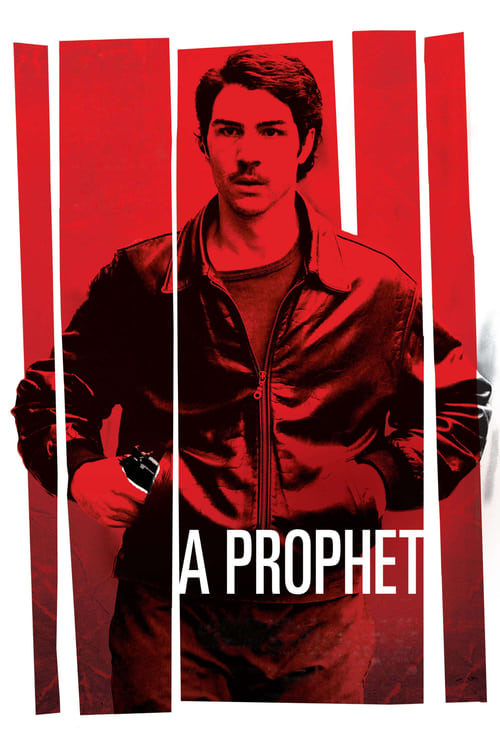
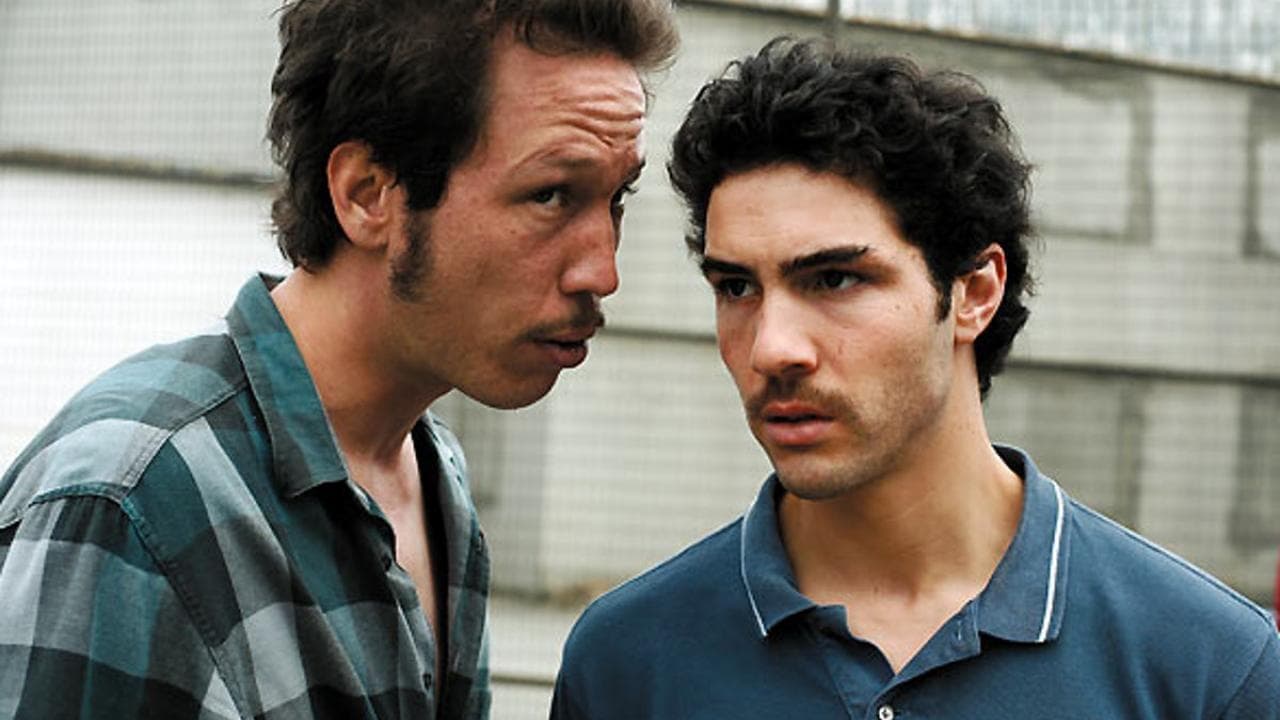
The first time I saw Malik El Djebena hide a razor blade in his mouth, I stopped breathing. It’s a sequence that defines Jacques Audiard’s 2009 masterpiece, A Prophet. Malik isn't a hardened killer; he’s a terrified nineteen-year-old kid, illiterate and utterly alone, forced by a Corsican mob boss to assassinate a fellow inmate. He has to practice the "delivery"—sliding the blade from his cheek to his teeth without slicing his own tongue to ribbons. I watched this scene while my cat was frantically trying to catch a moth against the window, the frantic thwack-thwack of paws against glass providing a bizarre, domestic percussion to the most stressful thing I’d ever seen on a screen.
A Prophet arrived during that final stretch of the 2000s when international cinema felt like it was finally punching through the "subtitle barrier" in the West. While most of us were obsessing over the birth of the MCU or the CGI blue people of Avatar, Audiard was busy reinventing the prison subgenre. He took the grit of 1970s American crime films and injected them with a strange, spiritual energy that felt entirely new.
The Evolution of an Empty Vessel
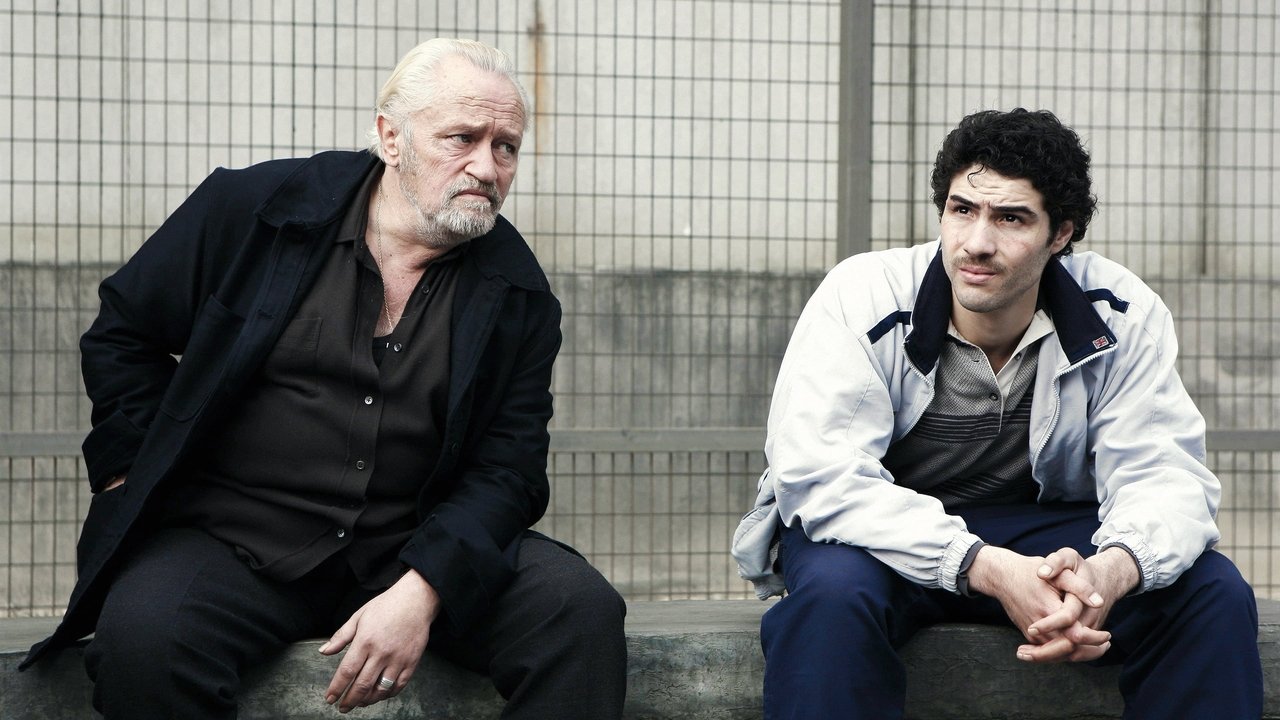
The film belongs entirely to Tahar Rahim. At the time, he was a relative unknown, which is vital because Malik begins the movie as a blank slate. He doesn’t have an ideology, a gang, or a family. He is "an empty vessel," as the film’s antagonist puts it. Watching Tahar Rahim transform over the 155-minute runtime is like watching a photo develop in a darkroom—the image starts blurry and faint, but by the end, the contrast is sharp enough to cut you.
Malik doesn’t have the luxury of a moral compass. He survives because he is a fast learner. He learns to read, he learns to speak Corsican, and he learns how to navigate the tribal warfare between the ruling Corsican faction and the growing Muslim population within the prison walls. Most prison movies are about escaping walls; this one is about building an empire within them.
The performance is incredibly physical. Early on, Malik is hunched, eyes darting, always looking for an exit that doesn't exist. By the final act, Tahar Rahim carries a stillness that is genuinely chilling. He isn't a "prophet" in the biblical sense, but he possesses a terrifyingly clear vision of how power works.
The Tyranny of the Old Guard
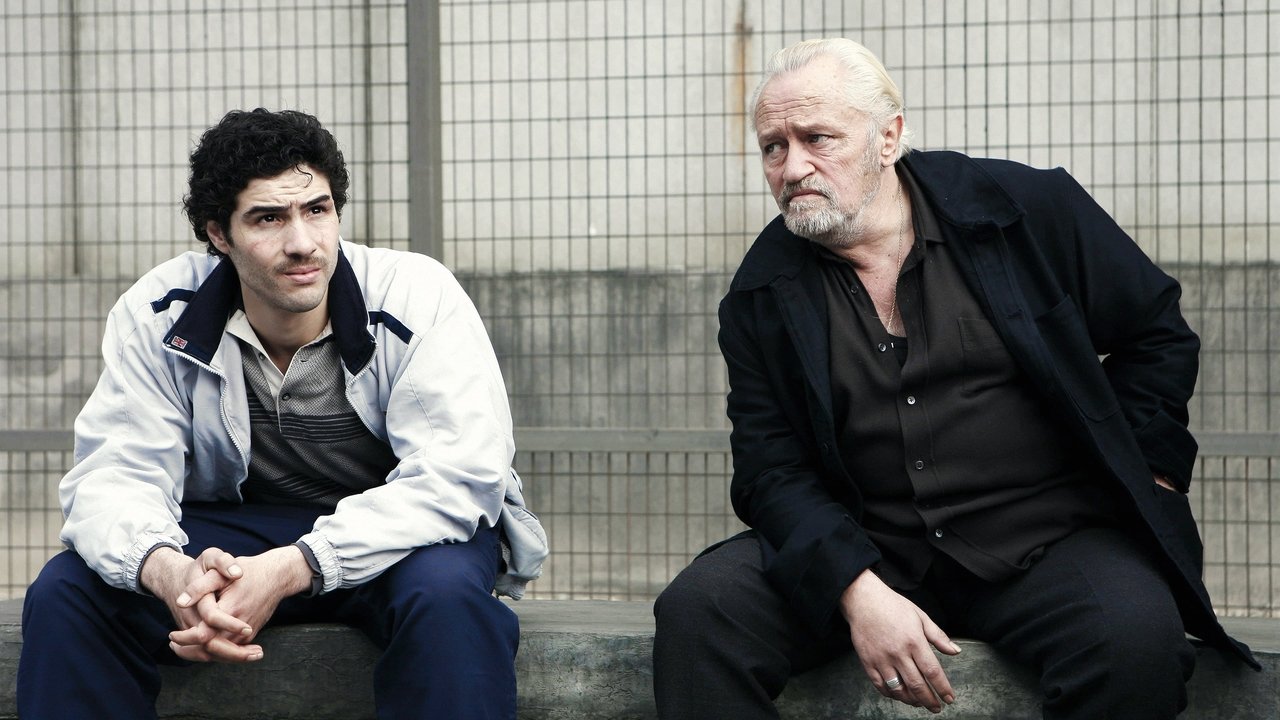
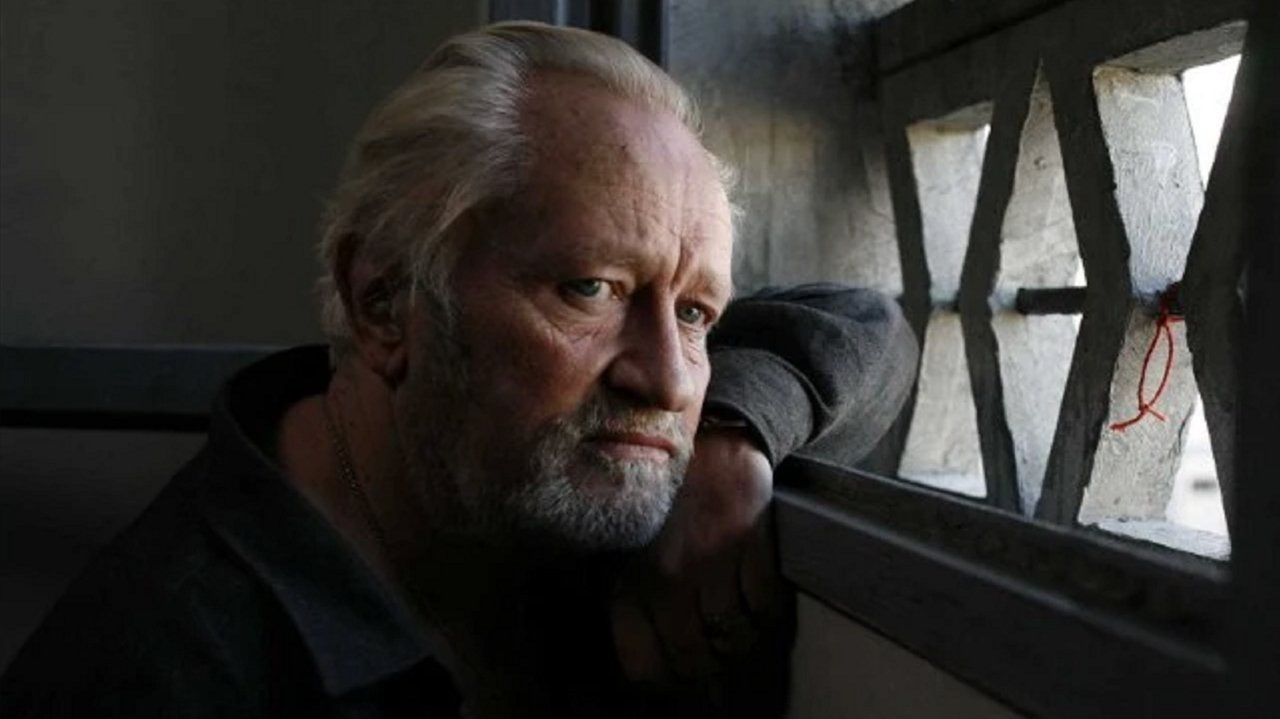
Every great rise needs a formidable obstacle, and Niels Arestrup provides it as César Luciani. Luciani is the aging king of the prison, a man who rules through a combination of institutional corruption and raw, old-school brutality. Niels Arestrup plays him with a heavy, sagging menace—he’s like an old lion who knows he’s losing his teeth but can still crush a throat if he gets close enough.
The chemistry between Tahar Rahim and Niels Arestrup is the dark heart of the film. It’s a twisted father-son dynamic where the "father" is a racist tyrant who uses the "son" as a disposable tool. Watching Malik slowly realize that his mentor is actually his prisoner—trapped by his own prejudices and the changing demographics of the world outside—is one of the most satisfying slow-burn arcs in modern drama. Niels Arestrup manages to make you feel a sliver of pity for a monster, which is a testament to the script’s refusal to lean into easy archetypes.
Gritty Realism with a Ghostly Soul
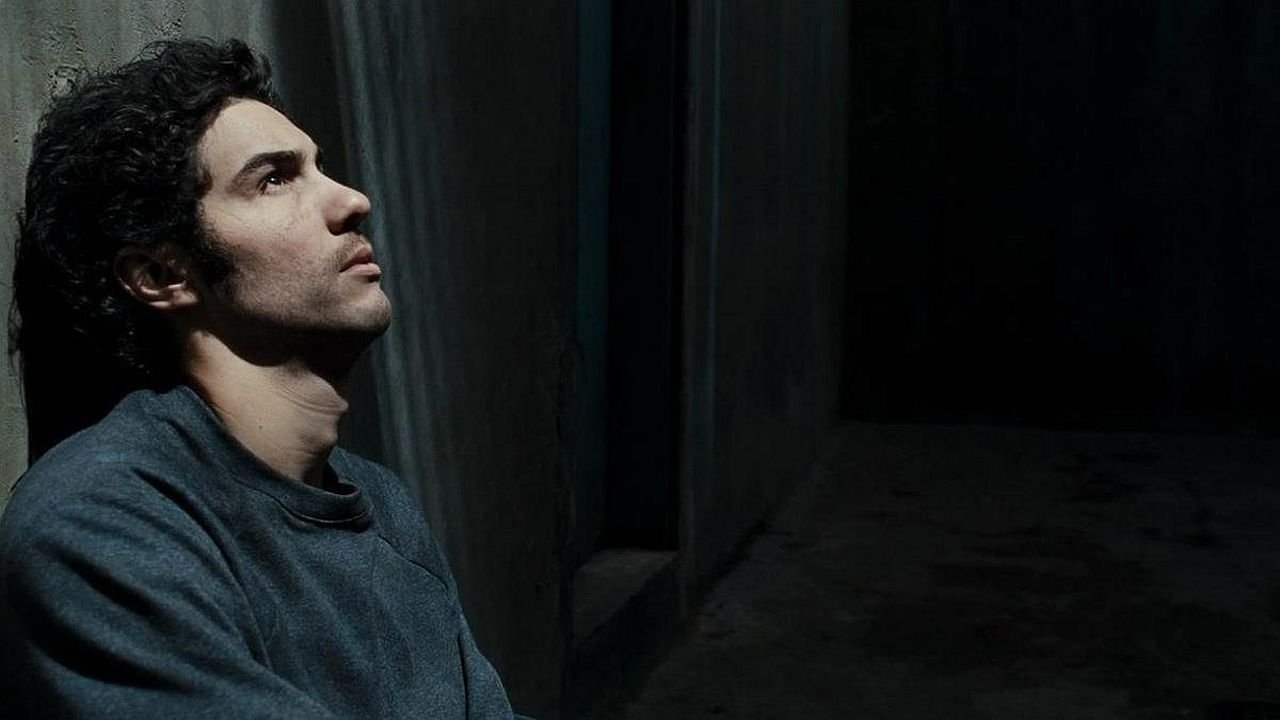
What separates A Prophet from the dozens of "gritty" dramas of the late 2000s is its flirtation with the supernatural. After Malik commits his first murder, the victim—Reyeb, played with a tragic, lingering grace by Hichem Yacoubi—doesn't disappear. He remains as a "ghost" in Malik’s cell.
These aren't horror movie scares. Reyeb is a companion, a manifestation of Malik’s guilt and his expanding consciousness. He literally lights the way for Malik in the dark. It’s a bold directorial choice by Audiard that could have easily felt pretentious, but in the context of the film’s brutal reality, it feels like a necessary exhale. The cinematography by Stéphane Fontaine mirrors this balance; it’s often handheld and intimate, catching the sweat on the brow, but it occasionally breaks into beautiful, wide-lensed dream sequences that feel like Malik’s soul trying to leak out of his cage.
The score by Alexandre Desplat (who seemed to be scoring every masterpiece of that era, from The Curious Case of Benjamin Button to The King's Speech) is minimalist and haunting. It doesn’t tell you how to feel; it just sits in the back of your throat like a lump you can't swallow.
Why We Should Still Be Talking About It
Despite being a critical powerhouse and winning the Grand Prix at Cannes, A Prophet often gets lost in the shuffle of "great foreign films you should see one day." It shouldn't be a homework assignment. It’s a lean, mean, 155-minute engine of tension. It arrived during a period where we were transitioning from the analog grit of the 90s into the hyper-clean digital era, and it captures the best of both worlds.
It feels real because a lot of it was—the production utilized former prisoners as extras and built a massive, functioning prison set that felt lived-in and decayed. There was a rumor at the time that Tahar Rahim spent days in a cell just to get the posture right, and looking at his performance, it’s easy to believe.
If you’re tired of crime sagas that romanticize the life of the outlaw, A Prophet is the antidote. It shows that power isn't about suits and cigars; it’s about who can endure the most silence, who can learn the fastest, and who is willing to keep a blade tucked against their cheek until the moment is right.
This is a film that demands your full attention and rewards it with interest. It is a grueling, beautiful, and ultimately transcendent piece of cinema that proves the "modern" era of the 2000s was capable of producing epics that rivaled the classics of the 70s. It’s dark, yes, but there is a strange, flickering light at the end of Malik’s journey that stays with you long after the credits roll. Don’t let the subtitles scare you off—this is a universal story of survival.
Keep Exploring...
-

Rust and Bone
2012
-
Tell No One
2006
-
Bad Education
2004
-
Capote
2005
-
The Protector
2005
-
Undisputed II: Last Man Standing
2006
-

United 93
2006
-
Before the Devil Knows You're Dead
2007
-
Mesrine: Killer Instinct
2008
-
Mesrine: Public Enemy #1
2008
-

Mother
2009
-
Polisse
2011
-

3-Iron
2004
-
A Bittersweet Life
2005
-
Batman: Under the Red Hood
2010
-

Elite Squad: The Enemy Within
2010
-
Batman: Year One
2011
-
Batman: The Dark Knight Returns, Part 1
2012
-

Batman: The Dark Knight Returns, Part 2
2013
-

Miller's Crossing
1990