Agora
"One woman stood between the heavens and the mob."

Most historical epics are built on the backs of generals, kings, or gladiators. They usually end with someone giving a sweaty speech about freedom before a CGI army crashes into another CGI army. But Alejandro Amenábar’s Agora is a strange, beautiful outlier from the tail end of the "swords and sandals" revival. It’s a $70 million movie where the primary weapon isn't a gladius—it's a compass and a scroll. I watched this on a scratchy DVD I bought at a garage sale for fifty cents, and I’m pretty sure the previous owner used the disc as a coaster for a very sweaty glass of iced tea, but the film’s grandeur still cut through the digital skips.
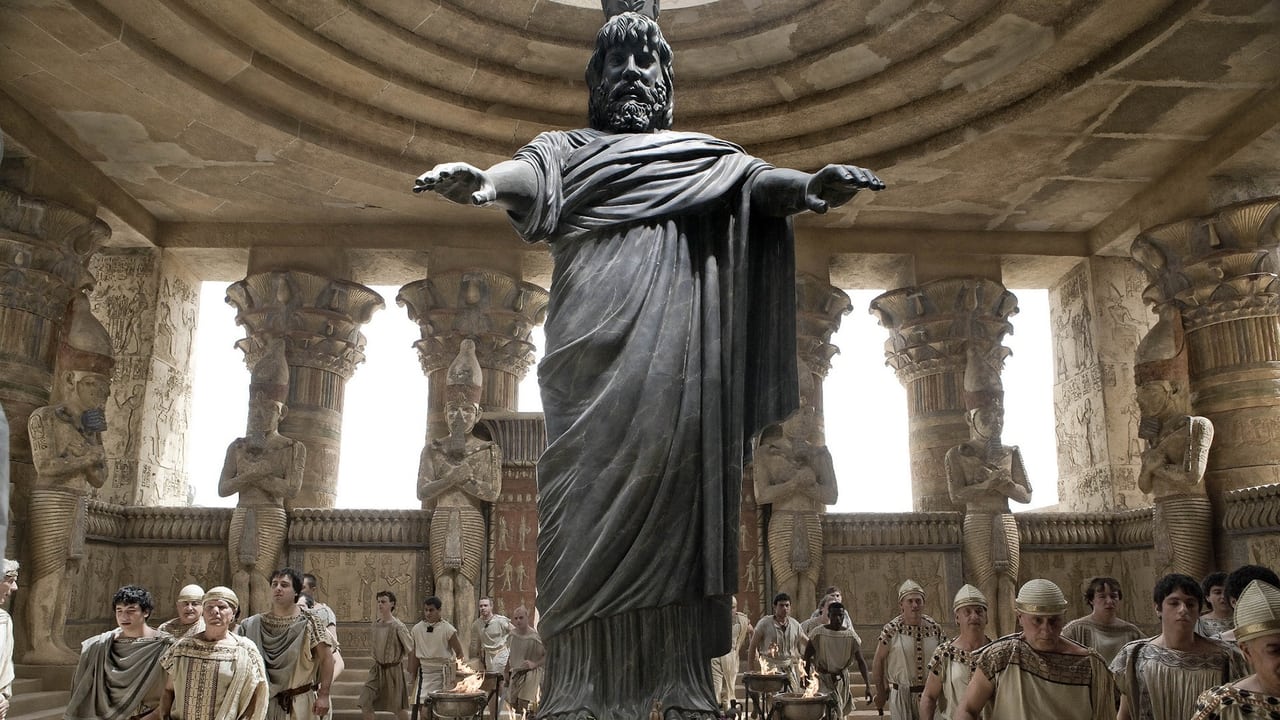
Set in 4th-century Alexandria, the story follows Hypatia, played by a luminous Rachel Weisz (The Constant Gardener, The Mummy). She’s a philosopher, astronomer, and teacher who is more interested in the elliptical orbits of the planets than the religious rioting happening outside her window. As the Roman Empire starts to crumble, the rise of a militant form of Christianity begins to clash with the old Pagan traditions. Hypatia is caught in the middle, trying to save the accumulated knowledge of the ancient world while her former student Oscar Isaac (Dune, Ex Machina) and her slave Max Minghella (The Handmaid’s Tale) grapple with their feelings for her and their changing loyalties.
A God’s Eye View of Dust
What struck me immediately about Amenábar’s direction is how he uses the camera to make us feel tiny. He and cinematographer Xavi Giménez frequently use these "top-down" shots that zoom out from a street brawl all the way into orbit, showing the Earth as a silent marble in the blackness of space. It’s a very late-2000s visual trick—reminiscent of the early days of Google Earth—but it serves a brilliant thematic purpose. From the stars, the religious zealots and the panicked scholars look like ants scurrying over a mound. It’s a humbling perspective that reminds me how much our "world-changing" conflicts are just blips in the cosmos.
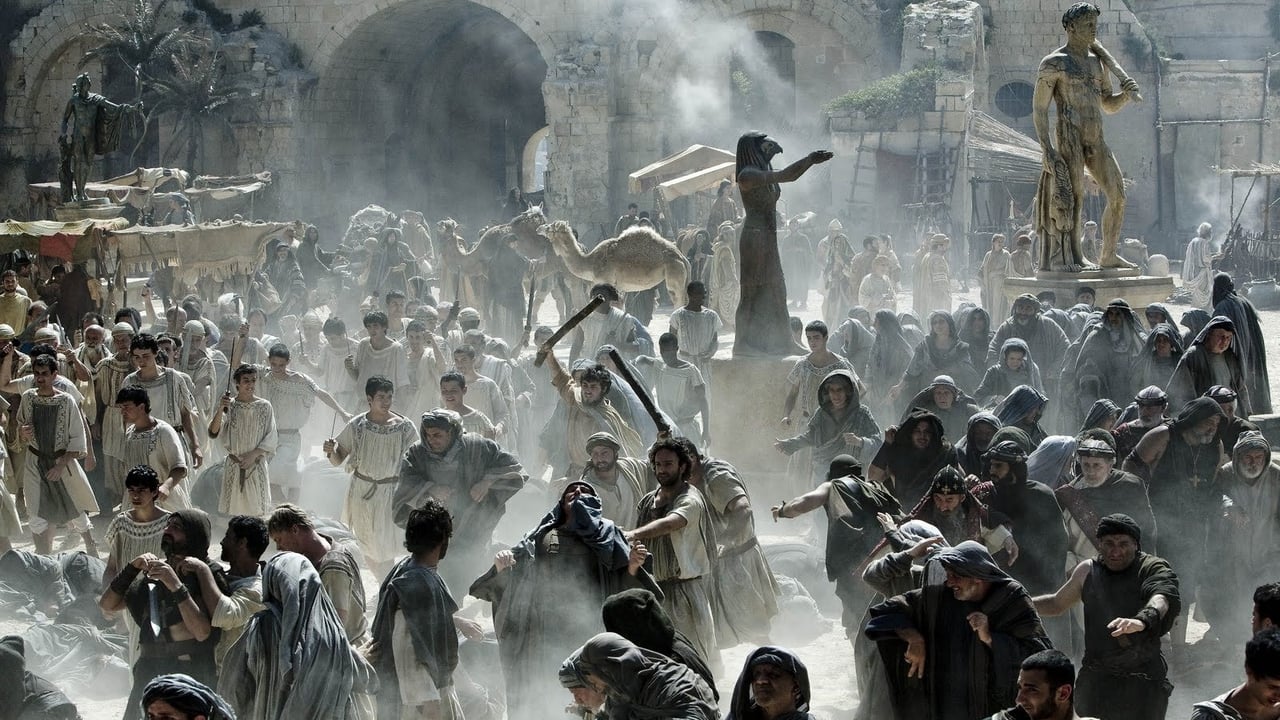
The production design is massive. Unlike the later entries in the MCU or the Hobbit films that drowned in green screen, Agora feels tactile. They built enormous sets in Malta, and you can feel the heat of the sun on the white stone and the grit of the sand in the Library of Alexandria. There’s a weight to this world that I think we’ve lost in the transition to purely digital environments. When the mob finally breaks into the library, it doesn't feel like a choreographed stunt; it feels like a tragedy. It’s basically a $70 million IMAX educational film that accidentally wandered into a slasher movie.
Performances That Humanize the History
Rachel Weisz is the soul of the film. She plays Hypatia not as a dry academic, but as someone who is genuinely in love with the universe. There’s a scene where she’s experimenting with a bag of sand on a boat to test the laws of motion, and her excitement is more infectious than any battle scene. It’s rare to see a performance that makes the act of thinking look so cinematic.
Then there’s Oscar Isaac as Orestes. Looking back, you can see all the charisma that would eventually make him a superstar. He plays Orestes as a man who wants to be noble but is ultimately a politician, forced to choose between his principles and survival. His chemistry with Weisz is tinged with a melancholy "what-if" that gives the film its emotional backbone. On the flip side, Max Minghella has the toughest job as Davus. His character’s transition from a devoted slave to a member of the Christian "Parabolani" is the most complex arc in the movie, even if it feels a little rushed in the final act.
The Tragedy of Being Too Smart
Why has Agora fallen into the "obscure" bin? I think it’s because it refused to play by the rules of its era. In 2009, audiences wanted the visceral thrills of 300 or the soaring heroics of Gladiator. Instead, Amenábar gave us a movie about the death of Reason. It’s a deeply cynical film in some ways—Agora is essentially the most expensive atheist pamphlet ever produced, and that didn't exactly sit well with everyone at the time. It was a massive hit in Spain but barely made a dent in the US box office, likely because it’s hard to market a movie where the "villains" are the founders of modern Western religion and the "hero" is a woman who just wants to do her math homework in peace.
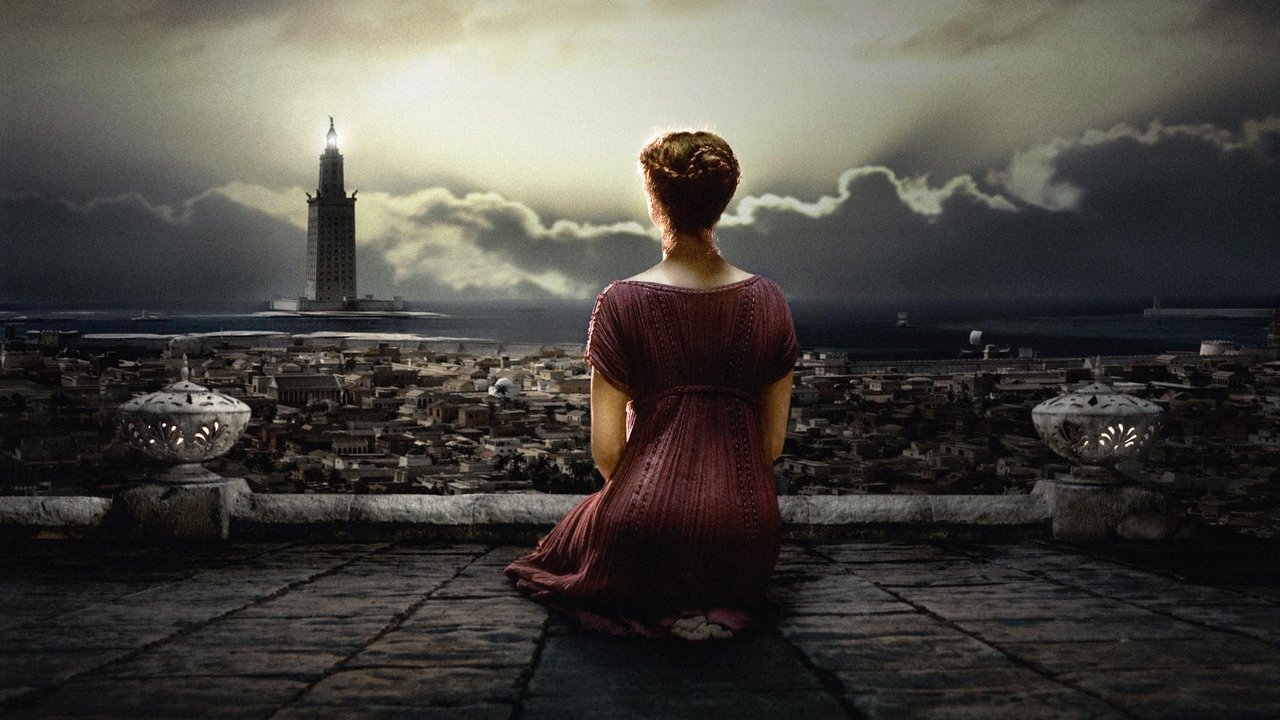
Looking back at it now, the film feels surprisingly prescient. Its depiction of how quickly a civilized society can devolve into tribalism and "us vs. them" rhetoric feels more relevant today than it did fifteen years ago. It’s not a perfect movie—the pacing in the middle drags like a chariot with a broken wheel, and some of the secondary characters like Ashraf Barhom’s Ammonius are a bit one-note—but its ambition is staggering.
Ultimately, Agora is a film that deserves a second look, preferably on a platform better than my tea-stained DVD. It’s a reminder of a brief window in the late 2000s when studios were still willing to throw blockbuster money at historical ideas that didn't involve a superhero landing. It’s beautiful, infuriating, and deeply sad. If you’ve ever looked at the stars and wondered how we got from there to here, this is a journey worth taking. Just be prepared for the fact that, in this story, the library doesn't get a sequel.


Keep Exploring...
-
The Sea Inside
2004
-
The Way Back
2010
-
The Physician
2013
-
Alive
1993
-
The Messenger: The Story of Joan of Arc
1999
-
The Count of Monte Cristo
2002
-
King Arthur
2004
-
Kingdom of Heaven
2005
-
1492: Conquest of Paradise
1992
-

Red Cliff
2008
-
Flags of Our Fathers
2006
-
The Good Shepherd
2006
-
World Trade Center
2006
-

Charlie Wilson's War
2007
-

Where the Wild Things Are
2009
-

Seven Years in Tibet
1997
-
Open Your Eyes
1997
-
Walking Tall
2004
-

Casanova
2005
-
Good Night, and Good Luck.
2005