Astro Boy
"A high-flying hero with a heavy metal heart."

The opening ten minutes of David Bowers’ Astro Boy are surprisingly grim for a movie that was marketed with the tagline "Have a blast." We aren’t treated to a whimsical origin story; instead, we watch a grieving father, Dr. Tenma, attempt to play God by digitizing the memories of his deceased son into a nuclear-powered robotic frame. It’s heavy stuff, bordering on Frankenstein territory, and it sets a tone that the rest of the film—a bright, zippy CGI adventure—struggles to maintain. I watched this on a rainy Tuesday while my neighbor was power-washing their siding, and the constant, mechanical drone outside actually provided a fitting soundtrack for a movie so obsessed with the clatter of gears and the hum of "Blue Core" energy.

A Mechanical Son in a Digital Age
Coming out in 2009, Astro Boy (or Atom, if you’re a purist) arrived at a strange crossroads in animation history. We were deep into the "Dreamworks-ification" of the genre, where every protagonist needed a snarky sidekick and a modern attitude. Yet, this film is based on Osamu Tezuka’s legendary 1950s manga, the very DNA of anime. The result is a fascinating, if slightly clunky, hybrid. It’s got the big-eyed, clean aesthetic of the source material, but it’s wrapped in the slick, polished CGI that defined the late 2000s.
Looking back, the character design for Astro, voiced with a sincere, wide-eyed innocence by Freddie Highmore (Finding Neverland), is actually quite charming. He lacks the textured "fur and pores" realism that Pixar was perfecting at the time, opting instead for a smooth, iconic look that honors the 2D roots. However, the world-building of Metro City—a floating utopia built on the literal trash of the "Surface"—feels like a precursor to the dystopian themes we’d see in later YA hits, just with more primary colors and jet-boots.
Jet-Powered Action and Scrapyard Gladiators
Where the film earns its keep is in the choreography. David Bowers (who previously gave us the underrated Flushed Away) understands that if you give a kid rockets in his feet, the audience wants to feel the G-force. The flight sequences are the highlight; there’s a genuine sense of weightless momentum as Astro zips through the skyscrapers of Metro City. It’s clear the team at Imagi Animation Studios put their heart into the physics of flight, even if the script occasionally stalls.
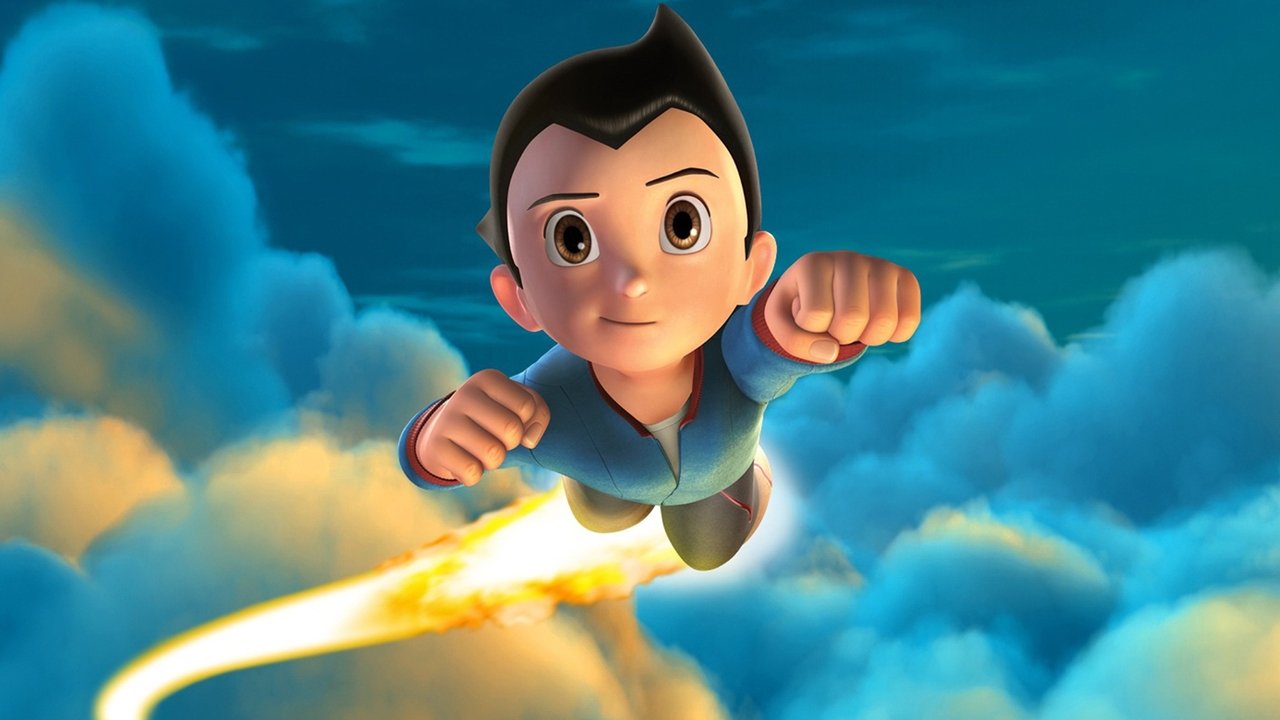
The action shifts gears when Astro is exiled to the Surface, landing him in a robot gladiator ring run by Hamegg, voiced by a delightfully oily Nathan Lane (The Birdcage). Here, the film leans into its "Action" genre tag, giving us creative, scrap-metal brawls that feel like a kid-friendly version of Mad Max. We also get the legendary butt-machine guns, a staple of the original character that the filmmakers were brave enough to include. Honestly, the butt-guns represent a level of creative bravery that modern superhero cinema wouldn't touch with a ten-foot pole. They are ridiculous, hilarious, and perfectly capture the "anything goes" spirit of the original manga.
The Tragedy of the "Replacement"
The supporting cast is a "Who's Who" of 2000s reliable voices. Bill Nighy (Love Actually) brings a much-needed warmth as Dr. Elefun, serving as the moral compass while Tenma descends into a pit of cold, scientific regret. Kristen Bell (Frozen) pops up as Cora, the leader of a band of Surface kids, providing the human connection Astro desperately craves.
The film's biggest hurdle is its own identity crisis. It wants to be a profound meditation on grief and "otherness"—Astro’s realization that he isn’t the "real" Toby is the narrative equivalent of being ghosted by your own creator—but it frequently interrupts these moments for a goofy joke from Orrin (a frantic Eugene Levy). It’s a symptom of its era; studios were terrified of being too "dark," so the genuine pathos of a robot boy trying to earn his father's love is often undercut by the need to keep things "breezy."
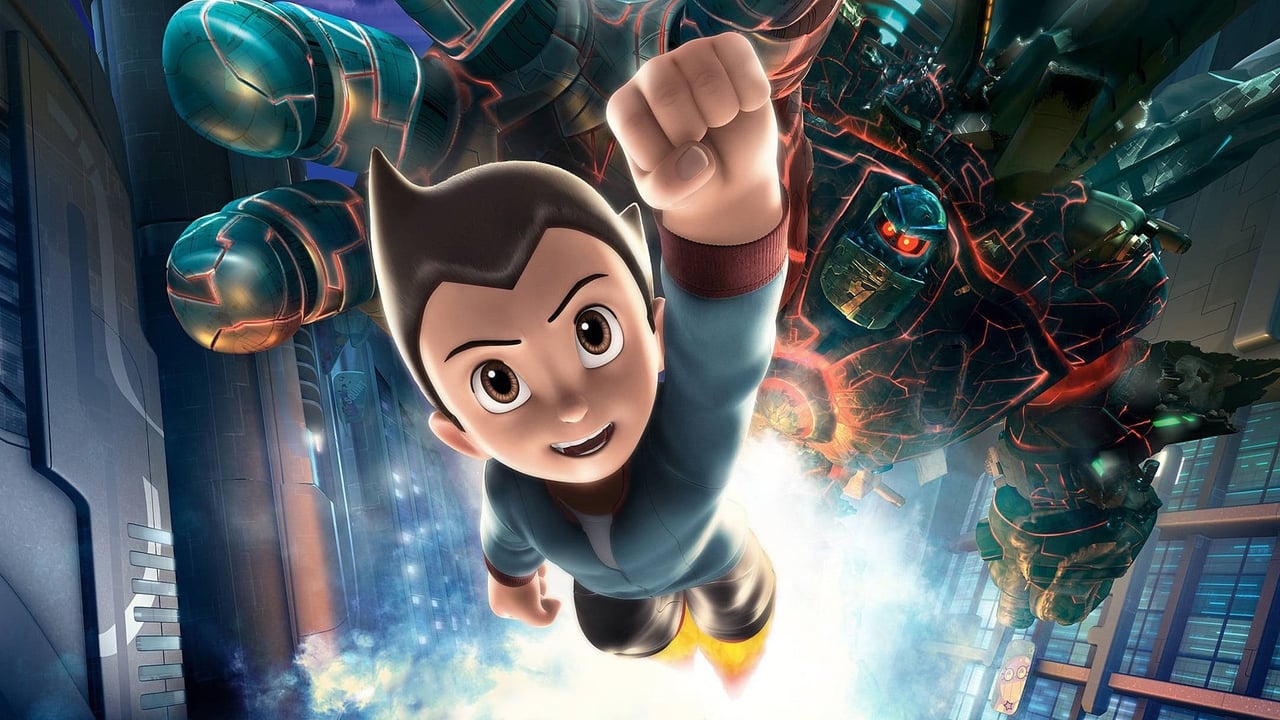
Still, for a film with a modest $10 million budget, the scope is impressive. The final showdown with the "Peacekeeper"—a massive, logic-defying blob of malevolent tech—is a solid piece of spectacle that manages to raise the stakes without becoming a confusing mess of digital debris. It doesn’t quite have the emotional gut-punch of The Iron Giant, but it’s a lot more thoughtful than the generic "talking animal" flicks that cluttered the shelves in 2009.
Astro Boy is a vibrant, well-meaning attempt to Westernize a Japanese icon that mostly succeeds on the strength of its lead performance and some truly fun flight sequences. It’s a bit of a "lost" film from the CGI boom, overshadowed by the giants of its day, but it’s a curiosity worth revisiting if you have a soft spot for retro-futurism. It handles its heavy themes with enough grace to stay interesting, even if it eventually settles for a standard "save the city" finale. If you’re looking for a quick, 94-minute burst of nostalgia and rocket-powered heroics, you could do a lot worse than this mechanical underdog.
Keep Exploring...
-
Titan A.E.
2000
-
Osmosis Jones
2001
-

Flushed Away
2006
-
Megamind
2010
-
Lilo & Stitch 2: Stitch Has a Glitch
2005
-
Race to Witch Mountain
2009
-

Superman/Shazam!: The Return of Black Adam
2010
-

Evangelion: 3.0 You Can (Not) Redo
2012
-

Tangled Ever After
2012
-

Final Fantasy: The Spirits Within
2001
-
Atlantis: Milo's Return
2003
-

Diary of a Wimpy Kid: Dog Days
2012
-
Teenage Mutant Ninja Turtles II: The Secret of the Ooze
1991
-

The Rocketeer
1991
-
Jimmy Neutron: Boy Genius
2001
-
Final Fantasy VII: Advent Children
2005
-

Resident Evil: Degeneration
2008
-

Resident Evil: Damnation
2012
-

Dragon Ball Z: Battle of Gods
2013
-
Diary of a Wimpy Kid: Rodrick Rules
2011