Cado dalle nubi
"One man's dream is a city's nightmare."
There is a specific kind of chaos that can only be produced by an Italian man with a keyboard and a complete lack of a social filter. If you weren’t living in Italy in 2009, you likely missed the moment Checco Zalone (the stage name of Luca Medici) transitioned from a niche cabaret comedian on the show Zelig to a box-office supernova. Cado dalle nubi is the film that started the fire, a "fish out of water" comedy that somehow managed to be both incredibly crude and strangely sweet. It is a time capsule of a very specific era in European pop culture—the height of the "talent show" craze—and while it was a monster hit domestically, it remains a fascinatingly obscure curiosity for the rest of the world.
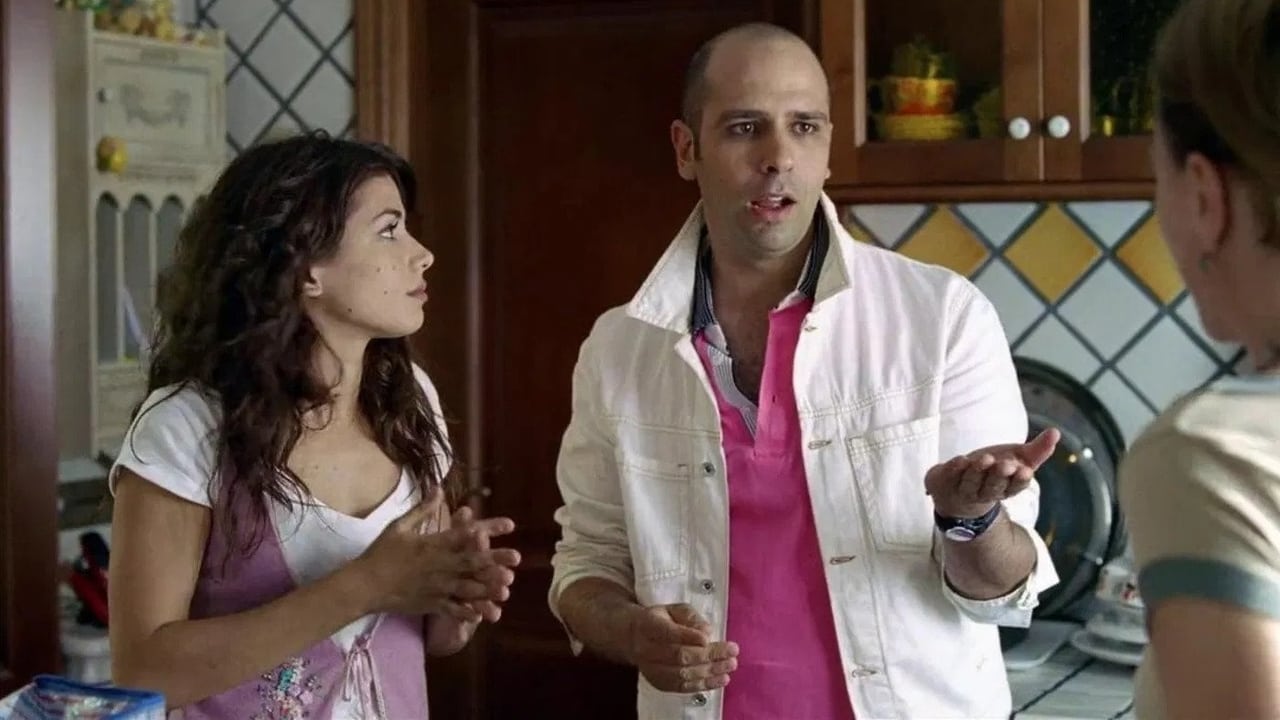
The Birth of a "Cozzalone"
The name "Checco Zalone" is a play on the Barese dialect phrase "Che cozzalone!" which roughly translates to "What a boor!" or "What a low-class guy!" I’ve always found it interesting that Medici, a man with a law degree in real life, chose to build an empire by playing the most unrefined version of himself possible. In Cado dalle nubi, he plays Checco, a singer from the sunny, southern town of Polignano a Mare who gets dumped by his girlfriend because he has no "stability." Heartbroken and wearing far too much polyester, he heads north to Milan to stay with his cousin Alfredo (Dino Abbrescia).
What follows is a relentless assault on the cultural divide between the traditional, "loud" South and the polished, "cold" North. I watched this movie recently on a laptop that was overheating so badly I had to balance it on a bag of frozen peas, and honestly, the physical discomfort of the peas matched the deliberate "cringe" of Checco’s social interactions perfectly. He is the ultimate unguided missile of awkwardness. Whether he’s misunderstanding the lifestyle of his cousin’s gay roommate Manolo (Fabio Troiano) or accidentally offending Marika’s (Giulia Michelini) ultra-conservative Northern League father, played with wonderful grumpiness by Ivano Marescotti, Checco is a neon sign of glorious, unpolished ignorance.
Poking the Social Bear
Comedy from the late 2000s often has a bit of a jagged edge when viewed today. We were moving out of the era of the broad, slapstick "cinepanettone" (the vulgar Christmas comedies that dominated Italy for decades) and into something more satirical. Gennaro Nunziante, who directed and co-wrote the screenplay with Zalone, understands that the best way to lampoon prejudice is to make the protagonist so oblivious that the bigots don't know how to react to him.
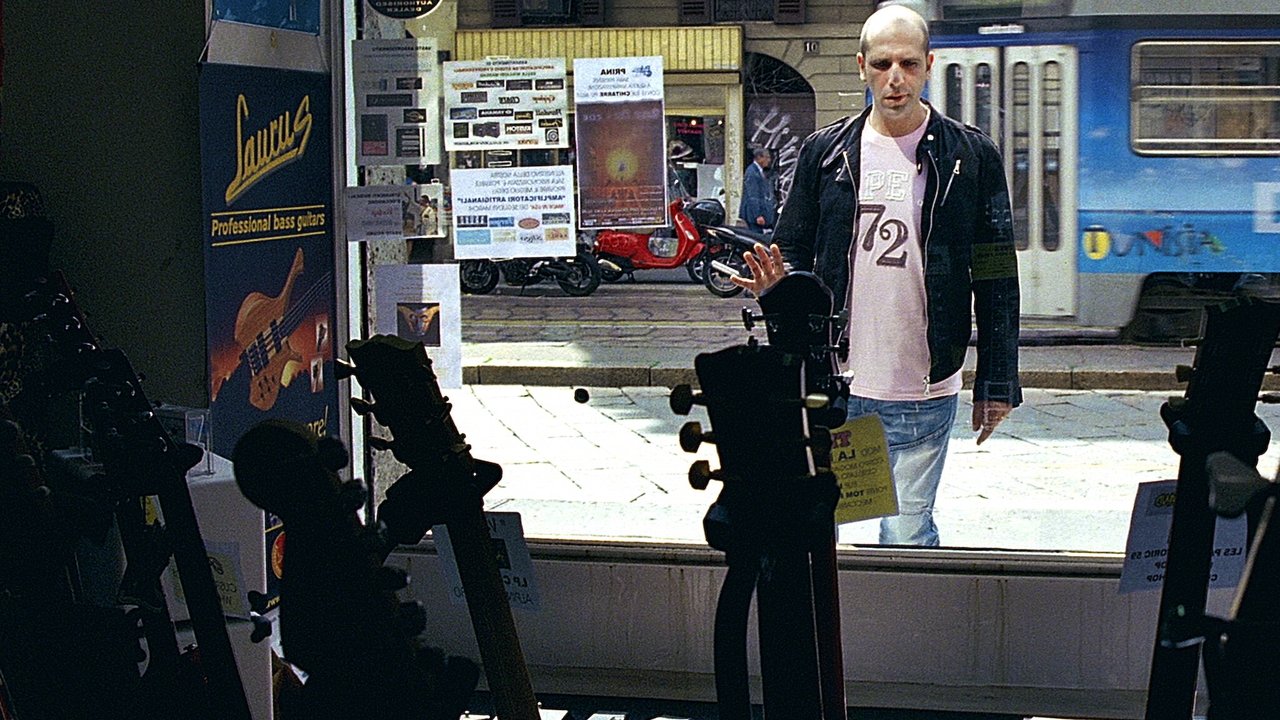
The film targets everything: the "Lega Nord" politics of the time, religious hypocrisy, and the vapid nature of reality TV. The "talent show" subplot, featuring Raul Cremona as a cynical TV producer, feels like a direct response to the American Idol and X-Factor fever that had gripped the planet by 2009. Looking back, the digital cinematography and the bright, almost clinical lighting of the Milanese sets perfectly capture that transitional "DVD-era" aesthetic—everything is a bit too sharp, a bit too clean, which only makes Checco’s messy Puglia energy stand out more.
The Secret Weapon: The Music
If you strip away the social commentary, the reason Cado dalle nubi works is the music. Checco Zalone is a legitimately talented musician, and his satirical songs are the highlight of the film. "Gli uomini sessuali" (The Sexual Men) is a masterpiece of backhanded tolerance, where Checco tries so hard to be "progressive" that he ends up being hilariously offensive. It’s a tightrope walk that very few performers could pull off without falling into mean-spiritedness.
The film thrives on the chemistry between the leads, particularly the romance with Marika. Giulia Michelini has the unenviable task of being the "straight man" to a human whirlwind, and she plays it with enough sincerity that you actually believe she could fall for this idiot. It’s an ensemble that works because everyone is playing the reality of the situation, no matter how absurd the punchline. Dino Abbrescia is especially good as the cousin trying to hide his "South-ness" to fit into the sleek Milanese lifestyle, only for Checco to blow his cover within five minutes of arrival.
Ultimately, Cado dalle nubi is the cinematic equivalent of a loud relative at a wedding—occasionally embarrassing, definitely too loud, but impossible to truly hate. It’s a film that demands you understand the context of its time and place, but even if you don’t know your Puglia from your Piedmont, the physical comedy and the sheer audacity of Zalone’s performance carry it through. It’s a shame it hasn’t found a wider international audience, if only because it offers such a sharp, funny rebuttal to the postcard-perfect version of Italy we usually see in Hollywood films.
If you can find a version with decent subtitles, it is well worth the 95 minutes of your time. It’s a reminder of that brief window in the late 2000s when comedy felt like it was testing its new digital boundaries, trying to see just how much it could get away with before the world changed again. Just don't blame me if you have "Immigrato" or "Angela" stuck in your head for the next three weeks.
Keep Exploring...
-
What a Beautiful Day
2011
-
Sun In Buckets
2013
-
Where Am I Going?
2016
-
Have You Met Claudia?
2004
-

The Santa Claus Gang
2010
-
Welcome to the North
2012
-
The Mafia Kills Only in Summer
2013
-
The Invisible Boy
2014
-

The Rich, the Pauper and the Butler
2014
-

Tutta colpa di Freud
2014
-
Johnny Stecchino
1991
-
The Legend of Al, John and Jack
2002
-

Tolo Tolo
2020
-

Alfie
2004
-

Barbie as The Princess & the Pauper
2004
-
Coffee and Cigarettes
2004
-

Confessions of a Teenage Drama Queen
2004
-

Ella Enchanted
2004
-
First Daughter
2004
-
Jersey Girl
2004