District 9
"The eviction has begun."
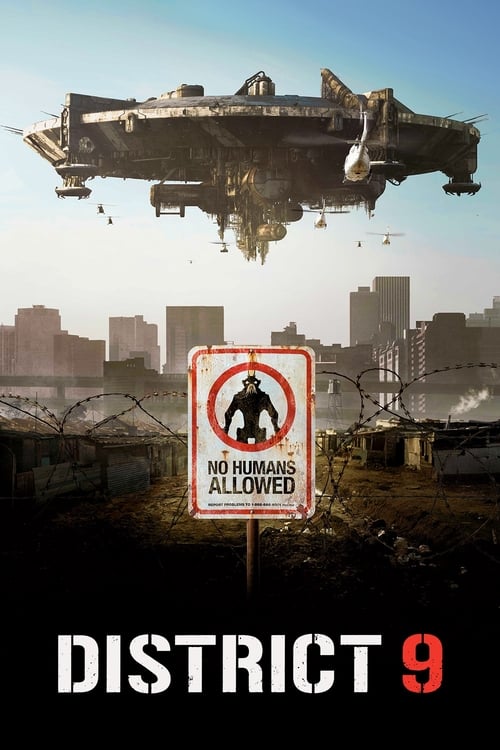
I remember standing at a bus stop in 2009, staring at a poster that simply said: "Humans Only. Report Non-Human Activity." There was no movie title, no actor names, and no release date—just a phone number. It was the kind of viral marketing that actually worked because it felt less like an ad and more like a threat. When I finally sat down to watch District 9, I was expecting a standard "alien invasion" flick. Instead, I got a movie that felt like a punch to the gut, mostly because it spent the first twenty minutes making me hate the protagonist.
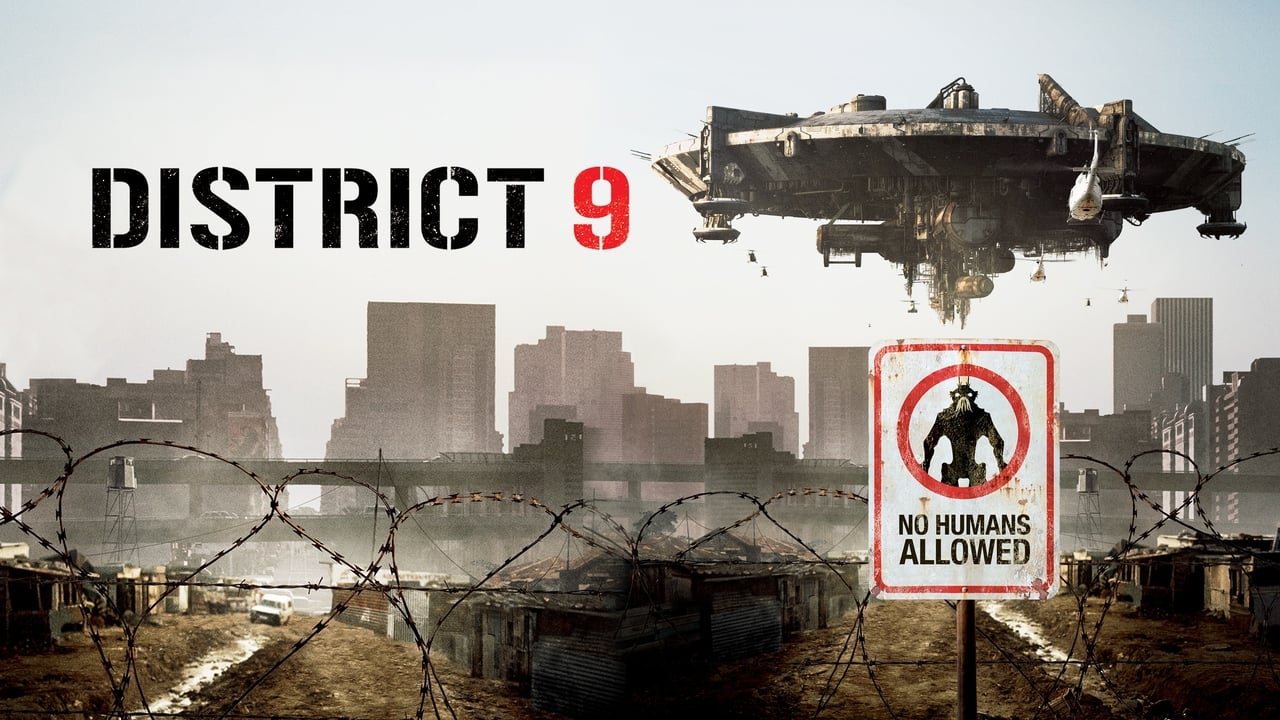
The genius of Neill Blomkamp’s debut—which famously rose from the ashes of a collapsed Halo movie project—is how aggressively unpolished it feels. In an era where James Cameron was giving us the glowing, ethereal beauty of Avatar, Blomkamp gave us Jo’burg grime, rusted corrugated metal, and aliens that looked like upright crustaceans obsessed with canned cat food. It’s a "first contact" story where the contact happened decades ago, and the novelty has long since curdled into bureaucratic resentment.
The Bureaucrat and the Body Horror
At the center of this mess is Wikus van de Merwe, played by Sharlto Copley. If you only know Copley from his later, more polished roles, his performance here is a revelation. He starts the film as a stuttering, mildly racist paper-pusher for Multi-National United (MNU), giggling nervously as he serves eviction notices to aliens who clearly don't understand the legal jargon. He is the ultimate "middle-manager of evil," and Wikus is essentially a mid-level insurance adjuster who accidentally becomes a god-tier insurgent.
The shift happens when Wikus is sprayed with a mysterious alien fuel (the "black fluid"), sparking a biological transformation that is some of the best body horror since Cronenberg’s heyday. I’ll never forget the scene where his fingernails start popping off while he's trying to eat a birthday cupcake—I actually had to pause the DVD because my own hand started twitching in sympathy. It’s through this agonizing physical decay that Wikus finally finds his humanity, or at least, he stops seeing the "Prawns" as pests and starts seeing them as a means of survival.
Weta, Wealth, and Wasted Potential

What’s truly staggering, looking back, is that this film cost roughly $30 million. In Hollywood terms, that’s the catering budget for a modern Marvel movie. Yet, the CGI here—handled by the wizards at Weta Digital—still looks better than most $200 million blockbusters released last year. Part of that is the lighting; Blomkamp shoots everything in harsh, overexposed daylight. There’s nowhere for the effects to hide. When the alien Christopher Johnson (Jason Cope) interacts with Wikus, you never question the physics of it. The "prawn" design is the last time CGI felt like it had actual weight and smell.
I watched this again recently on a scratched-up Blu-ray while sitting in a folding chair that squeaked every time I breathed, and honestly, the discomfort of the chair matched the movie's vibe perfectly. District 9 isn't supposed to be a comfortable watch. It’s loud, it’s shaky, and it’s unapologetically violent. The "arc-gun" sequence near the end, where human soldiers are basically turned into red mist, remains one of the most satisfying uses of sci-fi weaponry ever put to film. It’s the payoff for ninety minutes of mounting frustration and systemic cruelty.
A Legacy of Grime
The film captures that specific 2000s transition from analog to digital filmmaking perfectly. It uses security camera footage, mockumentary interviews, and news feeds to ground its impossible premise. It also reflects the post-9/11 anxieties of its time—the fear of the "other," the privatization of military force, and the way corporations like MNU treat sentient beings as nothing more than biological keys to unlock weapon systems. Peter Jackson, who stepped in to produce after the Halo deal died, clearly gave Blomkamp the freedom to keep the film’s South African identity intact rather than "Los Angeles-ing" the script.

Looking back, it’s a bit of a tragedy that Blomkamp never quite captured this lightning in a bottle again. While Elysium and Chappie had their moments, they lacked the raw, desperate energy found here. District 9 feels like a movie made by someone who had something to prove and a limited amount of money to prove it. It’s a masterclass in using science fiction as a mirror, showing us that if aliens did land, we wouldn't build a monument; we’d build a fence and start charging them for the privilege of staying behind it.
District 9 remains a high-water mark for "dirty" sci-fi. It’s a film that manages to be a heartbreaking social commentary, a terrifying body-horror nightmare, and a kick-ass action movie all at once. Whether you're here for the political subtext or just to see a giant alien mech rip a mercenary in half, it delivers. If you haven't revisited the slums of Johannesburg lately, it’s time to head back—just leave the cat food at home.


Keep Exploring...
-

Elysium
2013
-
Chappie
2015
-

Cloverfield
2008
-

Limitless
2011
-
Chronicle
2012
-
The Maze Runner
2014
-

Spider-Man 2
2004
-

Robots
2005
-

Star Wars: Episode III - Revenge of the Sith
2005
-

War of the Worlds
2005
-
I Am Legend
2007
-

Transformers
2007
-

Iron Man
2008
-

Avatar
2009
-

Despicable Me
2010
-
Inception
2010
-

Rise of the Planet of the Apes
2011
-

Source Code
2011
-
Super 8
2011
-

Prometheus
2012