Gamer
"The revolution will be live-streamed and pay-to-play."
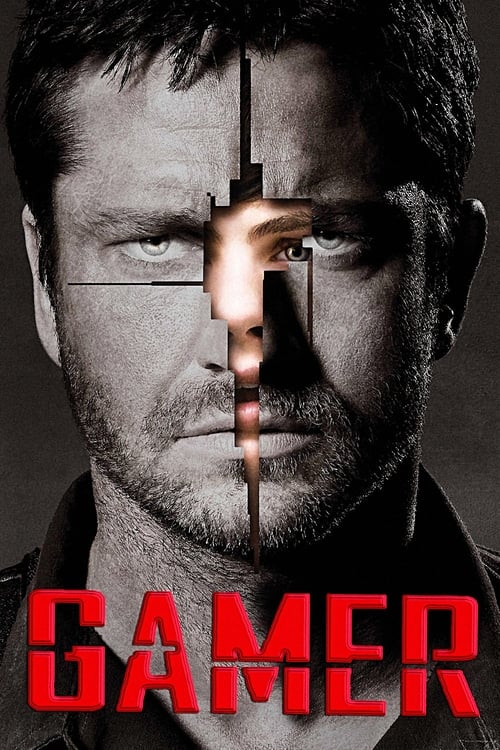
Watching a Neveldine/Taylor movie feels less like a cinematic experience and more like being shoved into a dryer filled with glass shards and Red Bull. By the time 2009 rolled around, the directing duo—Brian Taylor and Mark Neveldine—had already established themselves as the bad boys of the digital age with Crank. But with Gamer, they tried to sharpen their jagged edge into something resembling social commentary. It’s a loud, ugly, frequently brilliant, and occasionally repulsive look at a future where our darkest impulses are monetized for the entertainment of the bored.

I watched this recently while sitting on a beanbag chair that was slowly leaking its Styrofoam guts across my floor, which felt remarkably on-theme for a movie about crumbling autonomy and physical decay.
The Digital Meat Grinder
The premise is pure 2000s tech-anxiety. In a near-future, a tech mogul named Ken Castle (Michael C. Hall) has created "Slayers," a massive multiplayer game where "players" control actual death-row inmates in real-life combat. If an inmate survives 30 matches, they win their freedom. Our protagonist is Kable (Gerard Butler), a man who is one win away from liberty, controlled by a teenage gaming prodigy named Simon (Logan Lerman).
Looking back, Gamer captures a very specific transition in cinema history. This was the era where digital cameras were starting to replace film stock, and instead of trying to make digital look like "film," Neveldine/Taylor leaned into the digital "ugliness." They used early Red cameras and often operated them while wearing rollerblades to get those frantic, low-to-the-ground angles. The result is a movie that looks like a high-definition seizure. It’s a far cry from the polished, orange-and-teal look that would soon dominate the MCU. It’s a movie that actively hates its own audience's eyeballs, and I kind of respect that.
Slayers, Society, and Satire
What makes Gamer more than just a standard "death game" movie is the contrast between "Slayers" and "Society." While "Slayers" is a mud-caked war zone, "Society" is a live-action version of The Sims or Second Life, where people pay to control the bodies of others to live out colorful, hedonistic, and often degrading fantasies. Amber Valletta plays Kable’s wife, who is forced to work in "Society" to survive.
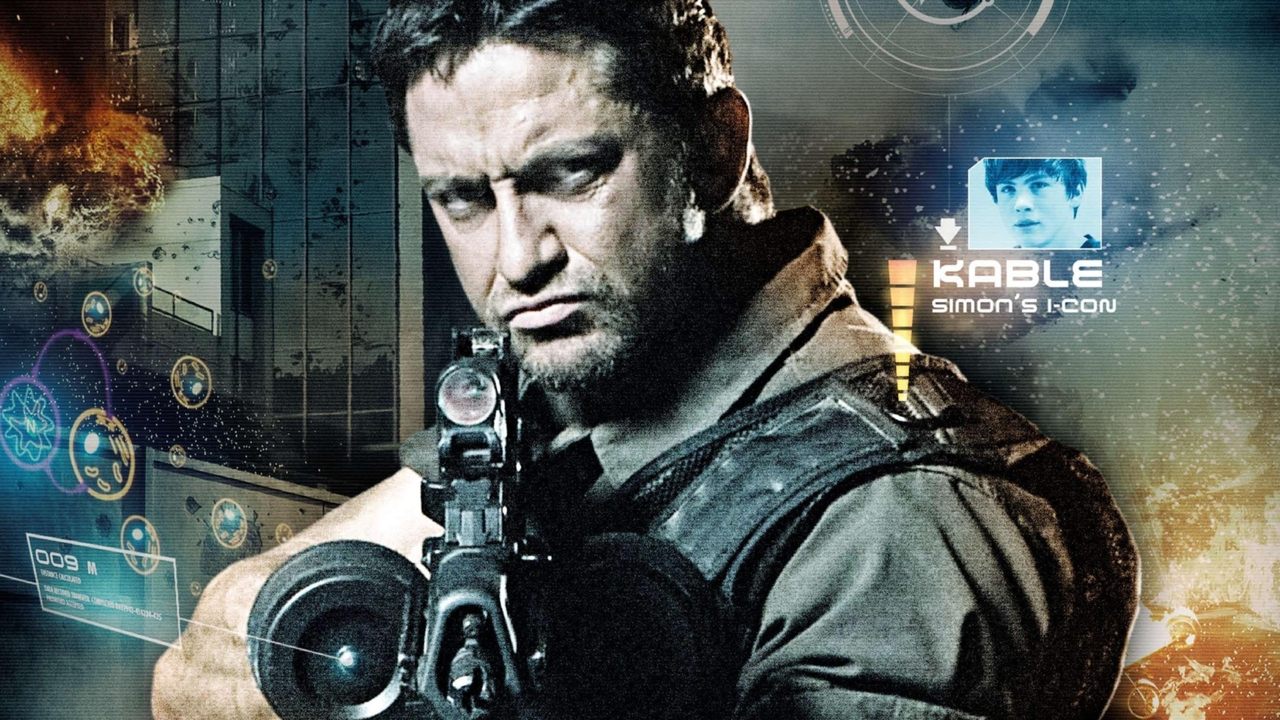
These scenes are where the film’s post-9/11 cynicism really shines. The world isn't being taken over by a Skynet-style AI; it’s being sold piece-by-piece to the highest bidder. The filmmakers capture the grotesque nature of early internet subcultures—the voyeurism, the anonymity, and the way we treat digital avatars (even when they're human) as disposable objects. It was a time when the internet was moving from a niche hobby to an all-encompassing lifestyle, and Gamer viewed that shift with a healthy dose of "yuck."
The Hall of Fame Villainy
While Gerard Butler provides the necessary brawn and "This is Sparta" grit, the movie belongs entirely to Michael C. Hall. Fresh off the success of Dexter, Hall plays Ken Castle as a twitchy, egomaniacal billionaire who feels like a terrifying cross between Steve Jobs and a cult leader.
The highlight of the entire film—and a scene that has cemented its cult status—is a choreographed musical number where Hall’s character controls a group of mind-controlled soldiers to perform "I’ve Got You Under My Skin" while beating up the hero. It is absurd, tonally jarring, and absolutely magnetic. It’s the kind of big, weird swing you only get from directors who have been given $50 million and zero adult supervision.
Apparently, that scene was a nightmare to film because the directors wanted the movements to look "puppet-like" and uncanny, requiring the stunt team to move with a precise, jerky rhythm that matches the film’s "mind control" logic. It’s a rare moment where the action choreography actually serves the weird philosophical underpinnings of the plot.
A Cult Relic of the Aughts
Gamer bombed at the box office, making back less than its budget. Critics at the time mostly dismissed it as "juvenile" or "excessive." But in retrospect, it’s a fascinating time capsule. It predates the explosion of Twitch and the corporatization of the Metaverse, yet it seems to have predicted the exact flavor of our modern digital exhaustion.
The action is relentless, though it lacks the clarity of something like John Wick. It’s "chaos cinema" at its peak—zooming, whip-panning, and cutting so fast you sometimes lose track of where Kable is in relation to the explosions. But that's the point. We aren't supposed to feel like we’re watching a hero; we’re supposed to feel like we’re trapped in a server rack with a fever.
Ultimately, Gamer is a film that is much smarter than it looks, even if it’s often too gross for its own good. It’s a 95-minute adrenaline shot that manages to squeeze in a biting critique of how we consume violence. It might not be "good" in a traditional sense, but it is undeniably an artifact of a bold, experimental era of digital filmmaking. If you can handle the shaky-cam and the relentless cynicism, it's a trip worth taking.


Keep Exploring...
-

Crank
2006
-
Crank: High Voltage
2009
-

Æon Flux
2005
-

The Island
2005
-

X-Men: The Last Stand
2006
-
Next
2007
-

Babylon A.D.
2008
-

G.I. Joe: The Rise of Cobra
2009
-
Surrogates
2009
-
Terminator Salvation
2009
-

Cowboys & Aliens
2011
-

I Am Number Four
2011
-

Battleship
2012
-
Total Recall
2012
-

Elysium
2013
-

G.I. Joe: Retaliation
2013
-
The 6th Day
2000
-

Olympus Has Fallen
2013
-
Death Race
2008
-
Pandorum
2009