G.I. Joe: The Rise of Cobra
"High-tech toys meet high-octane mayhem."
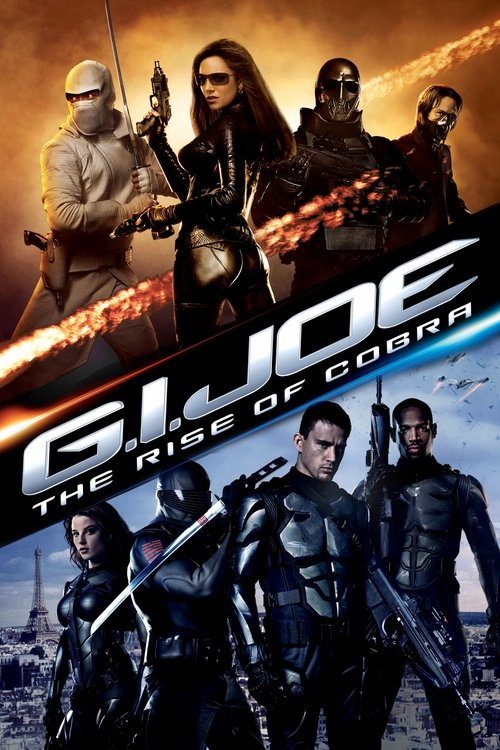
The Eiffel Tower doesn’t just fall; it dissolves. In a flurry of green "nanomites," the most iconic landmark in Paris collapses into the Seine like a sandcastle meeting a tide of acid. It is a moment of pure, unadulterated cinematic silliness that could only exist in the late 2000s—a period where digital effects were finally cheap enough to destroy anything, but directors hadn't yet learned the "less is more" philosophy. Looking back at G.I. Joe: The Rise of Cobra, I’m struck by how much it feels like the last gasp of a specific kind of blockbuster: the kind that prioritizes "cool" over logic with the frantic energy of a kid dumping his entire toy box onto the living room floor.
The Sommers School of Maximum Overdrive
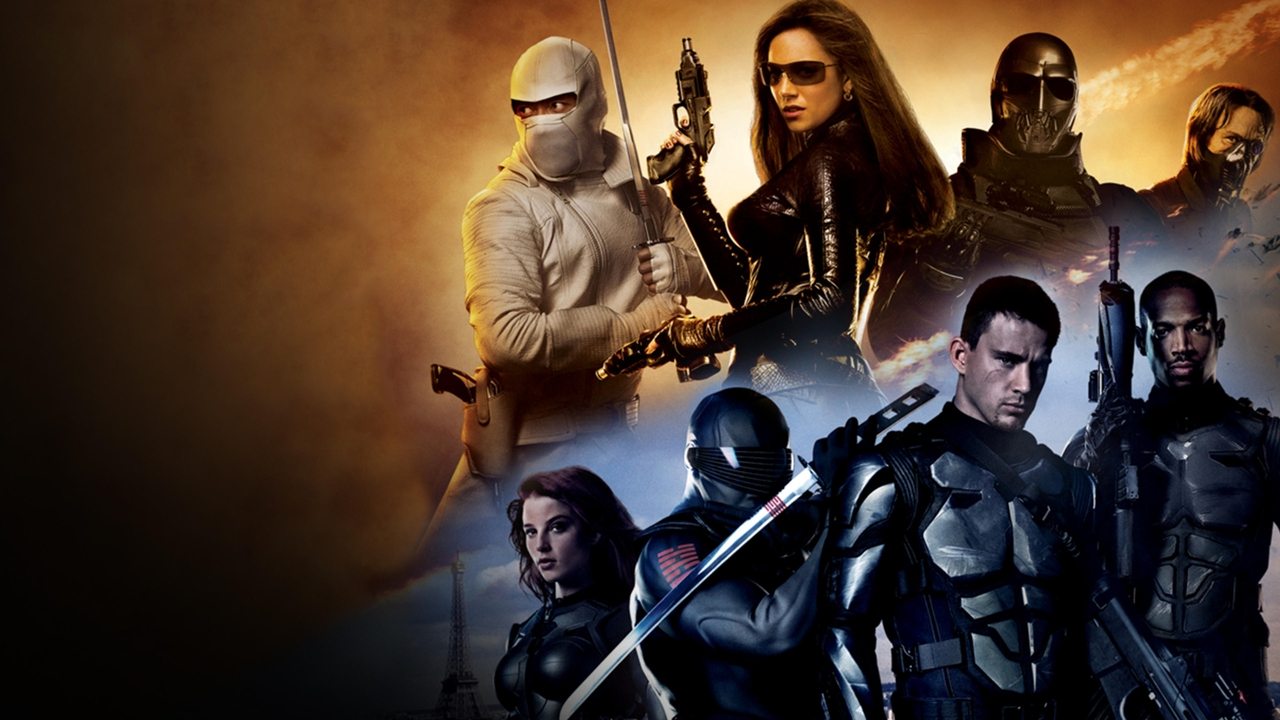
Directed by Stephen Sommers, the man who turned The Mummy into a breezy adventure classic, The Rise of Cobra moves at a terminal velocity that borders on exhausting. There is no such thing as a "quiet moment" here. If two characters are talking, they are usually doing it while walking toward a high-tech jet or standing in front of a flickering holographic map. I recently rewatched this while dealing with a mild head cold and the sheer amount of neon blue lighting nearly triggered a localized migraine, yet I couldn't look away.
Sommers treats the G.I. Joe lore not as a sacred text, but as a checklist of 1980s radicalism. You want a silent ninja in white? You got it. You want an underwater base that looks like a rejected level from a BioShock spin-off? It’s there. The action choreography, particularly the showdowns between Lee Byung-hun (Storm Shadow) and Ray Park (Snake Eyes), is surprisingly sharp, even if it’s often buried under a layer of early-digital sheen. The film leans heavily into the CGI revolution of the era, showcasing "Accelerator Suits" that allow the Joes to run through walls and leap over moving cars. It’s peak 2009 tech-optimism, back when we thought every soldier would be a cyborg by 2015.
A Cast That Didn't Get the Memo

The most fascinating aspect of the film in retrospect is the ensemble. At the time, Channing Tatum (Duke) was still finding his footing as a leading man; it’s no secret now that he reportedly hated the script and was contractually obligated to appear, which explains his somewhat wooden, "deer-in-the-headlights" performance. However, the villains are having the time of their lives. Christopher Eccleston chews the scenery as the arms dealer McCullen, and a pre-megastardom Joseph Gordon-Levitt is almost unrecognizable under layers of translucent facial prosthetics as "The Doctor."
Apparently, Gordon-Levitt’s makeup took four hours to apply every day, and he used a high-pitched, raspy voice inspired by the original cartoon’s Cobra Commander—a choice that is both baffling and deeply committed. Then there’s Sienna Miller as the Baroness, who famously had her hair catch fire during a pyrotechnic mishap on set. She brings a sultry, comic-book energy to the role that balances the stoic military posturing of Adewale Akinnuoye-Agbaje and Rachel Nichols. It’s a cast that feels like it belongs in four different movies, yet somehow, they all ended up in this neon-soaked blender.
The Physics of the Toy Box
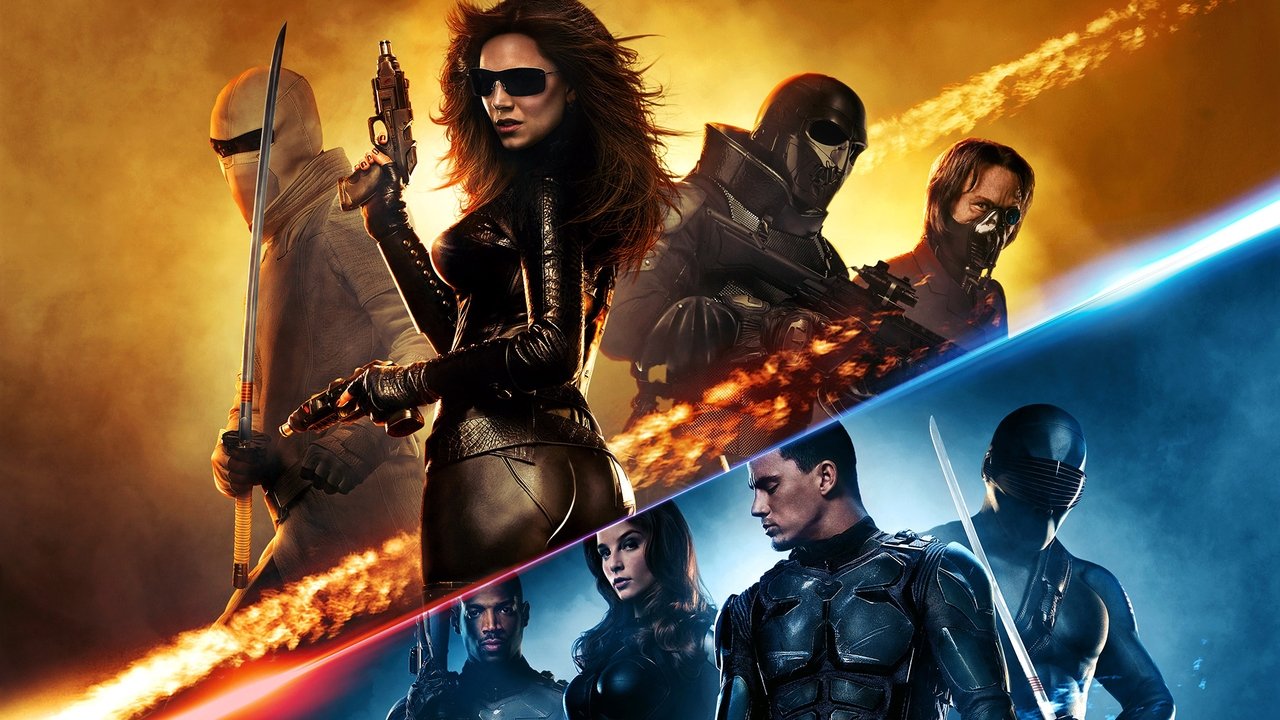
This film was produced during the 2007-2008 writers' strike, which meant the script was essentially locked and rushed into production before it could be properly polished. You can feel that frantic energy in the pacing. The movie doesn't care about the laws of physics or international diplomacy; it cares about the "Delta-6 Accelerator Suits." The Paris chase sequence is a masterclass in "chaos cinema." It’s edited with such speed that you can almost hear the editor’s mouse clicking in real-time, but it captures that visceral (oops, let's say raw) thrill of playing with action figures.
The film also captures the post-9/11 anxiety of the era by making the threat "invisible"—the nanomites can eat anything from the inside out. It’s a tech-horror concept dressed up in Saturday morning cartoon colors. While it lacks the tactical grit of modern military thrillers, there’s an honesty to its artifice. It doesn't want to be Black Hawk Down; it wants to be the coolest DVD you ever bought from a bargain bin. Turning off the "logic" part of my brain was easy because the film never asks you to turn it on in the first place. It is a loud, proud, and shiny relic of a time when we thought bigger was always better.
Ultimately, G.I. Joe: The Rise of Cobra is a time capsule of the transition from the practical-stunt era to the digital-takeover era. It’s messy, overstuffed, and occasionally eye-searing, but it’s never boring. It’s the cinematic equivalent of a sugar rush—short-lived and followed by a slight headache, but undeniably fun while the buzz lasts. If you’re looking for a reminder of why we fell in love with summer blockbusters before they all became "cinematic universes," this is your fix.

Keep Exploring...
-

G.I. Joe: Retaliation
2013
-
The Island
2005
-

X-Men: The Last Stand
2006
-
Babylon A.D.
2008
-
I Am Number Four
2011
-

Battleship
2012
-
Van Helsing
2004
-
The Matrix Revolutions
2003
-
Push
2009
-
RoboCop 2
1990
-
Sky Captain and the World of Tomorrow
2004
-
Race to Witch Mountain
2009
-

The Brothers Grimm
2005
-
AVP: Alien vs. Predator
2004
-

Æon Flux
2005
-

16 Blocks
2006
-

Poseidon
2006
-
Superman Returns
2006
-
Fantastic Four: Rise of the Silver Surfer
2007
-
Next
2007