Neuilly Yo Mama!
"Wrong side of the tracks, right side of the Seine."
If you weren't prowling the "International Comedy" section of a dying French video store in 2009, there is a very high chance Neuilly Yo Mama! (or Neuilly sa mère ! as it’s known back home) completely bypassed your radar. It belongs to that specific breed of mid-budget European comedy that becomes a localized juggernaut—think millions of tickets sold in France—yet struggles to translate its very specific social anxieties to an international audience. I recently revisited it while picking at a bag of slightly stale Haribo Tagada strawberries, which felt like the most appropriate culinary accompaniment for a movie this colorful and sugary.
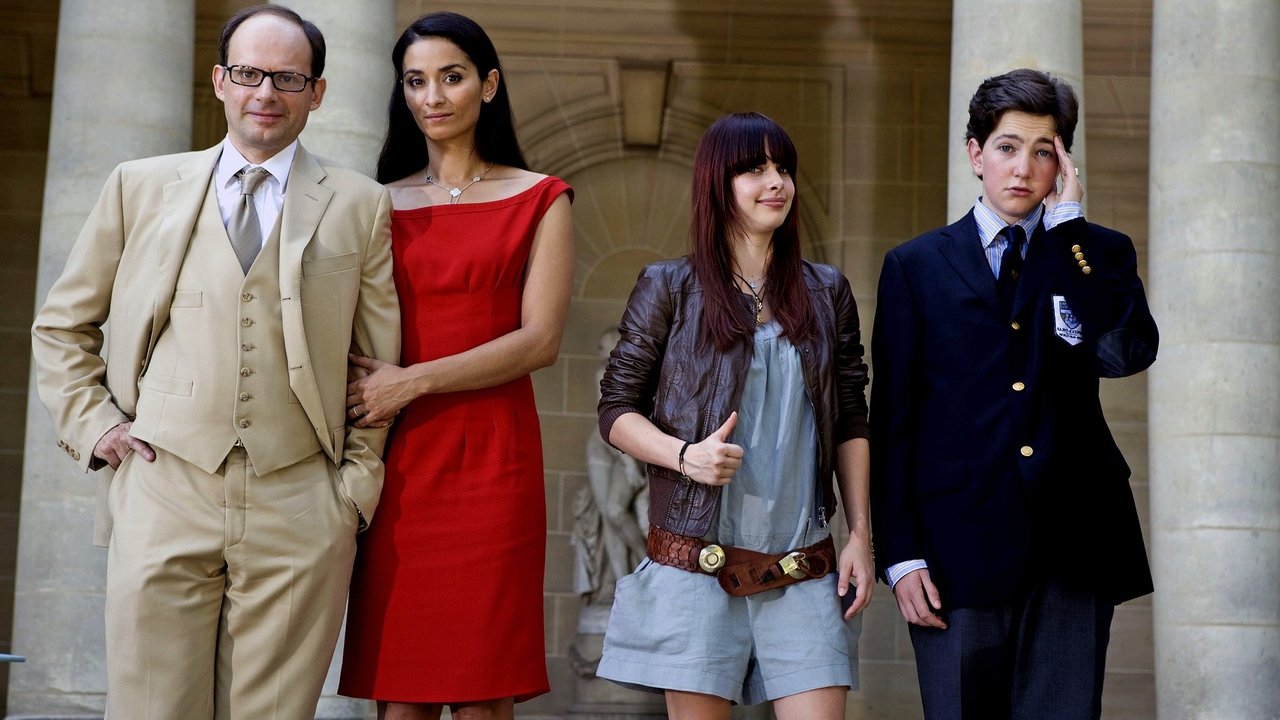
The premise is a classic "fish out of water" setup that feels essentially 'The Fresh Prince of Bel-Air' if Will Smith wore more Lacoste and was obsessed with French tax law. We follow Sami (Samy Seghir), a charming, smart kid from the "cité" (the underdeveloped housing projects) of Chalon-sur-Saône. When his mother takes a job in Abu Dhabi, Sami is shipped off to live with his aunt Djamila (Rachida Brakni) in Neuilly-sur-Seine. For those unfamiliar with French geography, Neuilly isn't just a rich suburb; it is the ultimate bastion of old-money, conservative, high-society elitism. It’s the kind of place where people wear sweaters tied around their shoulders without irony.
A Tale of Two Frances
The film functions as a bright, loud collision between two diametrically opposed versions of France. On one side, you have the high-energy, slang-heavy culture of the suburbs; on the other, the rigid, haughty etiquette of the de Chazelle family. Denis Podalydès, a heavyweight of the Comédie-Française, plays the patriarch Stanislas de Chazelle with a wonderful, vein-popping intensity. He’s the personification of the establishment, and his performance is a masterclass in comic timing—specifically the kind of timing that involves looking increasingly horrified by a teenager’s presence.
What makes the comedy work mechanically is the chemistry between Sami and his cousin Charles, played by Jérémy Denisty. Charles is a fascinating creature: a teenaged boy who dresses like a 50-year-old politician and dreams of one day running the country. Watching these two navigate a posh private school is where the movie finds its rhythm. The jokes are rapid-fire, leaning heavily into cultural tropes and the linguistic gulf between "street" French and "formal" French. While some of the wordplay might be lost if you’re relying on subtitles, the physical comedy and the sheer absurdity of the social situations keep the momentum high.
The Sarkozy-Era Satire
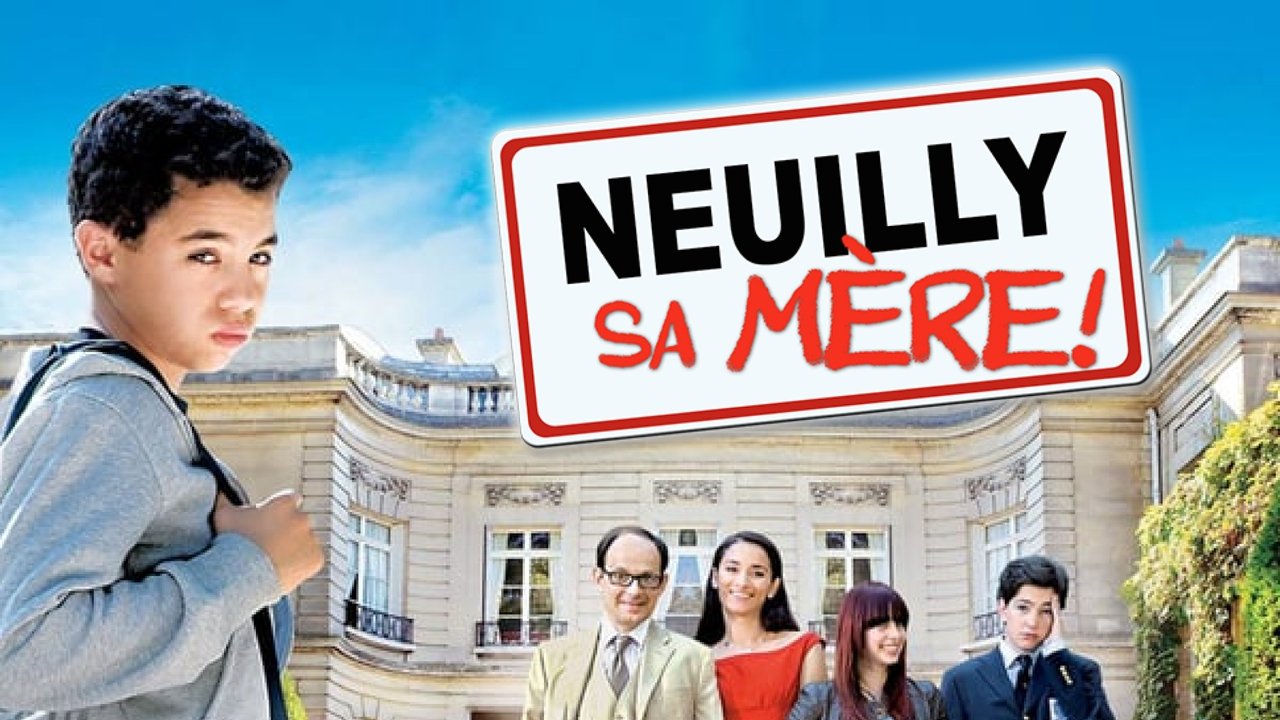
Looking back at 2009, the film is a perfect time capsule of the Nicolas Sarkozy presidency. Sarkozy had been the mayor of Neuilly, and the film is peppered with nods to the political climate of the time. It’s a "Modern Cinema" artifact that captures the transition from the grit of the early 2000s (think La Haine) to a more polished, commercialized style of social commentary. Director Gabriel Julien-Laferrière and screenwriter Djamel Bensalah (who also gave us the quirky Big City) aren't trying to make a gritty documentary. Instead, they’ve created a film so bright and saturated it looks like it was shot inside a giant, neon-lit macaron.
This visual style is very indicative of the late-2000s comedy boom. It’s clean, it’s digital, and it’s clearly designed for a wide DVD release. I remember the trailer being everywhere back then—it was the kind of movie that thrived on "word of mouth" during that final golden age of physical media before streaming totally took over. There’s something comforting about its simplicity. It doesn’t try to reinvent the wheel; it just wants to make you laugh at the ridiculousness of class pretension.
Why It Stayed a "Hidden" Gem
Why didn't this become a global hit like The Intouchables? It’s likely because Neuilly Yo Mama! is so deeply rooted in the specific French "banlieue" vs. "bourgeois" conflict that some of the stakes feel a bit alien to outsiders. Some of the humor has dated, too—the film treats the housing projects with a level of cartoonishness that feels a bit reductive by today's standards. However, if you view it through the lens of a late-2000s farce, it still earns its keep.
The film did eventually get a sequel nearly a decade later, but the original has that lightning-in-a-bottle energy of a young cast finding their footing. Samy Seghir carries the film with a natural charisma that makes you root for him even when the script veers into predictable territory. It’s a movie about identity and the realization that neither side of the tracks has all the answers. It’s a light, breezy 90 minutes that reminds me of a very specific era of filmmaking—one that was just starting to embrace digital sheen but still relied on good old-fashioned ensemble chemistry.
Ultimately, Neuilly Yo Mama! is a charming curiosity for anyone interested in French pop culture or the evolution of the "fish out of water" trope. It’s not going to change your life, but it will probably make you smile, especially during the scenes where Denis Podalydès looks like he’s about to have a physical meltdown over a pair of sneakers. It’s a colorful, energetic comedy that deserves a look if you can track it down on the deeper corners of a streaming service or an old DVD rack. It’s a reminder that no matter how much money someone has, they’re still just as susceptible to a well-placed prank.
Keep Exploring...
-
Little Nicholas
2009
-

RRRrrrr!!!
2004
-

Wimbledon
2004
-
Bandidas
2006
-

Camping
2006
-

Smokin' Aces
2006
-
Taxi 4
2007
-

LOL (Laughing Out Loud)
2009
-

Heartbreaker
2010
-

Nothing to Declare
2010
-
A Monster in Paris
2011
-

The Tuche Family
2011
-

It Boy
2013
-

Asterix: The Mansions of the Gods
2014
-
Babysitting
2014
-

Samba
2014
-
Serial (Bad) Weddings
2014
-

Alfie
2004
-
Coffee and Cigarettes
2004
-

Confessions of a Teenage Drama Queen
2004