Star Trek
"The final frontier just got a lot louder."
The 2009 reboot of Star Trek begins not with a philosophical debate or a diplomatic mission, but with a scream in the vacuum of space. Within the first ten minutes, J.J. Abrams manages to do what decades of television struggled with: he makes the vast, cold expanse of the universe feel incredibly personal and terrifyingly loud. I watched this again recently while trying to assemble a flat-pack bookshelf, and by the time the USS Kelvin collided with the Narada, I had completely abandoned my screwdriver to sit on the floor, surrounded by Swedish particleboard, just to watch Chris Pine get punched in a bar. It’s that kind of movie.
New Blood, Old Souls
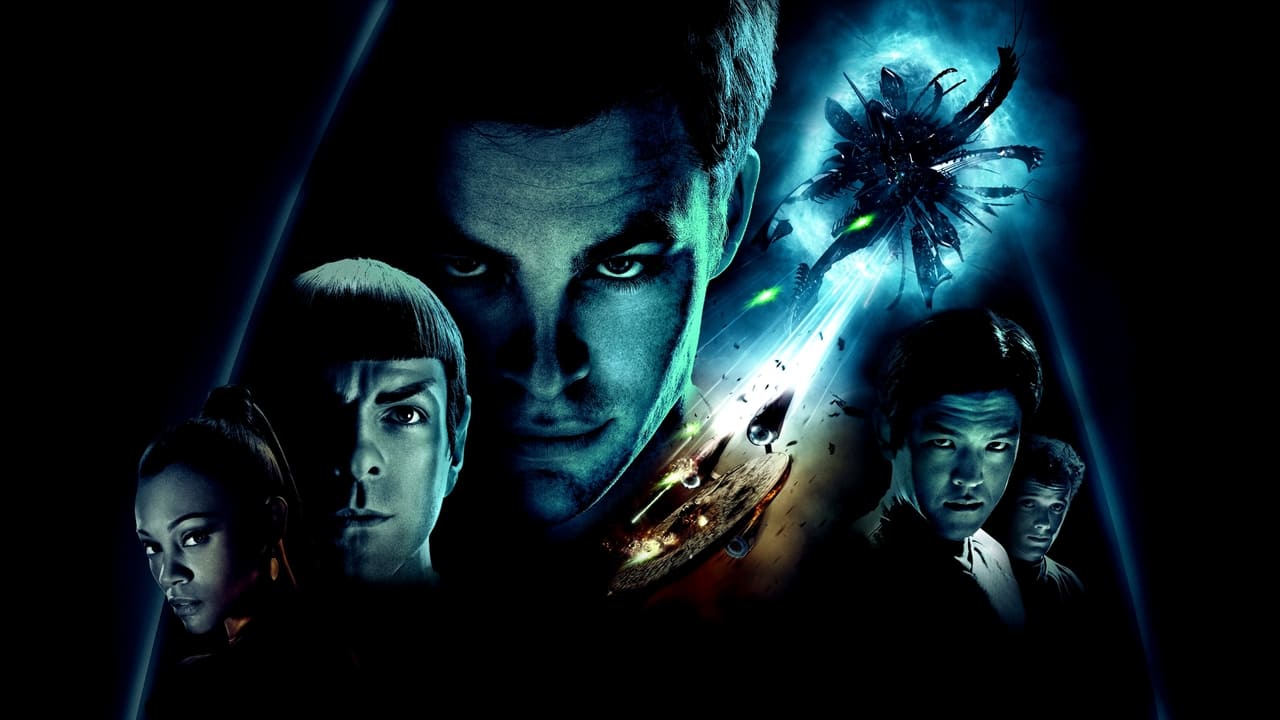
The genius of this film isn't in its plot—which involves time travel and a very angry Romulan named Nero (Eric Bana) seeking revenge—but in its casting. Re-casting iconic roles like Kirk and Spock was a gamble that should have backfired spectacularly. Instead, we got a group of actors who didn't just imitate their predecessors; they inhaled their essence and exhaled something fresh.
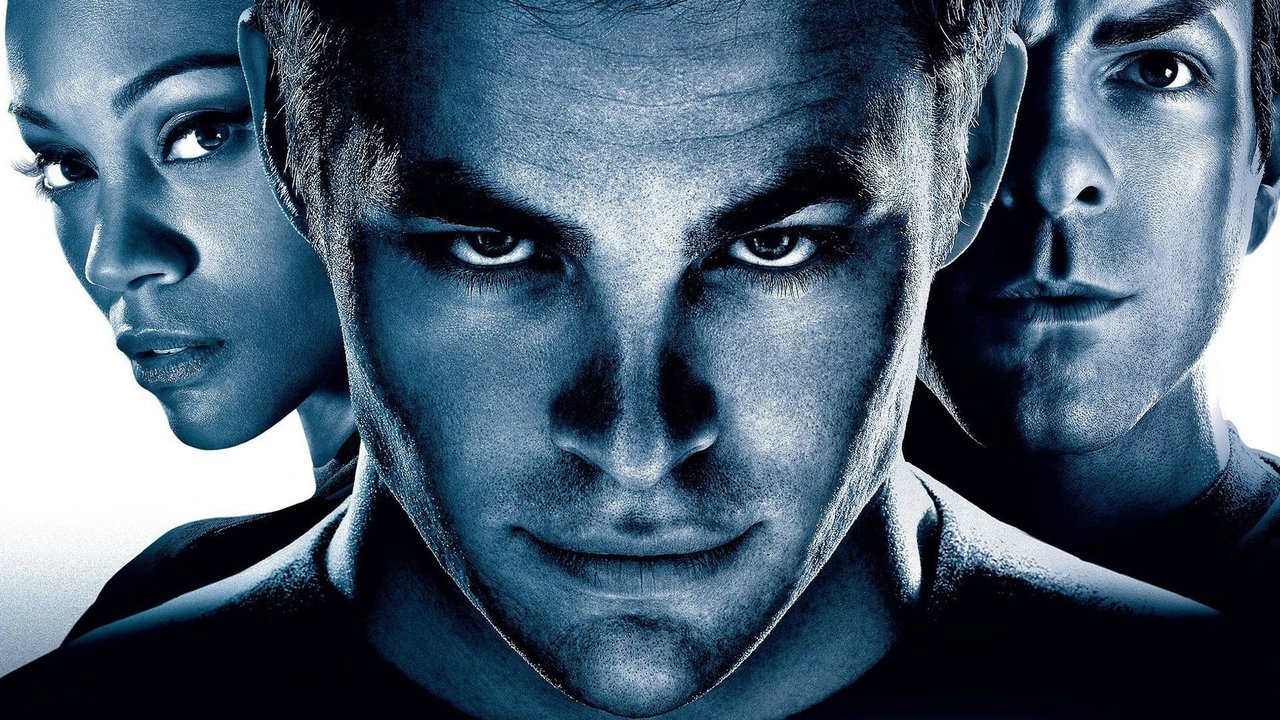
Chris Pine’s James T. Kirk is essentially a golden retriever with a motorcycle license and a death wish. He captures the swagger of Shatner without the hamminess, grounding the character’s arrogance in a desperate need to prove he belongs among the stars. Opposite him, Zachary Quinto provides a Spock that is vibrating with repressed rage. It’s a fascinating choice; this Spock isn't just a logic machine, he’s a man whose lid is barely staying on the pot.
The real secret weapon, however, is Karl Urban as Dr. 'Bones' McCoy. Urban is doing the cinematic equivalent of a high-wire act, channeling DeForest Kelley so perfectly that you’d swear he was possessed by the ghost of a 1960s country doctor. Every "Dammit, Jim!" feels earned, providing the necessary friction to keep the shiny, Apple-Store-chic bridge of the Enterprise from feeling too sterile.
The Physics of the Lens Flare
Looking back, 2009 was a tipping point for blockbuster cinema. We were moving away from the gritty, desaturated "shaky-cam" era of the mid-2000s and into something more vibrant. Abrams brought his signature lens flares—hundreds of them—which many critics at the time found distracting. Today, they feel like part of the film's optimistic, energetic DNA. The cinematography by Dan Mindel gives the film a tactile, "you are there" quality that digital cinematography often misses today.
The action choreography is where the film truly sings. Take the orbital skydive sequence over Vulcan. It’s a masterclass in tension, combining practical-looking stunt work with early-stage CGI that holds up remarkably well. You feel the wind resistance; you feel the vertigo. When the red shirts inevitably meet their doom, it isn't a joke—it’s a consequence of the high-stakes environment. The sound design plays a huge role here, too. Michael Giacchino’s score swaps the slow, regal horns of the original series for a driving, percussion-heavy anthem that practically demands you lean forward in your seat.
A Cult Within a Franchise
While this was a massive box office hit, it occupies a strange, cult-like space within the broader Star Trek fandom. To the "purists," this was "Star Wars in a Star Trek skin." But for a new generation, it was an entry point into a world that previously felt like a homework assignment. The "Kelvin Timeline" (named after the ship in the opening scene) was a clever writing trick by Alex Kurtzman and Roberto Orci to allow the filmmakers to play with the characters without erasing forty years of established canon.
Speaking of canon, the inclusion of Leonard Nimoy as Spock Prime is the bridge that makes the whole thing work. His presence gives the film a "blessing" that no amount of flashy effects could buy. Apparently, Nimoy was so impressed by the script’s respect for the Spock/Kirk friendship that he came out of acting retirement specifically for this role. Turns out, even the original logic officer couldn't argue with the emotional core of this script.
The production was also full of these weird, creative solutions. Did you know the Enterprise's engine room was actually a Budweiser brewery in Van Nuys, California? There’s something deeply satisfying about knowing that the most advanced warp drive in the galaxy is actually just a bunch of very large beer vats and shiny pipes. It gives the film a grounded, industrial weight that purely digital sets lack.
This film remains the gold standard for how to resurrect a dying franchise without losing its soul. It balances the "pew-pew" requirements of a summer blockbuster with a genuine curiosity about how different personalities clash and eventually coalesce into a family. It’s fast, it’s funny, and it’s unapologetically earnest. Whether you’re a lifelong fan or someone who thinks "Vulcan" is a type of luggage, this is a ride worth taking.
Live long and prosper—and maybe turn the brightness down on your TV just a little bit to compensate for those flares.
Keep Exploring...
-
Star Trek Into Darkness
2013
-
Star Trek Beyond
2016
-
Mission: Impossible III
2006
-
The Island
2005
-
Transformers
2007
-
TRON: Legacy
2010
-

Captain America: The First Avenger
2011
-

X-Men: First Class
2011
-

Ender's Game
2013
-
Man of Steel
2013
-
Oblivion
2013
-
Pacific Rim
2013
-
The Amazing Spider-Man 2
2014
-
X-Men: Days of Future Past
2014
-

Rise of the Guardians
2012
-
Serenity
2005
-
9
2009
-

Guardians of the Galaxy
2014
-

Starship Troopers
1997
-
The Matrix Revolutions
2003