Summer Wars
"Save the world, survive the family reunion."

The first time I saw a screenshot of Summer Wars, I assumed I was looking at two different movies. On one hand, you have these crisp, vibrant avatars that look like they were birthed from a Takashi Murakami fever dream—all neon colors and rounded, pop-art geometry. On the other, you have the lush, hand-painted greens of the Japanese countryside and a sprawling traditional estate filled with enough cousins, aunts, and grandmas to fill a stadium. It’s a jarring contrast, but that’s exactly where the magic happens. I watched this for the first time on a laptop with a dangerously loose charging port, and the constant fear that my screen would go black at any second added a weirdly appropriate layer of "tech anxiety" to the experience.

The Most Relatable Apocalypse Ever
At its heart, Summer Wars is a movie about a massive security breach, but it’s told through the lens of a chaotic family vacation. Ryunosuke Kamiki voices Kenji, a high school math prodigy who gets roped into a "summer job" by his crush, Natsuki (Hitomi Miyauchi). That job? Playing the part of her high-achieving fiancé to please her formidable great-grandmother, Sakae (Sumiko Fuji), during her 90th birthday celebration.
While Kenji is busy trying not to sweat through his shirt under the piercing gaze of the Jinnouchi matriarch, he accidentally solves a cryptic mathematical riddle sent to his phone. This inadvertently hands the keys to "OZ"—a ubiquitous virtual world that handles everything from social media to city traffic lights—to a rogue AI called Love Machine. What follows is a digital collapse that feels remarkably prescient. Long before we were arguing about the "Metaverse" or worrying about AI-generated chaos, director Mamoru Hosoda was showing us exactly how fragile a fully connected world can be. It turns out the greatest threat to humanity isn’t a robot with a laser; it’s a sentient algorithm that really likes playing poker.
Tradition Meets the Metaverse
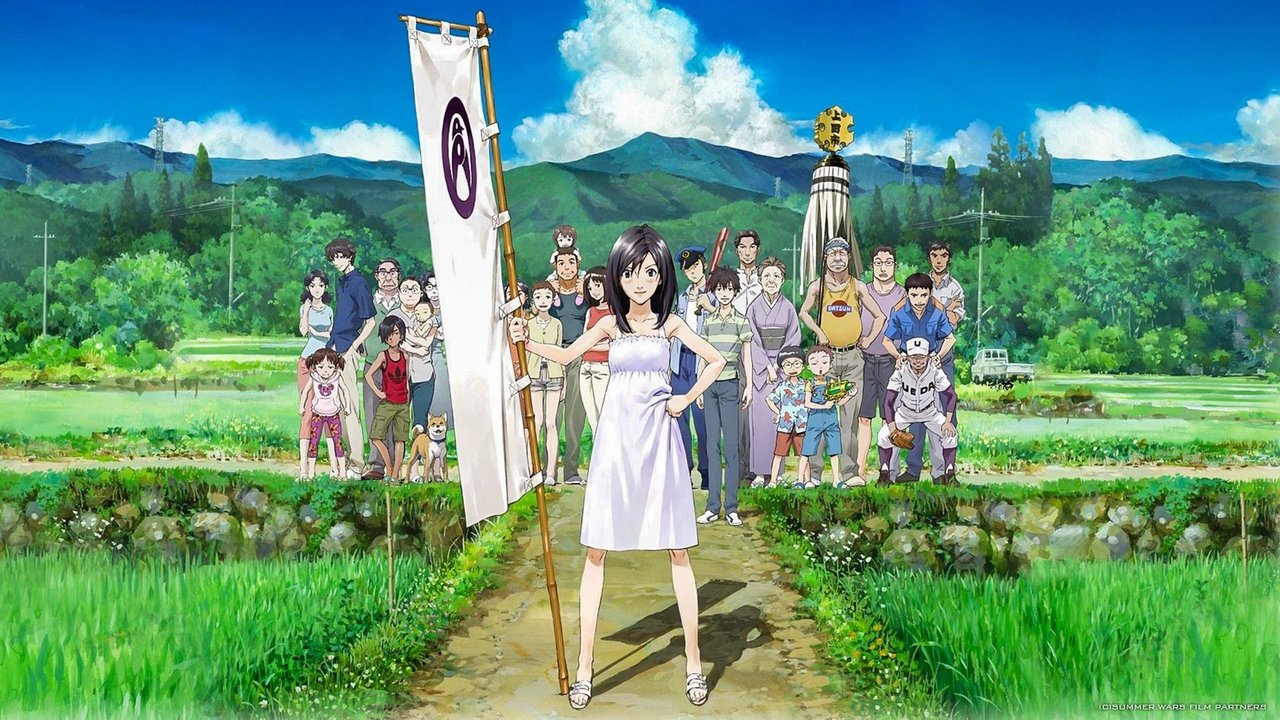
What makes this film such a standout in the 1990-2014 era of cinema is how it bridges the gap between the old world and the new. This was a period when the internet was moving from a desktop curiosity to a pocket-sized necessity, and Summer Wars captures that transition perfectly. The Jinnouchi family isn't some tech-savvy elite squad; they are a bunch of stubborn, loud, and deeply loving relatives who happen to include a professional baseball player, a fisherman, and a grumpy computer scientist.

The way Hosoda pits traditional family values against a digital threat is nothing short of brilliant. In one of my favorite sequences, the 90-year-old Sakae picks up a rotary phone and starts calling every influential contact she’s made over nine decades to keep the country from spiraling into panic. It’s a beautiful reminder that while code is powerful, social capital and human grit are the original "network." Seeing a grandmother use a landline to fight a super-intelligence is basically the ultimate 'OK Boomer' reversal.
The visual language here is top-tier Madhouse production. The OZ sequences use early-2010s CGI in a way that hasn’t aged a day, mostly because they aren't trying to look "real." They look like art. Meanwhile, the scenes in the real world are grounded and tactile. You can practically smell the summer rain and the heavy humidity of the Nagano prefecture.
The Hosoda Touch: Why It Sticks
If you feel a sense of déjà vu while watching the OZ segments, there's a good reason. Mamoru Hosoda previously directed a short film for the Digimon franchise called Our War Game!, and Summer Wars feels like the fully realized, adult-budget evolution of that concept. After famously being pushed off the director’s chair for Studio Ghibli’s Howl’s Moving Castle due to creative differences, Hosoda went on a tear to prove he was the heir apparent to the animation throne.
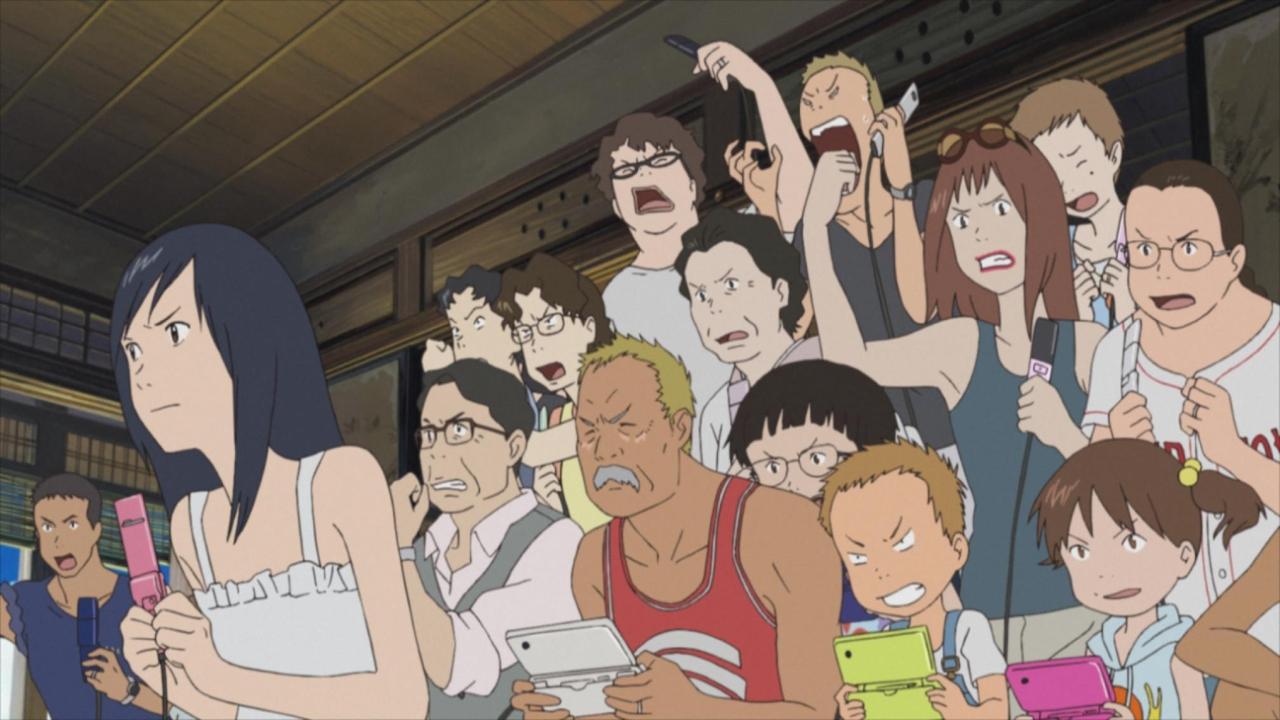
The screenplay by Satoko Okudera manages a Herculean task: it juggles about twenty different family members and makes you care about at least half of them. Even the "cool" cousin, Kazuma (Mitsuki Tanimura), who spends most of the movie in a dark room as a world-class virtual fighter, feels like a real kid dealing with real pressure.
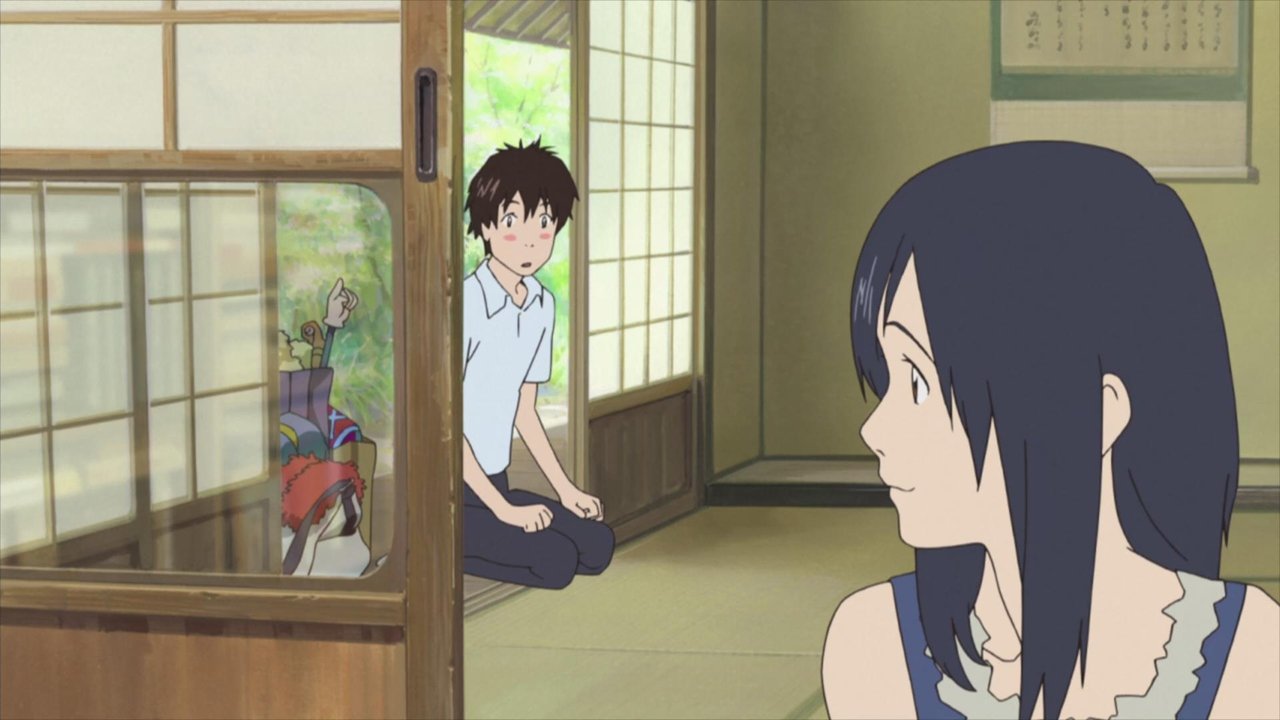
I’ll admit, the "fake fiancé" trope usually makes me want to roll my eyes into the back of my skull, but here it serves as a necessary anchor. It forces Kenji—an outsider—into the inner workings of a family that is just as complex and glitchy as the software he’s trying to fix. By the time the climax hits—which involves a high-stakes game of Koi-Koi (a Japanese card game) played for the fate of the planet—you’ll be leaning forward in your seat. The math-based hacking sequence is basically a sports movie for nerds, and it’s unironically thrilling.
Summer Wars is the rare sci-fi film that remembers that "technology" isn't just about silicon and fiber optics; it’s about the people using it. It’s a vibrant, high-energy masterpiece that manages to be a biting satire of our digital dependence and a warm hug of a family drama all at once. If you’ve ever wanted to scream at your router while your extended family asks why you aren't married yet, this movie will speak to your soul. It’s a joyous, visually stunning reminder that even when the world is ending, someone still needs to set the table for dinner.
Keep Exploring...
-
The Girl Who Leapt Through Time
2006
-
Wolf Children
2012
-
Ghost in the Shell 2: Innocence
2004
-
Final Fantasy VII: Advent Children
2005
-

Evangelion: 1.0 You Are (Not) Alone
2007
-
Evangelion: 2.0 You Can (Not) Advance
2009
-

Evangelion: 3.0 You Can (Not) Redo
2012
-
Resident Evil: Damnation
2012
-
Dragon Ball Z: Battle of Gods
2013
-
Lilo & Stitch 2: Stitch Has a Glitch
2005
-
A Scanner Darkly
2006
-

Superman/Shazam!: The Return of Black Adam
2010
-
Batman: The Dark Knight Returns, Part 1
2012
-
Justice League: Doom
2012
-

Batman: The Dark Knight Returns, Part 2
2013
-
Justice League: The Flashpoint Paradox
2013
-

Dragon Ball Z: Broly - The Legendary Super Saiyan
1993
-

Dragon Ball Z: Fusion Reborn
1995
-
Neon Genesis Evangelion: The End of Evangelion
1997
-

Cowboy Bebop: The Movie
2001