The Girl Who Played with Fire
"Hell hath no fury like a hacker framed."
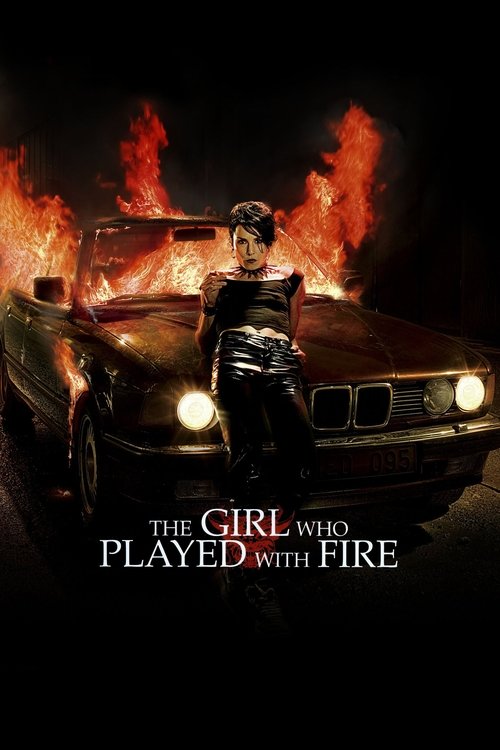
Before the American studios decided to give Stieg Larsson’s "Millennium" trilogy the slick, high-contrast David Fincher treatment, there was a raw, somewhat unpolished Swedish engine that could. By the time The Girl Who Played with Fire arrived in late 2009, the world was already obsessed with Lisbeth Salander. We had seen her exact a brutal, poetic revenge in the first film, and the sequel had the unenviable task of proving that this wasn't just a one-hit-wonder of "Nordic Noir." It had to turn a localized mystery into a sprawling conspiracy while keeping the character work as sharp as Lisbeth’s piercings.
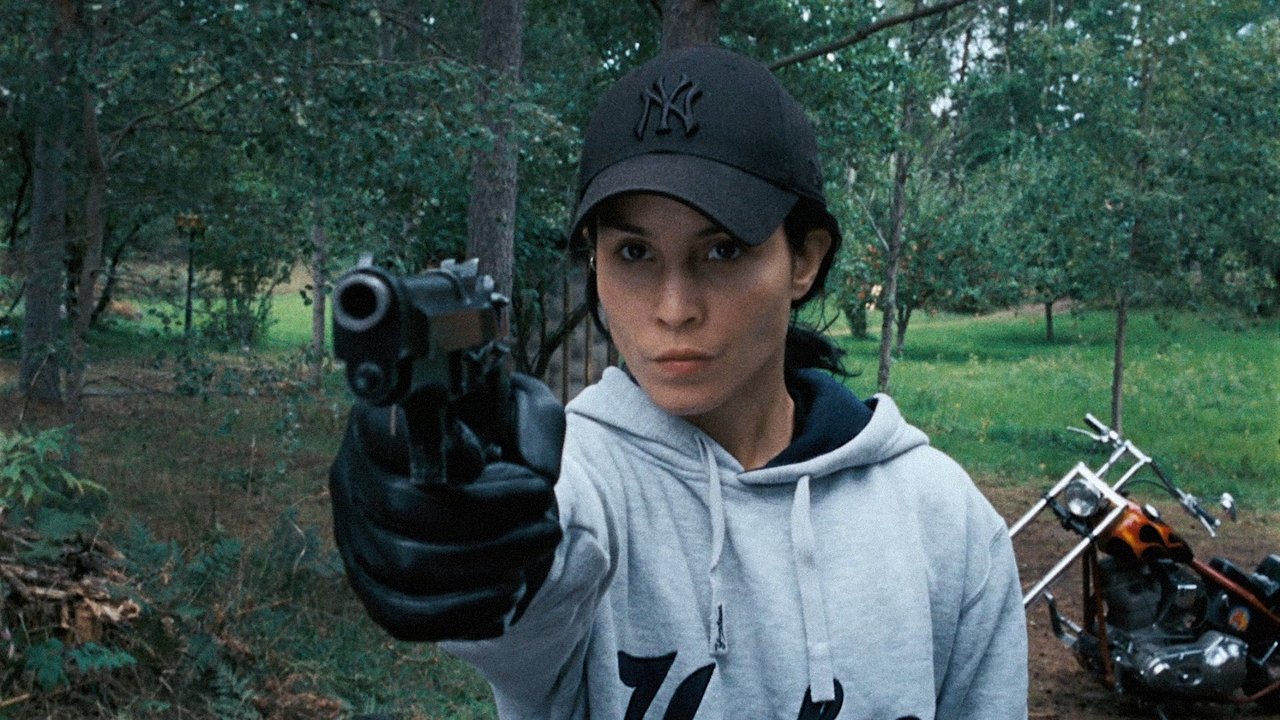
I watched this on a laptop in a public library while wearing a hoodie that smelled faintly of old coffee, which honestly felt like the appropriate uniform for a Salander marathon. There is something about the low-budget, grey-skied aesthetic of this era of Swedish filmmaking that makes you feel like you should be drinking lukewarm espresso and looking over your shoulder.
The Burden of Being a Phenomenon
The film picks up with Mikael Blomkvist (Michael Nyqvist) doing what he does best: poking the hornet's nest of the Swedish elite. This time, the nest involves sex trafficking and high-ranking officials. However, the narrative heart shifts more heavily toward Lisbeth (Noomi Rapace), who finds herself framed for a triple murder. Unlike the first film, where the duo worked side-by-side, Fire keeps them on parallel tracks for most of the runtime.
Looking back at this era (1990-2014), we see the tail end of the "indie thriller" before everything was swallowed by the $200 million franchise machine. This film was made for roughly $4.4 million. To put that in perspective, that’s about what a modern blockbuster spends on its craft services table for a month. Yet, the stakes feel significantly higher because the film doesn't rely on CGI safety nets. When Lisbeth is in danger, she feels vulnerable in a way that modern superheroes simply don't. Noomi Rapace delivers a performance that is all scar tissue and silence; she doesn't need a three-page monologue to tell you she’s pissed off.
Grit Over Glamour: The Action Aesthetic

The action choreography in The Girl Who Played with Fire is a fascinating study in "functional violence." Director Daniel Alfredson (taking over from Niels Arden Oplev) moves away from the stylized tension of the first film toward something more muscular and grounded. There is a specific fight sequence involving a massive blonde giant named Niedermann (played with chilling silence by Mickael Spreitz) and a retired boxer that feels incredibly heavy.
Every punch has a dull thud. There are no wire-work stunts or impossible physics here. Instead, the film embraces the physical reality of the era—messy, desperate, and occasionally clumsy. It captures the transition of the late 2000s where action started moving away from the "shaky-cam" chaos of the Bourne films and back toward a clearer, more intentional staging. The blonde giant looks like a rejected Bond henchman from the Roger Moore era, but somehow he’s terrifying because he simply won't stop moving. This lack of "Hollywood polish" is actually the film's greatest strength; it feels like you're watching real people commit real crimes in real basements.
From the Small Screen to the Global Stage
One of the most interesting behind-the-scenes stories about the Millennium trilogy is that the sequels were originally intended to be television miniseries episodes. When the first film became a global juggernaut, the producers scrambled to give the sequels a theatrical release. You can see this in the DNA of the film—the pacing is episodic, and the cinematography by Peter Mokrosinski has a functional, "made-for-TV" clarity that lacks the cinematic depth of a big-budget feature.

However, the "indie" spirit saved it from being generic. The production leaned into authentic locations across Sweden, avoiding the "tourist-trap" versions of Stockholm. They used actual Swedish journalists as consultants to ensure the Millennium magazine offices felt lived-in. This was a passion project that accidentally became a cash cow, and that sincerity shines through the somewhat flat lighting. It’s a film that knows it’s a middle chapter, but it refuses to just tread water. It digs into the backstory of Lisbeth’s father and her institutional trauma, effectively humanizing a character that could have easily become a cartoonish vigilante.
While it lacks the tight, gothic mystery structure of its predecessor, The Girl Who Played with Fire succeeds as a character study wrapped in a conspiracy. It’s a testament to how much you can achieve with a small budget and a lead actress who can hold the screen with a single glare. The film represents a specific moment in the late 2000s when "international" cinema wasn't just a niche category, but a dominant cultural force that forced Hollywood to take notice. If you can handle the bleakness, it’s a fire worth playing with.


Keep Exploring...
-

The Girl Who Kicked the Hornet's Nest
2009
-
The Girl with the Dragon Tattoo
2009
-
Felon
2008
-

Blood and Bone
2009
-

Undisputed III: Redemption
2010
-
In the Line of Fire
1993
-
The Net
1995
-
Breakdown
1997
-
The Score
2001
-

Basic
2003
-
Dead Man Down
2013
-
Batman: The Dark Knight Returns, Part 1
2012
-

Batman: The Dark Knight Returns, Part 2
2013
-

Cellular
2004
-

Revolver
2005
-
The Protector
2005
-
Lucky Number Slevin
2006
-
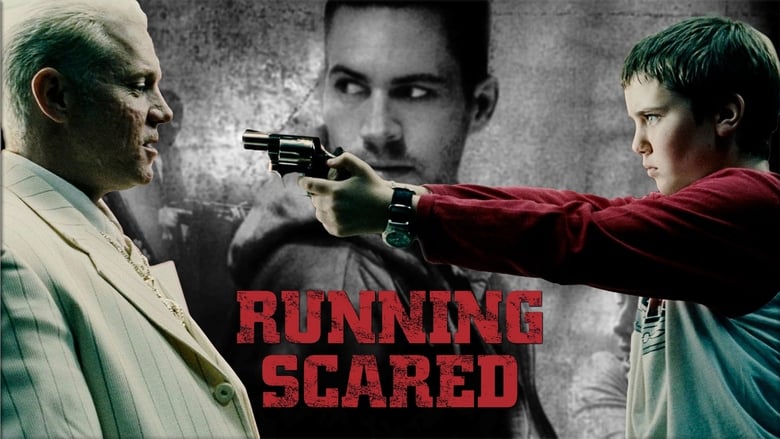
Running Scared
2006
-

Tell No One
2006
-

The Fast and the Furious: Tokyo Drift
2006