The Imaginarium of Doctor Parnassus
"A wager for the soul, fueled by pure imagination."
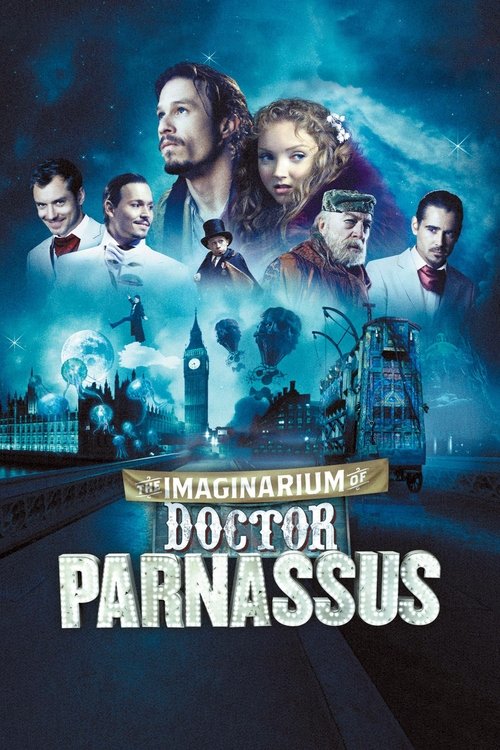
If you want to see a man try to outrun a literal curse, look no further than a rickety, horse-drawn stagecoach rattling through the neon-soaked, rain-slicked streets of 2009 London. It’s an image that shouldn't work—a Victorian fever dream colliding with a Starbucks-saturated reality—but that’s the specific brand of chaos Terry Gilliam has spent forty years perfecting. I watched this again recently while eating some particularly lukewarm leftover dim sum, and honestly, the slight indigestion only added to the hallucinatory quality of the whole experience.
The Imaginarium of Doctor Parnassus arrived at the tail end of a decade where fantasy was being streamlined into clean, digital franchises. We had Harry Potter and The Lord of the Rings, which were magnificent, but they were orderly. Gilliam, the man behind Brazil and Time Bandits, doesn’t do orderly. He does clutter. He does grime. He does "Adventure" not as a mapped-out quest, but as a desperate scramble through a psychic attic.
The Mirror and the Men Who Stepped Through
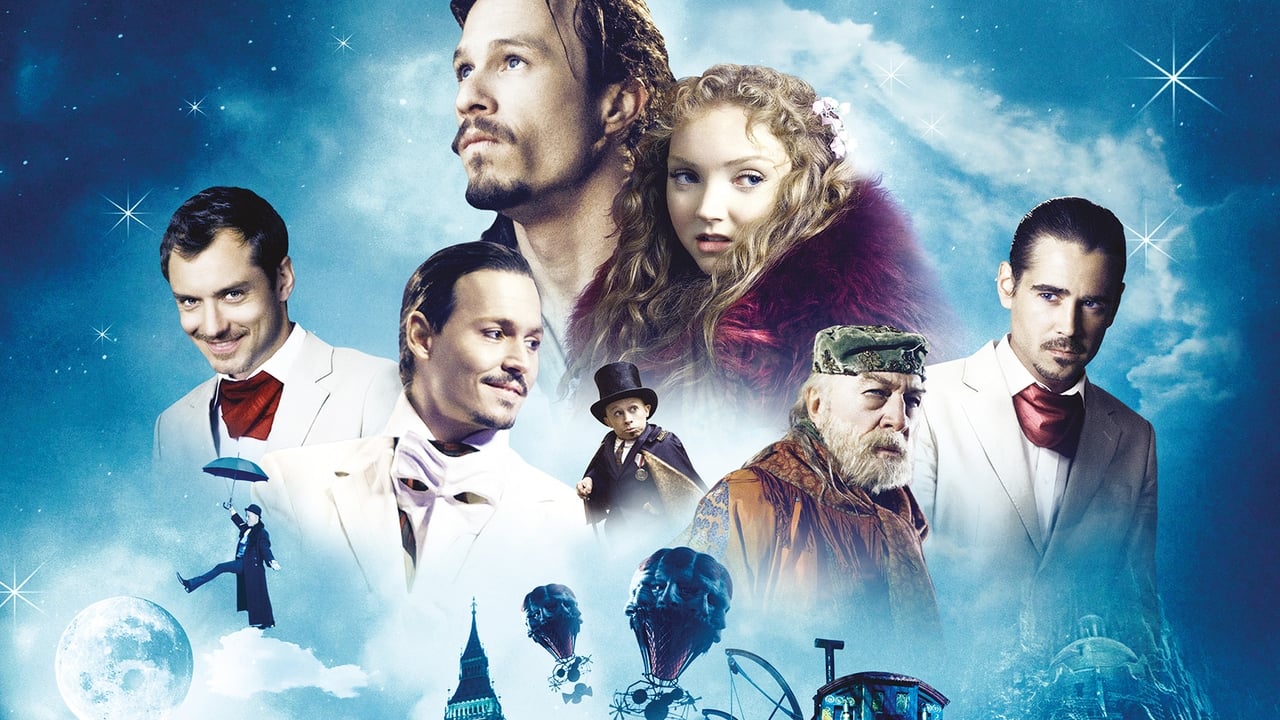
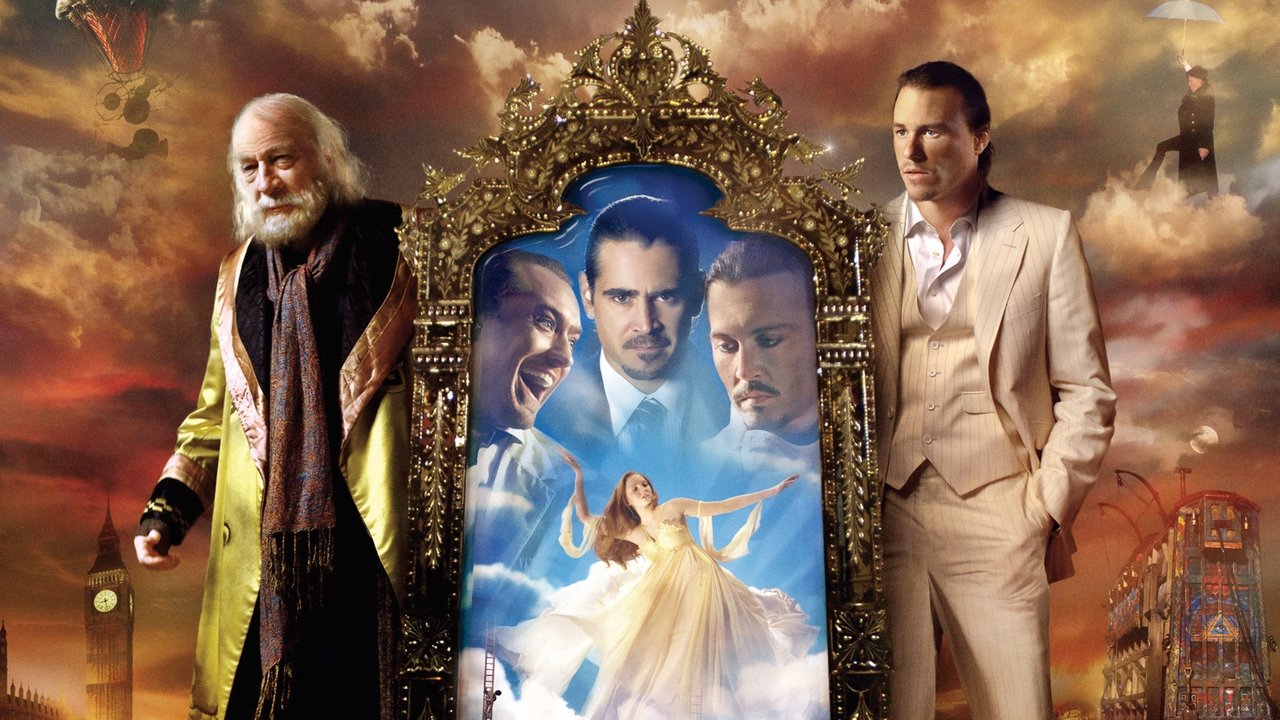
The elephant in the room—and the reason this film is cemented as a cult curiosity—is the tragic death of Heath Ledger during production. At the time, the industry assumed the film was dead. Gilliam, ever the survivor of "cursed" sets (lest we forget the first attempt at The Man Who Killed Don Quixote), decided to lean into the film’s own logic. Since Ledger’s character, Tony, travels through a magical mirror into a dreamscape, why shouldn't his face change?
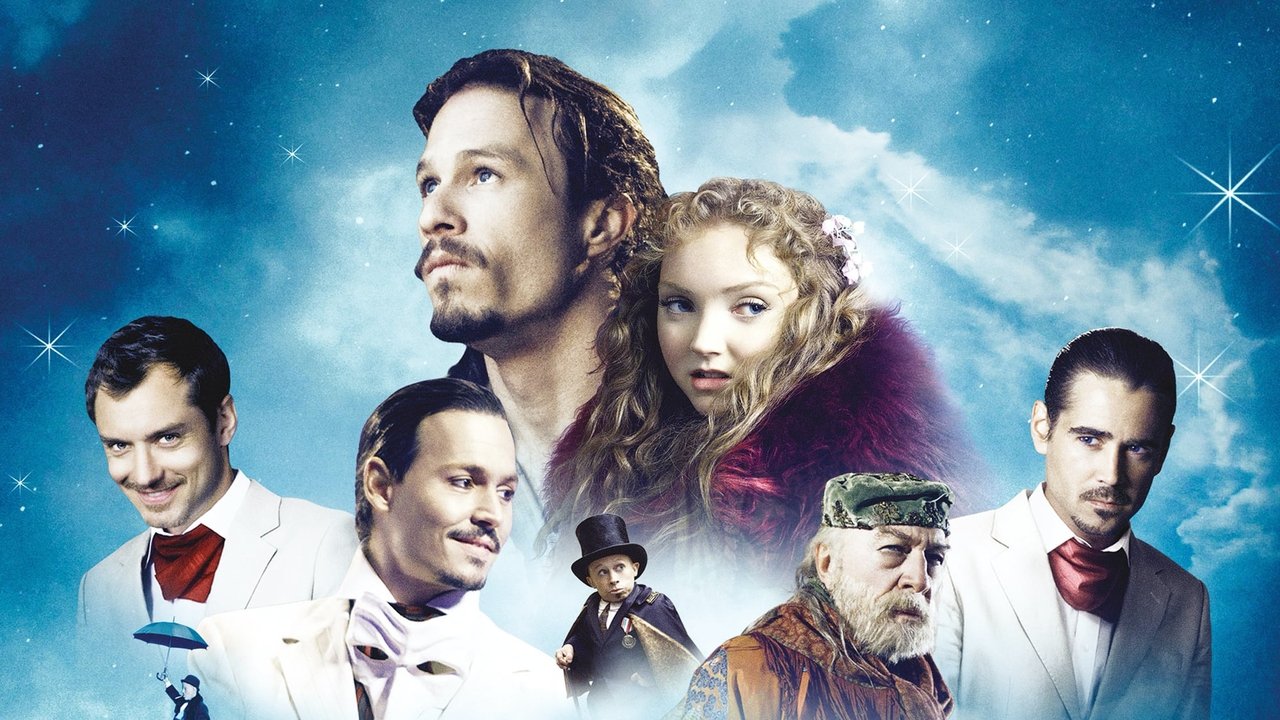
This led to the "Three Tonys": Johnny Depp, Jude Law, and Colin Farrell. It’s a solution born of necessity that somehow retroactively feels like it was the plan all along. Depp leans into the charm, Law into the frantic energy, and Farrell into the darker, more manipulative undercurrents of the character. Watching them pick up the baton is a bittersweet exercise in "what if," but it also turns the movie into a touching tribute. In a beautiful gesture that fits the spirit of the film’s carnival troupe, all three actors donated their salaries to Ledger’s young daughter.
A Baroque Wager in a Digital Age
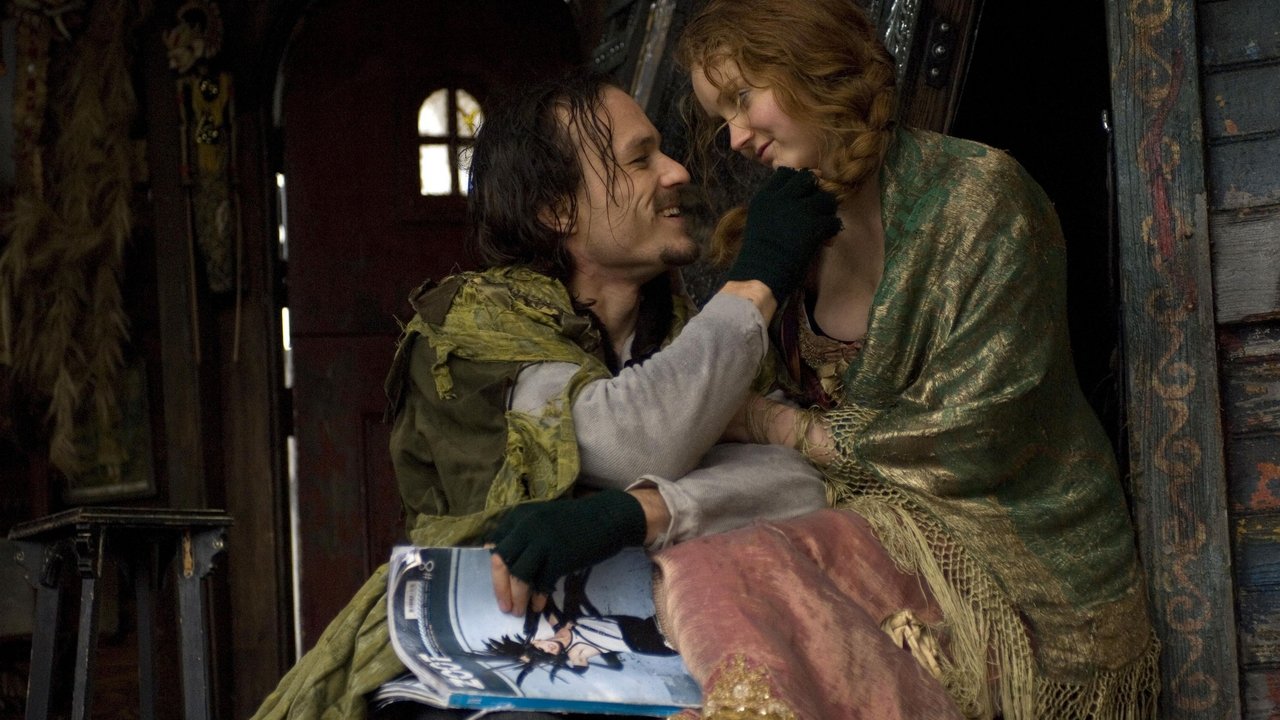
The plot is a classic Faustian bargain, but with more pulleys and trapdoors. Christopher Plummer plays the titular Doctor, an immortal storyteller who won his longevity in a bet with the Devil (Mr. Nick) but now faces the "collection" of his daughter, Valentina (Lily Cole). Plummer is spectacular here—he looks like a man who hasn't slept since the Renaissance, carrying the weight of a thousand forgotten stories.
Then there’s Tom Waits as Mr. Nick. If you were casting the Devil in 2009—or any year, really—you’d be a fool to look elsewhere. Waits doesn't play Satan as a monster, but as a bored, chain-smoking gentleman gambler in a bowler hat. He’s the highlight of the film for me. Every time he’s on screen, the movie finds its rhythm. The chemistry between him and Plummer feels like two old rivals who have been playing the same game of chess for five centuries and are both secretly terrified of it ending.
The Imaginarium itself is where Gilliam’s 2009-era CGI meets his 1970s Python-esque sensibilities. Terry Gilliam makes movies like a man who just discovered electricity and isn’t quite sure how to ground the wires. Some of the effects inside the mirror looked a bit "rubbery" even back then—giant jellyfish, ladders to the clouds, exploding landscapes—but they possess a handmade, theatrical charm that modern, polished Marvel-style VFX often lacks. It feels like a pop-up book come to life, or a dream you’d have after eating too much Stilton.
The Last Stand of the Analog Auteur
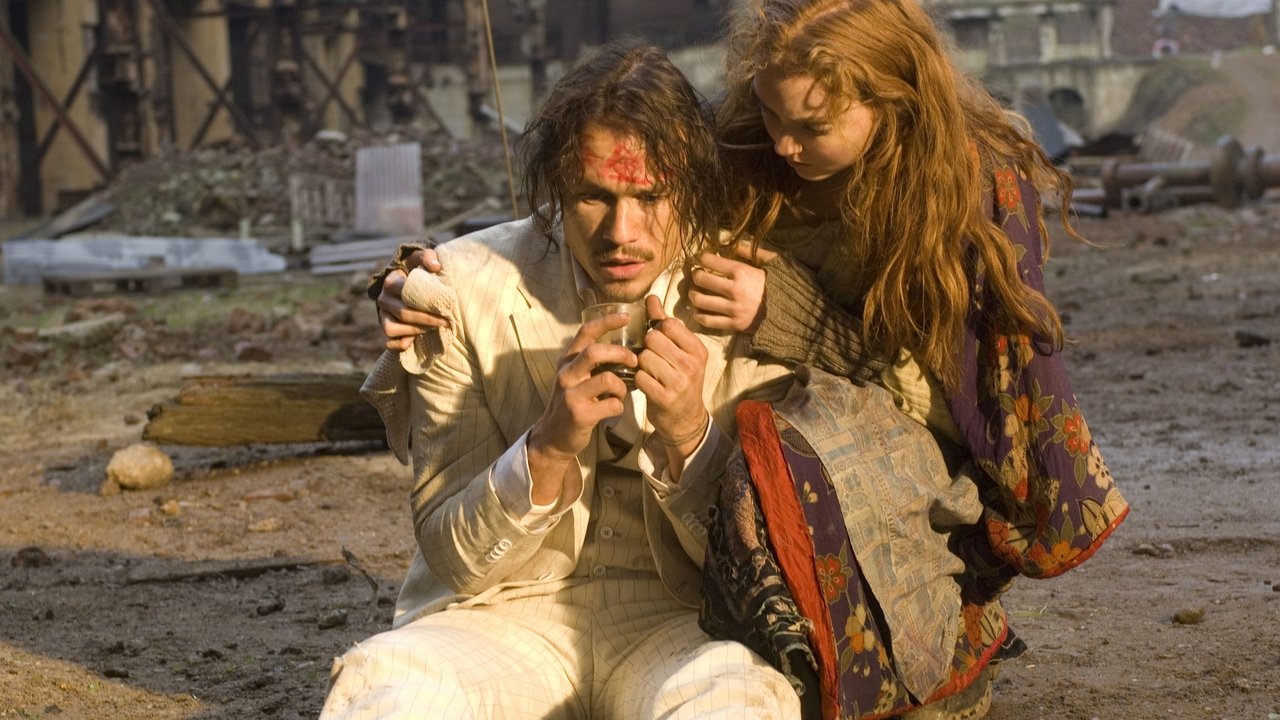
Looking back from the 2020s, Parnassus feels like a bridge between eras. It captures that transition where digital shooting was starting to replace film stock, yet Gilliam was still insisting on physical sets and practical grime. There's a supporting turn by a very young Andrew Garfield as Anton, the troupe’s barker, who brings a frantic, heart-on-sleeve vulnerability that foreshadows the star he’d become. And Verne Troyer as Percy, Parnassus’s cynical confidant, provides a dry, grounding wit that the movie desperately needs.
The film isn't perfect. The pacing in the second act gets as tangled as the Doctor’s beard, and the "mystery" of who Tony actually is can feel secondary to the visual pyrotechnics. But as an adventure, it succeeds because it understands that true wonder requires a little bit of danger and a lot of mess. It’s not a sterile "chosen one" narrative; it’s a story about the cost of stories.
Is it a cult classic? Absolutely. It’s a film that survived the death of its lead, the collapse of its financing, and the skepticism of a Hollywood that was moving away from "weird" original fantasies. It’s a movie for people who miss the era of the DVD "Special Features" disc, where you could spend three hours watching a director explain how they built a giant head out of cardboard and sheer stubbornness.
While it occasionally trips over its own ambition, The Imaginarium of Doctor Parnassus remains a vibrant, soul-filled artifact of late-2000s cinema. It’s a reminder that even when the production is cursed and the budget is tight, a genuine imagination can still pull a rabbit—or a Jude Law—out of a hat. If you've never seen it, find the biggest screen you can, ignore the slightly dated CGI, and let the Doctor show you something you haven't seen before.
Keep Exploring...
-
The Brothers Grimm
2005
-
Fear and Loathing in Las Vegas
1998
-
The Extraordinary Adventures of Adèle Blanc-Sec
2010
-
Time Bandits
1981
-

The Zero Theorem
2013
-

Sherlock Holmes: A Game of Shadows
2011
-
Rise of the Guardians
2012
-
The Adventures of Baron Munchausen
1988
-
The Golden Compass
2007
-
Pirates of the Caribbean: On Stranger Tides
2011
-

Red Riding Hood
2011
-
Season of the Witch
2011
-
Scooby-Doo 2: Monsters Unleashed
2004
-

The Polar Express
2004
-

Herbie Fully Loaded
2005
-
Arthur and the Invisibles
2006
-
The Pink Panther
2006
-
Stardust
2007
-
Inkheart
2008
-
The Chronicles of Narnia: Prince Caspian
2008