The Invention of Lying
"Honesty is the only policy. Until it isn't."
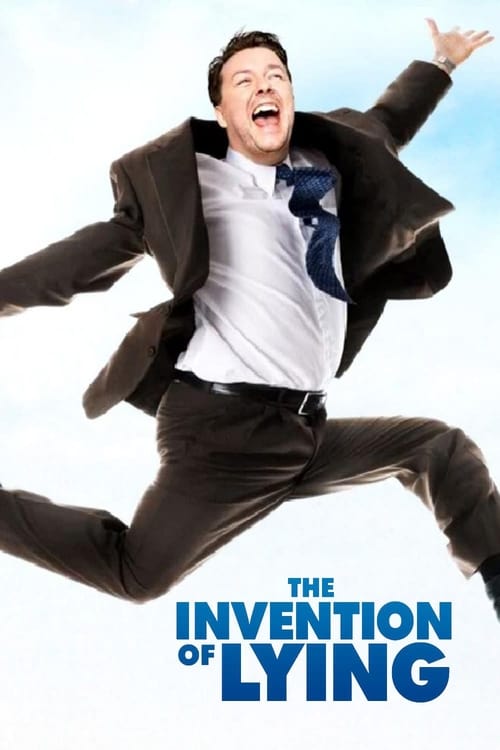
I’ll never forget the first time I saw the sign for the retirement home in this movie: "A Place for Sad Old People." It’s a throwaway visual gag, but it perfectly encapsulates the brutal, logic-driven universe Ricky Gervais and Matthew Robinson built for their 2009 experiment. There is no subtext in this world. There are no metaphors. If a waiter thinks you look like a bridge troll, they’ll tell you before they hand you the menu. It’s a high-concept playground that feels like a spiritual cousin to Liar Liar, but instead of a man cursed to tell the truth, we get a man who accidentally discovers the power of the "alternative fact."

I rewatched this recently on a Tuesday afternoon while my neighbor was loudly power-washing his driveway, and the rhythmic drone of the water somehow made the dry, deadpan delivery of the cast even funnier. It’s a film that thrives in that quiet, awkward space between what we think and what we say.
A World Without Filters
The premise is a masterclass in "What If?" screenwriting. In a world where lying hasn't been invented, Ricky Gervais plays Mark Bellison, a "genetically inferior" (the movie’s words, not mine) screenwriter who writes historical lectures because, well, fiction doesn't exist. When he’s on the verge of eviction and joblessness, his brain misfires, and he tells a bank teller he has $800 in his account instead of $300. The computer says one thing, but because people literally cannot conceive of a falsehood, she gives him the cash.
This is where the film is at its sharpest. The first thirty minutes are a rapid-fire succession of logic puzzles. Watching Mark realize he can essentially rewrite reality is a joy, mostly because Gervais plays it with a mix of terror and glee. Looking back from the vantage point of our current "post-truth" era, the film feels surprisingly prescient, though far more innocent. In 2009, the idea of one man being able to change the world's collective reality just by saying something loud enough was a whimsical comedy trope; today, it feels like a documentary about social media algorithms.
The "Man in the Sky" Pivot
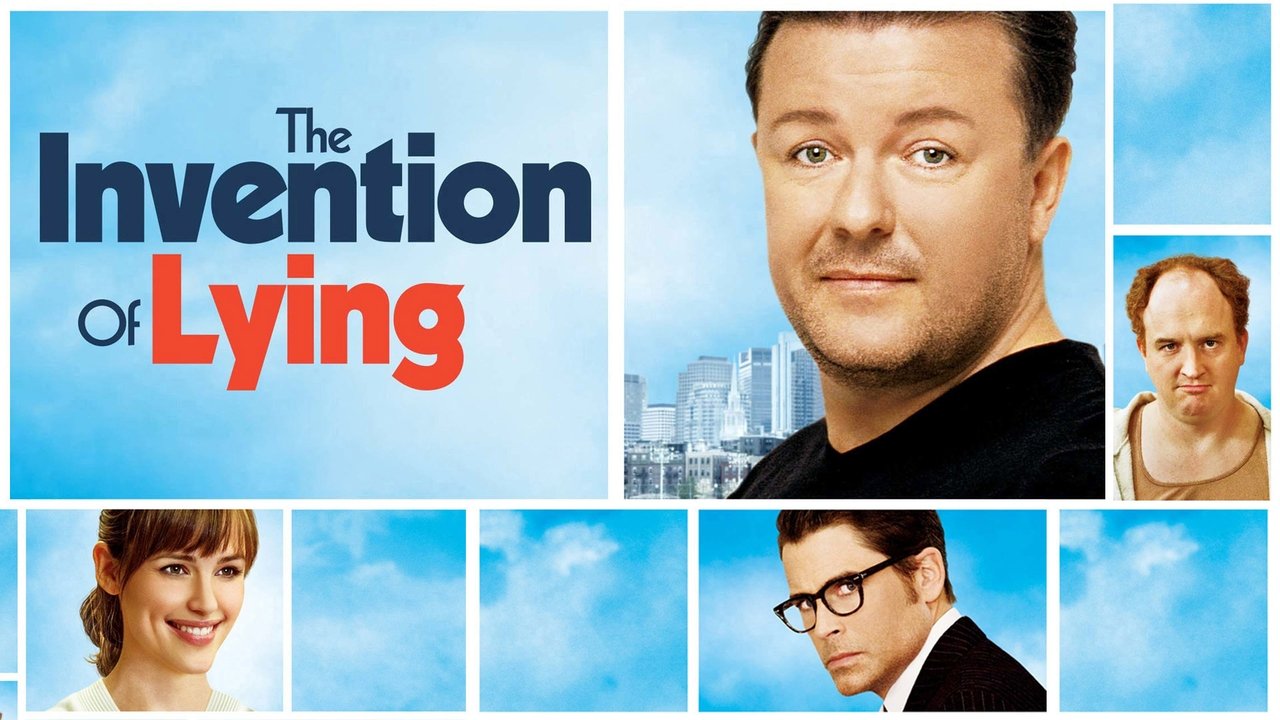
About halfway through, the movie takes a hard left turn from a workplace rom-com into a biting religious satire. To comfort his dying mother, Mark invents the concept of an afterlife—the "Man in the Sky" who gives you a mansion when you die. Suddenly, the loser screenwriter becomes a global prophet.
This is the part of the film that cemented its cult status, especially among the burgeoning "New Atheist" crowd of the late 2000s. I remember the DVD release being a huge talking point in online forums because of the "Ten Works of Prophecy" scene, where Mark tapes his "revelations" to the back of two Pizza Hut boxes. It’s a bold move for a studio comedy, shifting from lighthearted gags to a critique of organized religion. While it might feel a bit heavy-handed to some, I’ve always admired the sheer audacity of hiding a philosophical manifesto inside a movie where Jonah Hill plays a guy so honest about his depression it becomes a running joke.
The cast is an absolute embarrassment of riches. Jennifer Garner is tasked with the hardest role—playing a woman who is essentially "pure surface." She has to tell Mark he’s a loser to his face because she literally can’t lie, yet she makes the character sympathetic rather than robotic. Rob Lowe is in peak "literally" mode (years before Parks and Recreation) as the genetically perfect antagonist, and seeing a young Jonah Hill and Louis C.K. as Mark’s inner circle reminds you just how much comedic DNA was packed into this era of cinema.
The Evolution of the Cringe

Technically, the film is a product of its time. Shot on the Panavision Genesis digital camera, it has that clean, almost clinical look that defined late-2000s comedies before everyone pivoted back to the warmer, textured look of film or high-end Alexa sensors. It lacks a certain visual "pop," but the flatness actually serves the story. This is a flat world. There is no mystery, so why should there be shadows?
What’s fascinating is how the "cringe comedy" Gervais pioneered in the UK Office translates here. It’s softened for a Hollywood audience, but the edges are still there. The scene where Jeffrey Tambor, playing Mark’s boss, fires him while simultaneously admitting he’s a coward who hates confrontation is a perfect bit of comedic timing. It’s not about the jokes; it’s about the rhythm of the uncomfortable truth.
There are some elements that haven't aged as gracefully. The obsession with "genetic fatness" as the ultimate hurdle for the protagonist feels very 2009, and the romance plot occasionally drags when it moves away from the high-concept gags. However, the cameos are still top-tier. Keep an eye out for Edward Norton as a traffic cop and an uncredited Philip Seymour Hoffman as a bartender—small reminders of the industry respect Gervais carried at the time.
The Invention of Lying is a film that perhaps doesn't quite reach the heights of its own brilliant premise, but it remains a fascinating artifact of a time when original, high-concept comedies could still get a mid-range budget. It’s smart, occasionally mean-spirited, and deeply weird. If you can get past the somewhat conventional rom-com structure of the final act, you’re left with a movie that asks some genuinely uncomfortable questions about why we lie to each other—and more importantly, why we might need to. It’s a cult classic that deserves a spot on your shelf, if only for the Pizza Hut boxes.
Keep Exploring...
-

Ghosts of Girlfriends Past
2009
-
Ghost Town
2008
-

13 Going on 30
2004
-
Herbie Fully Loaded
2005
-
Just Like Heaven
2005
-

Bedtime Stories
2008
-
Bedazzled
2000
-

The Nutty Professor
1996
-
The Family Man
2000
-

Aquamarine
2006
-
Just My Luck
2006
-

Penelope
2007
-

17 Again
2009
-

Ruby Sparks
2012
-
Stranger Than Fiction
2006
-

Click
2006
-

It's a Boy Girl Thing
2006
-

Enchanted
2007
-
Evan Almighty
2007
-

When in Rome
2010