The Ugly Truth
"Honesty is the most dangerous aphrodisiac."
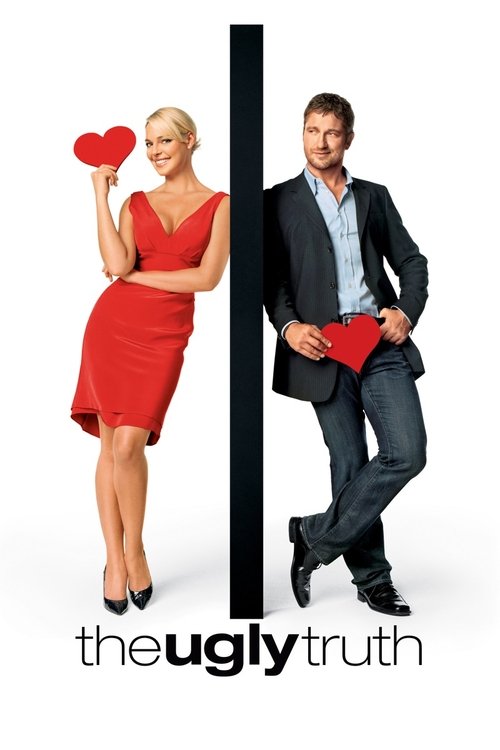
In the sunset years of the 2000s, Hollywood was gripped by a frantic need to "save" the romantic comedy by injecting it with a shot of pure, unadulterated testosterone. The genre had spent the previous decade drifting into a pastel-colored purgatory of weddings and misunderstandings, but by 2009, the industry decided that what audiences really wanted was a battle of the sexes that traded poetic declarations for R-rated cynicism. The Ugly Truth is the crown jewel of this specific, slightly grimy era—a film that desperately wants to be the "truth-teller" in a room full of liars, even if its own version of reality feels like it was ripped from a discarded Pick-Up Artist forum.

I recently rewatched this while sitting on a beanbag chair that was slowly leaking its Styrofoam guts across my floor, and I was struck by just how much of a 2009 time capsule this is. We’re talking about a world of chunky Blackberry phones, highlights that could be seen from space, and a version of gender politics that feels less like a conversation and more like a collision at a high-speed intersection.
The Leonidas of Love Advice
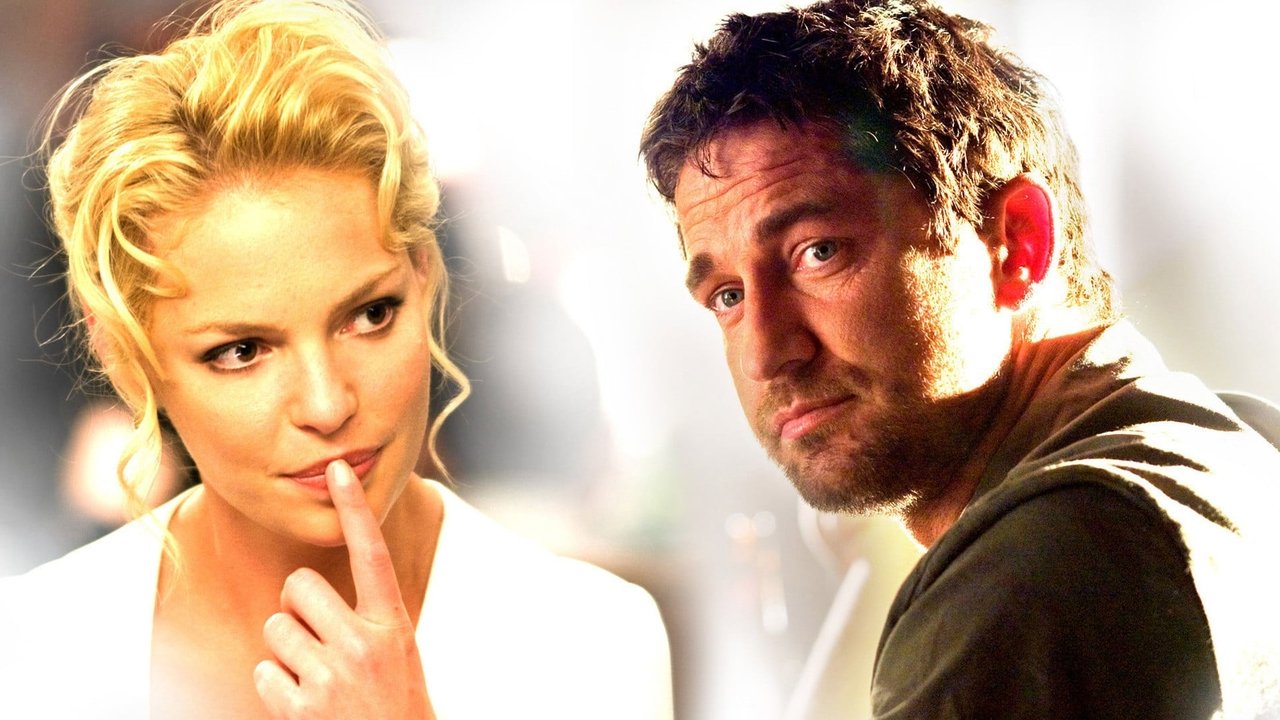
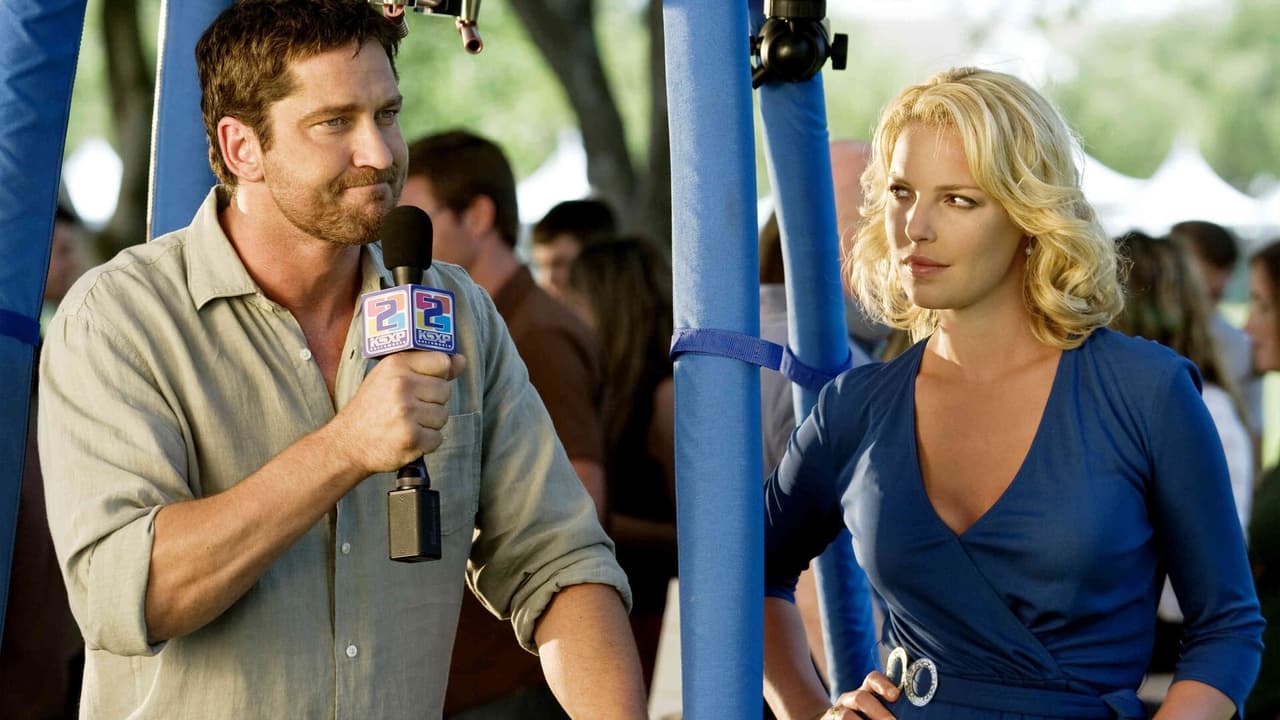
At the center of this hurricane is Katherine Heigl as Abby Richter, a morning show producer who manages her dating life with the same rigid spreadsheets she uses for her broadcast schedule. Heigl was at the absolute zenith of her "America’s Sweetheart" era here, having come off the massive success of Knocked Up and 27 Dresses. She’s a formidable comedic actress with a gift for high-strung physical comedy, even when the script asks her to do things that would make a vaudeville performer blush.
Her foil is Mike Chadway, played by Gerard Butler, who was fresh off kicking Persians into bottomless pits in 300. Here, he’s playing a public access host whose entire brand is telling women that men are incapable of loving anything other than a specific physical silhouette. It is a wildly aggressive performance. Butler leans into the role with a charming sort of thuggishness, turning Mike into the cinematic equivalent of a 1950s instructional video rewritten by a disgruntled frat boy.
The premise is pure Cyrano de Bergerac via Maxim magazine: Mike helps Abby land the "perfect" guy—the handsome, slightly bland neighbor played by Eric Winter—by teaching her how to suppress her personality and play into male primal instincts. It’s cynical, it’s loud, and somehow, it made a staggering $321.7 million against a $38 million budget. That is an insane return on investment, proving that in 2009, the "crude-but-honest" rom-com was a license to print money.
Behind the Shiny Veneer
Looking back, the production team behind this movie is actually a Rom-Com All-Star team. It was directed by Robert Luketic, the man who gave us the bright, feminist pop-art of Legally Blonde. Interestingly, the screenplay was co-written by Karen McCullah and Nicole Eastman; McCullah was part of the duo that penned 10 Things I Hate About You. You can see those sharper edges trying to poke through the glossy, high-definition sheen of Russell Carpenter’s cinematography. Carpenter, who won an Oscar for Titanic, gives Sacramento a golden, perpetual-afternoon glow that feels almost surreal today.
One of the more fascinating things about The Ugly Truth is its relationship with the DVD culture of the time. This was one of those "Unrated Edition" stalwarts that lived in the five-dollar bins at Walmart for a decade. The film leans heavily into the R-rating, particularly in the infamous vibrating underwear scene at a business dinner—a sequence clearly designed to rival the deli scene in When Harry Met Sally, though it trades the wit of the former for the broad slapstick of the latter.
While the leads get all the oxygen, the supporting cast actually keeps the movie afloat. John Michael Higgins and Bree Turner as the bickering co-anchors deliver some of the few genuinely clever moments of observational humor. They represent the "actual" ugly truth of long-term relationships far better than the main plot’s grand theories.
A Relic of the "Raunchy" Pivot
Does it hold up? That’s a complicated question. On one hand, the chemistry between Heigl and Butler is undeniable. They are both incredibly charismatic performers who manage to sell a romance that, on paper, is about as romantic as a colonoscopy performed by a drill sergeant. On the other hand, the film’s central thesis—that women must lobotomize their intellect to find love—has aged like a carton of milk left in a hot car.
Yet, there’s an honesty to its commercialism. It captures a moment when the mid-budget studio comedy was still a titan of the box office before the MCU formula swallowed the world. It’s a film that trusts its stars to carry the weight, even if the script is running on fumes. It was a blockbuster because it leaned into the "battle of the sexes" tagline with both feet, regardless of how messy that battle became.
If you can separate the 2009 "men are dogs/women are crazy" tropes from the actual performances, there’s a breezy, well-paced comedy here that doesn't overstay its welcome. It’s a fascinating look at the career trajectory of Katherine Heigl, a woman who was briefly the most powerful force in the genre, and Gerard Butler, who proved he could trade his spear for a headset and still dominate the screen. It’s not a masterpiece, but it’s a loud, shiny, and weirdly compelling artifact of a time when we thought the "ugly truth" was just a series of dirty jokes and a happy ending.
Keep Exploring...
-

Monster-in-Law
2005
-

Legally Blonde
2001
-
27 Dresses
2008
-
Killers
2010
-
He's Just Not That Into You
2009
-

The Bounty Hunter
2010
-
Life As We Know It
2010
-
The Break-Up
2006
-

Yes Man
2008
-
Along Came Polly
2004
-
The Princess Diaries 2: Royal Engagement
2004
-

She's the Man
2006
-
Music and Lyrics
2007
-

High School Musical 3: Senior Year
2008
-
The House Bunny
2008
-
What Happens in Vegas
2008
-

17 Again
2009
-
Bride Wars
2009
-

Hannah Montana: The Movie
2009
-
The Proposal
2009