13 Assassins
"Total massacre. Total honor. Total cinema."
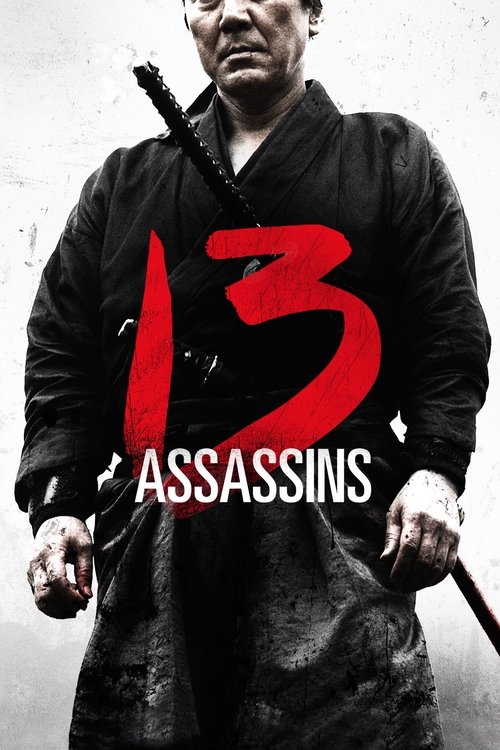
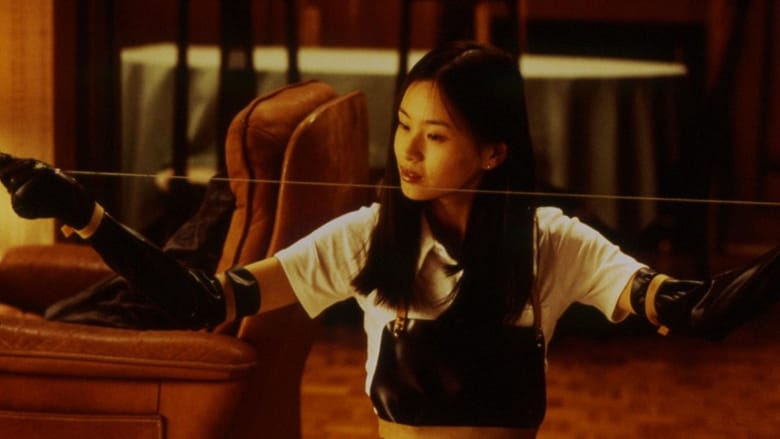
The sight of a woman who has had her tongue cut out and her limbs removed, writing a plea for vengeance with a brush held in her teeth, isn't exactly what most people expect from a "prestige" period drama. But then again, Takashi Miike (the mind behind Audition and Ichi the Killer) has never been interested in making your grandfather’s samurai movies. When this hit the festival circuit in 2010, there was a palpable sense of "Wait, the guy who made a movie about a man with needles in his skin just made a Kurosawa-level masterpiece?" It felt like a glitch in the Matrix, or at least a very high-budget apology for some of his weirder direct-to-video experiments.

I watched this for the third time last Tuesday while my neighbor was power-washing his driveway—the constant hum outside actually synced up surprisingly well with the low-frequency dread of the film's first hour. It reminded me that 13 Assassins is a movie of two very distinct halves: a slow-burn political thriller that turns into a 45-minute explosion of mud, blood, and swinging steel.
The Monster in the Silk Robes
The story is a remake of a 1963 black-and-white classic, but Miike injects it with a 21st-century edge that feels sharpened on a whetstone. We are in the waning years of the Shogunate, a time when samurai are essentially glorified bureaucrats. Into this peace comes Lord Naritsugu (Goro Inagaki), a man so bored by his own privilege that he spends his days raping, murdering, and mutilating his subjects for sport. Goro Inagaki gives one of the most unsettling performances of the 2000s; he doesn’t play a cackling villain, but rather a bored trust-fund kid with a katana and no moral compass.
To stop him from ascending to a position of ultimate power, a veteran samurai named Shinzaemon (Koji Yakusho) is hired to orchestrate a covert assassination. Koji Yakusho, whom you might know from Babel or Shall We Dance?, brings a weary, soulful gravity to the role. He knows the age of the samurai is over, and he’s looking for a meaningful way to exit the stage. He recruits a motley crew, including his nephew (Takayuki Yamada) and a wild, forest-dwelling wanderer named Koyata (Yūsuke Iseya), who provides the film’s only (and very strange) supernatural undertones.
Turning a Village into a Meat Grinder
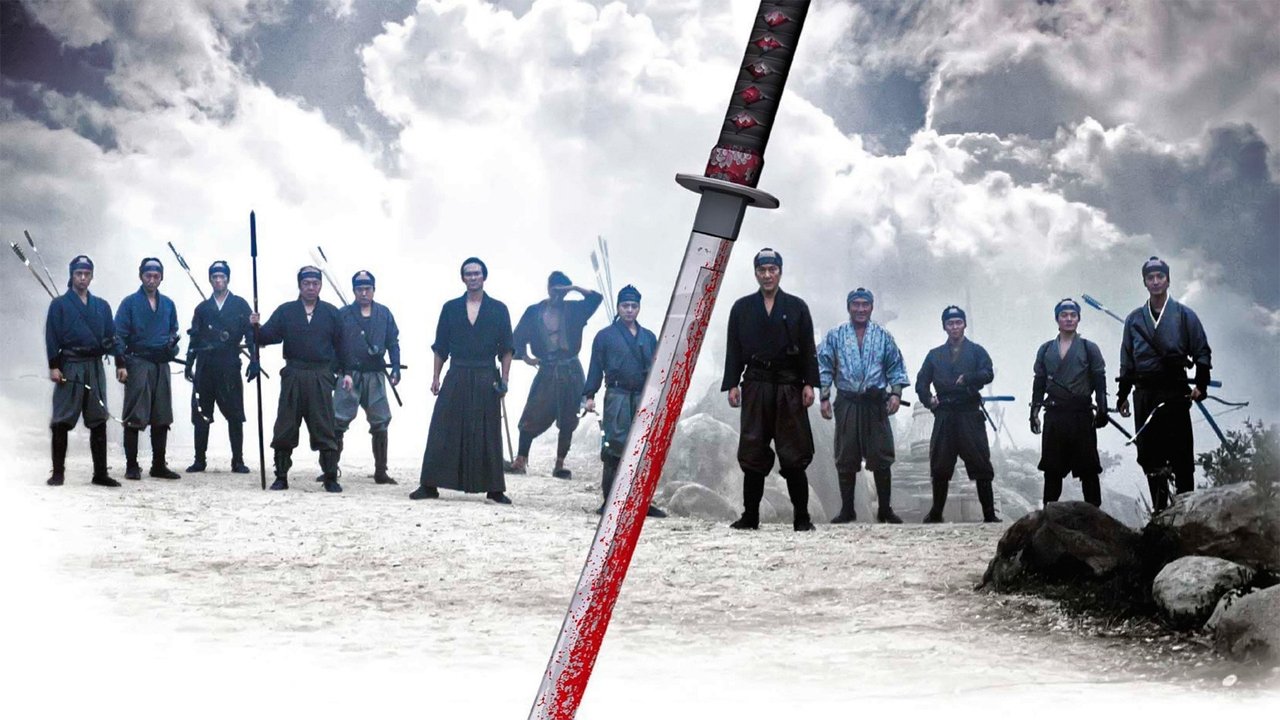
If the first hour is the fuse, the final 45 minutes is the powder keg. The assassins lure Naritsugu and his army of 200 guards into a small mountain village that they have rigged with traps, hidden doors, and exploding bridges. Looking back from our current era of CGI-heavy superhero brawls, the action here feels incredibly grounded and heavy. You can almost feel the weight of the wet wool and the clatter of wood.
Miike utilizes the 2010-era technology perfectly. While there is digital enhancement—most notably a sequence involving flaming bulls that looks a little like a PlayStation 3 cutscene by today’s standards—the vast majority of the carnage feels practical. It’s a masterclass in geography; even as thirteen men fight hundreds, you always know exactly where everyone is. The editing doesn't hide the choreography; it celebrates it. It’s a symphony of "clink-shink-thud" that makes modern "shaky-cam" action look like a toddler's home movie.
The DVD Era Legacy
This was a film that flourished in the waning days of the "prestige DVD" era. I remember the special features on the Magnet release detailing how they built the entire village set from scratch just to tear it apart. The production team, led by producer Shigeji Maeda, really leaned into the "old school" feel, hiring Hiroki Matsukata (a legend of 1960s yakuza cinema) to play the master swordsman Kuranaga. His presence connects the film to the history it’s trying to emulate.
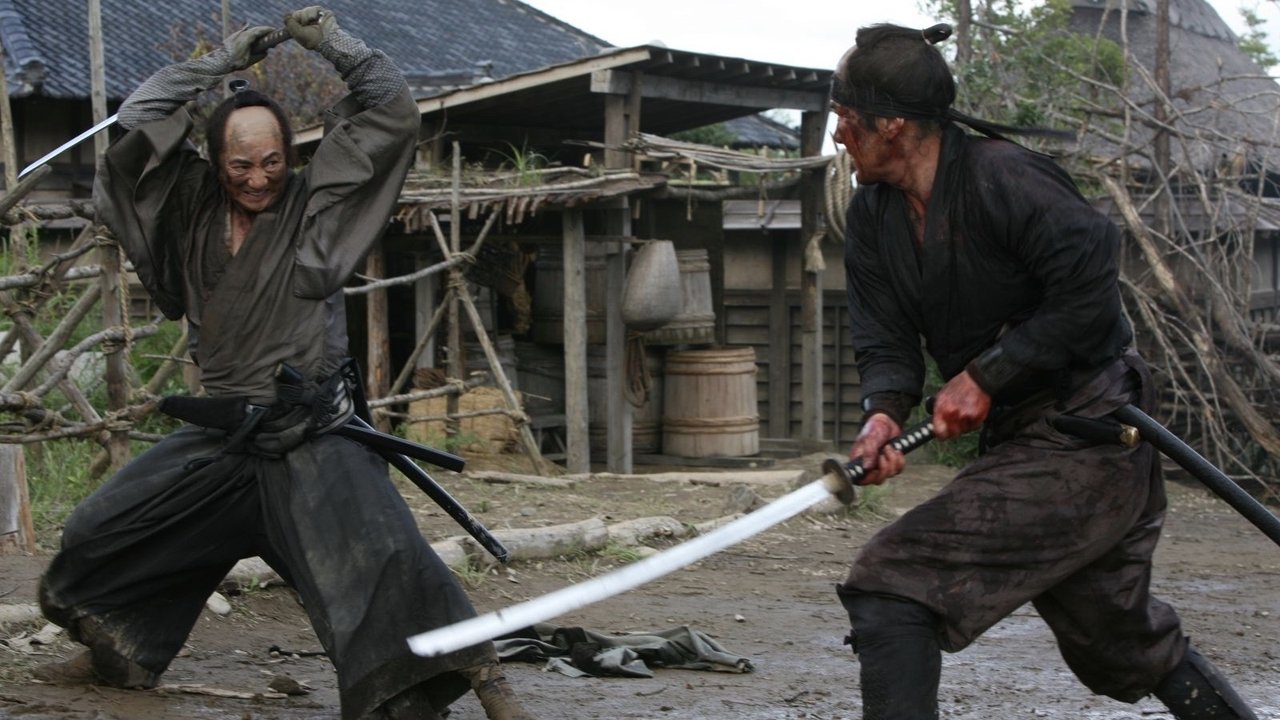
Interestingly, the film was released right as the "extreme" J-horror wave was cooling off. Miike proved here that he wasn't just a provocateur; he was a stylist of the highest order. He took the "men on a mission" trope (think The Dirty Dozen or The Seven Samurai) and stripped away the romanticism. In 13 Assassins, there are no clean kills. People slip in the mud. Swords get notched and useless. By the end, the "heroes" look less like noble warriors and more like coal miners who have had a very, very bad day at the office.
It’s rare to find an action film that treats its audience's intelligence and its characters' mortality with such equal respect. While the pacing in the middle might feel a bit deliberate for the "skip-to-the-good-parts" crowd, the payoff is one of the most rewarding sequences in modern cinema history. It’s a bloody, brilliant reminder that sometimes, to save the future, you have to be willing to get your hands—and everything else—absolutely filthy. If you’ve missed this one in the shuffle of the last decade, find the biggest screen you can and take up your sword.

Keep Exploring...
-
All Is Lost
2013
-
The Edge
1997
-
The Count of Monte Cristo
2002
-
House of Flying Daggers
2004
-
The Boy and the Beast
2015
-
Days of Thunder
1990
-
Maverick
1994
-
Executive Decision
1996
-
The Karate Kid
2010
-
The Grey
2012
-
Audition
2000
-

Evangelion: 1.0 You Are (Not) Alone
2007
-
Evangelion: 2.0 You Can (Not) Advance
2009
-

Evangelion: 3.0 You Can (Not) Redo
2012
-
Valhalla Rising
2009
-
Centurion
2010
-

King Kong
2005
-
Kingdom of Heaven
2005
-
Red Cliff
2008
-

Wizards of Waverly Place: The Movie
2009