Alice in Wonderland
"Down the rabbit hole, into the digital machine."
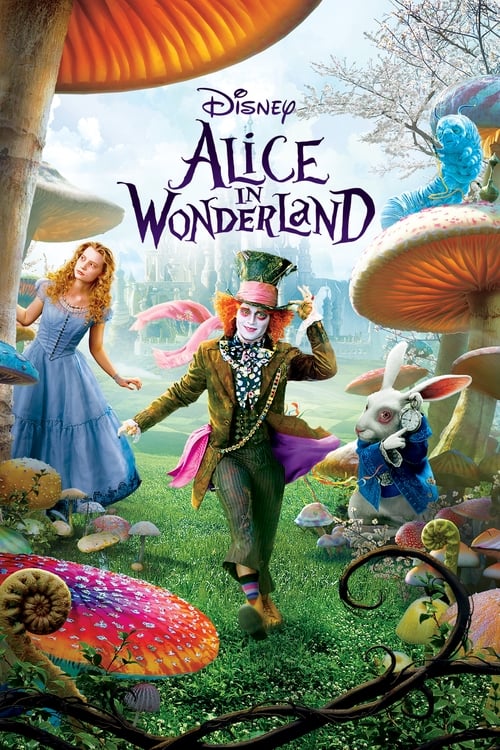
In the spring of 2010, you couldn't walk into a cinema without being handed a pair of slightly greasy plastic glasses. We were in the thick of the post-Avatar gold rush, a fever dream where every studio executive convinced themselves that if a movie wasn’t popping out of the screen, it didn't exist. Tim Burton’s Alice in Wonderland was the first true test of whether audiences would show up for the spectacle alone, or if we were just addicted to the novelty of depth. I went in with a bucket of popcorn and a healthy dose of skepticism, largely because I watched this while my radiator at home was making a rhythmic clanking sound that perfectly synced with the Mad Hatter's Futterwacken dance, and frankly, the radiator had more soul.
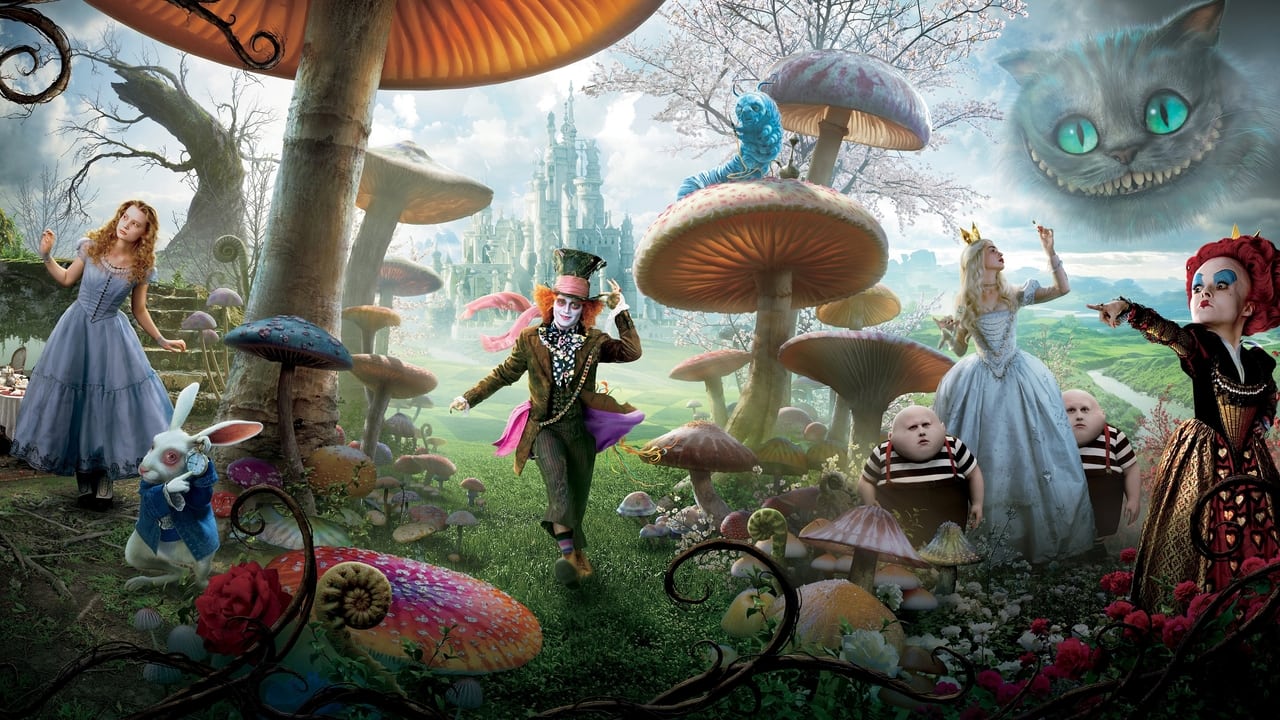
Looking back, this film is a fascinating relic of that "Transitional Digital" era. It’s the moment where the tactile, gothic whimsy of Edward Scissorhands (1990) officially gave way to the saturated, green-screen maximalism that would define the next decade of blockbusters. It wasn't just a movie; it was the blueprint for the entire Disney live-action remake machine that is still churning today.
A World of High-Gloss Nonsense
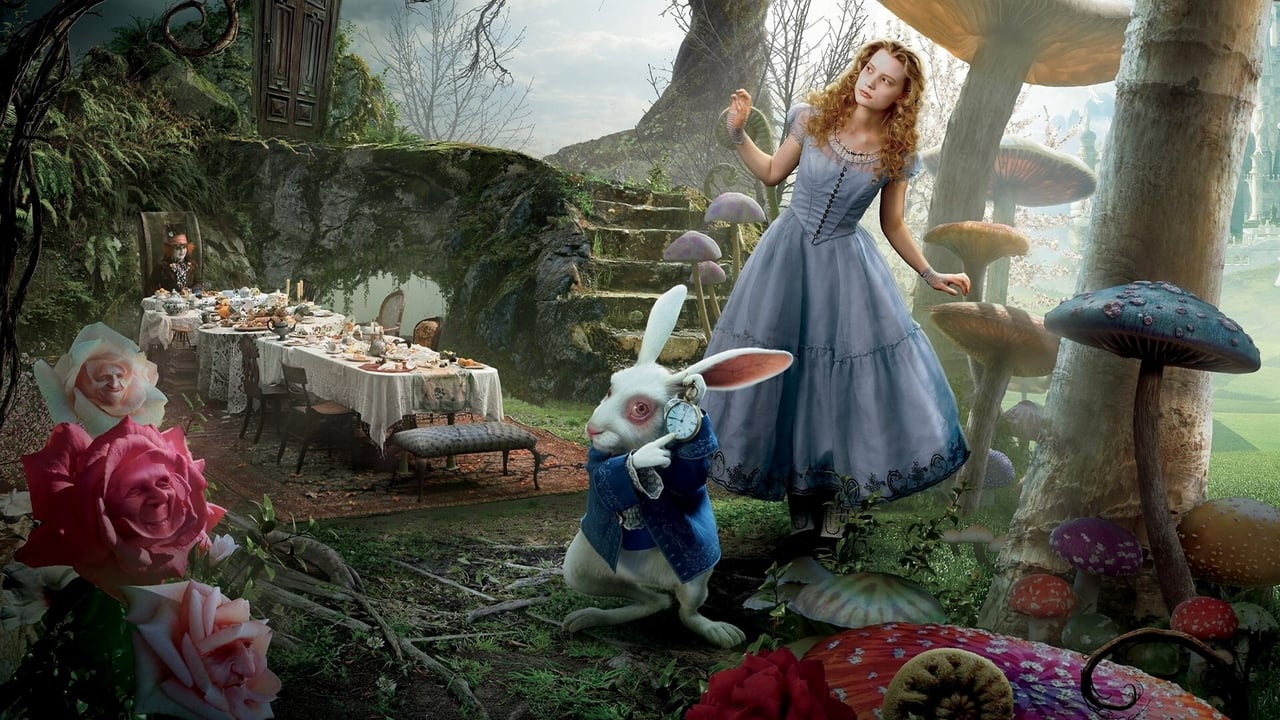
The plot isn't the episodic, drug-fueled logic puzzle of Lewis Carroll’s book. Instead, screenwriter Linda Woolverton (who also wrote The Lion King) reshapes it into a standard "Chosen One" adventure. Mia Wasikowska’s Alice is now nineteen, fleeing a stifling marriage proposal and tumbling back into "Underland"—a place she visited as a child but has since dismissed as a dream. The stakes aren't about curiosity; they’re about a prophecy, a Vorpal Sword, and a CGI dragon.
The adventure itself feels massive, but strangely weightless. Because almost everything on screen was rendered in a computer—from the bioluminescent mushrooms to the bulbous heads of Matt Lucas as Tweedledee and Tweedledum—there’s a disconnect between the actors and their environment. Mia Wasikowska does an admirable job playing the "straight man" to a world of digital insanity, but the film often feels like it’s suffocating Alice under a pile of expensive screensavers. The journey has the momentum of a video game; Alice must collect the MacGuffin, meet the NPCs, and level up for the final boss fight.
The Burton-Depp Industrial Complex
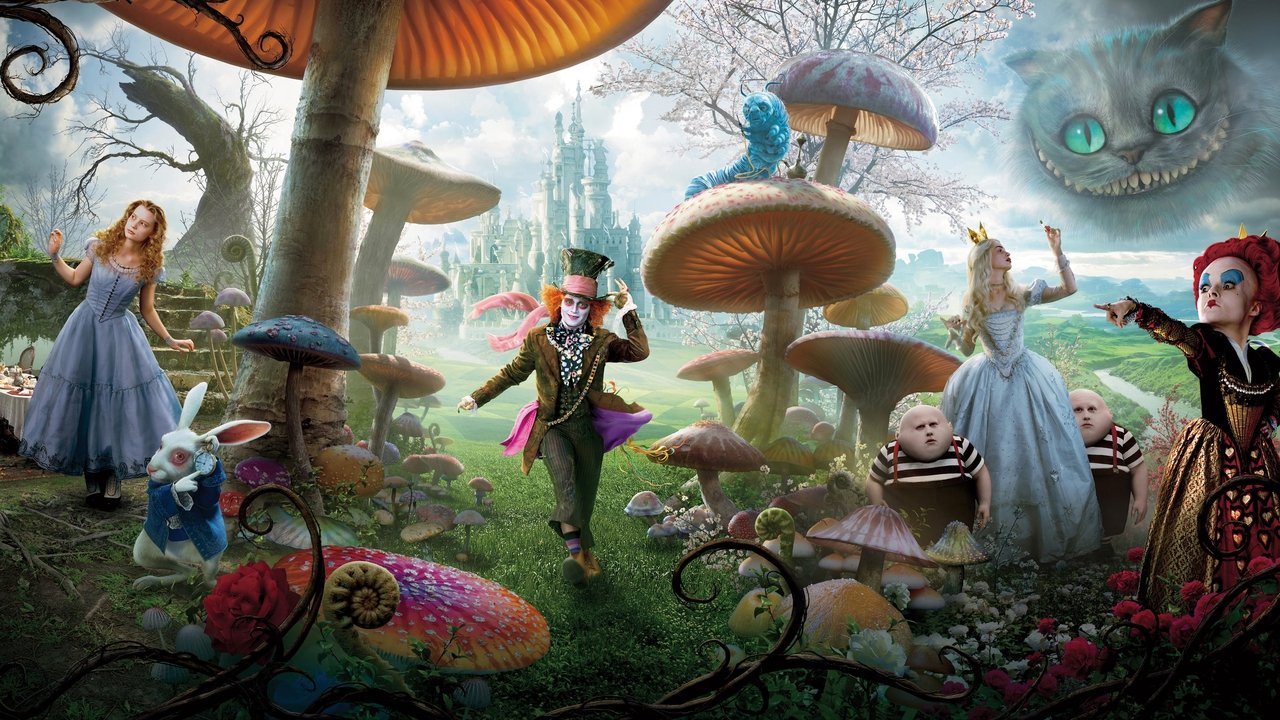
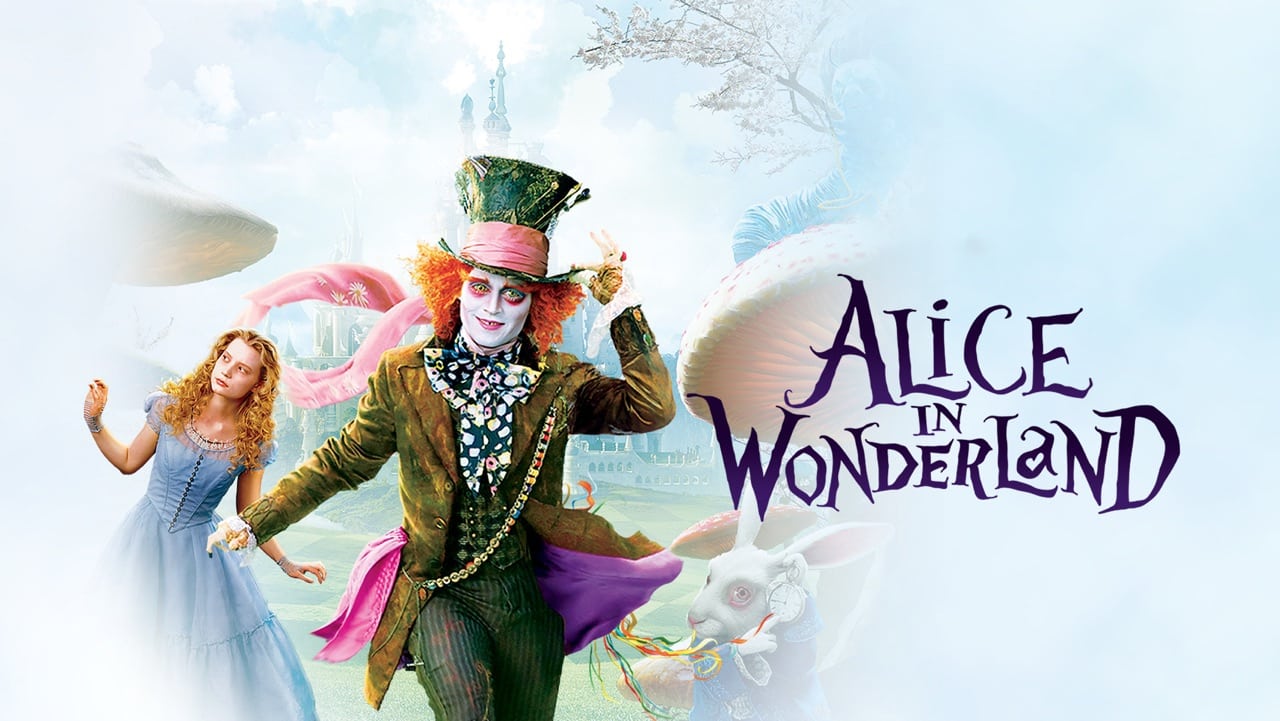
By 2010, the collaboration between Tim Burton and Johnny Depp had reached its apex of "weird for the sake of weird." As Tarrant Hightopp, the Mad Hatter, Depp is a kaleidoscopic mess of orange hair and mood-swinging contacts. It’s a performance that feels like it was designed by a committee of Hot Topic employees. While Johnny Depp is undeniably committed, the Mad Hatter looks like a neon nightmare had a baby with a box of Crayolas, and his Scottish-inflected outbursts feel more like a collection of tics than a character.
The real MVP here is Helena Bonham Carter. As Iracebeth, the Red Queen, she is a delight of insecurity and screeching entitlement. The visual effect used to enlarge her head—a feat of digital wizardry that required her to be filmed separately with high-resolution cameras—is one of the few CGI choices that actually enhances the performance rather than obscuring it. Watching her demand the decapitation of a frog for eating her raspberry tarts is the only time the film truly captures the "mean-spirited whimsy" of the source material. Anne Hathaway also leans into a hilariously "zen" version of the White Queen, drifting through scenes with her hands held aloft like she’s permanently posing for a perfume ad.
The Billion-Dollar Blueprint
Whatever I think of the film’s "Chosen One" narrative, its commercial impact is undeniable. Alice in Wonderland was a legitimate cultural phenomenon. It was only the sixth film in history to cross the $1 billion mark, fueled largely by the 3D ticket upcharge and the fact that it was the first "event" movie to follow James Cameron’s Avatar. It dominated the box office for weeks, proving that audiences were hungry for high-fantasy reimagining of childhood staples.
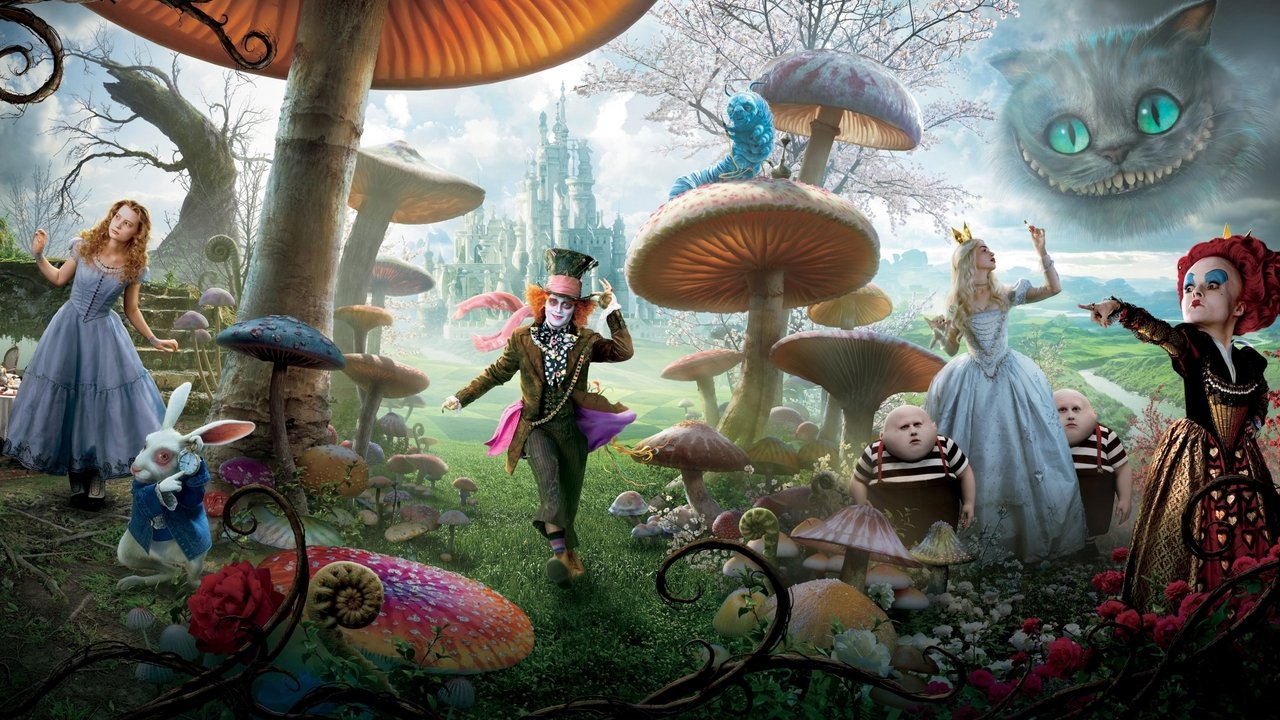
The industry impact was immediate. This film is the reason we have a dozen Maleficent and Cinderella spin-offs. It proved that you could take a public domain story, coat it in $200 million worth of CGI, and print money. The marketing was inescapable; from Avril Lavigne’s "Alice" playing on every radio station to a merch line that made it impossible to buy a notebook without a Cheshire Cat on it, it was a masterclass in franchise formation. Even Crispin Glover, as the Knave of Hearts, felt like he was being positioned for a spin-off that never quite materialized.
Ultimately, Alice in Wonderland is a gorgeous, albeit hollow, exercise in style. It captures the "wonder" of Underland in fits and starts, particularly when the legendary Danny Elfman’s score (which ranks among his most hauntingly beautiful) is allowed to take center stage. While it lacks the heart of Burton’s earlier work, it remains a fascinating look at the exact moment Hollywood decided that adventure needed to be "epic" to be worth our time. It’s a visually arresting journey that works best if you don't look too closely at the green screen seams—just sit back and let the colors wash over you.
Keep Exploring...
-
Alice Through the Looking Glass
2016
-
Charlie and the Chocolate Factory
2005
-
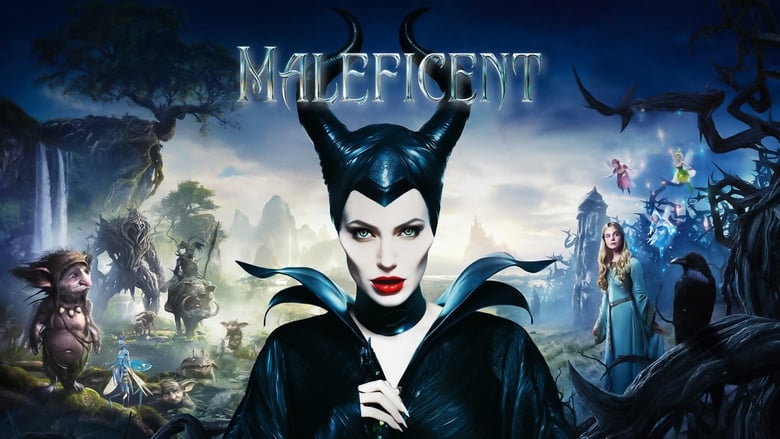
Maleficent
2014
-
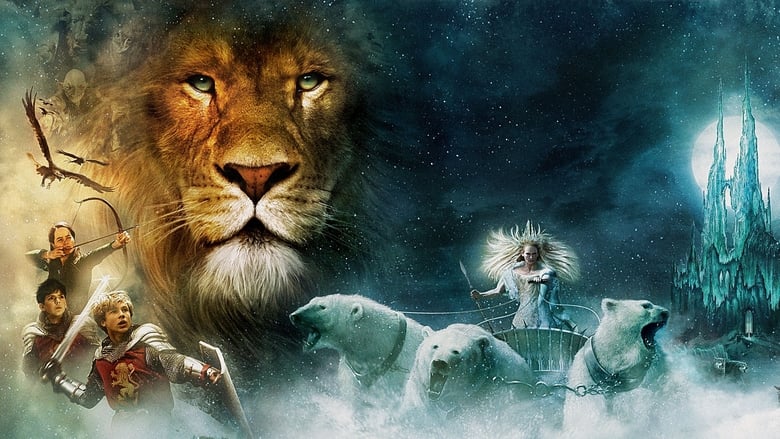
The Chronicles of Narnia: The Lion, the Witch and the Wardrobe
2005
-

Night at the Museum
2006
-
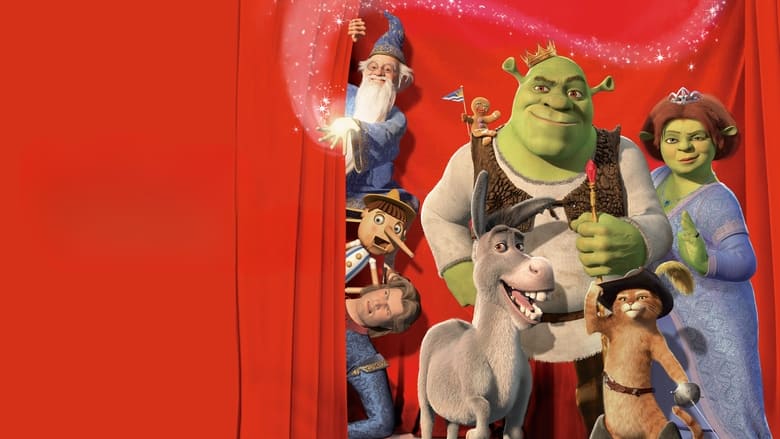
Shrek the Third
2007
-
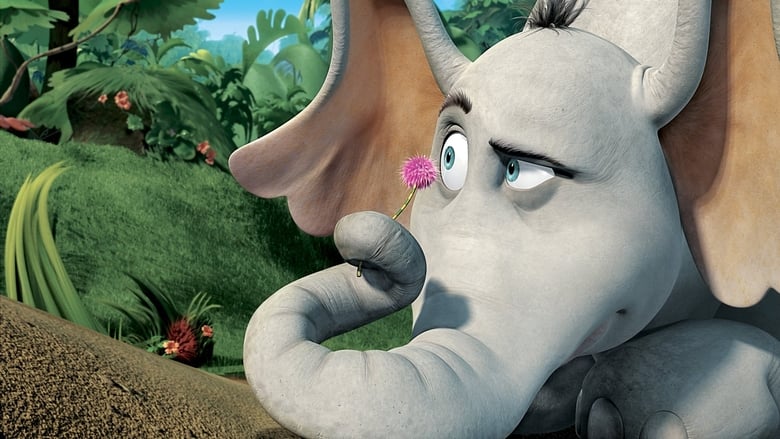
Horton Hears a Who!
2008
-
Shrek Forever After
2010
-

Puss in Boots
2011
-
The Smurfs
2011
-

Frozen
2013
-
Hook
1991
-
Jumanji
1995
-
Planet of the Apes
2001
-
Sweeney Todd: The Demon Barber of Fleet Street
2007
-
Tinker Bell and the Great Fairy Rescue
2010
-

The SpongeBob SquarePants Movie
2004
-
Herbie Fully Loaded
2005
-

The Ant Bully
2006
-

Enchanted
2007