Cop Out
"Two cops. One card. Zero chemistry."
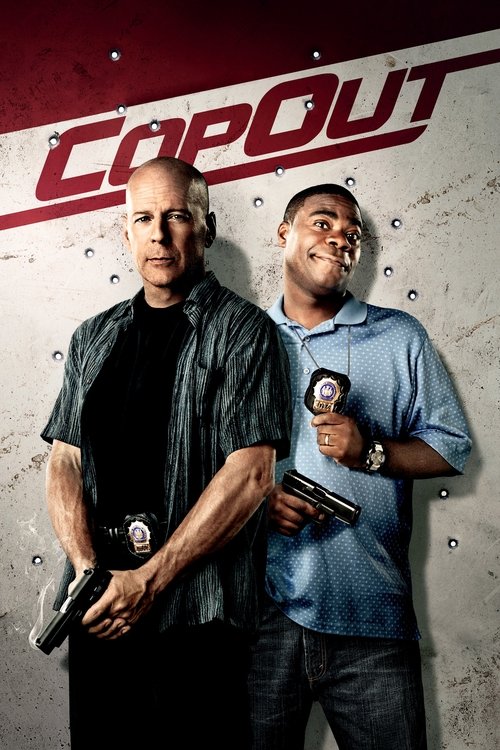
If you close your eyes during the opening minutes of Cop Out, you’d swear you’ve been transported back to 1984. The synthesized, poppy bloops of Harold Faltermeyer—the man who gave us the iconic "Axel F" theme—rinse over the speakers with a shameless, neon-drenched nostalgia. But then you open your eyes and see Bruce Willis, looking like he’d rather be undergoing a root canal without anesthesia, and Tracy Morgan, who appears to be vibrating at a frequency only dogs can hear.
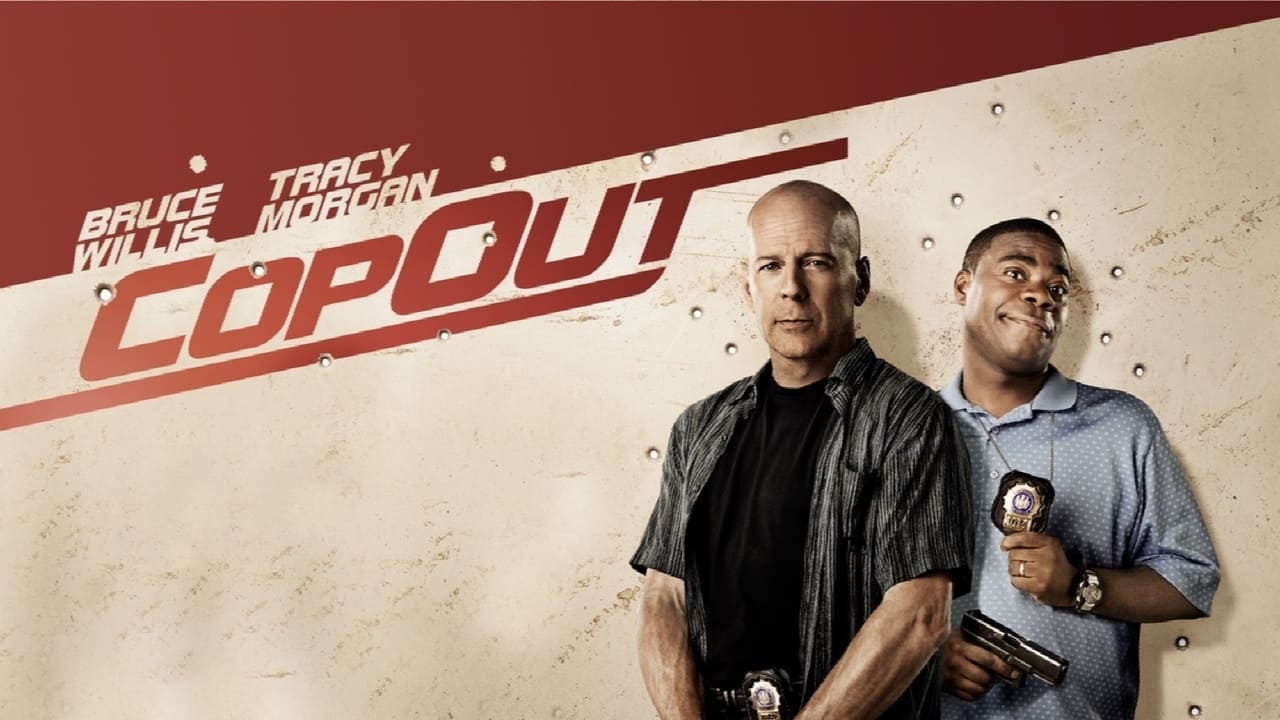
This is the strange, slightly uncomfortable legacy of Cop Out. It’s a movie that feels like a glitch in the Matrix of 2010 cinema. Released at the tail end of the era where a movie could be sold purely on "Star A meets Star B," it was also the moment the "Indie King" Kevin Smith (the mind behind Clerks and Chasing Amy) tried to play in the Hollywood studio sandbox. The result wasn't the genre-redefining explosion people expected; it was more like a loud, expensive argument caught on 35mm film.
The Odd Couple That Stayed Odd
The plot is a standard-issue "one last job" scenario, but with a baseball card-sized twist. Bruce Willis plays Jimmy Monroe, a veteran detective who needs to sell a rare 1952 Andy Pafko card to pay for his daughter’s wedding. When the card is stolen during a robbery, he and his partner Paul (Tracy Morgan) go rogue to get it back.
On paper, it’s Lethal Weapon meets The Last Boy Scout. In reality, the chemistry between the leads is less 'fire and ice' and more 'oil and a very loud lawnmower.' I watched this film while nursing a lukewarm cup of peppermint tea that I’d accidentally dropped a piece of popcorn into, and honestly, the soggy popcorn had more structural integrity than the bond between these two characters. Willis is in full "paycheck mode" here, barely moving his facial muscles, while Morgan is allowed to riff until the cows come home.
There is a scene where Tracy Morgan interrogates a suspect by quoting lines from every movie he can think of, from Training Day to Star Wars. It’s a sequence that feels entirely unscripted, and while it’s occasionally funny, you can practically feel the director behind the camera just letting the tape roll because he’s lost control of the ship. It’s pure comedic chaos that belongs in a different movie entirely.
A Throwback to Practical Mayhem
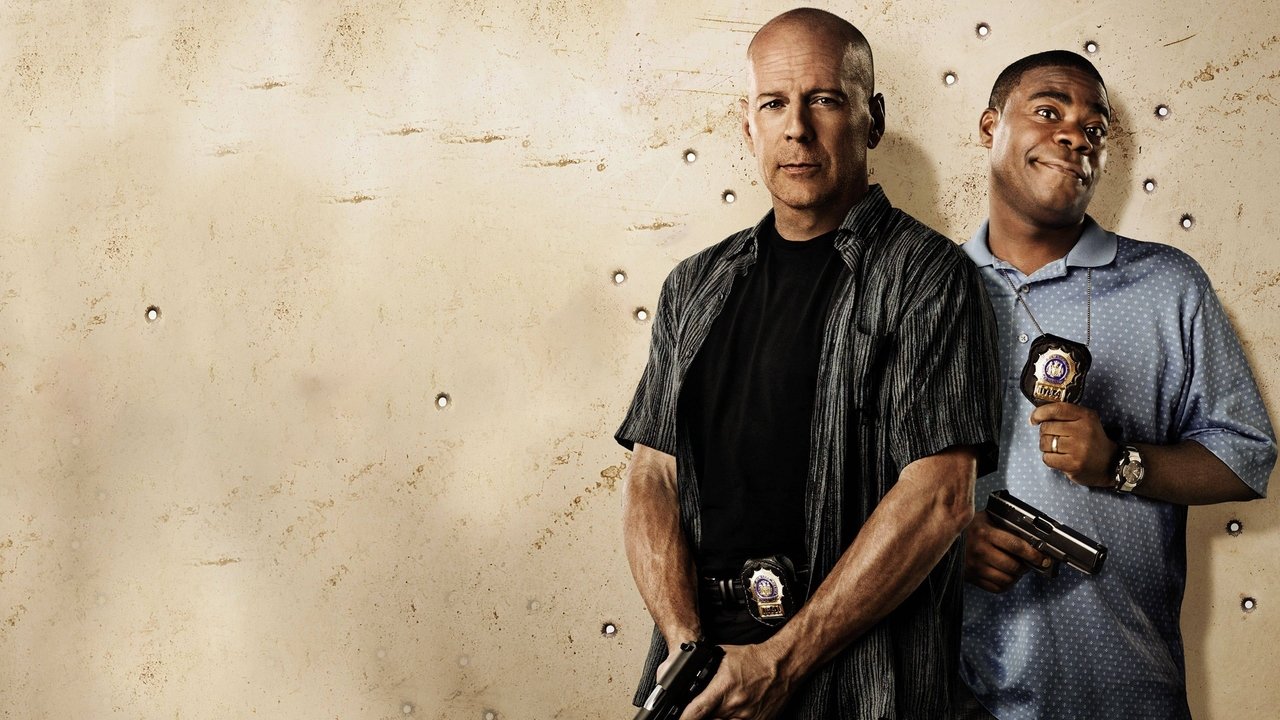
Despite the backstage friction, Cop Out manages to deliver some surprisingly competent action. Because it was filmed just before every car chase was replaced by digital pixels, there’s a weight to the stunts. When a car goes through a storefront or a character takes a tumble, it feels real. Kevin Smith isn't known for his visual flair—his usual style involves two people talking in a convenience store—but here, aided by cinematographer David Klein, he captures the gritty, sun-bleached streets of Brooklyn with a solid, professional eye.
The villain of the piece, Poh Boy, played by Guillermo Díaz (Scandal), is a highlight. He brings a genuine sense of menace to a movie that otherwise feels like it’s flirting with being a live-action cartoon. He’s obsessed with memorabilia, mirroring Willis’s character in a way that should have been explored more. Instead, we get a lot of scenes of Adam Brody and Kevin Pollak as rival detectives, who essentially exist to show up, insult our protagonists, and remind us that this movie has way too many funny people with nothing to do.
The Soul-Crushing Studio Experiment
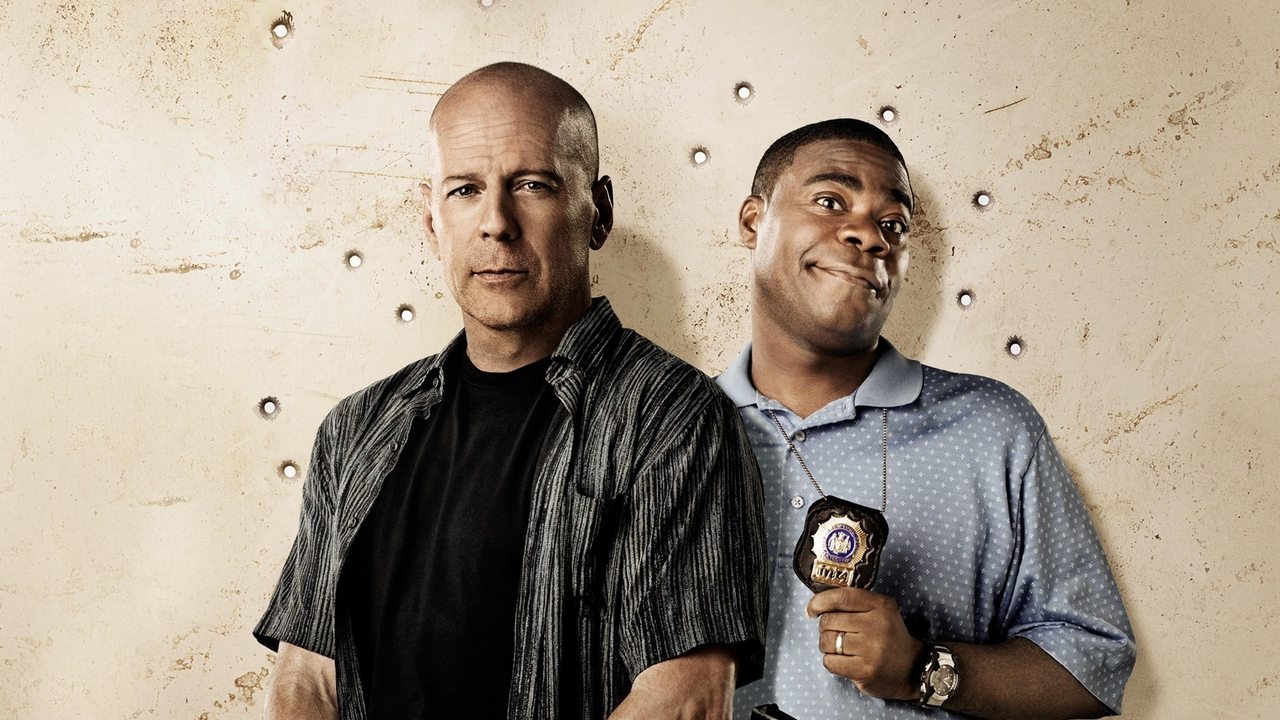
The real "action" of Cop Out happened behind the scenes. This was the film that famously broke the friendship between Kevin Smith and Bruce Willis. Smith would later go on a legendary speaking tour circuit describing the production as "soul-crushing," claiming Willis wouldn't even sit for the promotional poster shoot. Knowing that Willis was allegedly active-aggressively trying to sabotage the director’s vibes adds a layer of unintentional comedy to every scene they share. Every time Jimmy Monroe looks annoyed at his partner, you have to wonder if he’s actually just looking at Smith off-camera.
It’s also an interesting artifact of the DVD era. If you find a copy of the "Maximum Movie Mode" Blu-ray, you can see the sheer amount of deleted riffs and alternate takes. It was a time when studios thought "more is better," filling discs with hours of footage that proved that just because a comedian is funny, doesn't mean every 10-minute improv session belongs in the final cut.
Looking back, Cop Out is a fascinating failure. It’s not a "bad" movie in the sense that it’s unwatchable—it’s actually a perfectly serviceable Sunday afternoon watch—but it’s a "bad" Kevin Smith movie. It lacks the heart and the specific, filthy-yet-poetic dialogue that made him a cult icon. He was a hired gun here, trying to prove he could handle a $30 million budget, and the stress of the machinery is visible in every frame.
If you’re a fan of Tracy Morgan’s specific brand of lunacy, there are enough "what did he just say?" moments to keep you entertained. Just don't expect the kinetic energy of Bad Boys or the wit of Nice Guys. It’s a movie that exists in the middle of the road, fueled by a score that belongs in the 80s and a lead actor who clearly wished he was in the 40s. It’s a curious, clunky relic of the transition from the "Movie Star" era to the "IP" era, and for that alone, it’s worth a look for any student of 2010s cinema.


Keep Exploring...
-
Shoot 'Em Up
2007
-
Big Mommas: Like Father, Like Son
2011
-

One for the Money
2012
-
Stand Up Guys
2012
-
RED 2
2013
-
Bandidas
2006
-
Smokin' Aces
2006
-
Taxi 4
2007
-
Taxi
2004
-
Blue Streak
1999
-
Taxi 2
2000
-

The Mexican
2001
-
National Security
2003
-
Taxi 3
2003
-
The Family
2013
-

Hudson Hawk
1991
-
Hostage
2005
-

Rush Hour 3
2007
-

RED
2010
-
The A-Team
2010