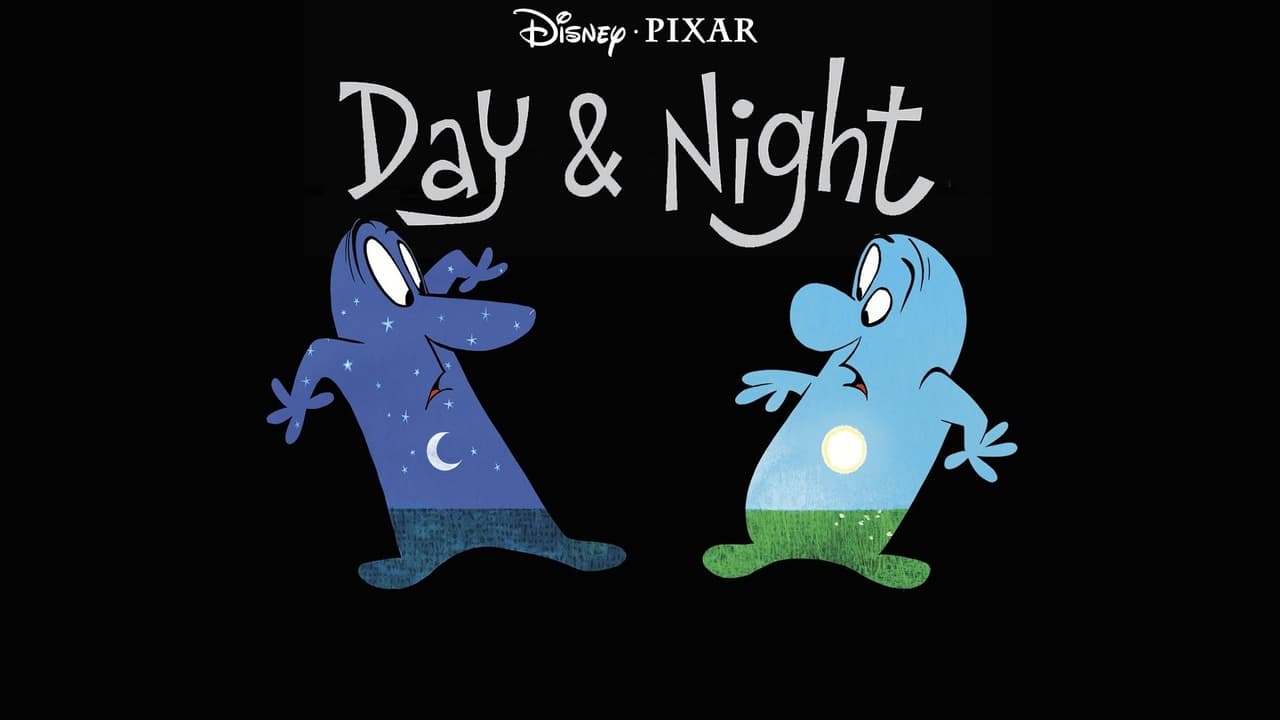
Day & Night
"Perspective is everything, even when it’s inside out."
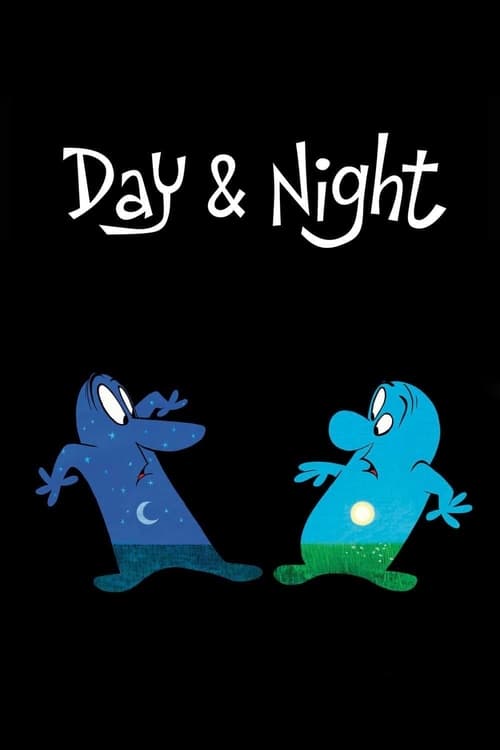
The summer of 2010 was a strange time for my tear ducts. We all flocked to theaters for Toy Story 3, ready to watch our childhood toys face an incinerator, but Pixar decided to play a different kind of game with our heads before the main event. While most of the audience was still fumbling with their overpriced popcorn, this six-minute experimental wonder flickered onto the screen. It didn't look like the Pixar we knew. There were no plastic textures or hyper-realistic fur. Instead, we got two wobbly, hand-drawn blobs that looked like they’d escaped from a 1950s UPA cartoon.
I remember watching this short again recently on a scratched-up DVD while my neighbor was apparently auditioning for a heavy metal band in his garage. Even with the muffled drumming coming through the walls, the sheer ingenuity of Day & Night grabbed me all over again. It’s a relic from that specific "Modern Cinema" window where Pixar was untouchable, flexing their creative muscles just because they could.
The Great Aesthetic Collision
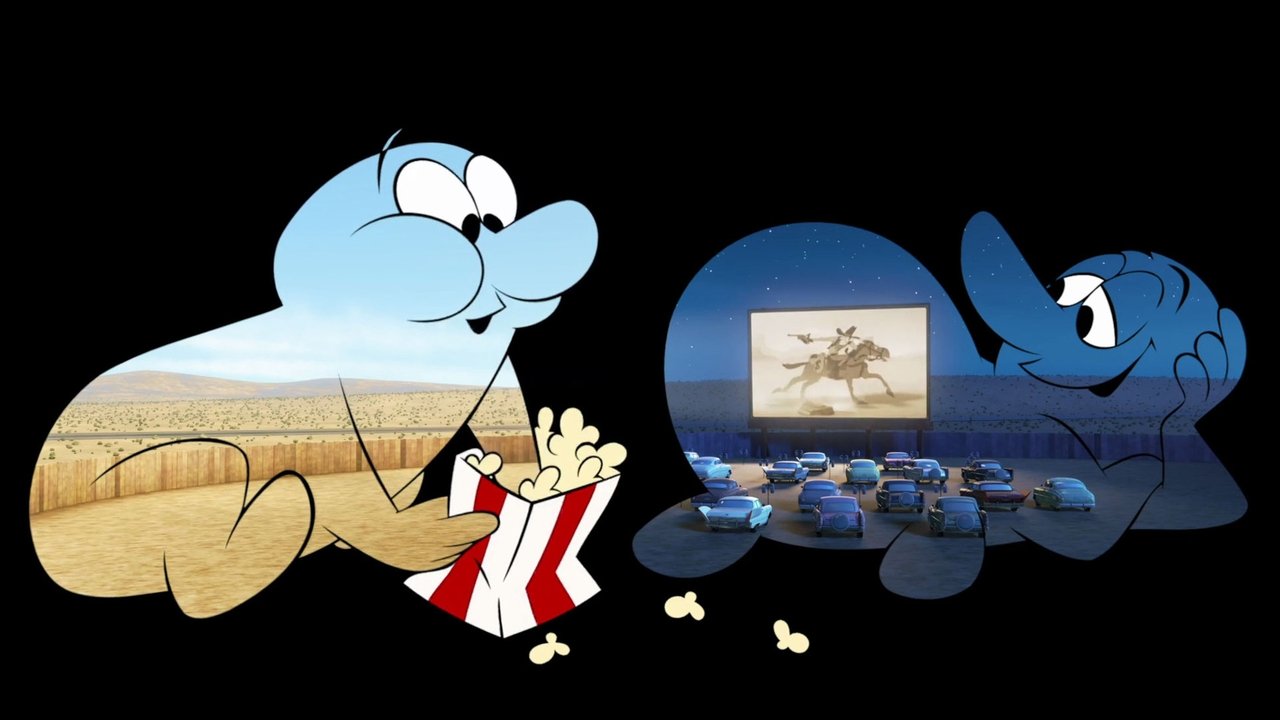
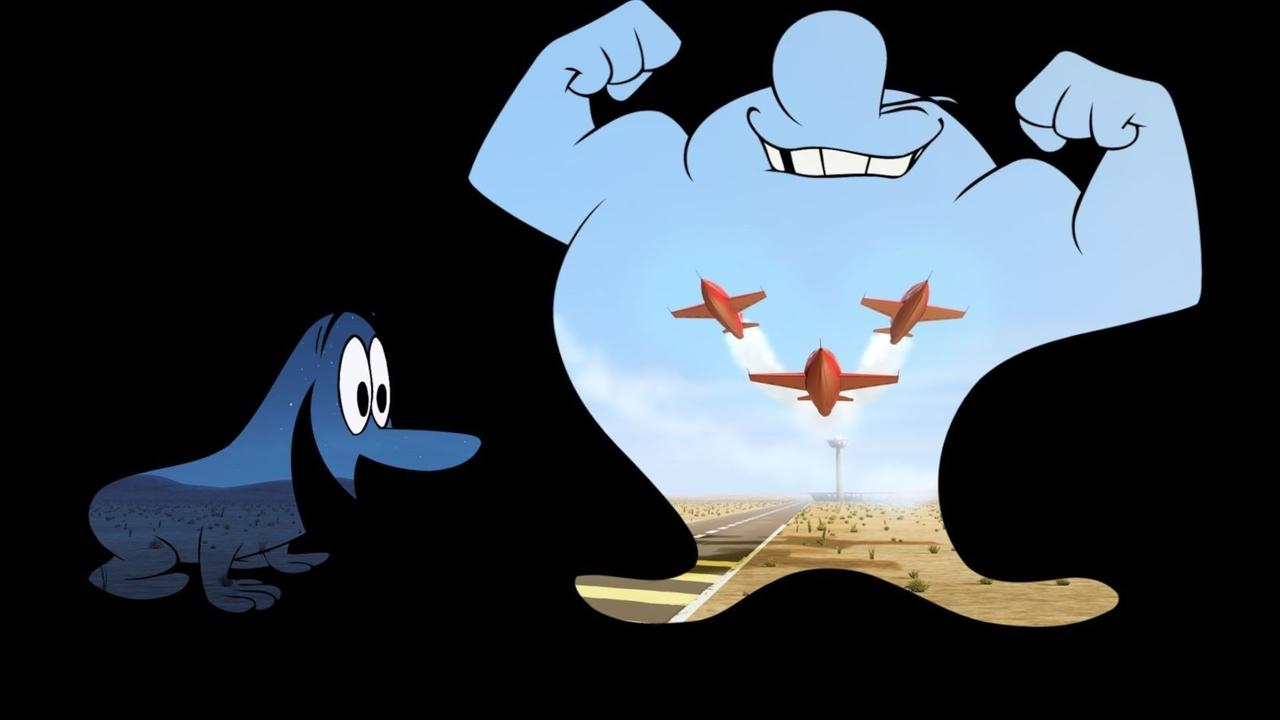
What makes this short such a trip is the technical audacity of the "window" effect. You have these 2D characters—Day (a chipper, bright fellow) and Night (his grumpy, starlit counterpart)—who are essentially walking silhouettes. But inside their bodies, we see a fully realized 3D world. When Day looks at a field, we see a sunny, lush meadow inside his belly. When Night looks at that same spot, we see the moonlit, chirping version of that field.
Director Teddy Newton—the guy responsible for the iconic character designs in The Incredibles and Ratatouille—was really pushing the envelope here. In 2010, the industry was obsessed with 3D; it was the Avatar hangover era. Studios were slapping post-conversion 3D on everything to justify a $5 surcharge. But 3D is usually just a gimmick to justify higher ticket prices, whereas here, it’s the entire point of the storytelling. The contrast between the flat, expressive linework of the characters and the deep, immersive CGI landscapes inside them creates a visual friction that I still haven't seen replicated. It’s a bridge between the analog past of Disney and the digital future they were currently building.
Slapstick with a Ph.D
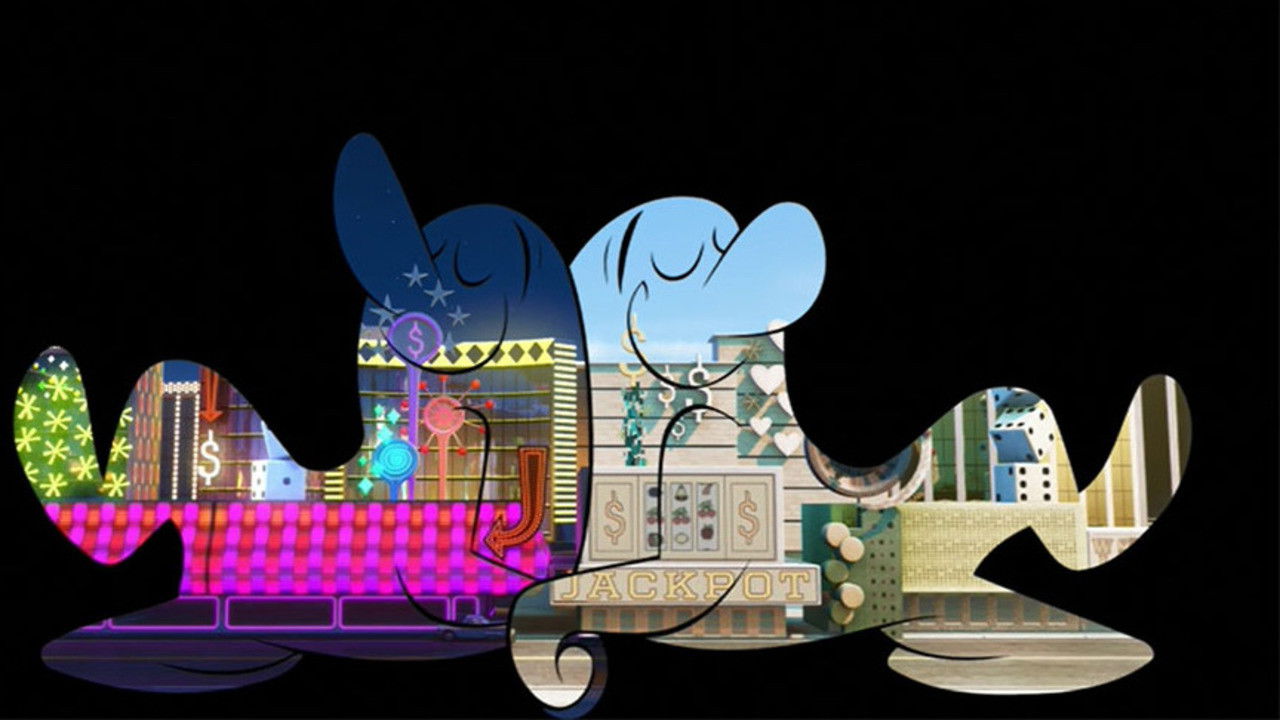
Despite the high-concept visuals, the humor is pure, old-school slapstick. It’s a "grass is greener" rivalry told through body language. Day shows off a bikini-clad sunbather on his "stomach"; Night retaliates by showing off the shimmering neon lights of a Las Vegas-style strip. It’s a classic comedic escalation. The timing is surgical. Teddy Newton understands that comedy is rhythm, and he uses the sound design to punch up every joke. There’s a fantastic bit where Day is enjoying a rhythmic lawn mower, only for Night to counter with the hauntingly beautiful (and much louder) sound of a midnight firework display.
The "performances" here are entirely pantomime, save for one crucial element: the voice of Wayne Dyer. Toward the end, as our two rivals begin to realize they’re looking at the exact same world from different angles, a radio broadcast cuts through the silence. It’s a real snippet from a 1970s lecture by Dyer. Usually, dropping a philosophical speech into a cartoon about blobs would feel like a pretentious thud, but here it acts as the "score" for their growing friendship. It’s a bold move that could have backfired, but it gives the film a soul that transcends mere technical wizardry.
A Time Capsule of Pixar’s Peak
Looking back from the 2020s, Day & Night feels like a snapshot of a studio at its absolute zenith of confidence. This was the era of the DVD "Special Features" boom, where we actually cared about who the crew was. I remember diving into the bonus features of the Toy Story 3 disc just to see how they layered the 2D and 3D elements. Apparently, the production was a bit of a nightmare for the technical teams because the characters' outlines had to constantly act as a "mask" for the CGI world behind them, requiring a level of coordination that traditional software wasn't quite ready for.
There’s also the score by Michael Giacchino, who was basically the MVP of the late 2000s (having just come off Up and Star Trek). He manages to blend orchestral swells with these quirky, synthetic day-to-night transitions that make the whole six minutes feel like a cohesive musical suite. It captures that pre-streaming feeling where short films weren't just "content" to be scrolled past; they were events in themselves.
If you missed this one because you were too busy crying over Woody and Buzz, go back and find it. It’s a reminder that even in an era of massive franchises and CGI dominance, a couple of hand-drawn circles and a bit of 1970s radio wisdom can say more about the human condition than a two-hour blockbuster.
This is Pixar at its most fearless and fun. It manages to take a potentially dry lesson about tolerance and turn it into a vibrant, funny, and technically stunning piece of art. It’s the kind of short that makes you want to pay more attention to the world around you—or at least appreciate the way the light hits a field at two different times of day. Day & Night is a tiny masterpiece that proves you don't need a huge runtime to leave a massive impression.
Keep Exploring...
-

Presto
2008
-
Partly Cloudy
2009
-
Winnie the Pooh
2011
-

Tangled Ever After
2012
-
Toy Story of Terror!
2013
-
Feast
2014
-
Toy Story That Time Forgot
2014
-
A Monster in Paris
2011
-
Asterix: The Mansions of the Gods
2014
-
A Goofy Movie
1995
-
Geri's Game
1997
-

For the Birds
2000
-
A Close Shave
1996
-
The Triplets of Belleville
2003
-

Barbie as The Princess & the Pauper
2004
-
Mickey, Donald, Goofy: The Three Musketeers
2004
-

Madagascar
2005
-

Wallace & Gromit: The Curse of the Were-Rabbit
2005
-
Cars
2006
-

Ice Age: The Meltdown
2006