Daybreakers
"In the future, the blood runs out."
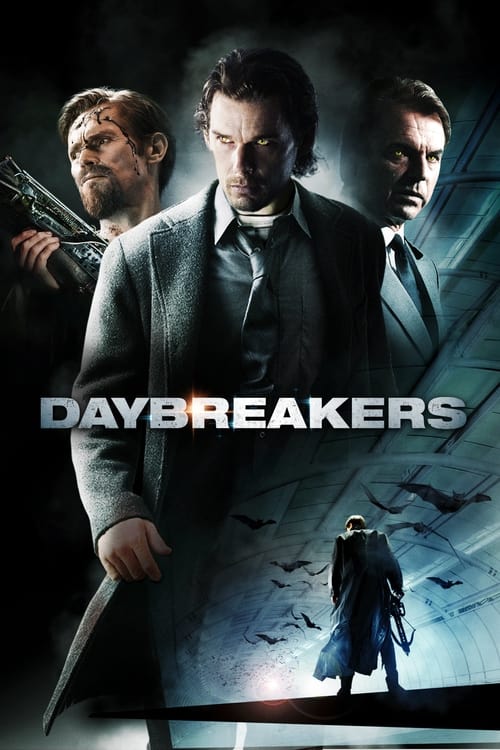
By the year 2010, pop culture was absolutely drowning in glitter. Twilight had reshaped the vampire mythos into a celibate teen romance, and True Blood was turning it into a sweaty Southern soap opera. Then along came the Spierig Brothers—Michael and Peter—two Australian filmmakers who looked at the vampire trend and thought, "What if this was just a really stressful corporate meeting about peak oil?"

I first saw Daybreakers on a laptop screen while sitting in a dentist's waiting room, which is a surprisingly appropriate way to experience a film that treats neck-biting with the same clinical detachment as a root canal. It’s a movie that swaps gothic castles for glass-and-steel boardrooms, trading the romantic "curse" of immortality for the crushing reality of a supply chain crisis.
A Corporate Nightmare in Crimson
The world-building here is top-tier sci-fi. In this version of 2019, 95% of the global population are vampires. They drive cars with "blackout" shields so they can commute during the day using cameras, they add a dash of blood to their morning coffee at walk-up kiosks, and they’re facing a total economic collapse because the human "cattle" are almost extinct. Ethan Hawke plays Edward Dalton, a hematologist who hates being a vampire and refuses to drink human blood, which makes him look like a guy who’s been on a three-day bender in a library.
Hawke (who also starred in the Spierigs' later mind-bender Predestination) brings a weary, soulful vibe to the role that keeps the film grounded. Opposite him is Sam Neill, who channels his Event Horizon intensity into Charles Bromley, the CEO of a blood-supply conglomerate. Neill is fantastic here; he doesn't play a monster, he plays a capitalist. To him, the extinction of the human race isn't a tragedy; it’s a quarterly earnings disaster. It’s essentially 'An Inconvenient Truth' but with fangs and better tailoring.
Practical Gore and Gutsy Action
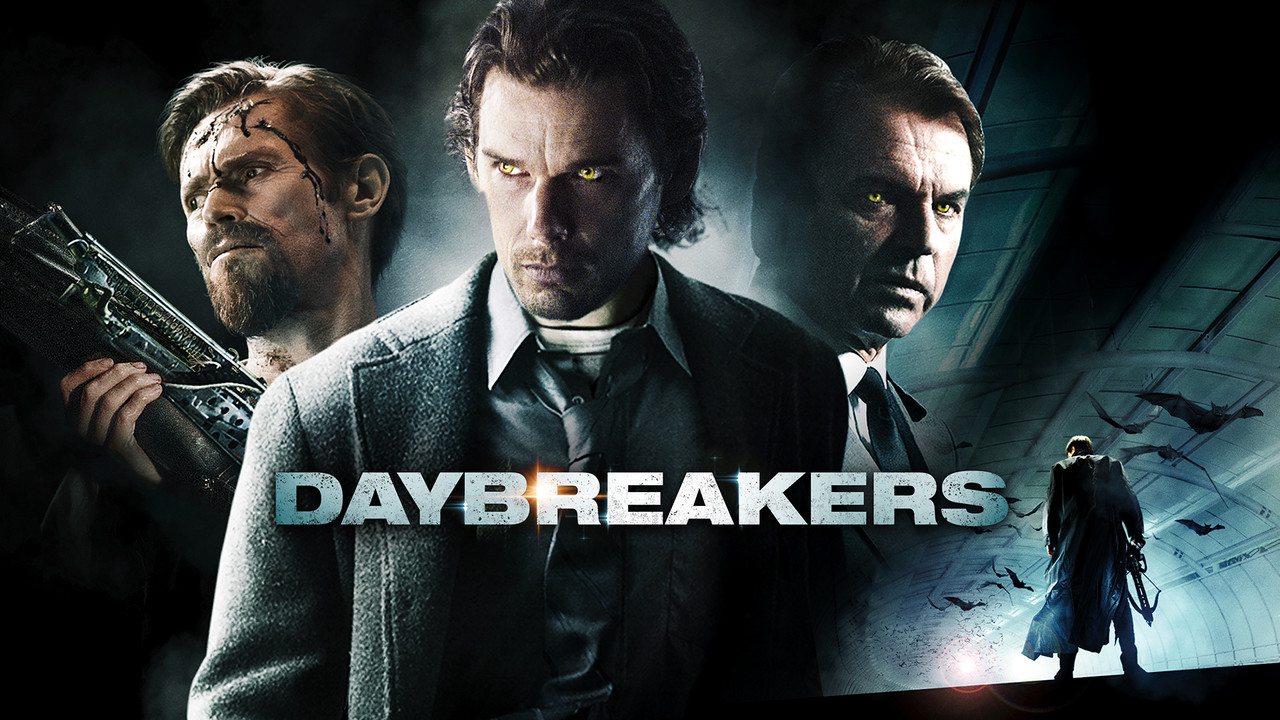
What really sets Daybreakers apart from its contemporary peers is the Spierigs’ commitment to practical effects and physical action. While the late 2000s were often marred by "floaty" CGI, this film uses Weta Workshop to create the "Subsiders"—vampires who have devolved into bat-like monsters because of blood deprivation. These things are grotesque, fleshy, and genuinely frightening when they’re lunging out of the shadows of a suburban basement.
The action choreography is tight and impactful, leaning into the unique physics of a vampire-run world. There’s a fantastic car chase involving a specially modified Chrysler 300 where Hawke has to navigate using only external cameras because the sun is up. When the cameras get shot out, the tension becomes palpable. It’s a creative use of the film's "rules" that moves beyond just shooting at things.
The film also isn't afraid of a little "splatstick" humor. When a vampire gets staked or exposed to sunlight, they don't just turn into neat piles of ash like in Buffy the Vampire Slayer; they explode in a messy geyser of viscera. There is a "cure" sequence involving a sunlight-resistant Willem Dafoe (playing a character named Lionel 'Elvis' Cormac) that is one of the most gloriously over-the-top practical effects sequences of that decade. Dafoe looks like he’s having the time of his life, chewing the scenery with a crossbow in hand and a gravelly "born-again" attitude.
The Cult of the Resource War

While it did decent business, Daybreakers never quite hit the mainstream heights of the Underworld franchise, mostly because it’s a bit too smart and cynical for its own good. It captured that specific post-9/11, late-2000s anxiety regarding dwindling natural resources and corporate overreach. Looking back, the blood shortage is a very thin metaphor for the oil crisis, but it works because the Spierigs take the internal logic of their world so seriously.
The trivia surrounding the production is a testament to indie ingenuity. The Spierig brothers actually handled a significant portion of the visual effects themselves on their home computers to stretch the $20 million budget. They also cast Isabel Lucas after seeing her in Transformers: Revenge of the Fallen, giving her a much meatier, more tragic role as Sam Neill’s estranged daughter.
One of my favorite "blink and you'll miss it" details is the newspaper headlines seen throughout the film. They detail the collapse of the "human" stock market and the rise of synthetic blood trials—the kind of world-building that rewards the DVD-era habit of hitting the pause button to read every prop. It’s a movie made by fans of the genre for fans of the genre, skipping the romance to focus on the grit.
Daybreakers is a sharp, bloody reminder that the vampire genre can be more than just pining looks and leather jackets. It’s a high-concept "what if" that executes its premise with style, a bit of social commentary, and a lot of exploding torsos. If you missed this one during the initial vampire craze of the 2010s, it’s well worth a revisit, especially for Willem Dafoe’s performance alone. It’s a cult classic that understands that sometimes, the scariest thing isn't the monster under the bed—it's the corporate executive trying to figure out how to monetize your last drop of life.
Keep Exploring...
-

Predestination
2014
-

Small Soldiers
1998
-

The League of Extraordinary Gentlemen
2003
-

Fantastic Four
2005
-

Final Fantasy VII: Advent Children
2005
-
Race to Witch Mountain
2009
-

John Carter
2012
-
Death Race
2008
-

Journey to the Center of the Earth
2008
-

Star Wars: The Clone Wars
2008
-
9
2009
-
Pandorum
2009
-
Push
2009
-
Underworld: Rise of the Lycans
2009
-

Legion
2010
-

Repo Men
2010
-

Attack the Block
2011
-
Season of the Witch
2011
-
Looper
2012
-

Riddick
2013