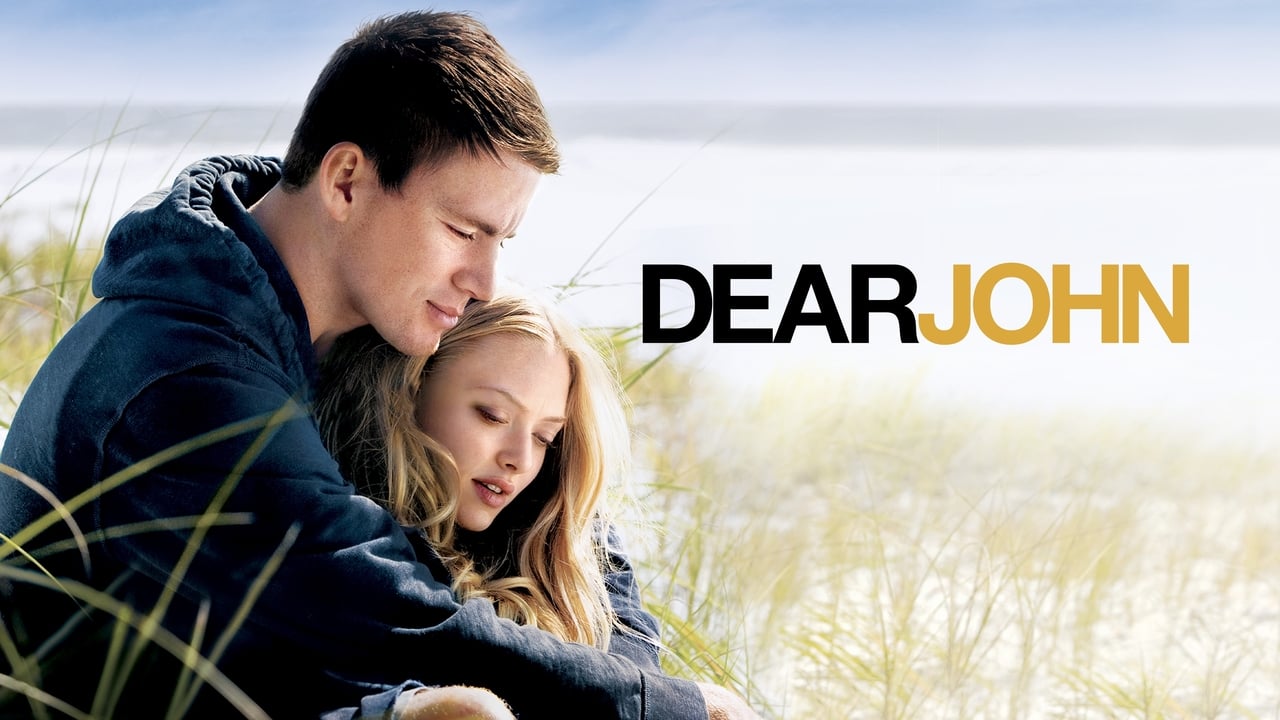
Dear John
"A soldier’s leave ends, but the letters never do."

In February 2010, the cinematic world was still painted deep blue. James Cameron’s Avatar had been sitting atop the box office throne for seven consecutive weeks, looking entirely invincible. Then, a modest $25 million romantic drama based on a Nicholas Sparks novel strolled into theaters and did the unthinkable: it knocked the Na’vi off their perch. Dear John didn’t need 3D glasses or groundbreaking CGI to conquer the weekend; it just needed a stack of handwritten letters and the combined pheromones of two of the era’s fastest-rising stars. Looking back, it represents the absolute zenith of the "Sparks-ian" era of filmmaking—a time when we were all apparently very eager to pay ten dollars to dehydrate ourselves through tears.

The Art of the Sledgehammer
I watched this film again recently while my radiator was making a rhythmic, metallic clanking sound that strangely synced up with Deborah Lurie’s piano-heavy score, and I realized that director Lasse Hallström is the secret weapon here. Hallström, the man who gave us the quirky tenderness of What’s Eating Gilbert Grape and the lush atmosphere of Chocolat, brings a level of restraint that this script—written by Jamie Linden—desperately needs. In lesser hands, the story of John Tyree and Savannah Lynn Curtis would have devolved into a greeting card commercial.
The premise is pure romance-novel DNA: John (Channing Tatum), a Special Forces soldier home on leave, rescues the purse of Savannah (Amanda Seyfried), a college student with a heart of pure sunshine. They have two weeks of bliss before the reality of his deployment to Germany (and later, the post-9/11 Middle East) sets in. They promise to write. They do write. But time, distance, and the terrifying shift in global politics following the September 11 attacks turn their "two weeks" into a years-long test of endurance. John Tyree is essentially a walking jawline with a heart of gold, and while Channing Tatum hadn't quite found his comedic "Magic Mike" or "21 Jump Street" spark yet, he plays the stoic, wounded soldier with a sincerity that’s hard to dislike.
A Tale of Two Dads

While the central romance is the hook, the movie’s actual soul resides in the relationship between John and his father, played by the incomparable Richard Jenkins. If you only know Richard Jenkins from his comedic turn in Step Brothers, his performance here will catch you off guard. He plays Mr. Tyree, a man obsessed with coin collecting who struggles with social cues and emotional expression—implied to be on the autism spectrum, though the film handles this with a delicate, "show-don't-tell" grace that was somewhat ahead of its time for 2010 mainstream cinema.
The scenes where John tries to connect with his father through their shared history of numismatics are, frankly, much more moving than the central love story. When John finally writes a "Dear John" letter to his father instead of his girlfriend, it’s an uncomfortably raw moment that justifies the price of admission. It helps that the cinematography by Terry Stacey (50/50) makes the South Carolina coast look like a perpetual golden hour, where the light hits the waves just right to hide the fact that the plot is essentially a series of emotional landmines designed to ruin your mascara.
The Post-9/11 Romance

Dear John is a fascinating artifact of how Hollywood processed the mid-2000s. It’s a war movie where the war is mostly an invisible thief, stealing time and potential from the characters. It captured that specific anxiety of the volunteer soldier—the "one more tour" syndrome that kept many families in a state of permanent limbo. It’s also a time capsule of a world just before the total dominance of the smartphone. The letters are the point. The physical act of writing, the waiting for the mail, the ink on paper—it all feels ancient now, but in 2010, it still felt like a plausible, if nostalgic, way to maintain a soul-deep connection.
The film was a massive commercial success, raking in over $114 million worldwide. It proved that Amanda Seyfried, coming off Mamma Mia!, could carry a dramatic lead, and it cemented the Nicholas Sparks adaptation as a reliable studio bank-roller. Is it perfect? No. The third act takes a turn into "misery porn" territory that feels a bit manipulative, especially involving a subplot with Henry Thomas (yes, the kid from E.T., all grown up) that feels like it belongs in a different, much darker movie.
Ultimately, Dear John is exactly what it promises to be: a beautifully shot, expertly acted weepie that prioritizes heartstrings over logic. It’s a movie that understands the power of a long-distance longing and the crushing weight of "what if." If you’re looking for a deep dive into the complexities of military geopolitical strategy, you’re in the wrong place. But if you want to see Richard Jenkins deliver a heartbreaking performance while Channing Tatum looks pensively at the ocean, this is the gold standard of the genre. It’s a comfortable, tear-stained sweater of a movie that still manages to fit surprisingly well.

Keep Exploring...
-
Chocolat
2000
-

Casanova
2005
-

Legends of the Fall
1994
-

Salmon Fishing in the Yemen
2012
-

What's Eating Gilbert Grape
1993
-
The English Patient
1996
-

Step Up 2: The Streets
2008
-

The Vow
2012
-

Letters to Juliet
2010
-
Joyeux Noel
2005
-

Eat Pray Love
2010
-
The Wind Rises
2013
-
Walk the Line
2005
-
Step Up
2006
-

Juno
2007
-
Knocked Up
2007
-

P.S. I Love You
2007
-

Forgetting Sarah Marshall
2008
-

High School Musical 3: Senior Year
2008
-
The Reader
2008