Faster
"Forgiveness is a detour he won't take."
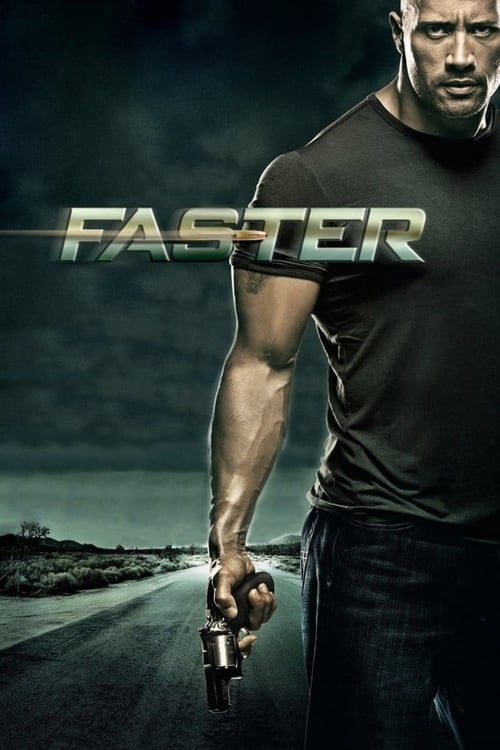
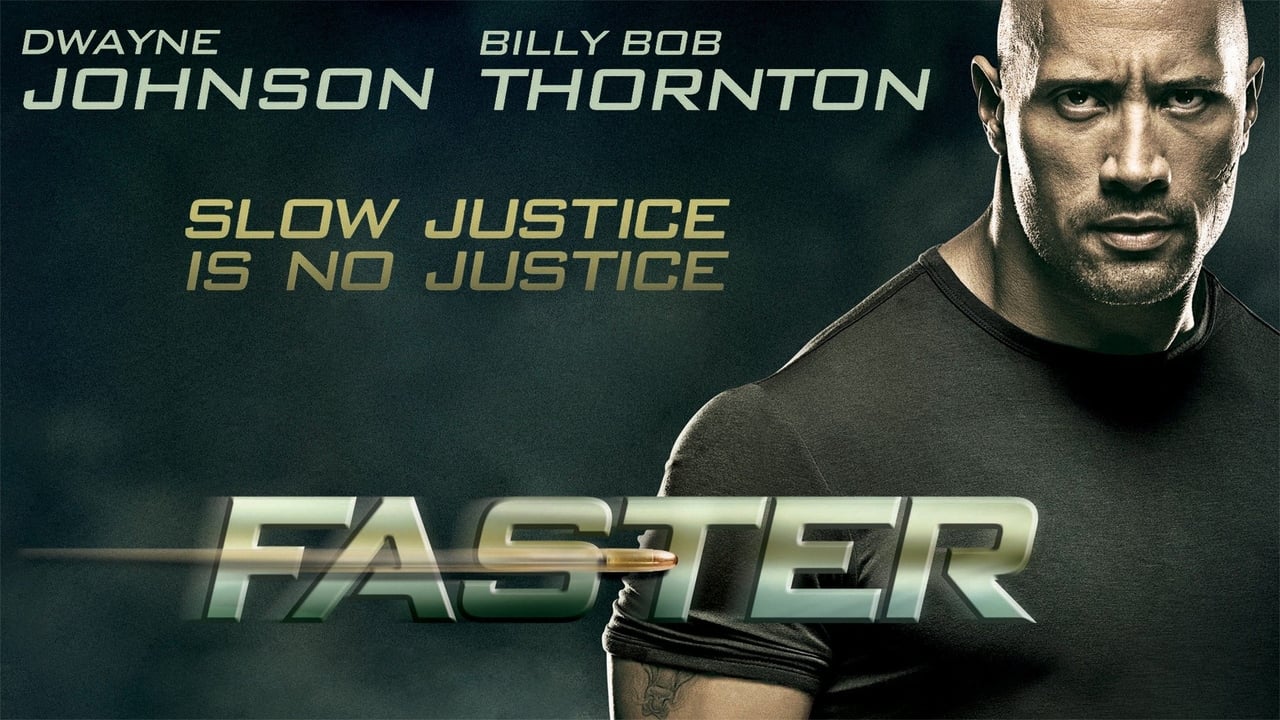
Before he became the smiling, franchise-saving "Franchise Viagra" of the Fast & Furious world, Dwayne Johnson was at a weird crossroads. He’d spent the late 2000s wearing tutus and playing Disney dads, and the collective cinematic world was starting to wonder if the guy who once told us to "smell what he was cooking" had lost his stove. Then came Faster (2010), a lean, mean, and surprisingly melancholic throwback that feels like a 1970s revenge flick got lost on its way to the multiplex. It’s the last time I can recall Johnson being genuinely scary on screen—no winks to the camera, no self-deprecating jokes, just a massive wall of muscle with a very large gun and a very short to-do list.
I watched this on a DVD I found in a "3 for $10" bin at a dying Blockbuster, and the disc had a smudge that made the car chase skip exactly once—which, honestly, added to the grindhouse vibe. It’s a movie that feels like it should be projected on a cracked screen in a theater that smells like stale popcorn and motor oil.
The Return of the Stoic Strongman
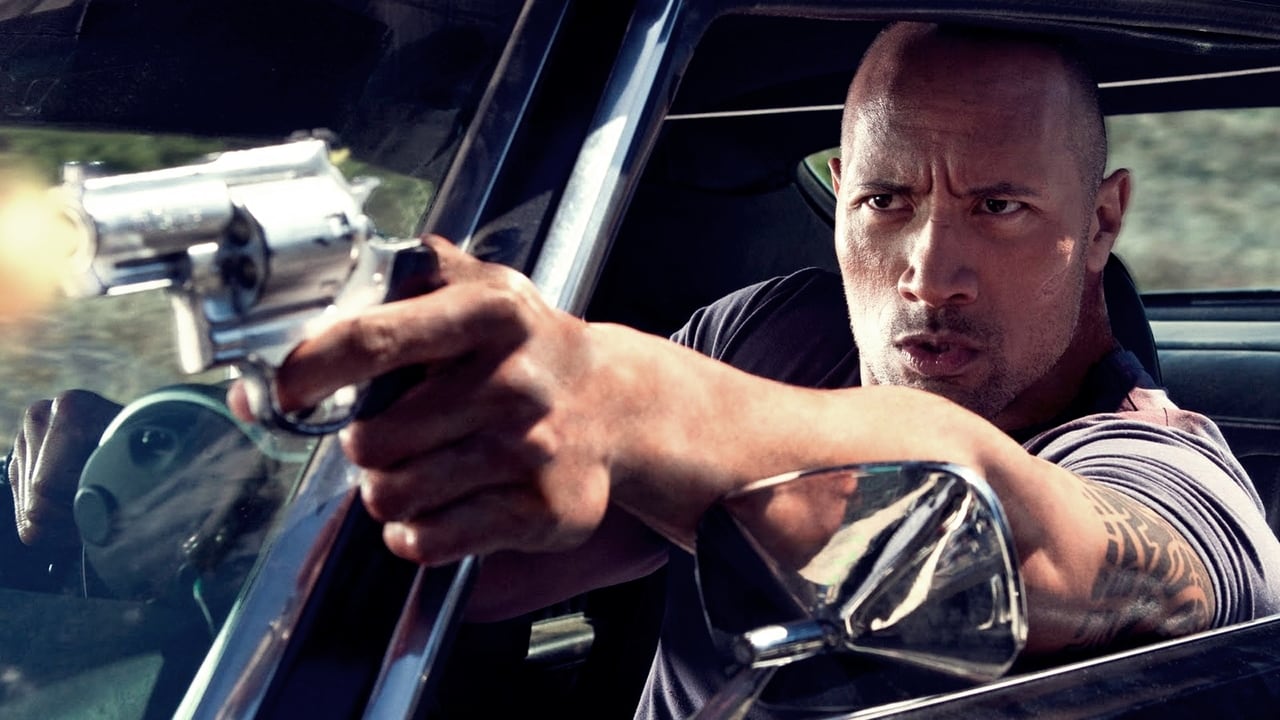
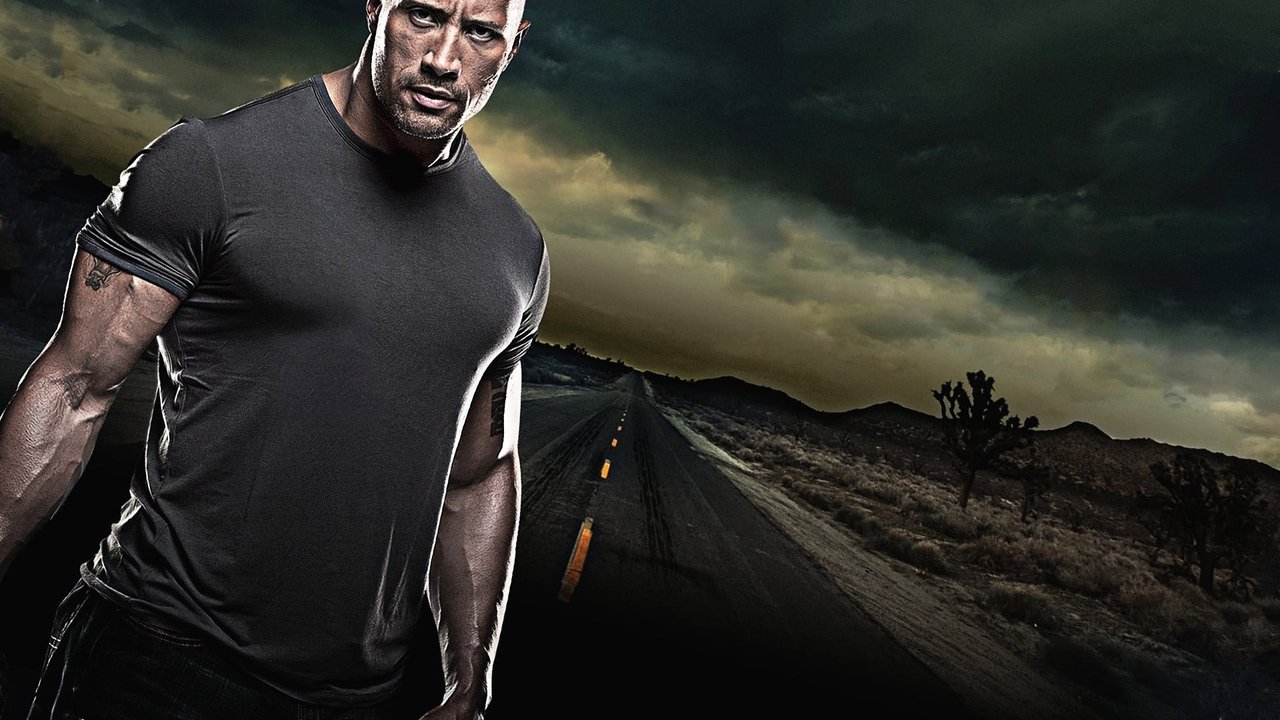
The plot is as thin as a racing stripe: Johnson plays a man known only as "Driver." He’s just finished a ten-year stint in prison, and within roughly thirty seconds of being paroled, he’s running across a desert to retrieve a 1971 Chevy Chevelle and a Ruger Super Redhawk Alaskan. He has a list of names—the people who betrayed him and murdered his brother during a botched heist—and he intends to cross them off with industrial efficiency.
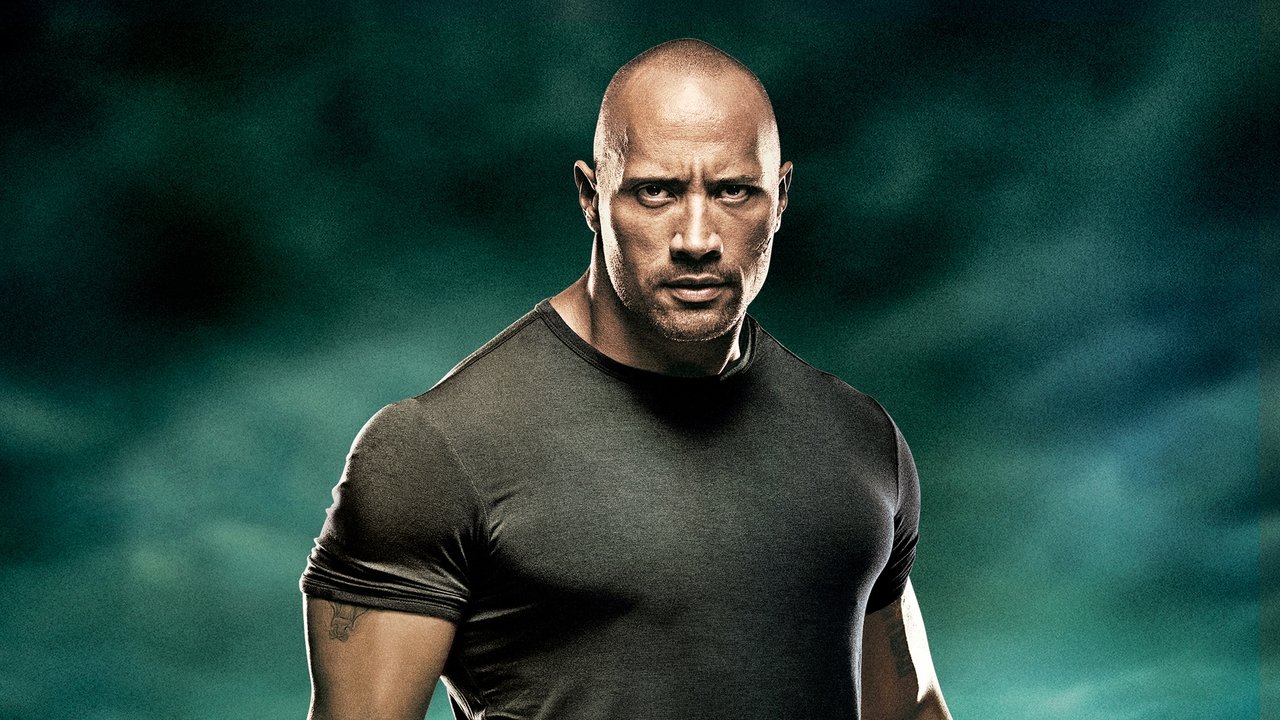
What makes this work is Tillman Jr.’s refusal to make it "fun" in the way we expect modern action movies to be. It’s grim. Johnson’s performance is entirely physical; he barely speaks, relying instead on that heavy-browed stare that suggests he’s constantly calculating the trajectory of his next bullet. Looking back, this was a pivotal moment for the era’s transition in action cinema. We were moving away from the shaky-cam chaos of the Bourne clones and into a period of polished digital spectacle. Faster chose a third path: practical, heavy-metal grit. Apparently, Johnson spent two full days at a stunt driving school to ensure he could pull off those J-turns himself, and the lack of CGI in the driving sequences gives the film a weight that today's green-screened car chases desperately lack.
A Tonal Car Crash (In a Good Way)
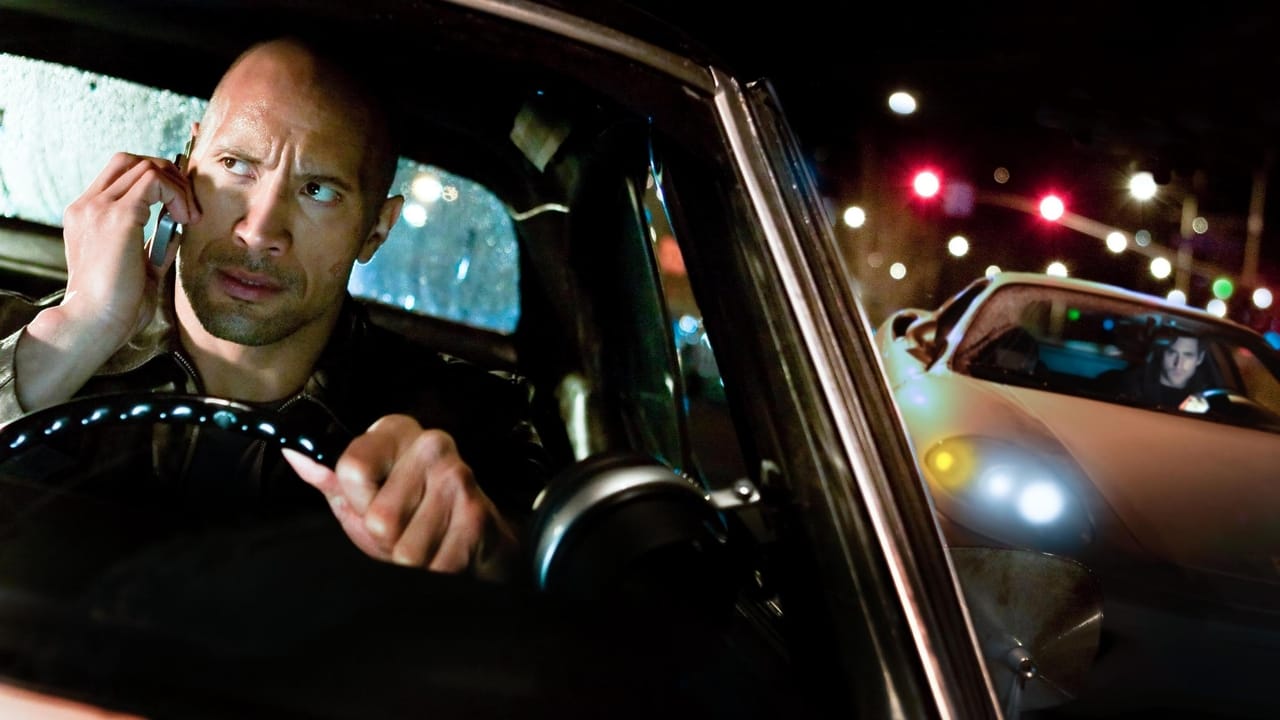
The movie isn't just a straight line, though. It attempts a strange, tripartite structure by following three archetypes: The Driver, The Cop (Billy Bob Thornton), and The Killer (Oliver Jackson-Cohen). While Driver is a force of nature, Billy Bob Thornton plays a classic "dirty laundry" detective—a man one bad day away from total collapse. It’s a performance that feels like it walked off the set of a mid-90s indie noir, all raspy whispers and desperation.
Then there’s "The Killer." The subplot with the yoga-practicing millionaire assassin is a bizarre tonal car crash. He’s a tech-bro hitman who treats assassination like a life-coach exercise, and while he’s meant to provide a foil to the Driver’s raw vengeance, he often feels like he’s in a completely different movie. This was the era where Hollywood was starting to obsess over the "modernity" of the internet and app culture, and the Killer feels like a timestamp of that transition. He’s the most 2010 thing about the film, for better or worse.
Why It Holds the Road
Faster flopped at the box office, barely making its budget back, but it has aged into a fascinating cult curiosity. It captures a specific "post-9/11 anxiety" vibe that permeated late-2000s action—the idea that the systems of law and order are broken beyond repair, and only a man with a heavy foot and a heavy caliber can find closure. The score by Clint Mansell (of Requiem for a Dream fame) is an absolute standout here, eschewing typical action beats for something more haunting and operatic.
The film is also packed with "Hey, it's that person!" cameos. Tom Berenger shows up as a world-weary Warden, and Maggie Grace and Carla Gugino do a lot of heavy lifting in roles that could have been one-dimensional. Interestingly, the script by Joe and Tony Gayton originally had even less dialogue. They wanted a silent movie punctuated by gunfire, and while the studio insisted on a bit more chatter, the DNA of that minimalist intent remains.
It’s not a perfect film—the ending tries a bit too hard to tie its philosophical threads into a neat bow—but as a delivery system for pure, unadulterated "The Rock" energy, it’s unparalleled. It’s the road not taken in Johnson’s career; a glimpse into an alternate timeline where he became our generation’s Charles Bronson instead of its Arnold Schwarzenegger.
If you’re tired of the quippy, physics-defying superhero antics of modern blockbusters, Faster is a refreshing pallet cleanser. It’s a movie about the cost of living for revenge, served with the roar of a V8 engine and the cold steel of a .454 Casull. It’s short, it’s loud, and it doesn't care if you like it—which is exactly why it’s worth the 98 minutes of your time. Turn it up loud enough to piss off your neighbors.
Keep Exploring...
-
Colombiana
2011
-
Contraband
2012
-
Snitch
2013
-

The Fast and the Furious: Tokyo Drift
2006
-
Gangster Squad
2013
-
Cellular
2004
-

The Negotiator
1998
-
Undisputed II: Last Man Standing
2006
-
United 93
2006
-
Street Kings
2008
-
Vantage Point
2008
-
Takers
2010
-

Get the Gringo
2012
-
Dead Man Down
2013
-
Sabotage
2014
-
The Protector
2005
-
Running Scared
2006
-
Death Sentence
2007
-
Felon
2008
-
Mesrine: Killer Instinct
2008