Flipped
"Some of us are dipped in flat, some in satin, some in gloss."
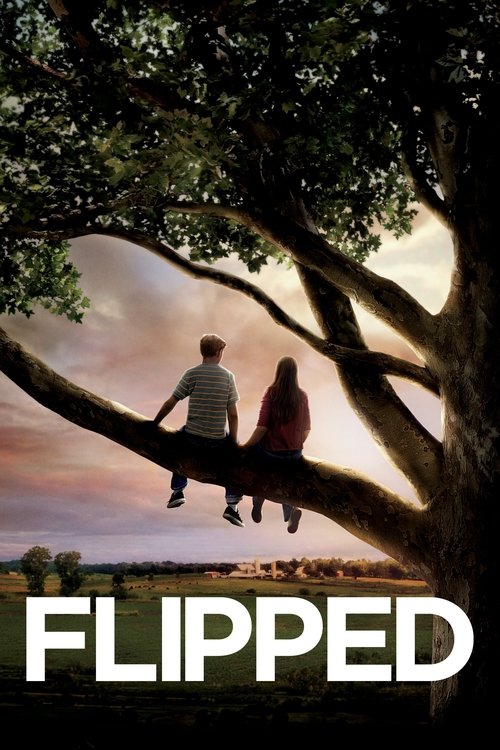
Most coming-of-age movies treat the first crush like a universal constant—a singular, shimmering event that happens to two people simultaneously. But Rob Reiner’s Flipped understands the messy, lopsided truth: twelve-year-old romance is often a brutal, two-sided misunderstanding where one person is playing a symphony and the other is trying to escape a restraining order. I watched this again last Tuesday while nursing a slightly burnt grilled cheese sandwich, and it struck me how rare it is for a film to admit that we are frequently the oblivious villains in someone else’s childhood memoir.
Released in 2010, Flipped arrived at a strange crossroads in cinema. We were deep into the 3D-spectacle era sparked by Avatar, and the "mid-budget drama" was already becoming an endangered species. It’s no wonder it vanished at the box office; a quiet, contemplative story about a girl, a boy, and a sycamore tree didn't exactly scream "IMAX experience." Yet, looking back from the digital saturation of the 2020s, this film feels like a rescued artifact. It’s a deliberate, analog heart-tugger that plays much better on a cozy living room screen than it ever did in a half-empty multiplex.
The Architecture of a Dual Reality
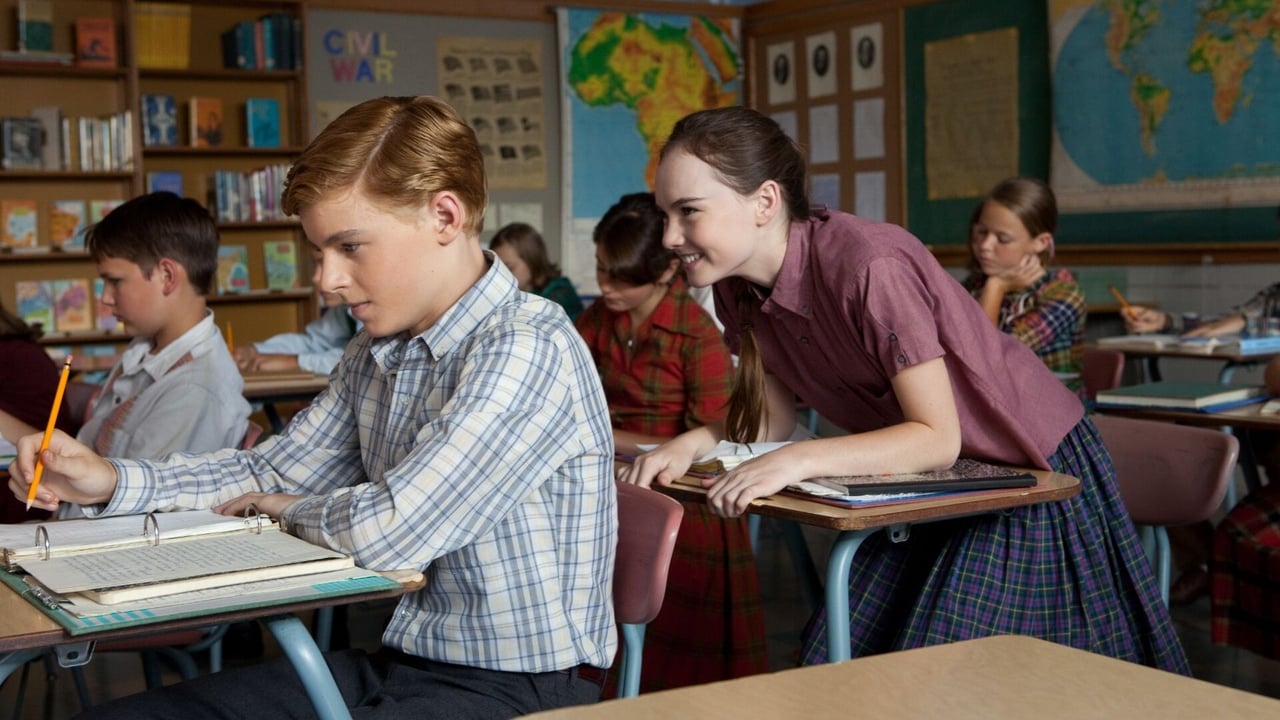
The genius of the screenplay, adapted from Wendelin Van Draanen’s novel by Rob Reiner and Andrew Scheinman (A Few Good Men), lies in its structural gimmick: the "flip." We see a sequence of events through the eyes of Juli Baker, then the film rewinds and lets us inhabit the terrified, awkward headspace of Bryce Loski. It’s a masterclass in subjective reality. Juli sees a "spark" in Bryce’s eyes; Bryce sees a girl who has been aggressively colonizing his personal space since the second grade.
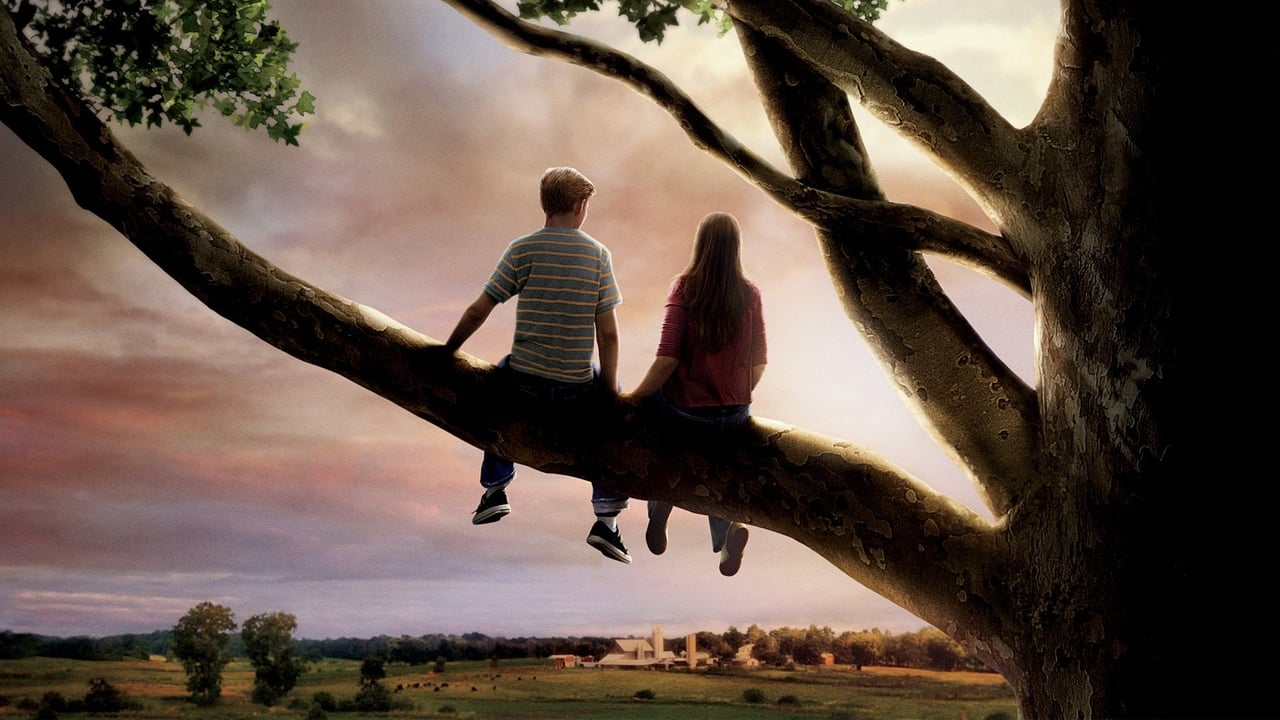
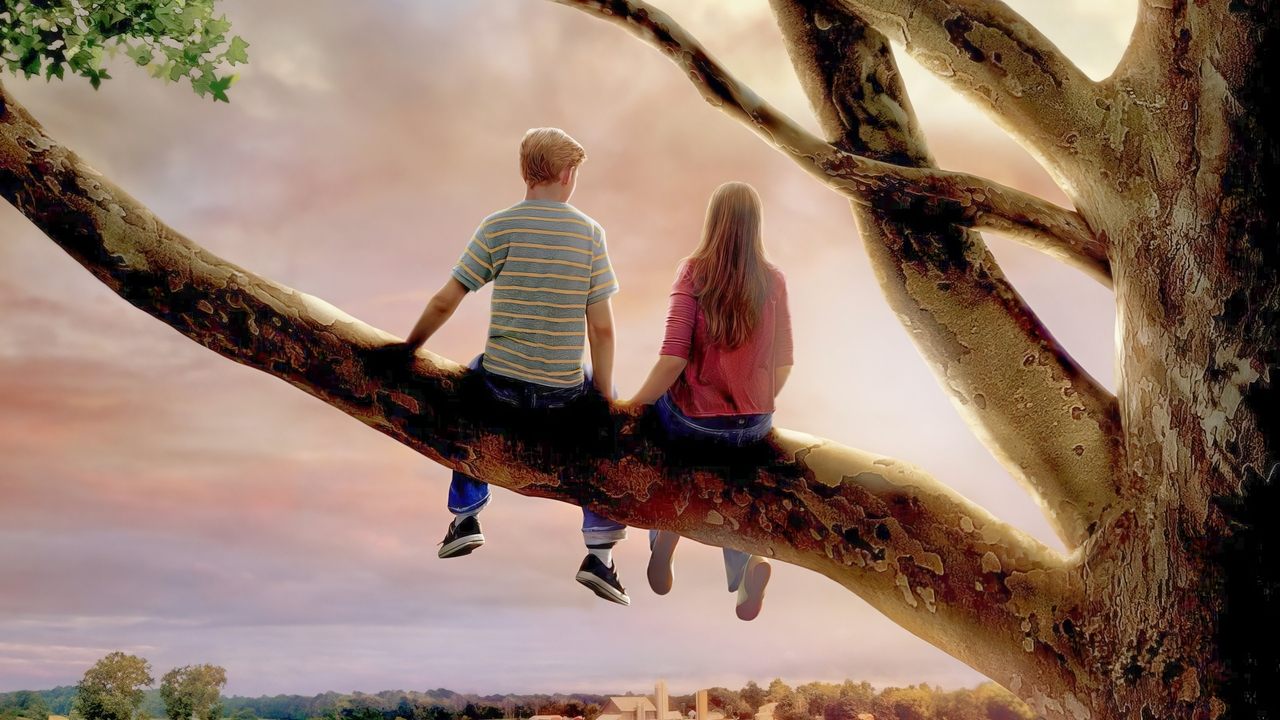
This isn't just a cute narrative trick; it’s a philosophical inquiry into how we perceive value. Juli, played with an incandescent, stubborn light by Madeline Carroll (Swing Vote), is a girl who sees the world in its "entirety." She’s obsessed with the view from the top of a local sycamore tree—a perspective that makes the world feel like more than the sum of its parts. Conversely, Bryce—played with a wonderful, deer-in-the-headlights paralysis by Callan McAuliffe—is a boy who is terrified of standing out. He spends the first half of the film as a coward, paralyzed by his father’s cynicism and his own social anxieties.
The film asks a surprisingly deep question for a "teen movie": Is the person you love actually there, or have you just painted their face onto a blank canvas? Watching Juli realize that Bryce might be "less than the sum of his parts" is one of the most heartbreakingly honest moments in any 2010s drama. It’s the moment the gloss wears off and the actual human being underneath is revealed to be, well, a bit of a disappointment.
A Masterclass in Supporting Subtext
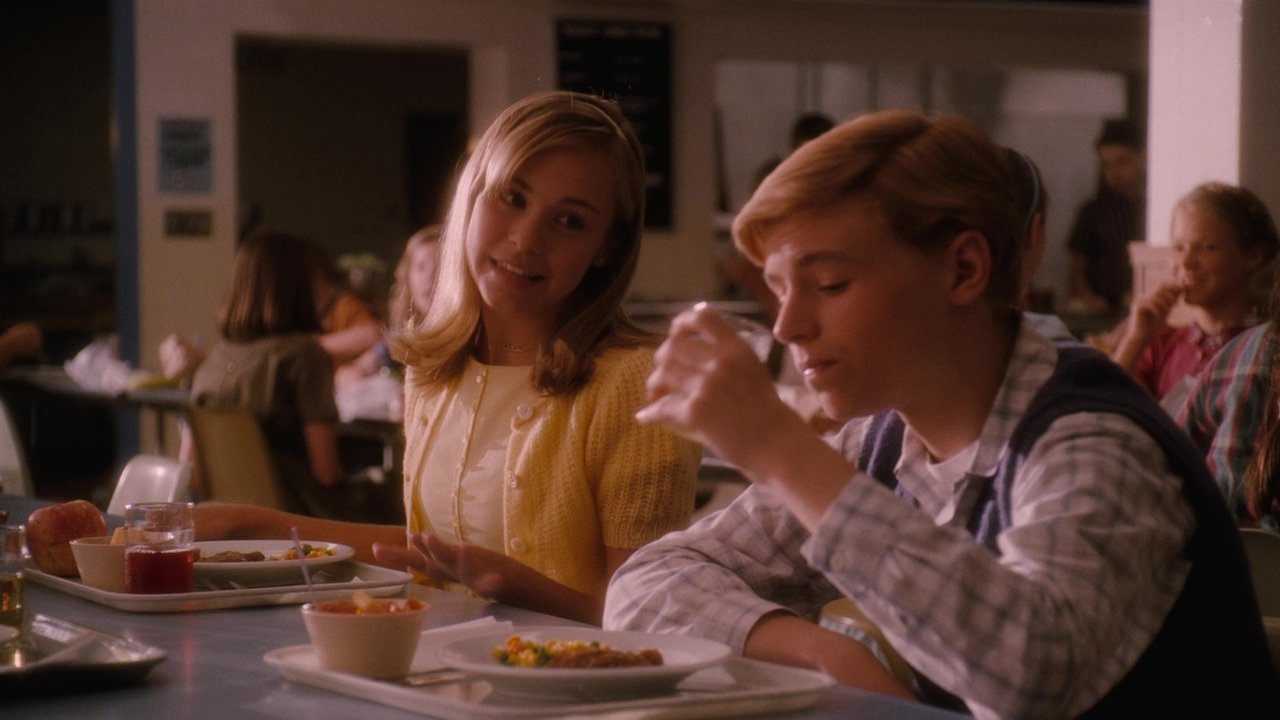
While the kids are the engine, the adults provide the high-octane emotional fuel. Rob Reiner has always been an "actor's director," but here he utilizes his ensemble to show the generational weight of character. Anthony Edwards (ER, Top Gun) is chillingly effective as Steven Loski, Bryce’s father. He’s the kind of man whose bitterness has curdled into a polished, suburban suit. He looks down on the Bakers because their yard is overgrown, never realizing that his own internal garden is a wasteland. Edwards plays a jerk so well it almost makes me forget he was Goose, and his performance serves as a warning of what Bryce might become if he doesn't learn to see the world like Juli.
On the flip side, we have the late, great John Mahoney (Frasier, Say Anything) as Bryce’s grandfather, Chet. This was one of Mahoney’s final significant roles, and he brings a weathered, soulful dignity to the screen. He is the bridge between the two families, the one who recognizes Juli’s "gold" and tries to help Bryce find his own. His scenes are the quietest in the film, yet they carry the most thematic weight. He represents the "restored version" of a man—someone who has learned what truly matters through loss and retrospection.
The Bakers, played by Penelope Ann Miller (The Artist) and Aidan Quinn (Legends of the Fall), provide the film’s moral North Star. There’s a scene involving a family dinner and a revelation about a disabled uncle that is handled with such grace and lack of sentimentality that it caught me off guard. It grounds the 1960s nostalgia in something real and difficult, preventing the film from becoming a mere Wonder Years clone.
The 1950s Lens and the 2010 Execution
Though it’s set in the transition from the late 50s to the early 60s, Flipped feels very much like a product of the late-2000s indie spirit. The cinematography by Thomas Del Ruth (The West Wing) uses a warm, amber-hued palette that suggests a memory rather than a documentary. It looks like a high-definition restoration of a Kodachrome slide.

It’s worth noting that Reiner made a bold choice to move the book’s setting from the 1990s to the 1960s. In 2010, this felt like a gamble—would audiences care about a period piece in the age of The Social Network? In retrospect, it was the right call. By placing the story in a world of milk deliveries and climbing trees, Reiner stripped away the distractions of modern technology, forcing us to focus purely on the chemistry and the character arcs. It allowed the "sum of parts" philosophy to breathe without being interrupted by a text message or a viral video.
Despite its initial failure, the film has gained a massive cult following, particularly in international markets like China, where its earnestness resonated deeply. It’s a reminder that the box office is often a terrible judge of a movie’s soul. Flipped is a film that rewards the "slow burn" viewer. It’s a movie that makes you want to look at your own backyard and wonder what you’ve been ignoring because you were too busy looking for something "glossy."
Flipped is a rare specimen: a family-friendly film that doesn't talk down to its audience. It treats the interior lives of children with the same gravity and complexity as an adult prestige drama. It’s nostalgic without being saccharine, and philosophical without being pretentious. If you missed it during its blink-and-you’ll-miss-it theatrical run, do yourself a favor and seek it out. It’s a reminder that sometimes, the most revolutionary thing a person can do is plant a tree—or finally see someone for who they truly are.
Keep Exploring...
-

Pride & Prejudice
2005
-
Mr. Nobody
2009
-
About Time
2013
-
A Few Good Men
1992
-
A Walk to Remember
2002
-
Before Sunrise
1995
-

Dilwale Dulhania Le Jayenge
1995
-
Brokeback Mountain
2005
-
The Reader
2008
-
The Wrestler
2008
-
Moonrise Kingdom
2012
-
The Bucket List
2007
-
Her
2013
-
In the Mood for Love
2000
-
Before Sunset
2004
-

Cinderella Man
2005
-

Memoirs of a Geisha
2005
-
Atonement
2007
-

My Name Is Khan
2010
-
Amour
2012