Kick-Ass
"Justice is a scuba suit and a concussion."
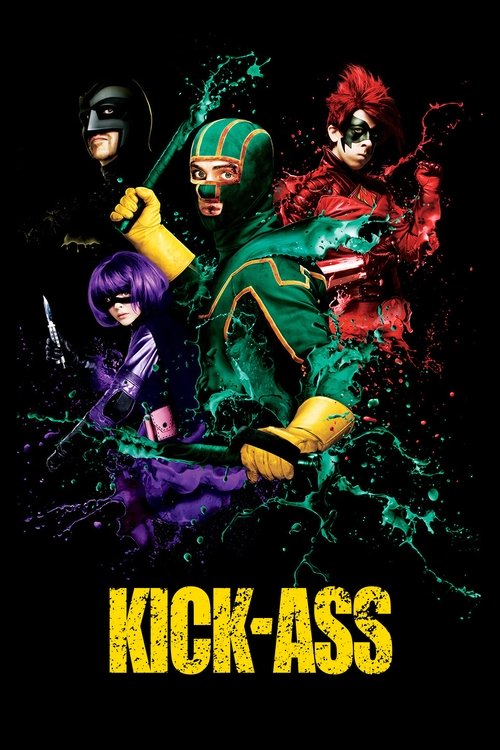
Why hasn't anyone tried to be a superhero? It’s the question that drives Dave Lizewski, and in 2010, it was the question that punctured the balloon of the burgeoning comic-book-movie industrial complex. I watched this for the third time recently while wearing a pair of socks with a massive hole in the big toe, and that drafty, uncomfortable feeling of being slightly exposed felt like the perfect metaphor for the film. Unlike the sanitized, multi-billion-dollar empires that would follow, Kick-Ass is a movie that isn’t afraid to let its protagonist get stabbed, run over, and beaten into a pulp within the first twenty minutes.
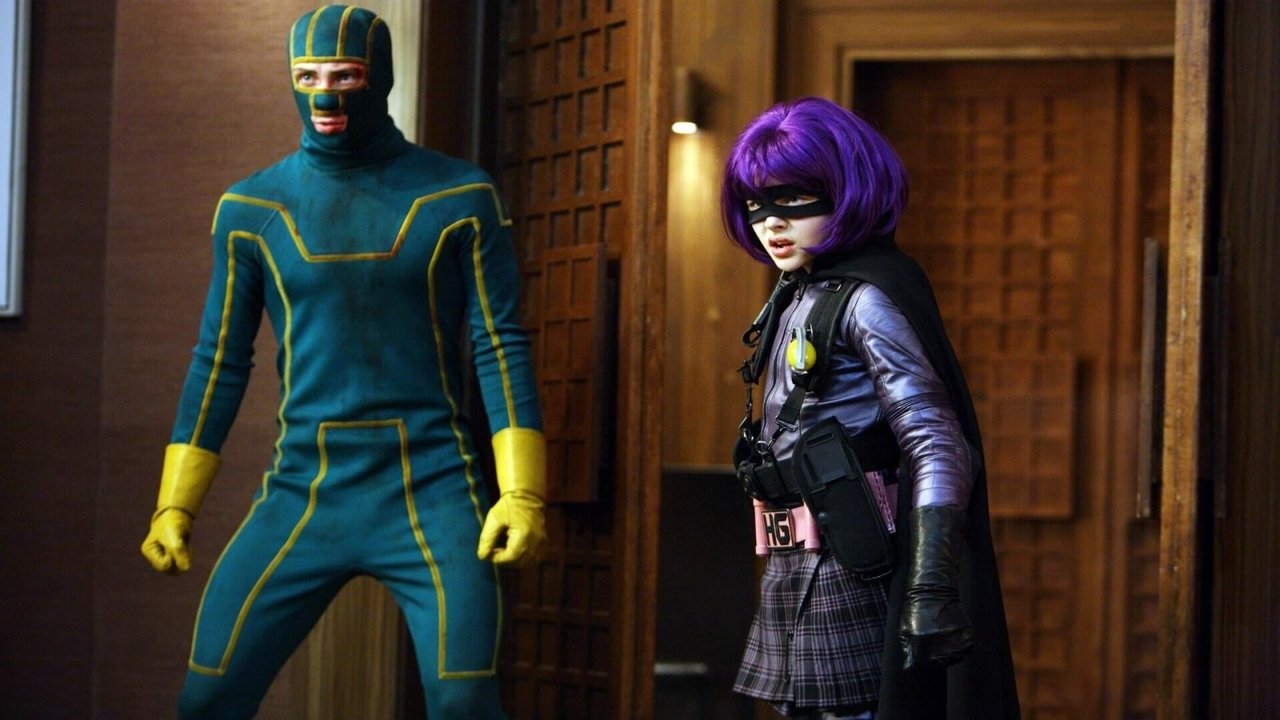
When Matthew Vaughn brought this to the screen, the MCU was still in its infancy and the "gritty" superhero was defined by Christopher Nolan’s brooding billionaire. Dave, played with a perfect "blank slate" energy by Aaron Taylor-Johnson, is the antithesis of both. He isn't a god or a genius; he’s just a kid who spends too much time on MySpace (remember that?) and decides that a wet suit from eBay is enough to change the world. It is essentially a movie about a teenager who has a very public, very violent mental breakdown and calls it heroism.
The Cage Factor and the Hit-Girl Shock
The movie shifts gears from a satirical high-school comedy to a hyper-violent crime saga the moment Mindy Macready and her father enter the frame. As Big Daddy, Nicolas Cage delivers one of his most inspired late-career performances by doing a dead-on Adam West impression that manages to be both hilarious and deeply unsettling. You realize he isn't just a vigilante; he’s a man who has functionally kidnapped his daughter and turned her into a pint-sized assassin.
Then there’s Chloë Grace Moretz. Looking back, her performance as Hit-Girl remains the film's most potent weapon. In an era before every third movie featured a snarky, combat-trained kid, she was a revelation. The controversy surrounding her use of a certain four-letter word beginning with "C" almost overshadowed how incredible her action choreography was. The kitchen fight, set to "The Banana Splits" theme, is a masterclass in rhythm and impact. It’s stylized, sure, but there’s a weight to the hits that modern CGI-heavy brawls often lack. Hit-Girl is what happens when you treat a John Wick character like a Saturday morning cartoon.
Practical Blood and Digital Polish
What fascinates me about the production of Kick-Ass is its independence. Matthew Vaughn couldn't get a major studio to touch it—they all wanted to tone down the violence or make Dave older. So, he and Jane Goldman raised the money themselves, which gave them the freedom to make something that feels genuinely dangerous. This was the tail-end of the era where you could still feel the practical stunts. When Aaron Taylor-Johnson hits a car or takes a fall, it looks like it hurts because the movie respects the physics of a human body breaking.

The action isn't just "cool"; it’s purposeful. The cinematography by Ben Davis (who would later shoot Guardians of the Galaxy) uses a color palette that feels like a glossy comic book, but the sound design is pure horror. Every crack of a baton or discharge of a firearm has a "thud" that resonates in your teeth. It’s a delicate balance: the film invites you to cheer for the spectacle while making you slightly nauseous at the consequences. The jetpack finale is arguably the most "2010" thing ever put on celluloid, yet it still manages to be a total blast.
A Cult Legacy in a Caped World
Looking back at this through the lens of our current superhero saturation, Kick-Ass feels like a relic from a timeline where the genre was allowed to be weird and mean. It’s a cult classic not because it was ignored—it did decent business—but because it spoke a language that only comic book nerds and gore-hounds understood at the time. It subverts the tropes so aggressively that it almost feels like it's rooting against its own protagonist.
The film's villain, Frank D’Amico, played with menacing efficiency by Mark Strong, isn't some world-ending threat with a laser in the sky. He’s just a mobster who is increasingly annoyed that a kid in green spandex is messing with his drug shipments. That groundedness is what keeps the film's crazier elements—like the microwave scene—anchored. It’s a "what if" scenario played out to its most logical, bloody conclusion.
Interestingly, Brad Pitt served as a producer through Plan B, and you can see that "indie with a budget" DNA throughout. They knew exactly when to spend the money (the corridor shootout) and when to let the performances do the heavy lifting. While the sequel struggled to capture this lightning in a bottle, the original remains a jagged, neon-soaked reminder that sometimes, the most heroic thing you can do is realize you're way out of your league.

Ultimately, this movie succeeds because it understands the adolescent fantasy of being special and then systematically dismantles it. It’s a film that exists in the transition period between the analog stunts of the 90s and the digital dominance of the 2010s, capturing the best of both worlds. It’s loud, it’s rude, and it’s surprisingly heartfelt when it isn't busy setting people on fire. If you’re tired of the assembly-line heroics of the current era, this is the perfect antidote. Just don't try the scuba suit thing at home; your local ER doesn't need the paperwork.
Stuff You Might Have Missed
Matthew Vaughn mortgaged his house to help fund the $28 million budget after studios demanded he "tone it down." Nicolas Cage actually chose that specific "Adam West" cadence as a tribute to the 1960s Batman series, which fits the character's warped sense of reality perfectly. The comic book was actually being written by Mark Millar at the same time the script was being developed, leading to some wild differences between the two versions. Aaron Taylor-Johnson was actually a very fit, athletic guy, but he had to intentionally slouch and hide his physique to look like a convincing, unathletic high schooler. * During the corridor shootout, the strobe light effect was so intense that some of the crew had to wear special glasses to avoid seizures during filming.

Keep Exploring...
-
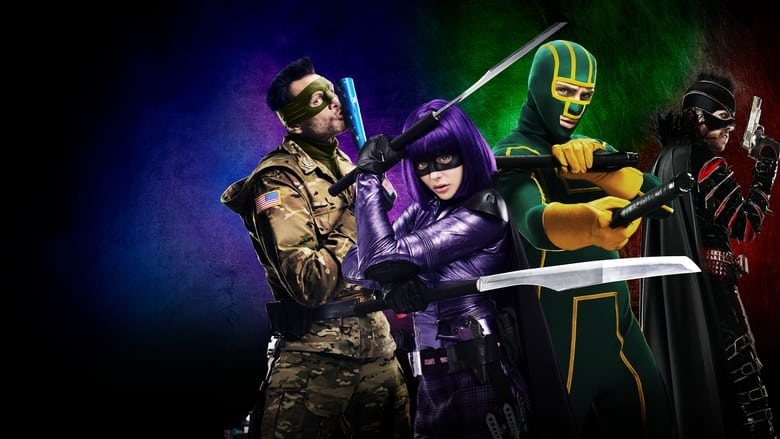
Kick-Ass 2
2013
-

X-Men: First Class
2011
-

Batman Begins
2005
-

Sherlock Holmes: A Game of Shadows
2011
-
Point Break
1991
-
True Romance
1993
-
From Dusk Till Dawn
1996
-
The Boondock Saints
1999
-
Training Day
2001
-
Stardust
2007
-
Elite Squad
2007
-

The Equalizer
2014
-
Kingsman: The Secret Service
2015
-

The Negotiator
1998
-
Undisputed II: Last Man Standing
2006
-
United 93
2006
-
RocknRolla
2008
-
Kingsman: The Golden Circle
2017
-

Layer Cake
2004
-
Four Brothers
2005