Resident Evil: Afterlife
"Experience the apocalypse in three dimensions."
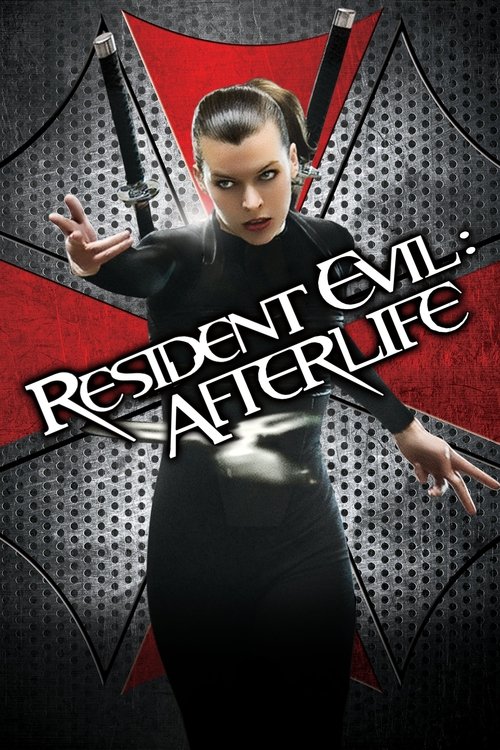
If you want to understand the exact moment the film industry collectively lost its mind over 3D, you don’t look at Avatar. You look at Resident Evil: Afterlife. While James Cameron was busy building a soulful digital ecosystem on Pandora, Paul W. S. Anderson was busy figuring out how many different ways he could hurl CGI sunglasses, axes, and slow-motion bullet casings directly at your forehead. I watched this on a Tuesday night while procrastinating on cleaning my air fryer, and honestly, the grease buildup in the basket was almost as scary as the zombies—but nowhere near as shiny.

By 2010, the Resident Evil franchise had already outlasted its welcome with critics, yet it was becoming a juggernaut with international audiences. This fourth entry was a pivotal turning point for modern cinema; it was the first "non-James Cameron" film to use the Sony Fusion Camera System. Looking back, you can see the sheer ambition in the tech. Anderson wasn't just making a movie; he was crafting a high-fashion music video for the end of the world.
The Shibuya Shuffle and the Clone Wars
The film opens with a sequence that remains one of the most striking in 21st-century action horror: a rainy Tokyo night, a lone girl in the middle of a Shibuya crossing, and the sudden, silent eruption of the T-Virus. It’s moody, atmospheric, and genuinely stylish. Then, of course, the "Alice Clones" show up. Milla Jovovich returns as Alice, but this time she’s brought an army of herself to storm the Umbrella Corporation’s underground headquarters.
Jovovich has always been the glue holding these films together. Even when the script is essentially a series of grunts and cool poses, she commands the screen with a physical presence that few action stars can match. Watching her navigate a corporate skyscraper while everything explodes in synchronized symmetry is a reminder of how much this era loved its "Matrix-lite" aesthetics. It’s also where we meet the film’s version of Albert Wesker, played by Shawn Roberts. He plays the role with such a stiff, modulated intensity that he feels less like a human villain and more like a piece of sinister office furniture from the year 2004.
The Prison Break We Didn't Ask For
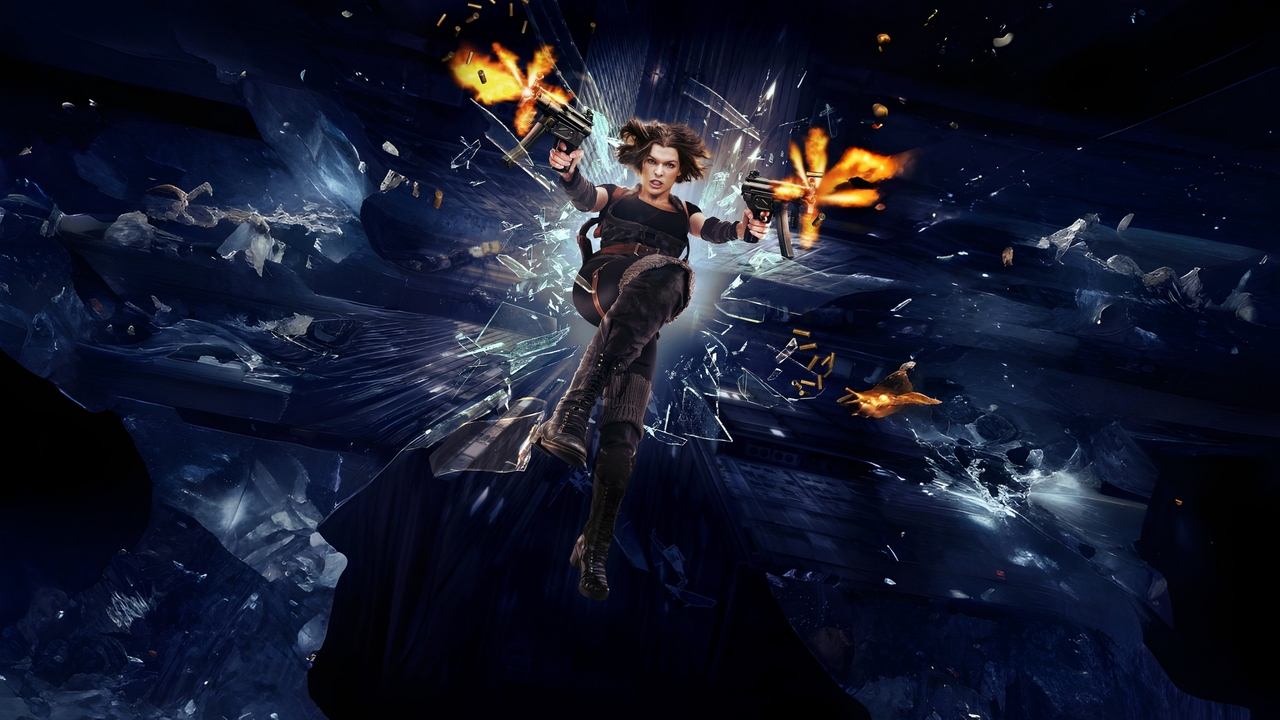
After the explosive Tokyo prologue, the movie shifts gears and heads to a sun-bleached, post-apocalyptic Los Angeles. This is where the film leans into its "survival horror" roots, trapping a small band of survivors in a high-security prison surrounded by tens of thousands of the undead. This segment introduced Wentworth Miller as Chris Redfield. Fresh off his success in Prison Break, the casting was a massive wink to the audience—Miller playing a guy trapped in a cage was a meme before we even called them memes.
He joins Ali Larter, returning as Claire Redfield, and a supporting cast of "zombie fodder" including Kim Coates (who I’ll always love from Sons of Anarchy) and Kacey Barnfield. The middle act slows down significantly, trading the high-octane clones for a more claustrophobic dread. It’s here that the film introduces the "Axeman"—a towering, hooded figure with a giant mallet-axe that looks like it was borrowed from a Silent Hill set. The bathroom fight sequence between the Axeman, Claire, and Alice is arguably the highlight of the film. The way the water droplets are suspended in 3D space during the slow-motion dodge-rolls is a perfect time capsule of the technical obsessions of 2010.
The tomandandy Influence
One thing I have to give Afterlife credit for is its sound. The score by tomandandy (the duo behind the music for The Mothman Prophecies and Killing Zoe) is a relentless, industrial throb that elevates the film from a B-movie to something that feels much more expensive. In the era of the DVD-to-Blu-ray transition, this was the kind of movie you used to show off your new surround sound system. It doesn’t care about nuance; it cares about bass.

There’s an undeniable charm in how shamelessly this movie ignores the laws of physics. Looking back from an era of hyper-saturated superhero movies, there’s something refreshing about the "mid-budget" $60 million blockbuster. It’s focused, it’s lean (at a tight 97 minutes), and it knows exactly what it is. It’s a delivery system for Jovovich looking cool in tactical gear. The film eventually earned over $300 million worldwide, proving that while critics were rolling their eyes, the global audience was more than happy to pay for the spectacle.
The film concludes on the deck of the Arcadia, a supposedly safe haven that turns out to be a floating Umbrella laboratory. It’s a cliffhanger ending that feels almost quaint today, coming just two years before the MCU turned post-credit stingers into a mandatory requirement. Resident Evil: Afterlife isn’t a masterpiece of storytelling—the dialogue is often clunky and the plot is thinner than a zombie’s decaying skin—but as a retrospective piece of the 3D boom, it’s a fascinating, visually polished relic. It’s the cinematic equivalent of a loud, shiny arcade cabinet: you know it’s just there to take your quarters, but you can’t help but enjoy the ride.


Keep Exploring...
-
Resident Evil: Retribution
2012
-

Resident Evil
2002
-
Resident Evil: Extinction
2007
-
Resident Evil: The Final Chapter
2016
-
Resident Evil: Apocalypse
2004
-
AVP: Alien vs. Predator
2004
-
Death Race
2008
-
Spider-Man 3
2007
-
Transformers
2007
-
2012
2009
-
Transformers: Revenge of the Fallen
2009
-

Iron Man 2
2010
-

The Three Musketeers
2011
-

Transformers: Dark of the Moon
2011
-
Journey 2: The Mysterious Island
2012
-
The Amazing Spider-Man
2012
-
Iron Man 3
2013
-
The Wolverine
2013
-

Divergent
2014
-
Teenage Mutant Ninja Turtles
2014