The Way Back
"Nature is the prison. Survival is the key."

If you ever feel like the walk from the parking lot to the grocery store is an insurmountable trek, Peter Weir’s The Way Back is the cinematic equivalent of a cold bucket of water to the face. It’s an endurance test disguised as a prestige drama, a film that asks how many miles a human being can walk on nothing but spite and the vague hope of not being shot by a Soviet border guard. Released in late 2010, it’s a movie that feels like it belongs to a different century, arriving just as Hollywood was fully pivoting toward the neon-soaked digital escapism of the 2010s.

I watched this recently while sitting in a very comfortable recliner, munching on a granola bar that was three months past its "best by" date. The slight staleness of the oats felt appropriately thematic as I watched a group of men consider whether or not to eat a stray dog in the Siberian wilderness. It’s that kind of movie—the kind that makes your own comforts feel slightly unearned.
The Art of the Long Walk
Peter Weir has always been a director fascinated by men in high-pressure environments, from the ship-bound discipline of Master and Commander to the manufactured sky of The Truman Show. In The Way Back, he takes that obsession to the ultimate extreme: a 4,000-mile journey from a Siberian Gulag to the Himalayas. There are no fancy gadgets here, and in an era where Avatar had just rewritten the rules of digital world-building, Weir went the opposite direction. He and cinematographer Russell Boyd (who captured the sea so beautifully in Weir’s previous films) leaned into the tactile, punishing reality of the elements.
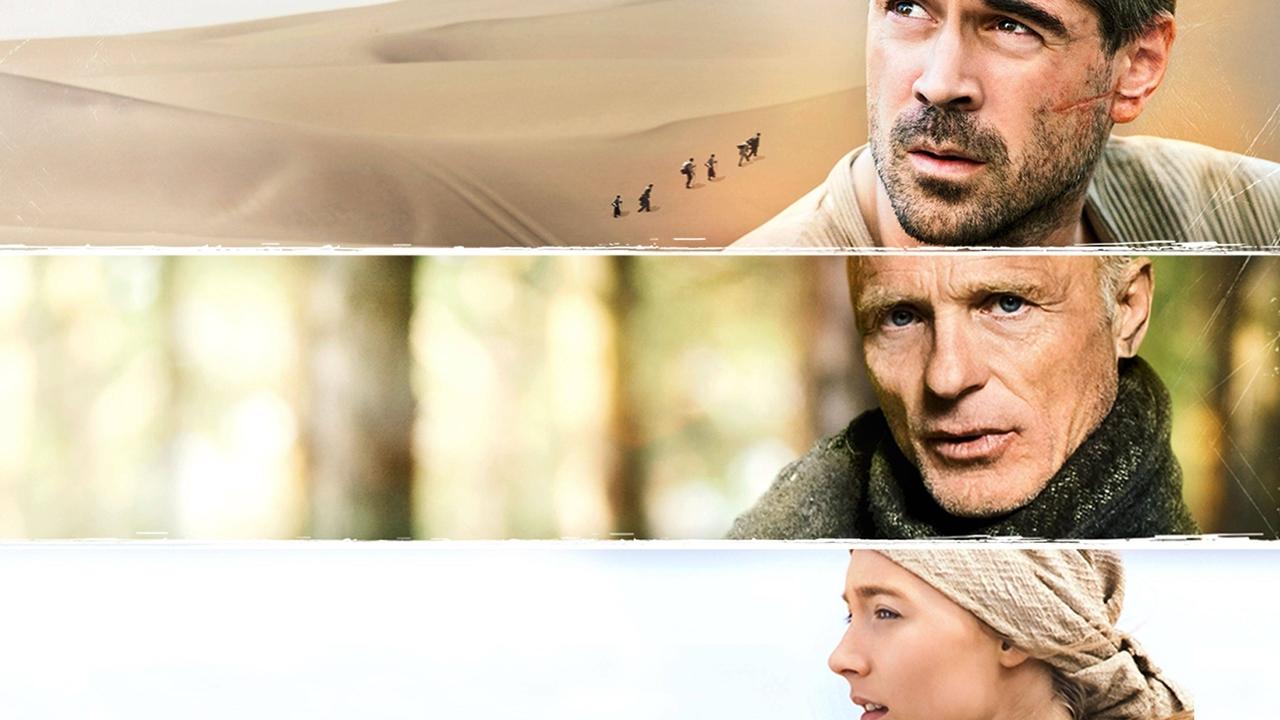
The plot is deceptively simple. Jim Sturgess plays Janusz, a Polish political prisoner who leads a ragtag group of convicts out of a blizzard-prone labor camp. Among them are Ed Harris as a cynical American known only as Mr. Smith, and Colin Farrell as Valka, a Russian thief who is the cinematic equivalent of a stray dog with a knife and a heart of rusted gold. They are joined later by Saoirse Ronan, who provides the emotional glue the group desperately needs.
What makes the film work isn't the destination—we know they’re walking to freedom—but the agonizingly slow transformation of the cast. In 2010, we were seeing the beginning of the "prestige transformation" becoming a cliché (think of the later The Revenant), but here, the physical degradation feels honest rather than performative. The film’s greatest special effect isn’t CGI; it’s the sheer amount of genuine, caked-on filth on Ed Harris’s face. Harris, as always, can say more with a silent, weary glare than most actors can with a five-minute monologue.
A Cast of Ghosts
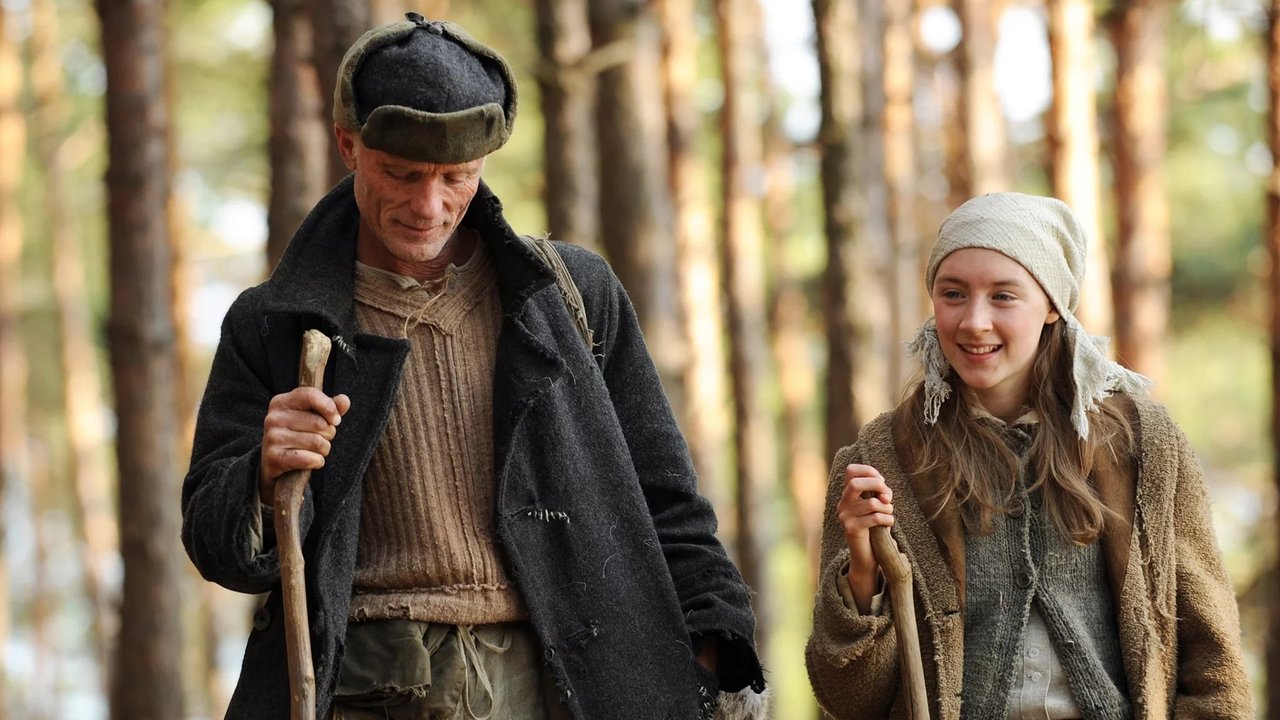
The performances are the backbone of this drama. Jim Sturgess carries the optimism of the film, but the real sparks fly between Ed Harris and Colin Farrell. Farrell, in particular, was in the middle of his "character actor in a leading man’s body" phase, and his Valka is a revelation. He’s terrifying, funny, and heartbreakingly loyal to a set of tattoos of Stalin and Lenin. It’s a performance that deserved way more awards-season buzz than it got, but the film’s quiet, meditative pace likely worked against it in a year dominated by the fast-talking energy of The Social Network.
Saoirse Ronan shows up midway through as Irena, and she brings a necessary shift in perspective. Without her, the movie might have devolved into a grim "who will die next" checklist. Instead, she forces the men to reconnect with their humanity. It’s a subtle arc, but in Weir’s hands, it’s handled with a restraint that prevents it from becoming overly sentimental.
However, the film’s commitment to "historical accuracy" is where things get interesting and a bit murky. The screenplay is based on The Long Walk by Slavomir Rawicz, a book that was a massive bestseller but was later largely debunked as a fabrication. Weir knew about the controversy but decided the "universal truth" of the survivors' experiences was more important than the literal truth of Rawicz’s specific claims. This creates a strange tension: it’s a "true story" that might be a lie, which somehow makes the mythical, legendary quality of the trek feel more appropriate.
Lost in the 2010 Shuffle
So, why did a $30 million epic directed by a legend and starring A-list talent vanish so quickly? Looking back, The Way Back was a victim of a changing industry. In 1995, this would have been a massive Oscar-bait hit. In 2010, it was an "adult drama" in a world that was rapidly losing interest in movies that didn't have a built-in franchise hook. It’s a slow-burn survival story that refuses to provide easy catharsis or flashy action beats.
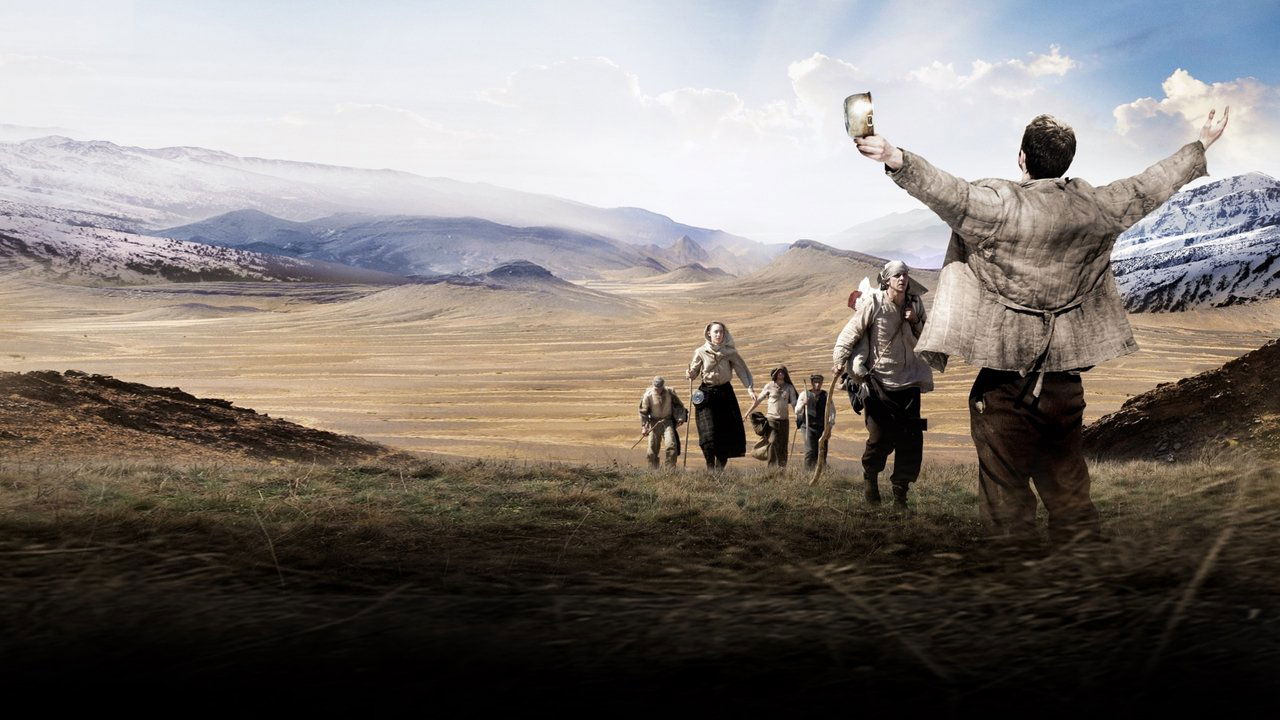
The DVD release offered some insight into the production, showing the grueling locations in Bulgaria and Morocco that stood in for the Siberian wastes and the Gobi Desert. Seeing the crew battle real sandstorms and freezing temperatures makes you appreciate the film’s grounded nature. It’s a testament to a type of filmmaking that uses the landscape as a primary character, rather than a green-screen backdrop.
This movie is the cinematic equivalent of a very high-quality pair of wool socks: sturdy, warm, but ultimately destined to be lost in the back of the drawer. It’s not "fun" in the traditional sense, but it’s deeply satisfying. It’s about the sheer, stubborn refusal of the human spirit to just lay down and die in the dirt.
The Way Back might not be Peter Weir’s masterpiece—it lacks the tight narrative tension of Witness or the poetic fire of Dead Poets Society—but it’s a beautifully shot, superbly acted piece of historical fiction. If you have two hours to spare and want to feel immensely grateful for your indoor plumbing and lack of scurvy, this is a journey worth taking. It’s a quiet reminder that sometimes, the most heroic thing a person can do is just keep putting one foot in front of the other.
Keep Exploring...
-
Master and Commander: The Far Side of the World
2003
-
Agora
2009
-
The Physician
2013
-
Alive
1993
-
The Count of Monte Cristo
2002
-
1492: Conquest of Paradise
1992
-
The Young Victoria
2009
-
The Eagle
2011
-
The Messenger: The Story of Joan of Arc
1999
-
Kingdom of Heaven
2005
-

Casanova
2005
-
Good Night, and Good Luck.
2005
-
The New World
2005
-
Invincible
2006
-

The Fall
2006
-
United 93
2006
-
In the Valley of Elah
2007
-
Rescue Dawn
2007
-
Defiance
2008
-
Frost/Nixon
2008