Barbie: Princess Charm School
"Class is in session, but royalty is earned."

I found myself watching Barbie: Princess Charm School on a Tuesday afternoon while eating a slightly cold grilled cheese sandwich that had more butter on the outside than cheese on the inside. It’s a specific kind of mood—the kind where you want to turn off the analytical part of your brain and sink into the glossy, neon-pink comfort of early 2010s CGI. But as the credits rolled on this 79-minute sprint, I realized my brain hadn't actually turned off. If anything, it was buzzing with questions about class mobility, the burden of secret lineages, and why the villain was giving me more "corporate takeover" energy than "evil stepmother" vibes.
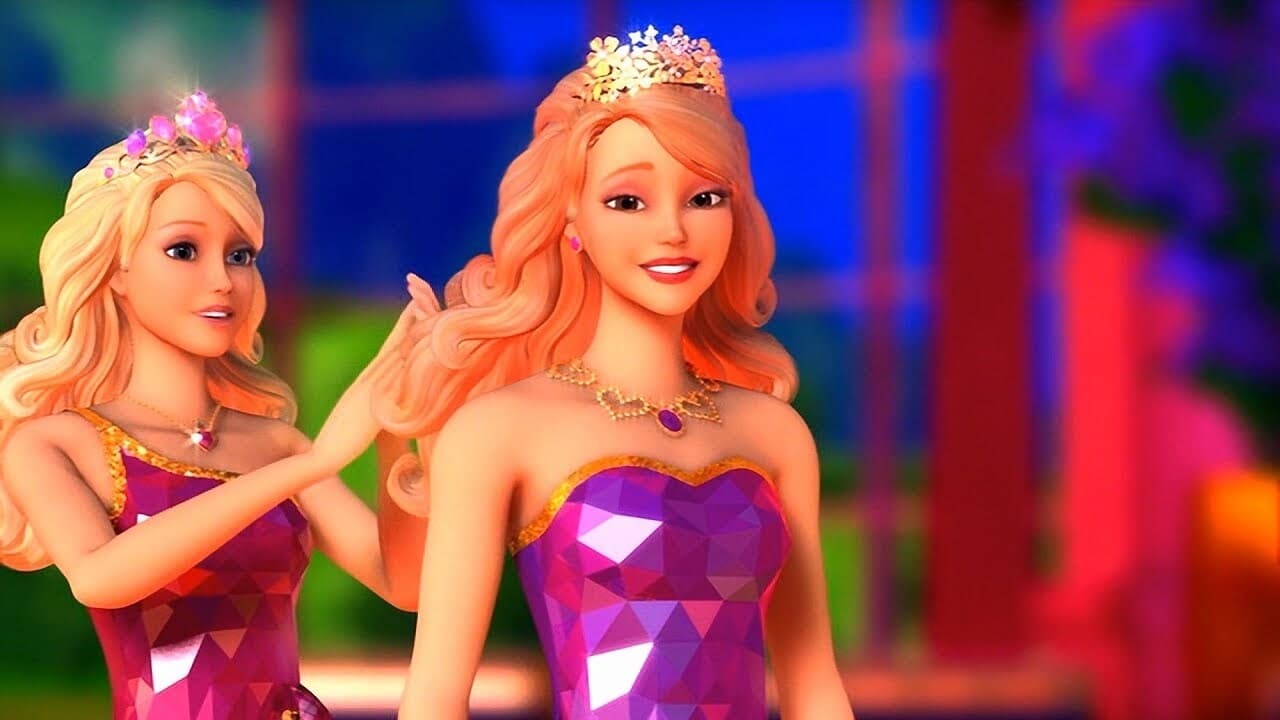
Released in 2011, Princess Charm School arrived during a fascinating pivot for Mattel and Rainmaker Entertainment. We were deep into the DVD era, where these films weren’t just commercials; they were attempts to build a coherent cinematic universe for a doll that had already lived a thousand lives.
The Velvet Ghetto of the DVD Aisle
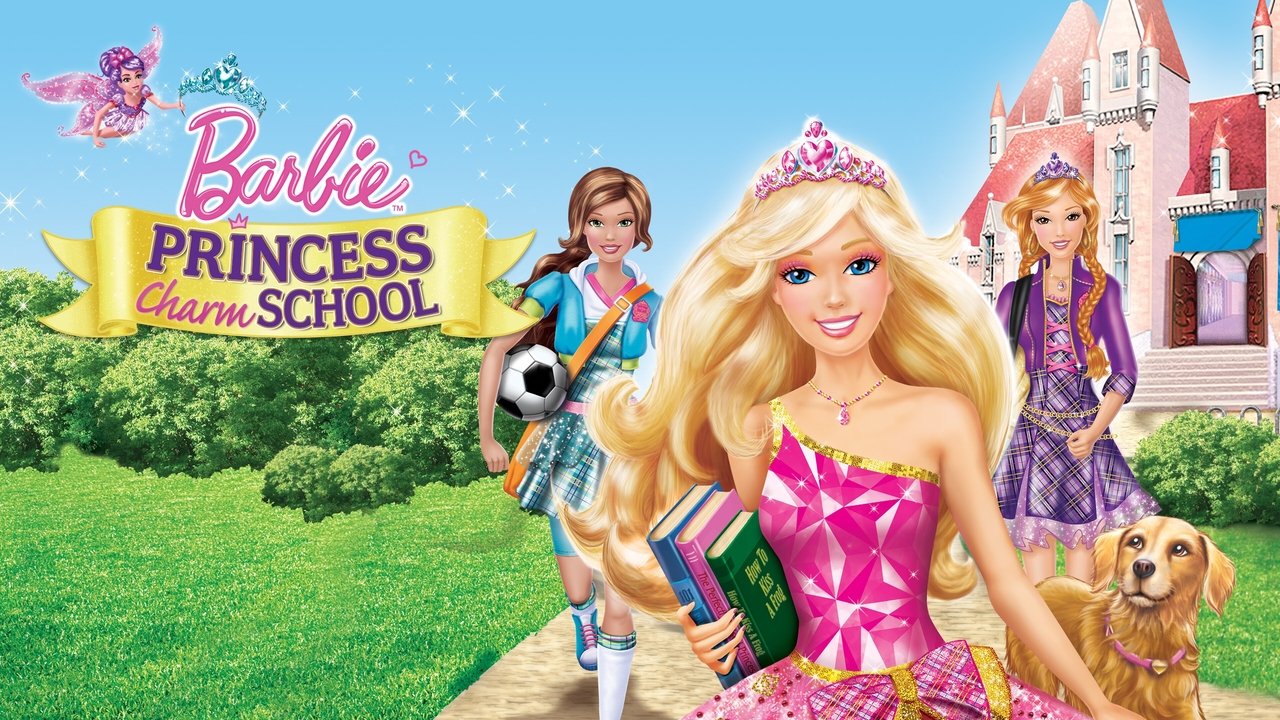
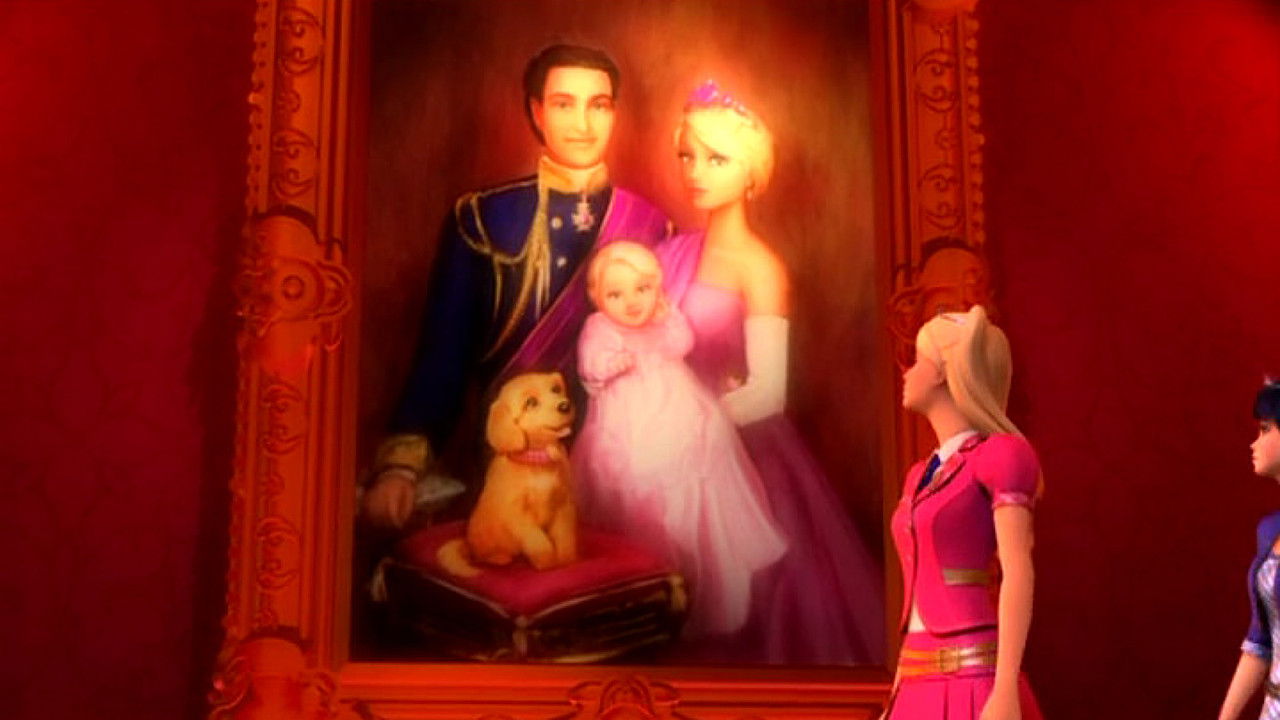
Looking back, there’s a tendency to dismiss the straight-to-DVD Barbie catalog as mere "pink noise." But Princess Charm School is a surprisingly sturdy piece of narrative architecture. It’s essentially The Princess Diaries meets Harry Potter, filtered through a lens of post-recession anxiety. Our protagonist, Blair Willows (voiced with a grounded earnestness by Diana Kaarina), isn't a bored socialite; she’s a waitress in the kingdom of Gardania, working herself to the bone to support her sickly adoptive mother and younger sister.
There’s a genuine weight to the "drama" here. Blair doesn’t go to the titular school because she wants a tiara; she goes because winning the "Lady Royal" lottery is her family’s only ticket out of a cramped apartment in the slums. In the context of 2011—a time when the "one percent" was entering the common vernacular—the film’s focus on Blair’s "outsider" status feels oddly pointed. When she’s mocked for her lack of poise, it’s not just about etiquette; it’s a critique of how the elite use manners as a barrier to keep the working class in their place.
Performance and the Art of the Plastic Villain
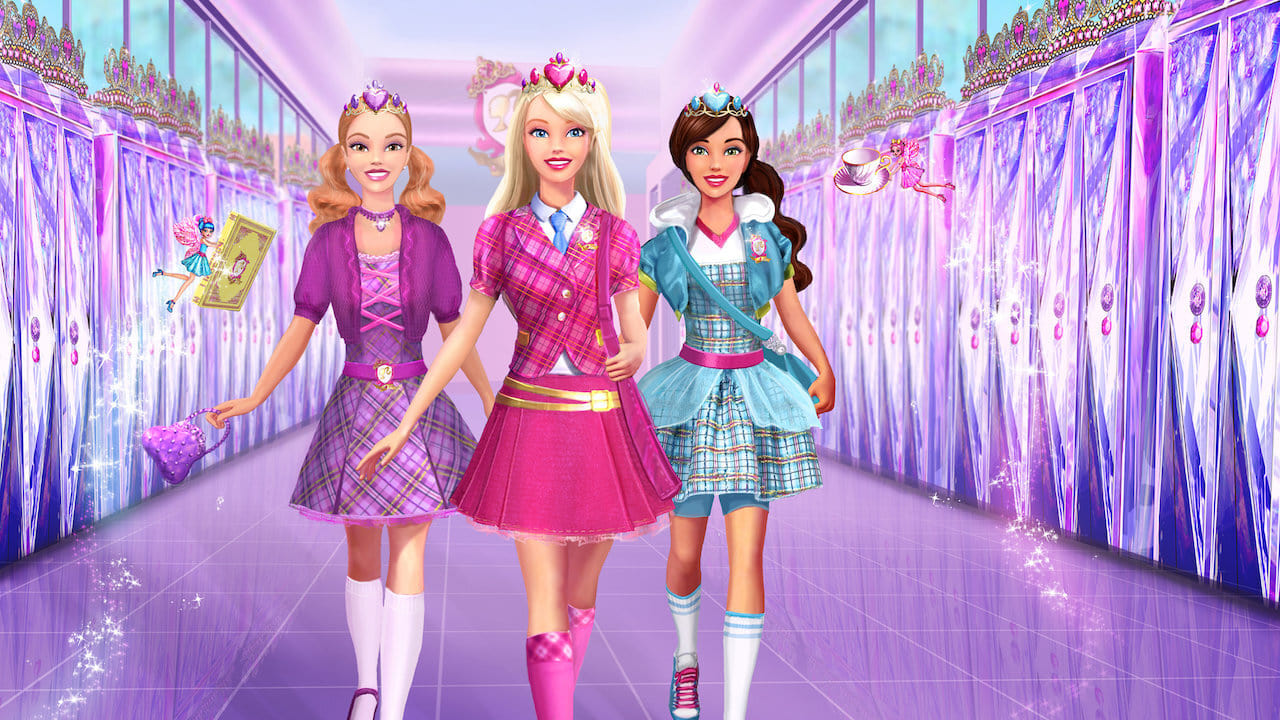
For a film populated by characters who literally look like they were raided from a Claire’s with a corporate credit card, the voice work is remarkably nuanced. Diana Kaarina (who also lent her voice to Barbie: A Fairy Secret) manages to make Blair feel like a person with real stakes, rather than a vessel for toy sales. But the real star here is Nicole Oliver as Dame Devin.
Oliver, who many will recognize as the voice of Princess Celestia in My Little Pony: Friendship is Magic, plays Dame Devin with a chilling, clipped precision. She isn’t a cackling witch; she’s a calculating politician. Her motivation—installing her daughter Delancy (Brittney Wilson) on the throne—is driven by a terrifyingly recognizable brand of stage-parent narcissism. There’s a scene where Dame Devin realizes Blair’s true identity, and the shift in her vocal tone from "passive-aggressive teacher" to "existential threat" is genuinely gripping. It’s a performance that earns its dramatic beats, making the final confrontation feel like more than just a foregone conclusion.
A Philosophical Crisis in Pink
If we look at this through a more cerebral lens, Princess Charm School grapples with the tension between meritocracy and monarchy. The school purports to teach girls how to be princesses through hard work and grace, yet the ultimate prize is still tied to a magical, glowing crown that only recognizes "true" royal blood. I couldn't help but wonder: if Blair hadn’t been the missing Princess Sophia, would her hard work have mattered at all?
The film flirts with the idea that Delancy—the "rightful" heir’s rival—is actually the more interesting character. She’s caught between her mother’s Machiavellian schemes and her own growing moral compass. Her eventual defection to help Blair is the film’s most emotionally authentic moment. It suggests that while you might be born into a system, you aren't required to uphold its rot. For a "kids' movie," that’s a heavy piece of philosophy to chew on.
Visually, the film is a time capsule of 2011 CGI. It’s that awkward middle ground where the textures are too smooth and the physics are a bit "floaty," but the ambition is everywhere. The design of the school—a mix of neo-Gothic spires and high-tech magical interfaces—reflects the era’s obsession with blending tradition with the digital frontier. It’s the kind of aesthetic that feels dated now, but in a way that’s almost nostalgic, like looking at an old iPod Nano.
Ultimately, Barbie: Princess Charm School is better than it has any right to be. It’s a drama disguised as a toy commercial, offering a surprisingly sharp look at identity and the courage required to claim one's space in a world designed to exclude you. While the animation hasn't aged with the grace of a Pixar classic, the heart of the story remains remarkably intact. It’s a reminder that even in the most commercial corners of cinema, there’s often a team of creators trying to say something real.
Blair Willows might have started as a waitress, but by the time the credits roll, she’s navigated a minefield of classism and corruption that would make a political thriller protagonist sweat. It’s a fun, fleeting, and strangely thoughtful relic of the early 2010s that deserves a second look, even if you’ve long since traded your tiaras for tax forms.
Keep Exploring...
-
Cinderella III: A Twist in Time
2007
-
Tinker Bell
2008
-
Partly Cloudy
2009
-
Tinker Bell and the Lost Treasure
2009
-
Tinker Bell and the Great Fairy Rescue
2010
-

Secret of the Wings
2012
-
The Boxtrolls
2014
-

Barbie in the 12 Dancing Princesses
2006
-
The Secret World of Arrietty
2010
-
Song of the Sea
2014
-

Justice League: The Flashpoint Paradox
2013
-
Anastasia
1997
-
Treasure Planet
2002
-
A Monster in Paris
2011
-
DuckTales: The Movie - Treasure of the Lost Lamp
1990
-
The Rescuers Down Under
1990
-

The Swan Princess
1994
-
James and the Giant Peach
1996
-
Coraline
2009
-
Monster House
2006