From Up on Poppy Hill
"To move forward, look behind you."
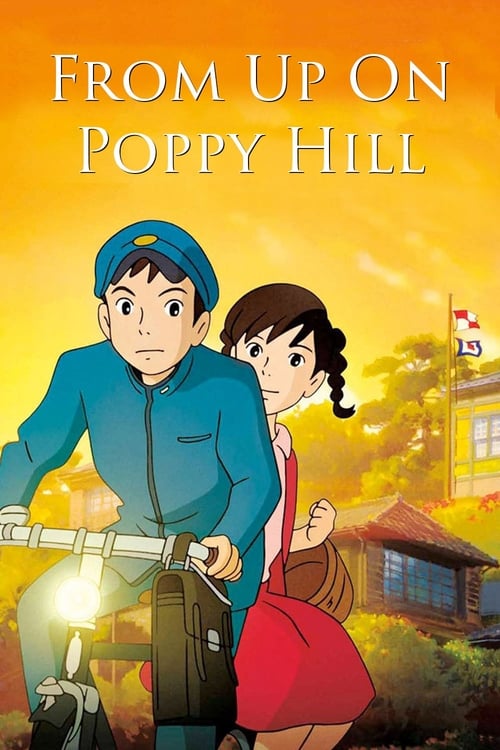
There is a specific, rhythmic sound at the heart of From Up on Poppy Hill—the clatter of a breakfast skillet and the snapping of signal flags against a flagpole. I first sat down with this film on a humid Tuesday afternoon, distracted by a flickering desk lamp and a half-eaten bag of slightly stale pretzels, expecting the usual Studio Ghibli whimsy. I wanted a Catbus or a soot sprite. Instead, I got a girl frying mackerel and a boy jumping off a roof into a pool of water. It was quiet, grounded, and surprisingly, exactly what I needed.

Released in 2011, From Up on Poppy Hill arrived during a fascinating pivot point for modern animation. While the rest of the world was sprinting toward the hyper-realized textures of 3D CGI—the era of Toy Story 3 and Tangled—Ghibli remained a stubborn, beautiful holdout. Directed by Goro Miyazaki and written by his father, the legendary Hayao Miyazaki, this film feels like a hand-drawn protest against the digital rush. It’s a period piece set in 1963 Yokohama, a city caught between the scars of the Korean War and the shiny promise of the 1964 Tokyo Olympics.
The Chaos of the Latin Quarter
The story follows Umi Matsuzaki (Masami Nagasawa), a disciplined high schooler who manages a boarding house, and Shun Kazama (Junichi Okada), a charismatic member of the school's journalism club. Their meet-cute isn't magical; it’s a collision of ideologies. Shun and his fellow students are fighting to save "The Latin Quarter," a crumbling, filth-encrusted clubhouse that houses everything from the philosophy club to the amateur chemists.
The Latin Quarter is easily the best "character" in the film. It’s a dizzying, five-story labyrinth of books, dust, and teenage passion. Watching the students clean it is oddly therapeutic. In an era where 2010s cinema was obsessed with "gritty" reboots and apocalyptic stakes, there is something deeply radical about a movie where the climax involves scrub brushes and floor wax. Goro Miyazaki captures the clutter of youth with a precision that feels lived-in. I’ll go out on a limb and say it: Goro is actually a more talented director of realism than his father. While Hayao’s worlds drift toward the surreal, Goro anchors us in the weight of a wooden chair or the steam from a noodle bowl.
A Drama of Blood and Memory
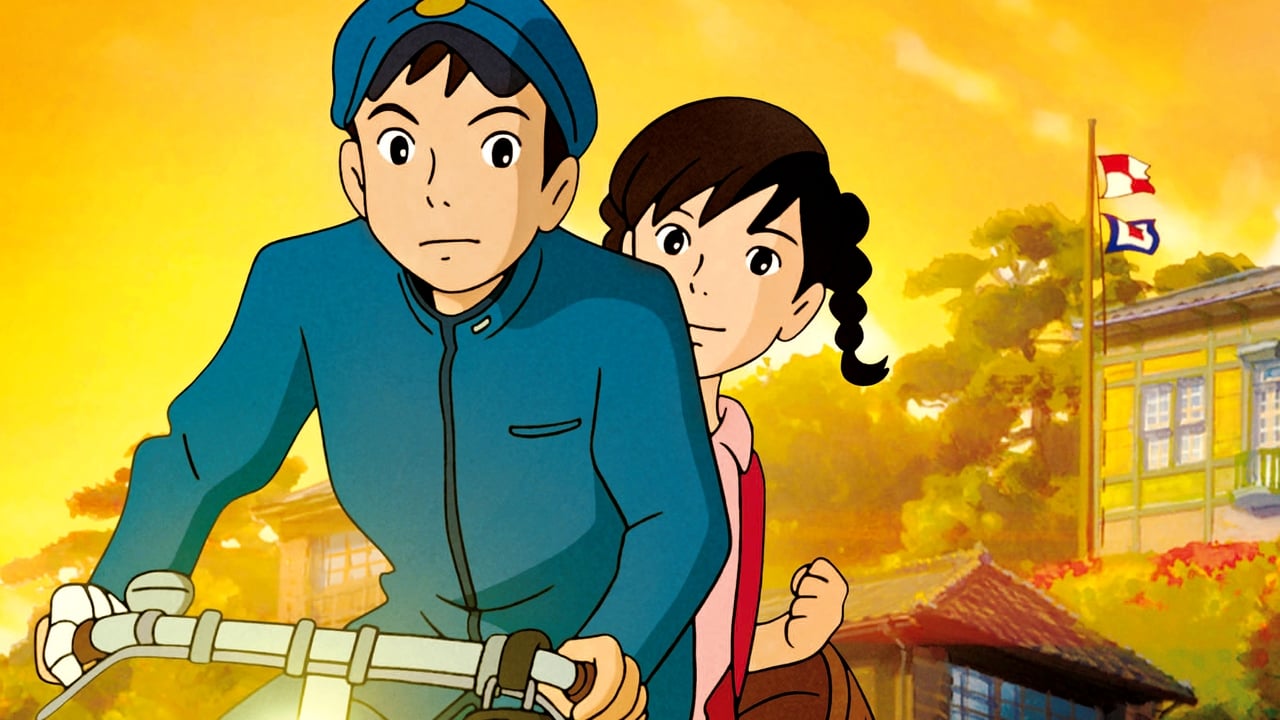
Of course, this is a drama, and it wouldn't be a Ghibli drama without a layer of existential yearning. As Umi and Shun grow closer, they discover a shared connection to the past that threatens to turn their budding romance into a Greek tragedy. A hidden photograph suggests they might share a father—a naval captain lost at sea.
This "secret sibling" trope can often feel like cheap soap opera filler, but here, it serves a deeper philosophical purpose. It asks: How do we honor the dead without letting them swallow our future? The film doesn't shy away from the trauma of post-war Japan. Umi raises her signal flags every morning to guide her father home, even though she knows he’s never coming back. It’s a heartbreakingly cerebral look at grief. Masami Nagasawa delivers a vocal performance that is remarkably restrained; she makes Umi’s maturity feel like a burden she’s proud to carry, rather than just a personality trait.
Looking back from our current vantage point, Poppy Hill feels like a "forgotten" Ghibli gem because it lacks the marketing hook of a flying castle. It’s a film that demands you slow down. In 2011, we were already beginning to feel the frantic hum of the smartphone era, and this movie was a deliberate invitation to look at the sunset instead of a screen.
The Sound of 1963

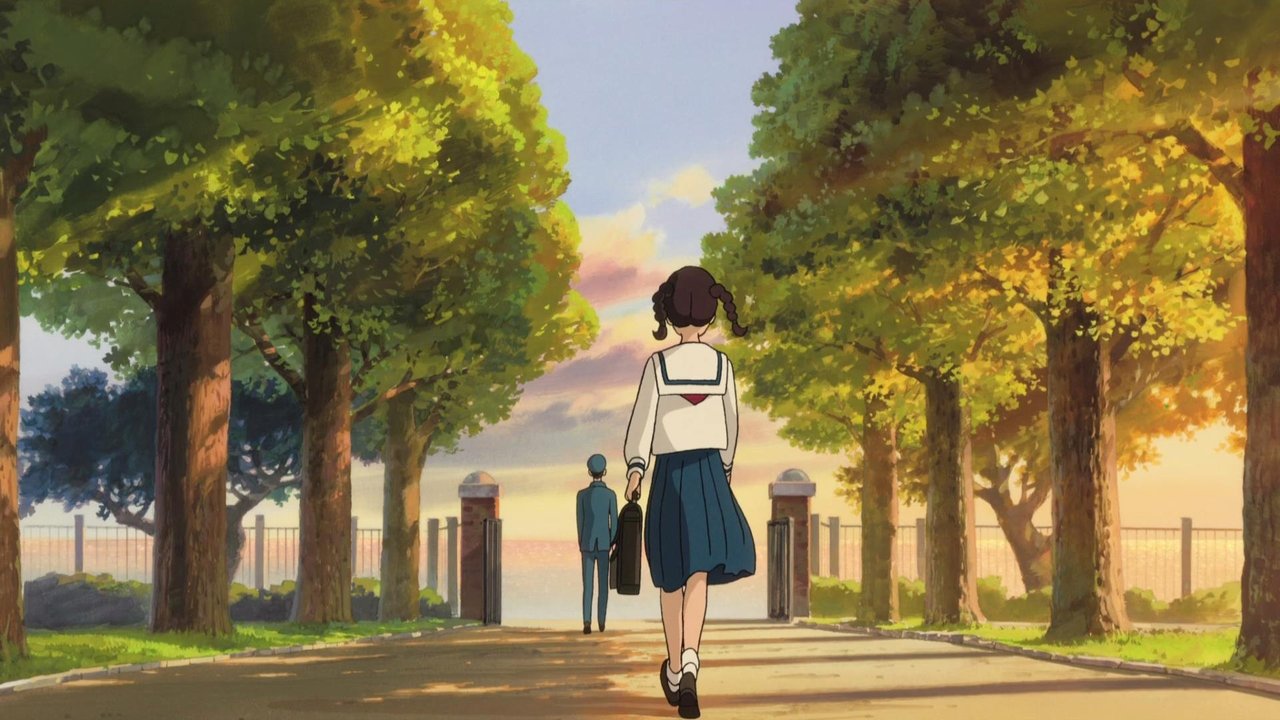
The atmosphere is bolstered by Satoshi Takebe’s score, which swaps the sweeping orchestral swells of Joe Hisaishi for a bouncy, jazz-inflected 1960s pop sound. It’s infectious. It makes the act of walking to school or riding a bike down a hill feel like a grand adventure.
There’s a bit of trivia that often gets lost: the production was hit by the 2011 Tohoku earthquake and tsunami. The staff faced rolling blackouts, forcing them to work at night to keep the animation desks lit. You can almost feel that sense of communal perseverance in the film. The students saving their clubhouse isn't just a plot point; it’s a reflection of a nation constantly rebuilding itself.
If I have one gripe, it’s that the ending feels a little too tidy for a story that grapples with such messy emotional heritage. But maybe that’s the point. Sometimes, the flags we raise are enough to bring us the peace we need, even if the ships don't return.
From Up on Poppy Hill is a gentle reminder that some things are worth preserving, whether it's an old building or the way we remember those we've lost. It’s a film that rewards the patient viewer with a sense of warmth that lingers long after the credits roll. If you’ve skipped this one because it looked "too normal," do yourself a favor and dive in. The water is fine, and the view from the hill is spectacular.

Keep Exploring...
-
When Marnie Was There
2014
-
Tales from Earthsea
2006
-

Evangelion: 1.0 You Are (Not) Alone
2007
-
Evangelion: 2.0 You Can (Not) Advance
2009
-
The Tale of The Princess Kaguya
2013
-
Whisper of the Heart
1995
-
Neon Genesis Evangelion: The End of Evangelion
1997
-
Millennium Actress
2002
-
Ponyo
2008
-
The Secret World of Arrietty
2010
-

Evangelion: 3.0 You Can (Not) Redo
2012
-
The Wind Rises
2013
-
The Girl Who Leapt Through Time
2006
-
Persepolis
2007
-
Wolf Children
2012
-
The Garden of Words
2013
-
Princess Mononoke
1997
-

The Fall
2006
-
Control
2007
-
The Diving Bell and the Butterfly
2007