Hotarubi no Mori e
"Don’t touch. Don’t let go."
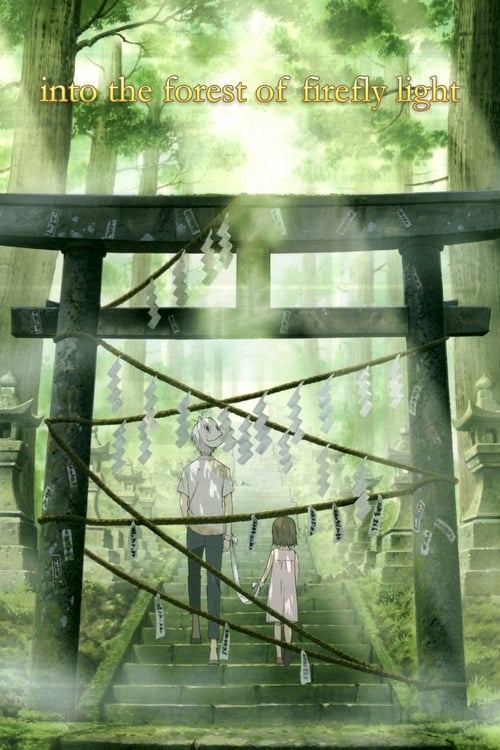
I watched Hotarubi no Mori e for the first time on a humid Tuesday night, sitting on my floor while eating a slightly freezer-burned mango mochi. The coldness of the rice cake felt like a weirdly appropriate sensory link to the film’s "spirit world" vibes. It’s a movie that only runs for 45 minutes—roughly the length of a prestige TV drama—but it carries more emotional weight than most three-hour epics I’ve slogged through lately.
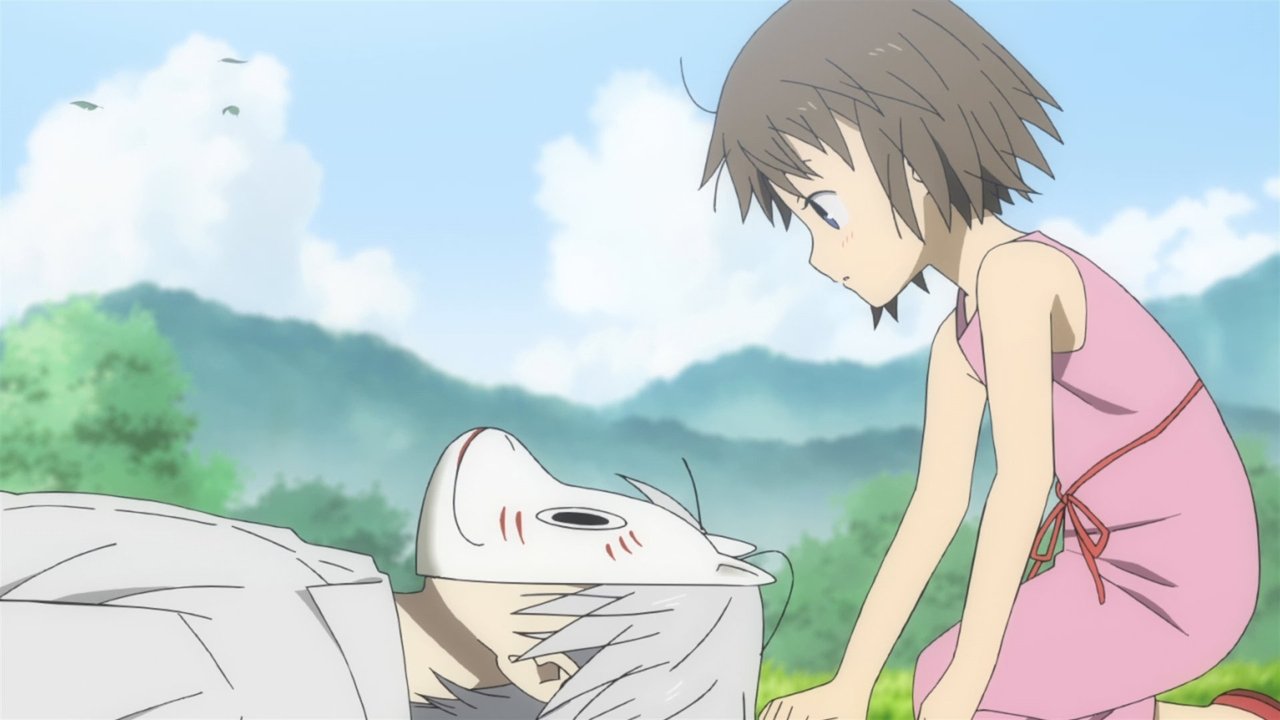
Released in 2011, this little film from studio Brain's Base arrived at a fascinating crossroads for anime. We were moving away from the gritty, experimental digital experiments of the late 2000s into a period of high-polish, painterly aesthetics. Yet, Hotarubi no Mori e feels strangely timeless, like a ghost story whispered in a playground. It’s an obscure gem that didn't get the massive theatrical push of a Ghibli film, but for those of us who stumbled upon it in the early days of streaming or through niche DVD imports, it’s a permanent inhabitant of our internal highlight reels.
The Physics of Longing
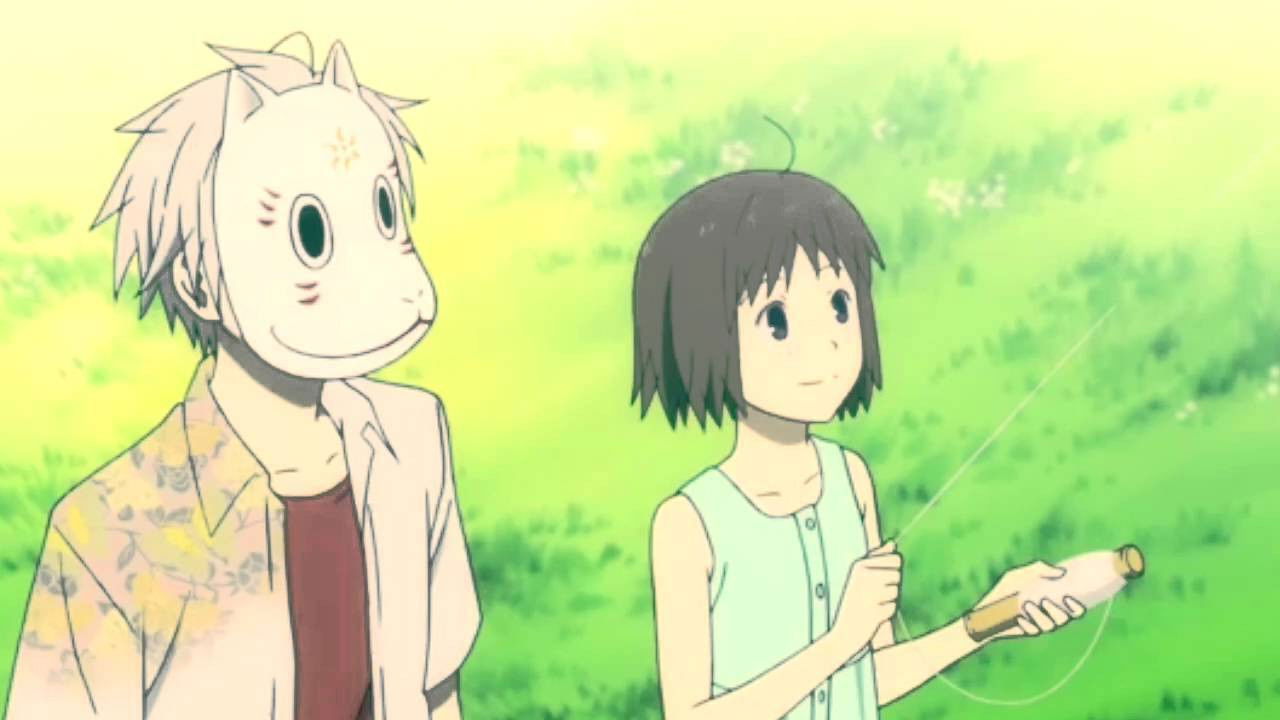
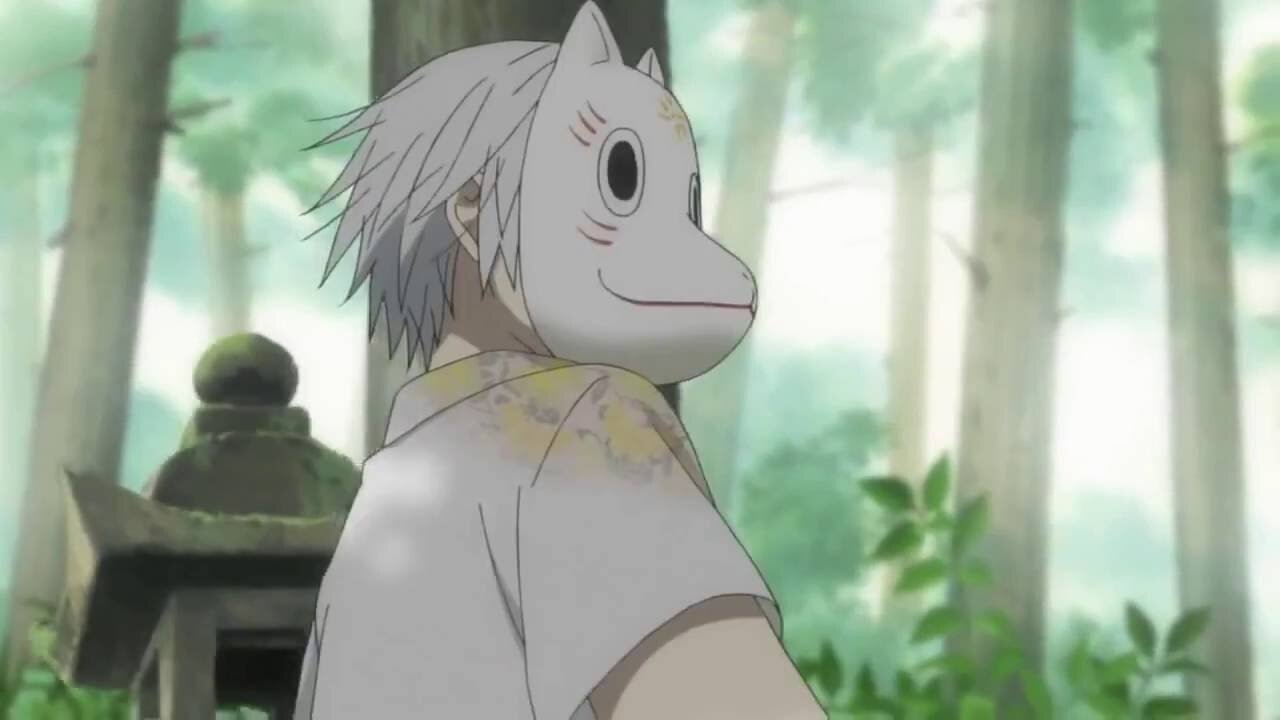
The story is deceptively simple: a six-year-old girl named Hotaru gets lost in a forest inhabited by yōkai. She’s rescued by a masked young man named Gin, who reveals a cruel cosmic catch—he is a spirit, and if a human ever touches him, he will disappear forever. What follows is a series of summer vignettes as Hotaru grows from a child into a teenager, returning every year to visit the unchanging Gin.
This "no-touch" rule is the film’s central philosophical engine. In an era where modern cinema often leans into explicit action or over-explained lore, director Takahiro Omori (who also helmed the equally soulful Natsume's Book of Friends) understands the power of restraint. By forbidding physical contact, the film forces us to focus on the spaces between the characters. It turns a simple walk through the woods into a high-stakes tightrope act of emotional intimacy.
The performances here are incredibly nuanced. Ayane Sakura, voicing Hotaru, has to navigate a decade of aging in under an hour. She captures that specific, frantic energy of childhood that gradually matures into a quiet, wistful longing. Opposite her, Koki Uchiyama plays Gin with a hollow, ethereal stillness. Because his face is hidden behind a fox mask for much of the runtime, Uchiyama has to do all the heavy lifting with his vocal cadence. He sounds like a person who is already half-convinced he doesn't exist, and the way his voice softens as the years pass is enough to break your heart.
A Masterclass in Atmospheric Minimalism
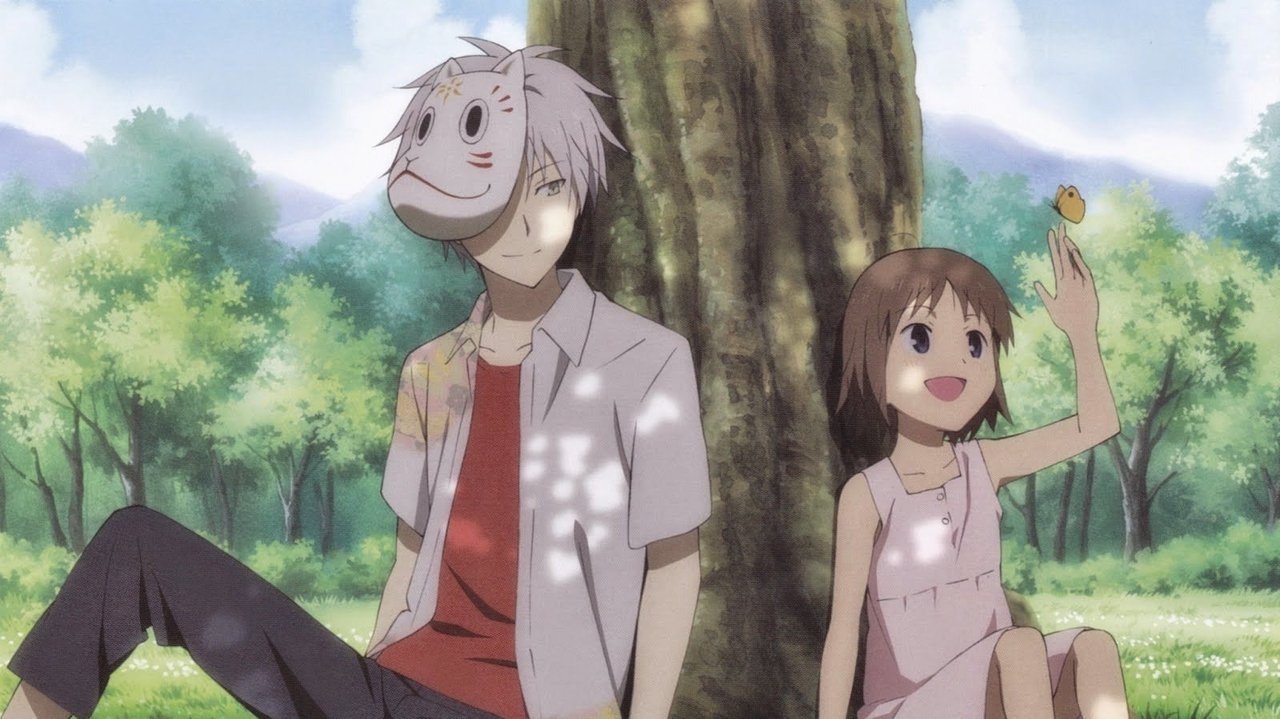
Visually, the film is a love letter to the Japanese summer. You can practically hear the cicadas screaming and feel the heavy, stagnant air of the mountain god’s forest. This was a peak era for Brain's Base, a studio that excelled at these "soft-focus" dramas. Looking back from 2024, the animation isn't trying to blow your hair back with CGI spectacles or "Sakuga" flexes. Instead, it uses lighting and pacing to create a sense of mono no aware—the pathos of things, or a sensitivity to the ephemeral.
The score by Makoto Yoshimori is the secret weapon here. It’s mostly piano-driven, punctuating the silence rather than filling it. It reminds me of the way some 90s indie films used music to signal a character’s internal shift without a word of dialogue being spoken. It’s respectful of the audience’s intelligence; it doesn't tell you how to feel, it just sits in the room with you while you feel it. It’s essentially a 45-minute exercise in emotional masochism.
I think the film’s obscurity is partially due to its awkward length. Studios usually don't know what to do with a 45-minute "mid-length" feature. It’s too short for a standard theatrical ticket and too long to be a "short." But in retrospect, that brevity is its greatest strength. There isn't a single frame of filler. Every summer visit, every conversation about Hotaru’s school life, and every shared popsicle builds toward a conclusion that feels both inevitable and devastating.
Why We Return to the Forest
Beyond the romance, the film grapples with the terrifying speed of time. Hotaru ages, her world changes, and she faces the pressures of adulthood, while Gin remains a static point in a shifting landscape. It’s a metaphor for the way we hold onto memories—we can look at them, we can visit them, but the moment we try to grab them and pull them into the present, they vanish.
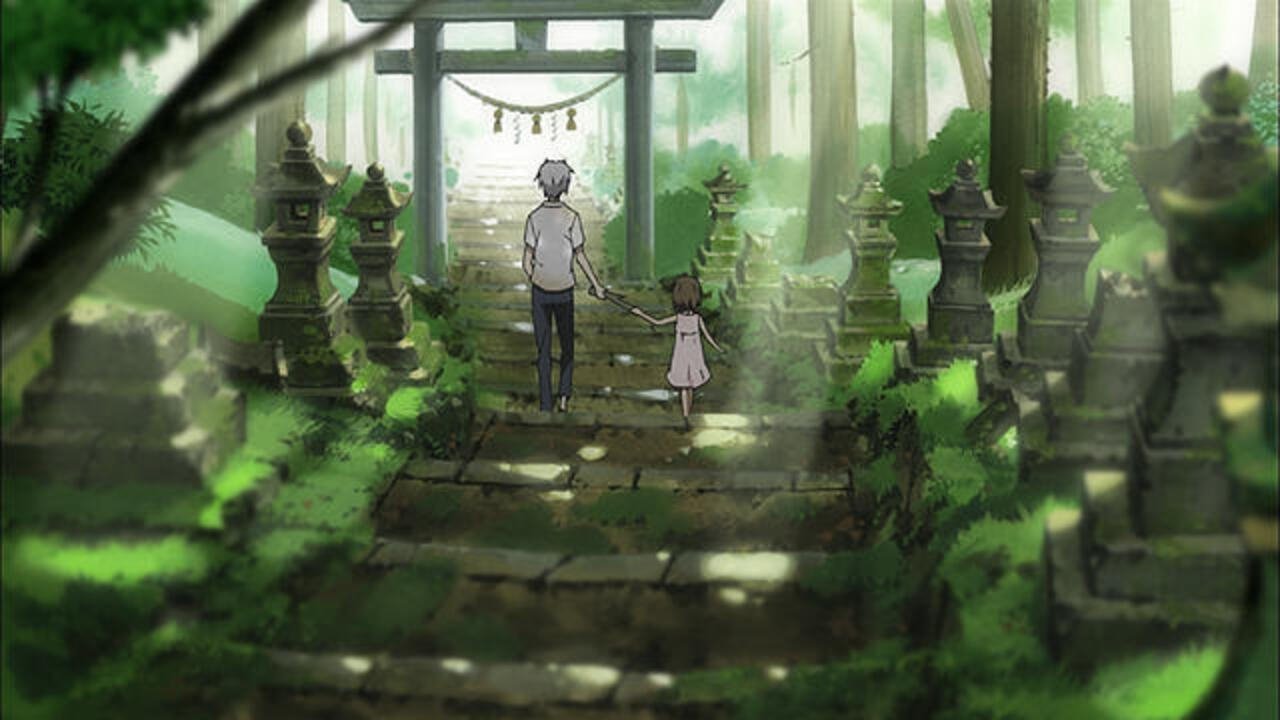
This isn't just a "teen romance" anime; it's a cerebral look at the boundaries of human connection. Does a relationship need physical touch to be "real"? If a bond is destined to end in a puff of blue light, was it a waste of time? The film argues, quite beautifully, that the ending doesn't negate the journey. Even if the screen goes dark and the credits roll before the hour mark is up, the impact remains.
If you can find a copy—it’s often tucked away on niche streaming services or found in the "Staff Picks" section of a dying video store—give it the 45 minutes it asks for. Just maybe have a box of tissues nearby. And some mochi. The mochi definitely helps.
Hotarubi no Mori e is a rare example of a film that knows exactly what it wants to be and achieves it with zero ego. It’s a quiet, haunting, and deeply human story that uses its fantasy elements to highlight very real truths about how we love and how we let go. It’s a reminder that sometimes the most powerful stories aren't the ones that span galaxies, but the ones that take place in the small, quiet gap between two reaching hands.
Keep Exploring...
-
Millennium Actress
2002
-
The Tale of The Princess Kaguya
2013
-
Paperman
2012
-
Justice League: The Flashpoint Paradox
2013
-
Song of the Sea
2014
-
Corpse Bride
2005
-
Neon Genesis Evangelion: The End of Evangelion
1997
-
A Dog's Will
2000
-
The Girl Who Leapt Through Time
2006
-
Ponyo
2008
-
The Secret World of Arrietty
2010
-
Wolf Children
2012
-
The Garden of Words
2013
-
A Whisker Away
2020
-
Road to Ninja: Naruto the Movie
2012
-
Cinderella III: A Twist in Time
2007
-
Coraline
2009
-
Barbie: Princess Charm School
2011
-

About Time
2013
-

Evangelion: 1.0 You Are (Not) Alone
2007