In Time
"Your life ends when your clock hits zero."
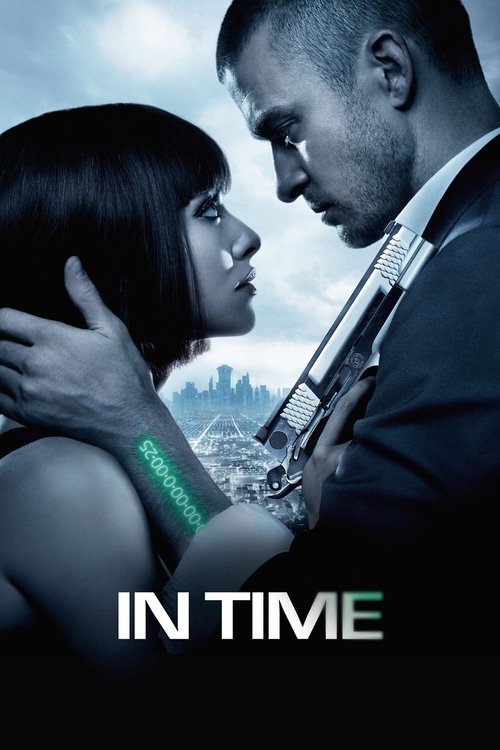
The 2011 cultural zeitgeist was a strange, prickly creature. We were right in the middle of the "Occupy Wall Street" movement, everyone was furious at the 1%, and the phrase "wealth inequality" was being tossed around like a hot potato at a backyard BBQ. Into this arena stepped Andrew Niccol, a director who has always been better at world-building than finishing a sentence. He gave us In Time, a movie where the metaphor isn't just on the nose—it’s actively punching you in the nostrils.

I watched this most recent time on a scratched DVD I picked up at a garage sale that had a weirdly persistent sticky residue on the case. Somehow, that felt right. There’s something beautifully "2011" about this film's aesthetic: it’s sleek, it’s slightly cynical, and everyone looks like they just stepped out of a high-end denim ad.
A Dystopia You Can Set Your Watch By
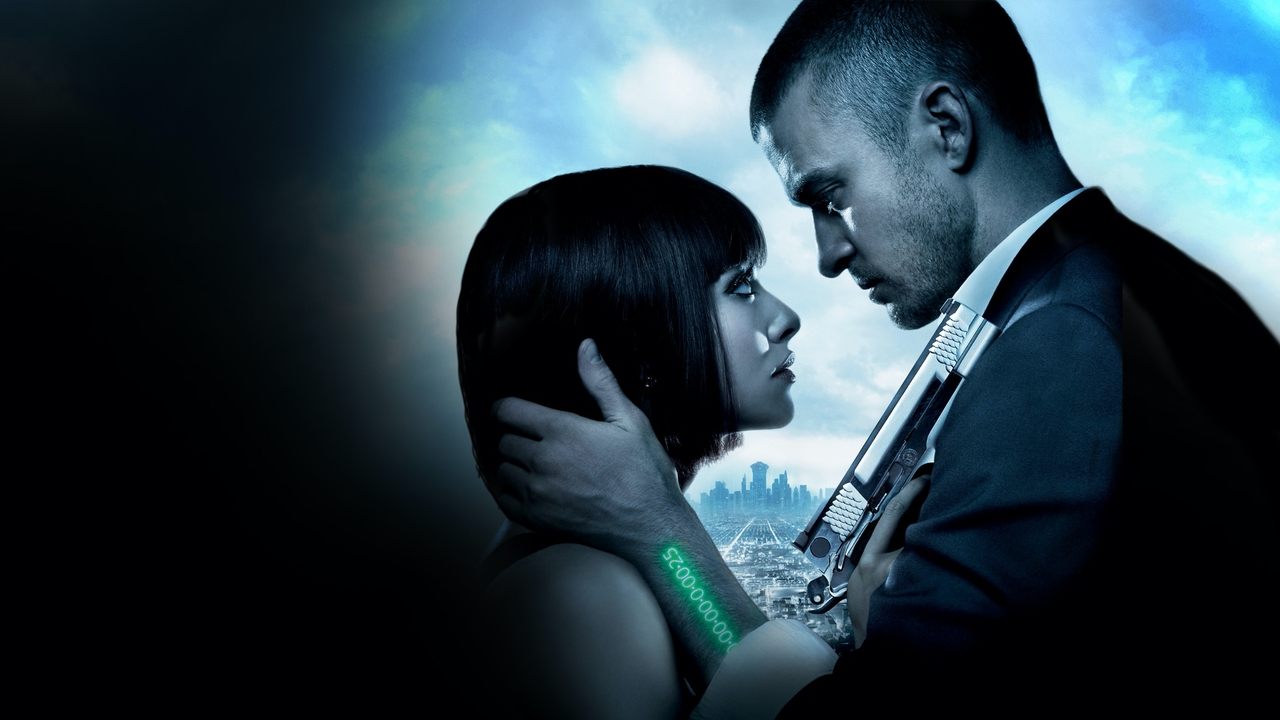
The premise is one of those "why didn't I think of that?" nuggets of sci-fi gold. In the future, humans are genetically engineered to stop aging at 25. The catch? You only get one year of "free" time after that. To stay alive, you have to earn, steal, or inherit more time. Your life expectancy is literally glowing in neon green on your forearm. Coffee costs four minutes. A bus ride is two hours. If your clock hits zero, you drop dead in the street.
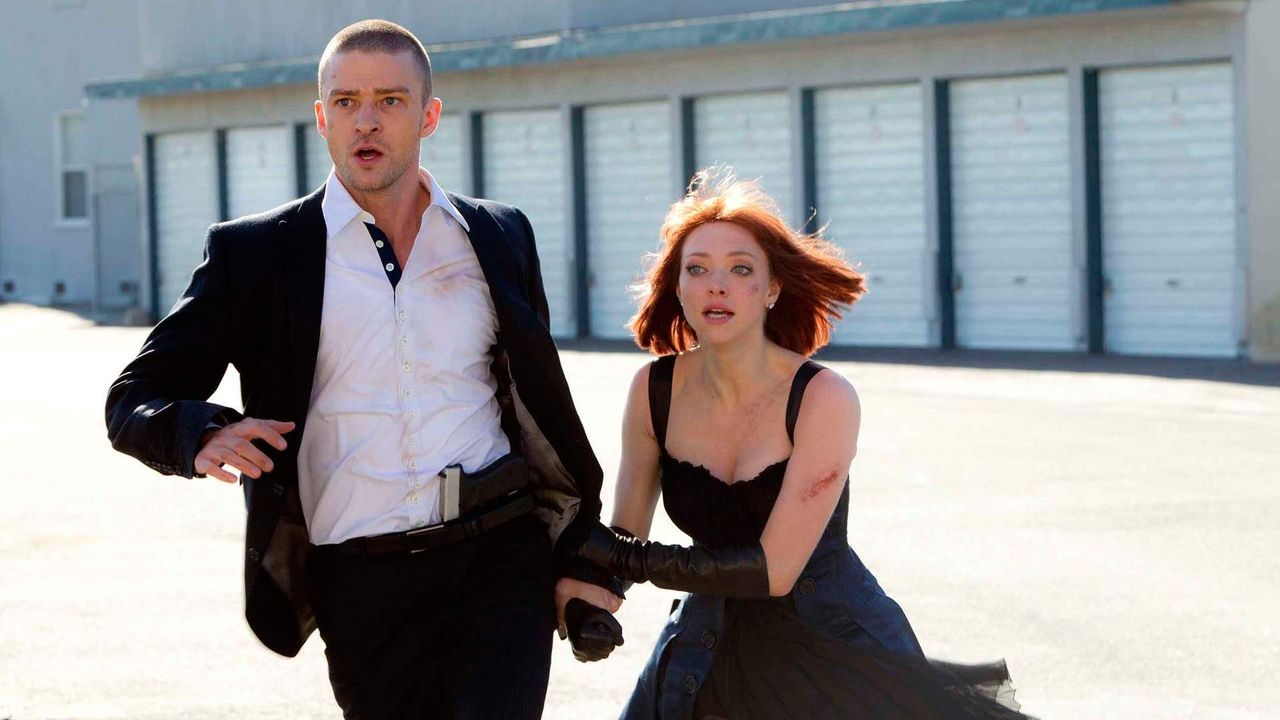
It’s a brilliant setup for an action movie because it creates a permanent, ticking stakes-generator. Justin Timberlake plays Will Salas, a guy from the "ghetto" zones who suddenly finds himself gifted with a century of time from a suicidal rich man. Will decides to head to the wealthy "New Greenwich" zone to stick it to the man, eventually kidnapping Amanda Seyfried’s Sylvia Weis, a bored rich girl with a bob haircut so sharp you could shave with it.
The Style of the Scarcity
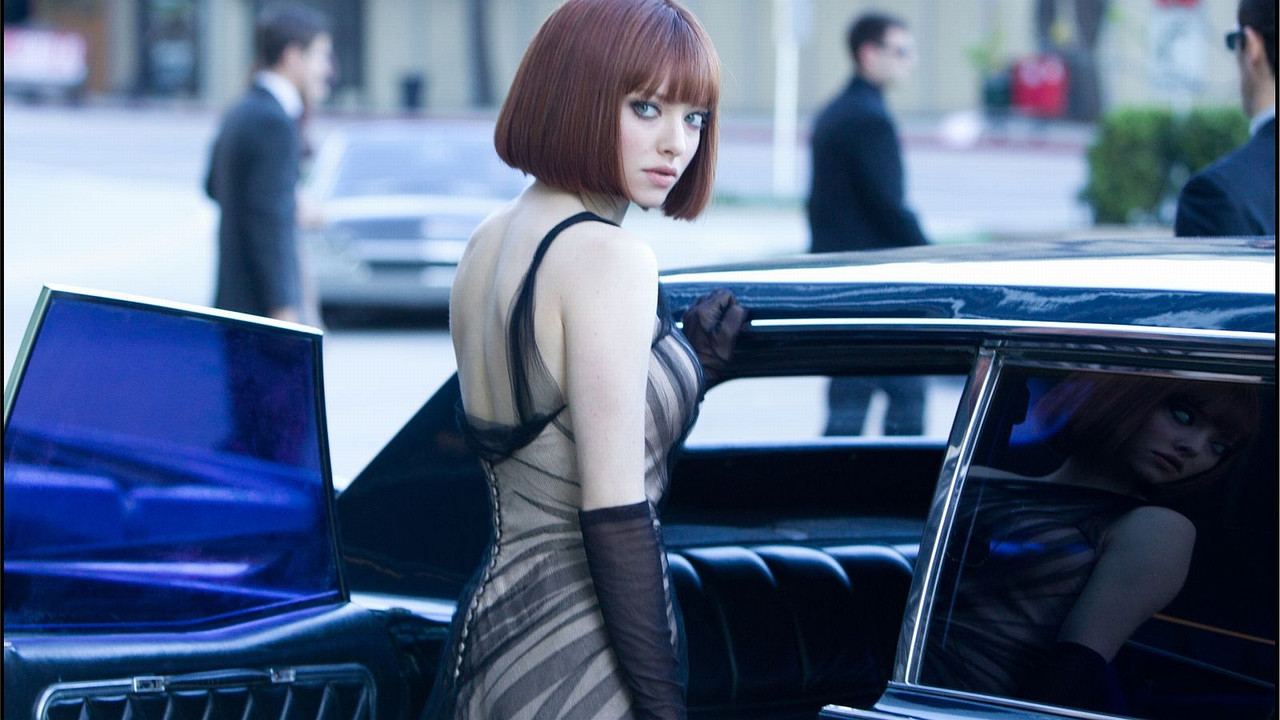
While the script can be a bit clunky with its time puns—trust me, if there’s a way to squeeze the word "second" or "minute" into a line of dialogue, Andrew Niccol found it—the film looks incredible. This was actually the legendary cinematographer Roger Deakins' first venture into digital filmmaking. Having worked on The Shawshank Redemption and No Country for Old Men, Deakins brings a crisp, desaturated coolness to the screen. He captures the contrast between the dusty, crowded streets of the "Time Zones" and the cold, glass-and-steel expanse of the wealthy districts perfectly.
The movie is essentially a feature-length chase scene dressed in an H&M catalog. It’s obsessed with running. Justin Timberlake spends about 70% of his screentime in a full sprint, and honestly, he’s good at it. He has that frantic, lean energy that makes you believe he’s one missed paycheck away from a heart attack. However, the real MVP is Cillian Murphy as Raymond Leon, a "Timekeeper" (basically a cop). Murphy's cheekbones look like they were carved out of flint, and he brings a weary, bureaucratic menace to the role. He’s not a villain; he’s just a guy trying to keep the ledger balanced, which is much scarier.
Behind the Ticking Clock
What’s fascinating looking back is how the production handled its "everyone is 25" gimmick. Olivia Wilde plays Justin Timberlake’s mother, despite being three years younger than him in real life. It’s a bizarre casting choice that actually works within the logic of the film, creating a jarring, unsettling opening act that emphasizes how messed up this world is.
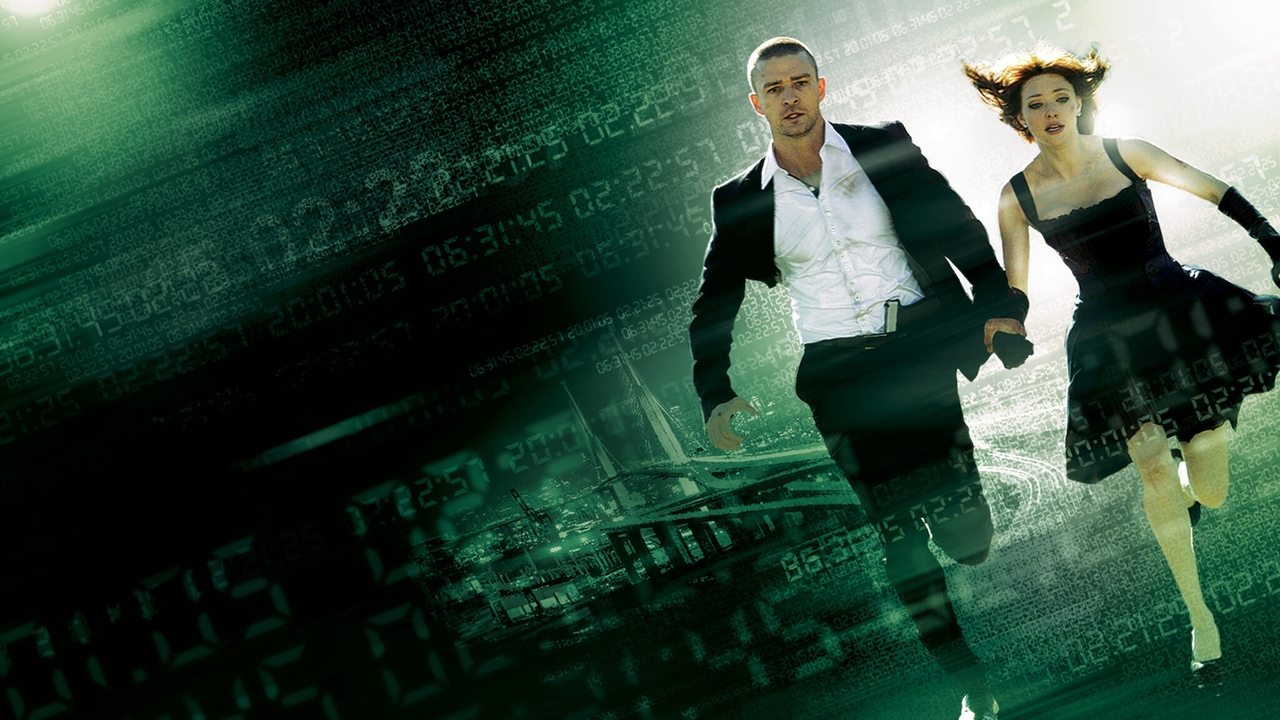
Despite its $40,000,000 budget, the film felt surprisingly grounded. They didn't go for flying cars or laser beams. Instead, they used modified 1960s and 70s muscle cars—Dodge Challengers and Lincoln Continentals—to give the future a "retro-fitted" look. It’s a clever trick that Niccol also used in Gattaca, and it helps the film age much better than it would have if they’d relied on clunky 2011-era CGI. It paid off at the box office too, raking in nearly $174 million worldwide. People clearly related to the idea of being "timed out" by a system that doesn't care if you live or die.
The action choreography is tight, focusing more on the tension of the countdown than on massive explosions. There’s a "time-wrestling" scene that is peak high-concept nonsense, but the film commits to it so hard you can't help but lean in. The film’s central metaphor is as subtle as a sledgehammer to a grandfather clock, but in the world of high-concept action, sometimes a sledgehammer is exactly what you need.
In Time doesn't quite reach the philosophical heights of Gattaca, and it definitely stumbles over its own cleverness in the final act. Yet, it remains a wildly entertaining slice of sci-fi that captures a very specific moment of early 2010s anxiety. It’s a movie that knows exactly what it wants to be: a sleek, fast-paced thriller with a gorgeous cast and a killer hook. If you have 109 minutes to spare, you could do a lot worse than spending them here. It’s a solid Friday night watch that might make you look at your watch—and your bank account—a little differently.
Keep Exploring...
-

The Host
2013
-

Cloverfield
2008
-

Predators
2010
-
The Maze Runner
2014
-

Knowing
2009
-
Rise of the Planet of the Apes
2011
-

The Hunger Games
2012
-
Universal Soldier
1992
-
Star Trek: Generations
1994
-
Timecop
1994
-
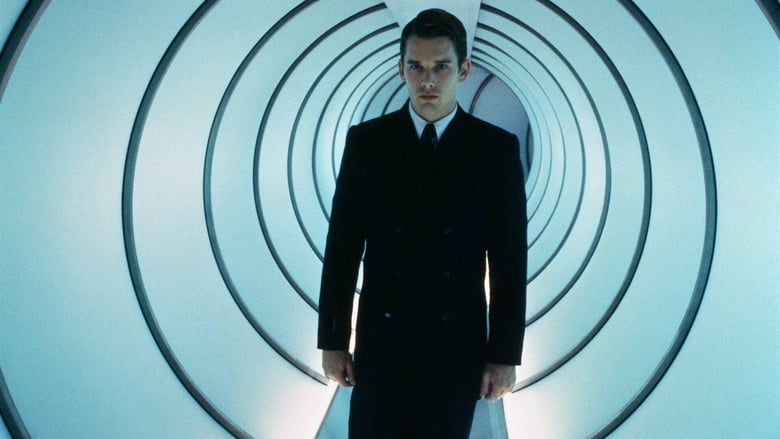
Gattaca
1997
-

Outbreak
1995
-
Armageddon
1998
-

Jurassic Park III
2001
-

The Matrix Reloaded
2003
-
Death Race
2008
-

9
2009
-
Pandorum
2009
-
Looper
2012
-

Anon
2018