Kill Bill: The Whole Bloody Affair
"One woman. Five targets. No more chapters."
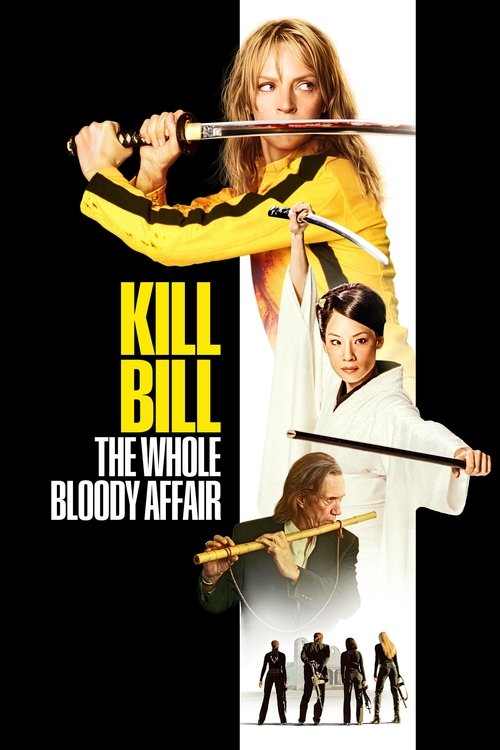
The myth of the "lost" masterpiece is a staple of film nerd culture, but rarely does the reality live up to the forum-post hype. For years, the unified version of Quentin Tarantino’s fourth film felt like a cinematic Bigfoot—rumored to exist at the 2004 Cannes Film Festival, then vanishing into the vaults of Miramax. When it finally surfaced for a brief run at the New Beverly Cinema in 2011, it wasn't just a gimmick. Kill Bill: The Whole Bloody Affair transformed a bifurcated genre exercise into a monolithic, exhausting, and utterly singular tragedy. It is the definitive way to experience the story of Beatrix Kiddo, even if your lower back starts to ache by the third hour.
Watching this version is a fundamentally different experience than flipping two separate DVDs into a player. The removal of the "Volume 1" cliffhanger and the "Volume 2" recap creates a seamless descent into madness. I watched my copy on a projector while my neighbor was loudly pressure-washing his driveway, and the mechanical hum of his machine weirdly synced up with the ambient drone of the score—it actually made the tension in the desert scenes feel even more suffocating.
A Single, Four-Hour Sword Stroke
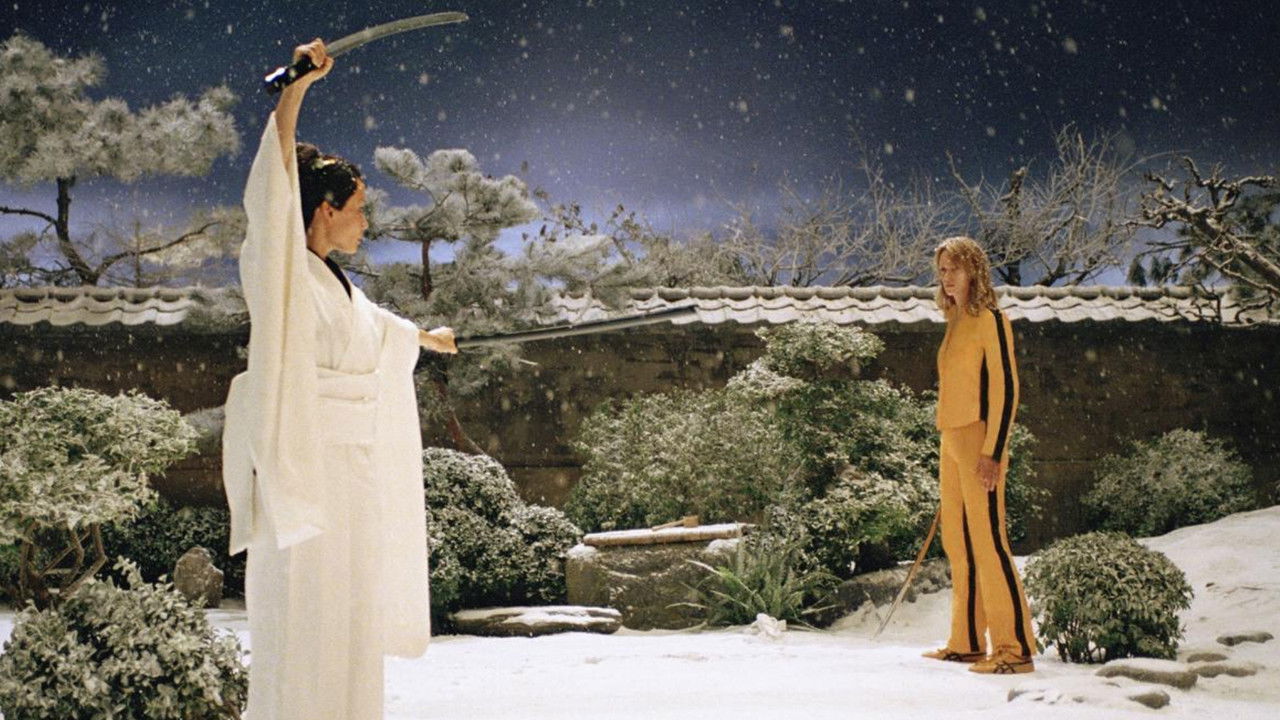
In the early 2000s, the decision to split the film into two parts was purely financial—Harvey Weinstein knew he could get two tickets for the price of one. But seeing it as one 247-minute epic reveals the internal architecture Quentin Tarantino (who also gave us Pulp Fiction) originally intended. The first half is a high-octane homage to Shaw Brothers kung fu and Japanese chanbara, while the second half settles into a dusty, talkative Spaghetti Western. In the split version, the tonal shift feels jarring. In The Whole Bloody Affair, it feels like an inevitable exhaustion.
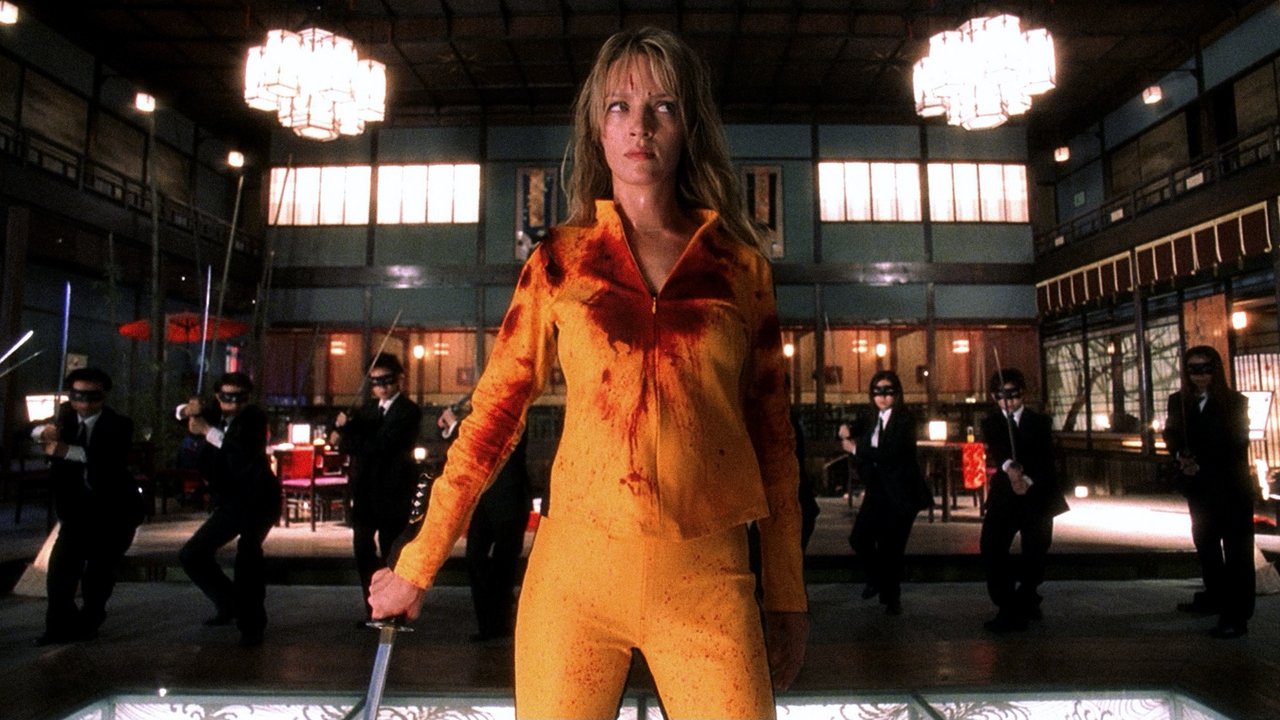
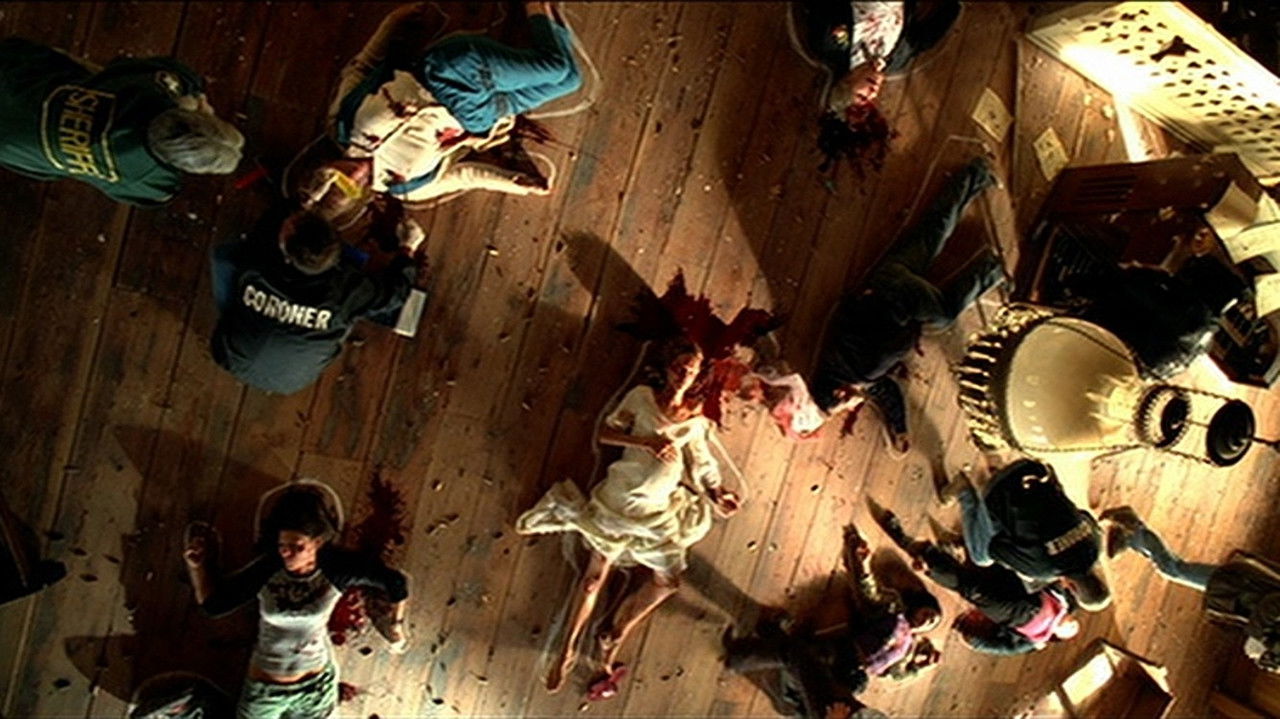
The action choreography remains some of the finest of the digital transition era. This was a time when the "Matrix-style" CGI was becoming the norm, yet Tarantino leaned heavily into the practical. He brought in Yuen Woo-ping (the legendary choreographer from Crouching Tiger, Hidden Dragon) to ensure every movement had weight. When Uma Thurman (the star of Pulp Fiction) faces off against the Crazy 88, you can feel the sweat and the steel. Unlike the theatrical release, which shifted to black-and-white during the House of Blue Leaves massacre to avoid an NC-17 rating, this cut keeps the sequence in full, eye-searing color. Seeing the arterial spray in its original crimson makes the sequence feel less like a comic book and more like a grimy, beautiful nightmare.
The Color of Revenge
The most significant addition for completionists is the extended anime sequence produced by Production I.G. (the studio behind Ghost in the Shell). It adds seven minutes of backstory for O-Ren Ishii, played with a chilling, quiet authority by Lucy Liu. In the theatrical cuts, this sequence was a stylish diversion; here, it’s a foundational pillar of the film’s theme regarding the cycle of trauma. It’s brutal, disturbing, and reminds you that despite the yellow tracksuit and the catchy whistles, this is a very dark story about a woman who had everything stolen from her.
The cast is a who’s who of cult cinema icons, many of whom were being "rediscovered" by Tarantino’s lens. David Carradine, famous for the Kung Fu TV series, gives a performance as Bill that is terrifyingly gentle. His "Superman" monologue near the end gains more weight when you've just spent four hours watching the wreckage he left in his wake. Then there’s Michael Madsen (from Reservoir Dogs) as Budd, providing a pathetic, soulful counterpoint to the high-fashion assassins. The physical commitment from Daryl Hannah and Vivica A. Fox is equally staggering—the kitchen fight between the Bride and Vernita Green is still one of the most grounded, impactful brawls in modern movies because it feels so domestic and desperate.
From Japan to the Mojave
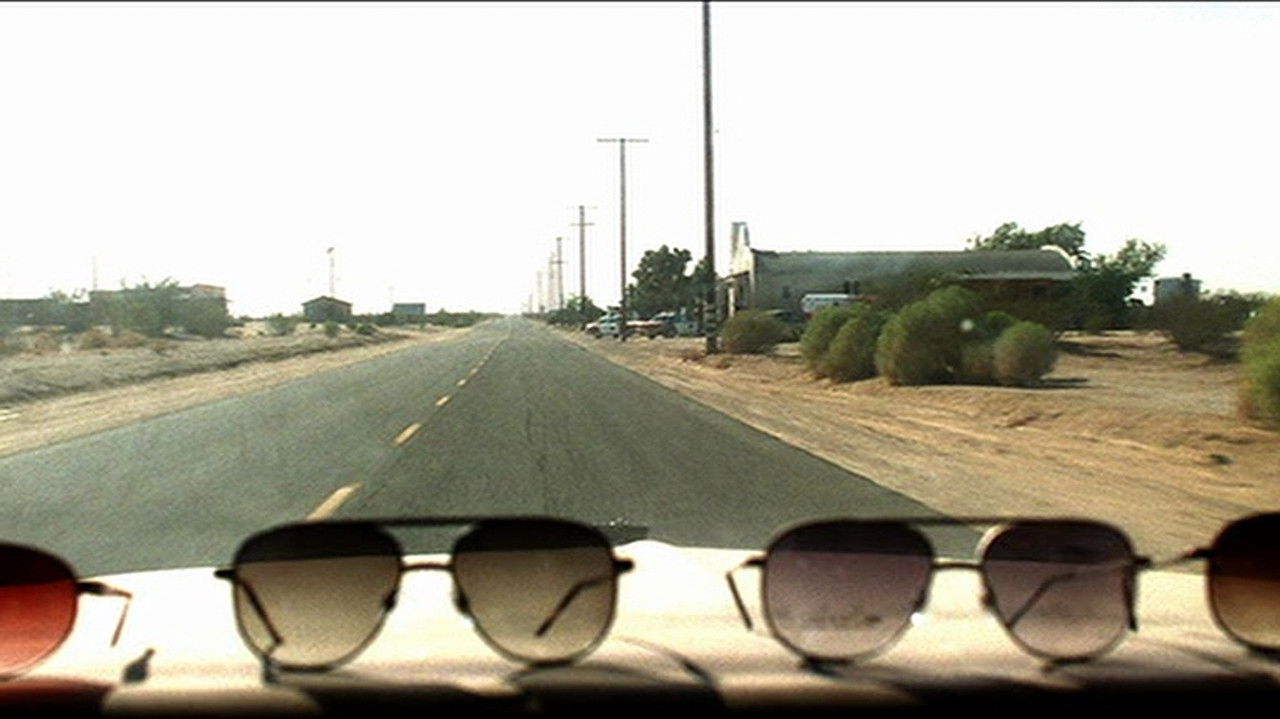
Technically, the film is a masterclass in the era's cinematography. Robert Richardson, who shot JFK, uses different film stocks and lighting styles to distinguish each chapter. The transition from the saturated greens of Tokyo to the bleached-out tans of the California desert is handled with a built-in intermission that allows the audience to catch their breath. The score, a collaborative effort involving Robert Rodriguez (who famously charged only $1 for his work), is a collage of sounds that shouldn't work together—flamenco guitars, RZA beats, and Ennio Morricone tracks—but somehow forms a cohesive emotional spine.
Turns out, that $1 fee was actually a trade; Tarantino directed a segment of Rodriguez's Sin City for the same price. It’s that kind of indie-spirit-on-a-blockbuster-budget that makes the film feel so alive. The decision to split the movie originally was a cowardly move by a studio that didn't trust the audience's attention span. When watched as a single piece, the "Volume 1" cliffhanger—revealing that the daughter is alive—becomes a mid-point pivot rather than a cheap hook, changing the entire motivation of the second half from simple revenge to a desperate search for motherhood.
This is the "Director’s Cut" that actually justifies its existence by altering the soul of the work. By the time the credits roll and the "Mommy" title card appears, you don't feel like you've watched an action movie; you feel like you've survived a marathon. It’s a grueling, indulgent, and spectacular achievement that reminds us why the early 2000s were such a fertile ground for high-concept filmmaking. If you can find the four hours to spare, don't settle for the two-part version. This is the whole bloody story, exactly as it was meant to be told.
Keep Exploring...
-
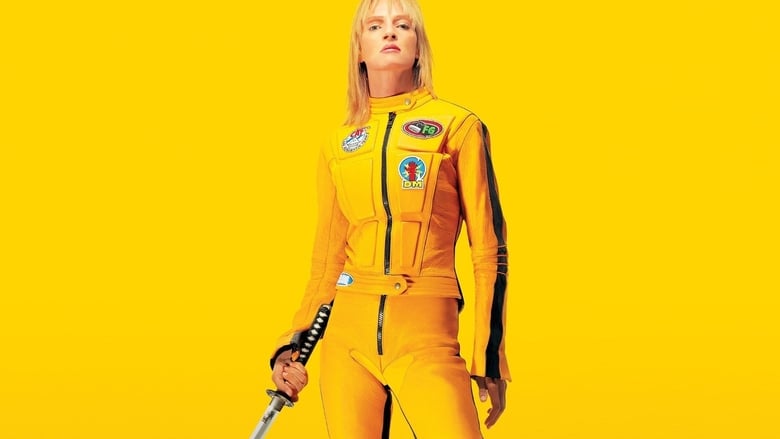
Kill Bill: Vol. 1
2003
-

Kill Bill: Vol. 2
2004
-
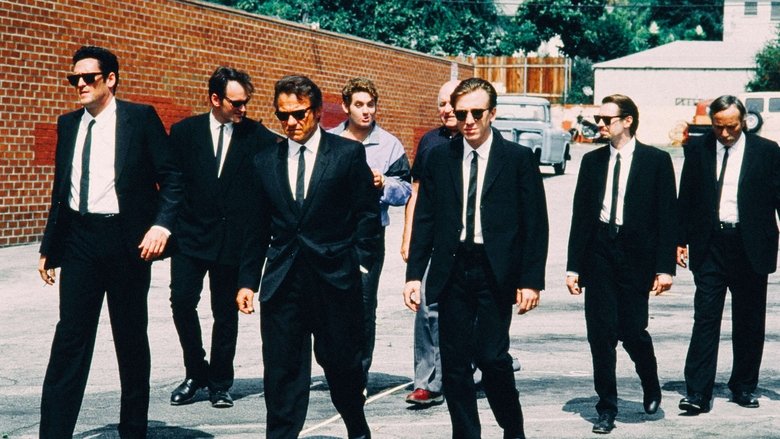
Reservoir Dogs
1992
-

Jackie Brown
1997
-
Undisputed II: Last Man Standing
2006
-
United 93
2006
-
Batman: Under the Red Hood
2010
-
Batman: Year One
2011
-
Batman: The Dark Knight Returns, Part 1
2012
-

Batman: The Dark Knight Returns, Part 2
2013
-
Batman: Assault on Arkham
2014
-
Inglourious Basterds
2009
-
Mesrine: Killer Instinct
2008
-
Mesrine: Public Enemy #1
2008
-

Elite Squad: The Enemy Within
2010
-
Headhunters
2011
-

The Connection
2014
-
Batman: Mask of the Phantasm
1993
-
Bound by Honor
1993
-
True Romance
1993