Limitless
"Ambition is a hell of a drug."
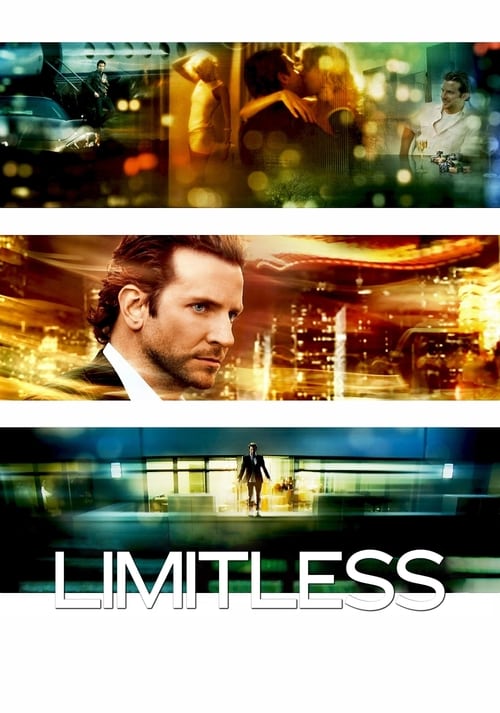
There is a specific, sickly shade of yellow that defines the opening act of Limitless. It’s the color of a nicotine-stained ceiling and a failed life. When we first meet Eddie Morra, played with a greasy, desperate charm by Bradley Cooper, he looks like he hasn’t seen a shower or a vegetable in six months. He’s a writer who can't write, a boyfriend who can't commit, and a man who is essentially drowning in the shallow end of the New York City pool. I remember watching this on a scratched-up DVD while eating a bowl of lukewarm Ramen, feeling particularly insulted by Eddie’s sudden ability to master Italian and finish a novel in four hours.
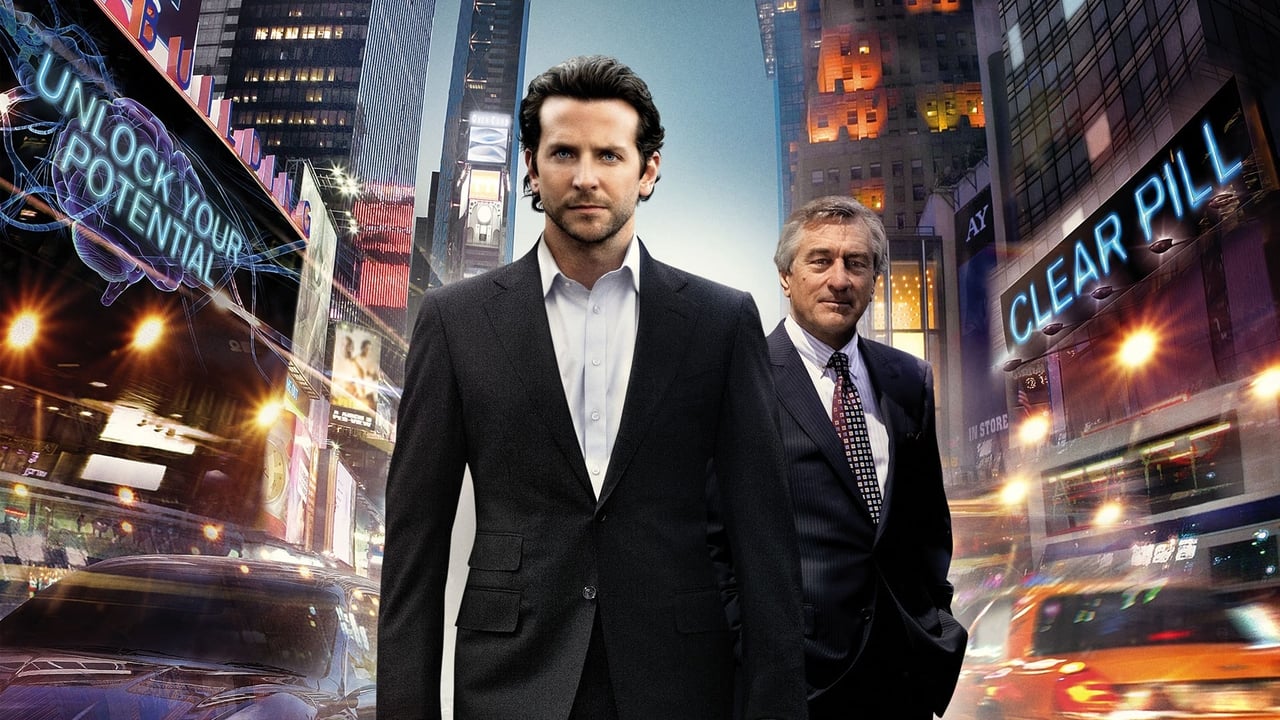
Then comes the pill. NZT-48. A little translucent dot that clears the cinematic cataracts. Suddenly, the world isn't mustard-yellow anymore; it’s high-contrast, hyper-saturated, and pulsing with a frantic, crystalline blue. It’s the visual equivalent of a double espresso hitting a hollow stomach, and in 2011, it felt like the ultimate post-recession fantasy: the ability to out-think a failing economy.
The Aesthetics of a Cerebral Nitro-Boost
Director Neil Burger (who also gave us the stylish The Illusionist) understood that a movie about being "smart" is boring if it doesn't look fast. To solve this, he and cinematographer Jo Willems (later of The Hunger Games fame) utilized a "visual fractal" technique known as the infinite zoom. It’s a series of stitched-together shots that make the camera feel like it’s plummeting through the streets of Manhattan at Mach 1. It’s dizzying, slightly nauseating, and perfectly captures the mania of a mind operating at 100% capacity.
Looking back, this was a pivotal moment for Bradley Cooper. Before this, he was mostly "the guy from The Hangover" or the jerk from Wedding Crashers. Limitless required him to carry a film on pure charisma and a terrifyingly intense stare. When the NZT kicks in, his eyes seem to turn a shade of blue not found in nature—a digital enhancement that underscores the film's science-fiction DNA. It’s a performance that balances on a knife-edge; Eddie Morra is essentially a high-functioning junkie with a better tailor. We should probably find him repulsive, but Cooper makes his predatory competence deeply seductive.
Sharks in Bespoke Suits

While the "ten percent of your brain" premise is a well-documented load of scientific garbage, the film treats it with the gravity of a hard-boiled thriller. This isn't a superhero origin story; it's a corporate horror show. Enter Robert De Niro as Carl Van Loon, a merger-and-acquisition shark who views Eddie not as a protégé, but as a biological anomaly to be harvested.
De Niro was deep into his "venerable icon" phase here (The Intern and Little Fockers era), but he brings a cold, reptilian stillness to Van Loon that reminds you why he’s the GOAT. His monologue to Eddie about "not having earned" his brilliance is the film’s moral anchor. It’s the old guard staring down the digital shortcut. The tension between them elevates what could have been a simple B-movie into something that feels like a legitimate cautionary tale about the ethics of the "shortcut" culture that was just beginning to take over the tech world.
The Darkness Under the Glow
For all its slick editing and fast-paced stock market montages, Limitless gets surprisingly grim. The second half of the film is haunted by the literal and metaphorical "shadowy forces" mentioned in the blurb. We have Andrew Howard as Gennady, a low-level Russian mobster who gets a taste of NZT and becomes a nightmare of amplified thuggery. The scene where Eddie, suffering from withdrawal and desperation, has to "reclaim" the drug from a puddle of blood is genuinely unsettling. It’s a sharp reminder that this is a story about addiction, regardless of how much money the addict is making on Wall Street.
The production itself was a lean, mean machine. With a budget of just $27 million, the film punched way above its weight class, eventually raking in over $161 million globally. It was a massive win for Relativity Media and proved that audiences were hungry for high-concept thrillers that didn't involve capes. Apparently, the role was originally intended for Shia LaBeouf, but after a car accident sidelined him, Cooper stepped in—a casting shift that arguably changed the trajectory of his career from "funny best friend" to "Academy Award perennial."
The film also thrived in the twilight of the DVD era. If you’ve only seen the theatrical cut, you’re missing the slightly more ambiguous, darker ending found on the "Unrated" discs. The special features revealed that the production used multiple cameras mounted on a single rig to achieve those infinite zooms, a practical solution to a digital problem that still looks better than most of the CGI-heavy sequences we see in modern blockbusters.
Ultimately, Limitless works because it doesn't try to be a moral lecture. It acknowledges that if most of us had a pill that made us gods, we wouldn't use it to solve world hunger; we’d use it to pay our rent and win at the blackjack table. It captures a specific 2011 anxiety—the feeling that the world is moving too fast and the only way to keep up is to chemically alter your soul. It’s a sleek, dark, and unapologetically cynical piece of pop-sci-fi that remains one of the most rewatchable thrillers of the last decade. Even if the science is fake, the thrill of the chase feels entirely real.

Keep Exploring...
-
The Maze Runner
2014
-
Source Code
2011
-
Twelve Monkeys
1995
-
The Illusionist
2006
-
Gattaca
1997
-
The Thirteenth Floor
1999
-

Knowing
2009
-
Super 8
2011
-
I Am Legend
2007
-
The Bourne Ultimatum
2007
-

The Girl with the Dragon Tattoo
2009
-
Rise of the Planet of the Apes
2011
-

The Hunger Games
2012
-

Gravity
2013
-
Dawn of the Planet of the Apes
2014
-

Ghost
1990
-
Primal Fear
1996
-
Star Trek: First Contact
1996
-

The Others
2001
-

Mystic River
2003