Monte Carlo
"Fake it until you make it to Monaco."
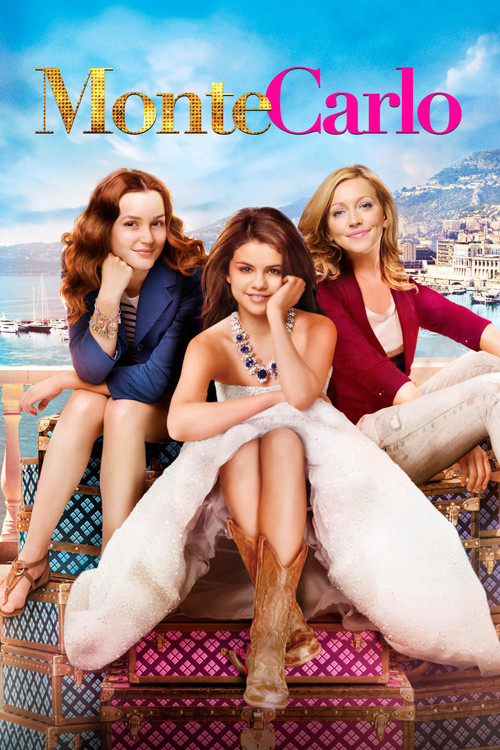
I was halfway through a slightly stale croissant that I’d microwaved for too long when I hit play on Monte Carlo last Tuesday, and honestly, the chewy pastry was the perfect companion for this movie. Both are comforting, sugary, and fundamentally French in a way that feels a bit manufactured but entirely delightful.
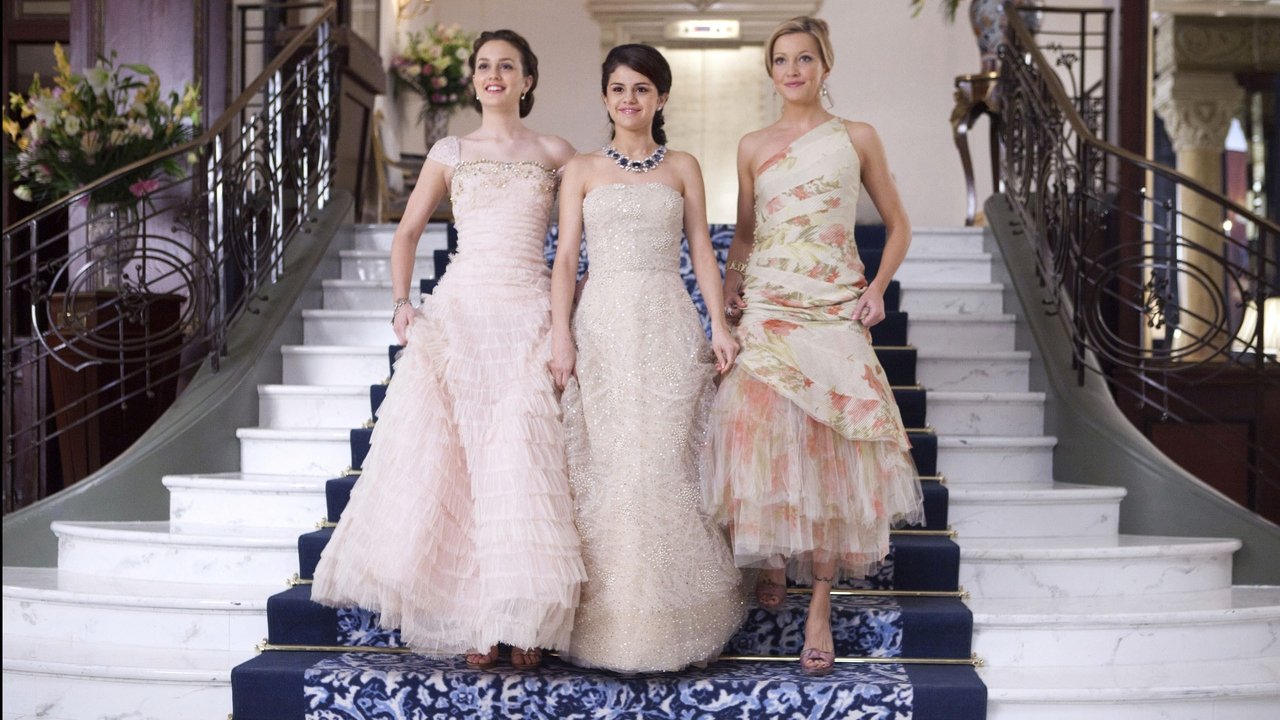
Released in 2011, Monte Carlo feels like a time capsule of a specific cultural pivot point. We were moving out of the "pure" Disney Channel/Nickelodeon era and into a world where starlets like Selena Gomez were trying to prove they could carry a theatrical feature without a laugh track. It arrived just as the DVD market was beginning to lose its grip to streaming, but before every single mid-budget movie was relegated to a "Netflix Original" graveyard. Looking back, it’s a remarkably earnest piece of "Passport Cinema"—that subgenre of films designed to make suburban teenagers believe that a missed bus in Paris is the start of a fairy tale rather than a frantic call to the embassy.
The Art of the Grand Swap
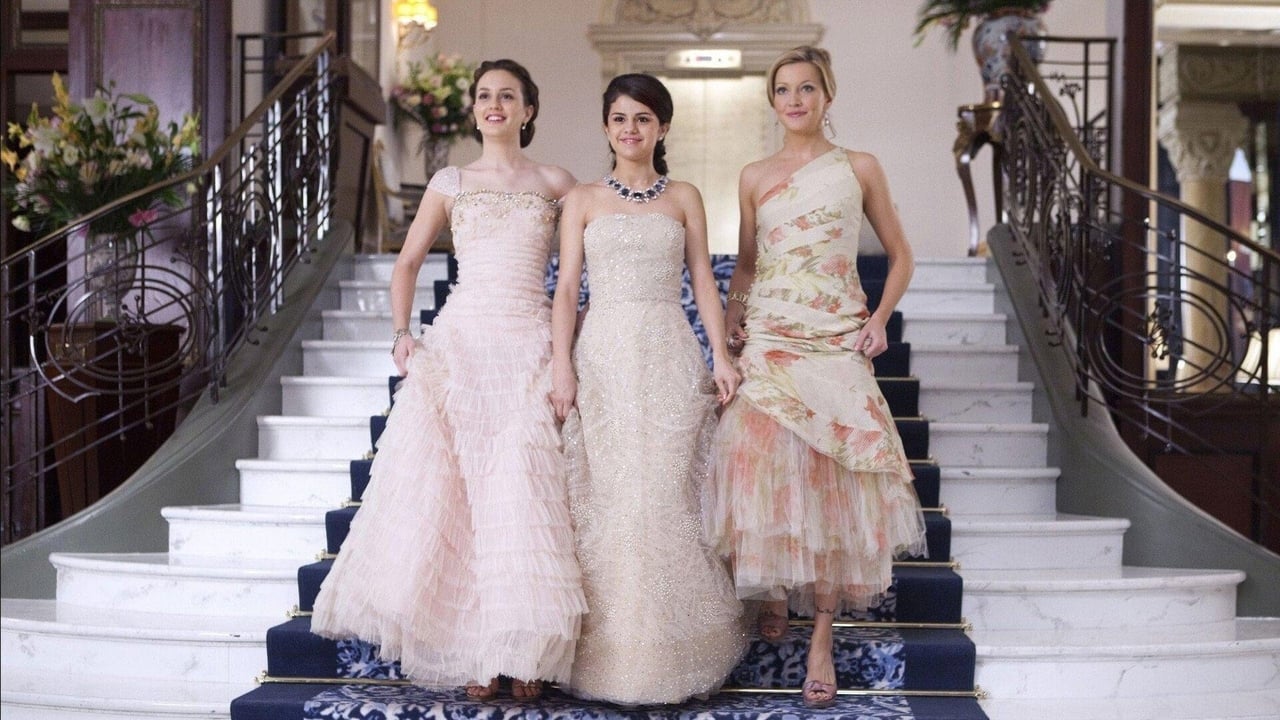
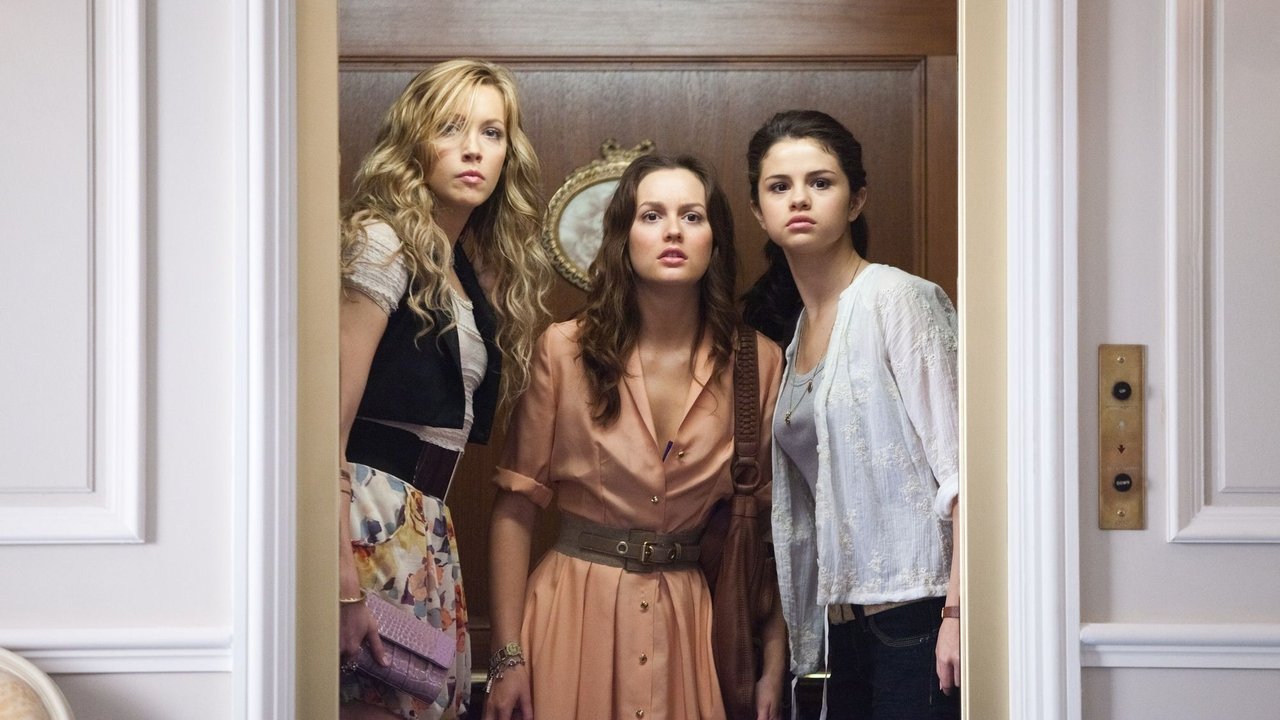
The setup is a classic "Princess and the Pauper" riff that cinema has leaned on since the silent era, but it’s handled here with a gloss that only 2011 Fox 2000 Pictures money could buy. Selena Gomez plays Grace, a recent high school grad who has saved every penny from her diner job to visit Paris with her best friend Emma (Katie Cassidy) and her uptight stepsister Meg (Leighton Meester). When their "luxury" tour turns out to be a rainy slog on a bus that looks like it smells exclusively of damp wool and regret, they duck into a high-end hotel to dry off.
Enter Cordelia Winthrop Scott, also played by Selena Gomez. Cordelia is a British heiress with a permanent sneer and a wardrobe that costs more than a mid-sized sedan. Through a series of frantic coincidences, Grace is mistaken for the heiress, and the trio is whisked away to Monaco via a private jet.
What makes this work isn’t the logic—because let’s be real, the security at that hotel is impressively incompetent—but the chemistry of the lead trio. They represent the Holy Trinity of early 2010s TV royalty. You have the Wizards of Waverly Place lead, the Gossip Girl veteran, and the Melrose Place standout. It’s a crossover event that felt like the Avengers for anyone who spent their Sunday nights on the CW.
A Masterclass in Comfort-Watching
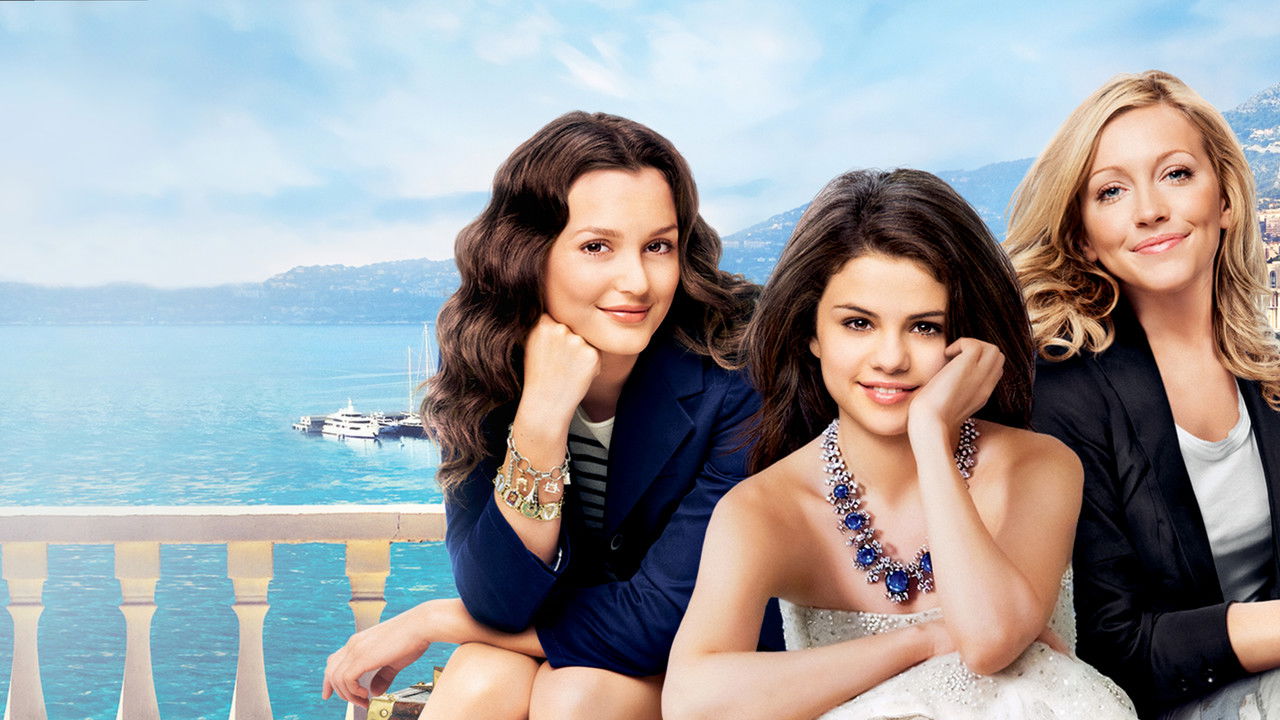
Director Thomas Bezucha (who would later give us the surprisingly grit-filled Let Him Go) treats the Mediterranean scenery with the reverence of a high-end travel brochure. The cinematography by Jonathan Brown makes every shot of the Monte Carlo harbor look like it was filtered through a "Valencia" Instagram filter before Instagram even peaked. It captures that specific post-Y2K aesthetic where everything is bright, saturated, and impossibly clean.
While the film is ostensibly about the romance—and Cory Monteith provides a lovely, grounded sweetness as the boy-next-door who follows them to Europe—the real "adventure" is the internal shift of the girls. Leighton Meester, in particular, does some heavy lifting here. After years of playing Blair Waldorf, seeing her play the repressed, mourning stepsister who finally learns to let go in the arms of a rugged Frenchman is surprisingly touching. She’s always been an actress who can do more with a weary sigh than most can do with a monologue.
The film has developed a genuine cult following among millennials, and it isn't hard to see why. It’s "Girl Component" cinema at its most polished. It doesn't have the biting satire of The Devil Wears Prada or the chaotic energy of Spring Breakers, but it has a sincerity that’s become rare. It’s a movie that believes, wholeheartedly, that a beautiful dress and a change of scenery can solve your existential dread.
The Nicole Kidman Connection and Other Oddities
If you look at the credits, you’ll see a surprising name: Nicole Kidman. Turns out, this project was originally intended as a much more adult vehicle for Kidman and Julia Roberts, based on the novel Headhunters by Jules Bass. It was going to be about three middle-aged women looking for rich husbands in Monte Carlo. When the studio decided to "youthify" the script, Kidman stayed on as a producer. You can almost feel that DNA in the film’s structure; it feels slightly more mature and structured than your average teen romp.
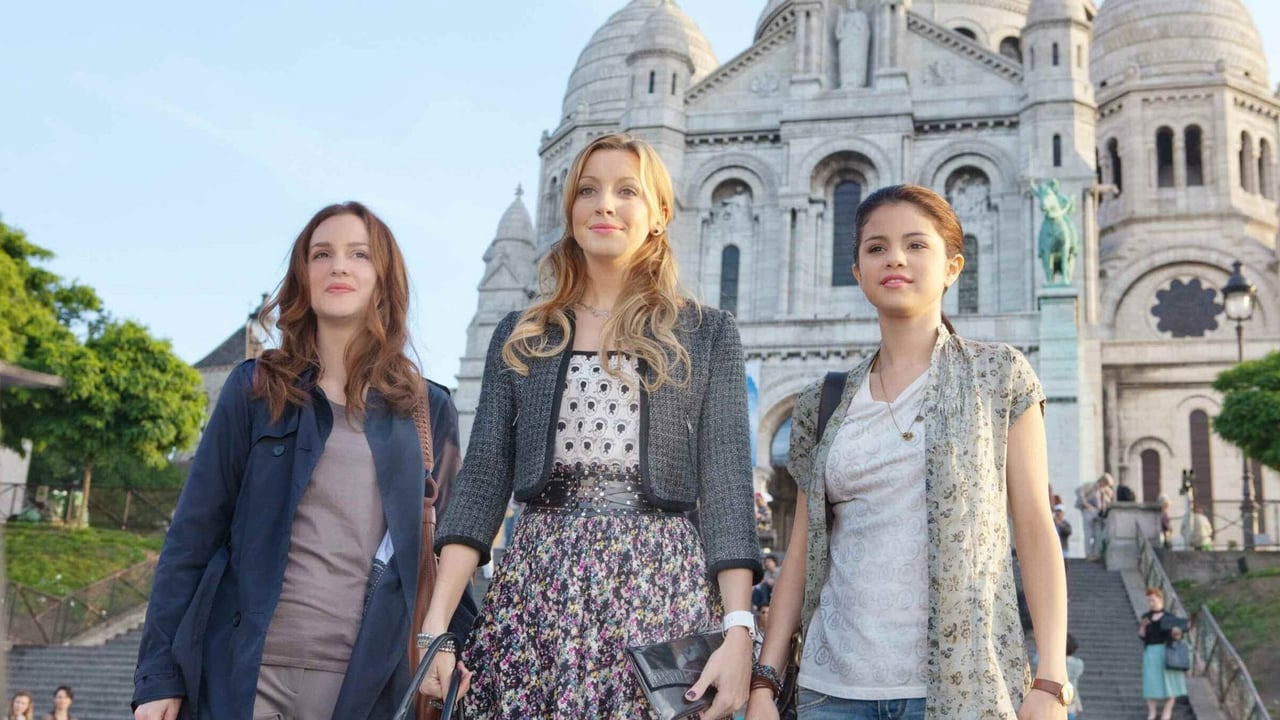
Apparently, Selena Gomez spent weeks training for the dual role, learning to play polo and working with a dialect coach to distinguish the "Texas" Grace from the "British" Cordelia. It’s the kind of effort that often goes unnoticed in "light" comedies. She nails the subtle physical differences—the way Cordelia holds her chin slightly too high, as if she’s constantly trying to smell something expensive.
Also, for the eagle-eyed film nerds: while the film is set in Paris and Monte Carlo, a significant portion was actually filmed in Budapest, Hungary. The Hungarian State Opera House stood in for the grand interiors of the Monte Carlo casino, proving once again that Eastern Europe is the ultimate stunt double for the rest of the world.
Monte Carlo is exactly what it promises to be: a sparkly, low-stakes adventure that functions as a 109-minute vacation. It’s not "important" cinema, but it’s effective cinema. It captures a moment when we still believed that being a British heiress was the ultimate dream, right before we all realized that having a private life is probably better than having a tiara. If you’re looking for a film that feels like a warm breeze and a glass of sparkling cider, this is your ticket. It’s a reminder of an era when movies were allowed to be just plain nice.
Keep Exploring...
-
Another Cinderella Story
2008
-
The Family Stone
2005
-
Hercules
1997
-
Seeking a Friend for the End of the World
2012
-
Fool's Gold
2008
-
Stranger Than Fiction
2006
-

The Darjeeling Limited
2007
-
Journey to the Center of the Earth
2008
-
Ghosts of Girlfriends Past
2009
-
Hot Tub Time Machine
2010
-

Leap Year
2010
-
She's Out of My League
2010
-

Paul
2011
-

LOL
2012
-
Bird on a Wire
1990
-
The Three Musketeers
1993
-
A Goofy Movie
1995
-
Casanova
2005
-

Wizards of Waverly Place: The Movie
2009
-

Flushed Away
2006