My Week with Marilyn
"Icons are fragile; legends are loud."
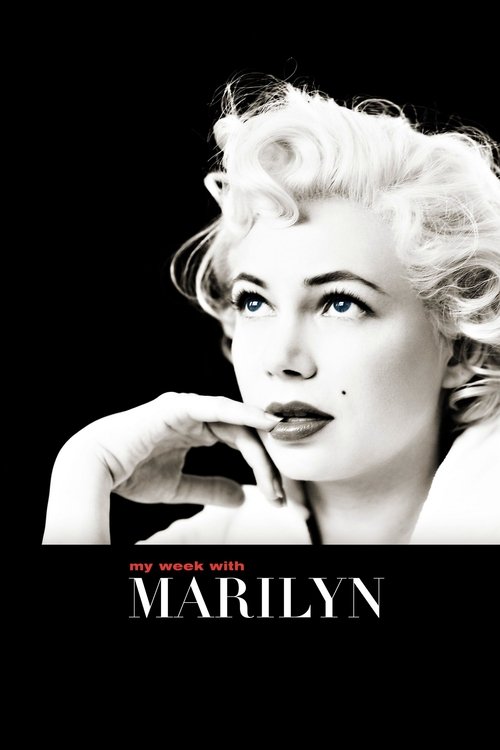
To play Marilyn Monroe is to sign up for a public execution. She isn't just an actress; she’s a secular saint of the silver screen, a Rorschach test for every generation’s ideas about beauty and tragedy. When I first heard Michelle Williams was taking on the role for My Week with Marilyn, I’ll admit I was a skeptic. How do you capture that specific, breathy alchemy of a woman who was simultaneously the most famous person on Earth and a disappearing act?

I remember watching this for the first time on a flickering laptop screen while hiding from a torrential downpour in a cramped London Airbnb, which felt strangely appropriate. The film is a damp, cozy, quintessentially British affair that tries to peer behind the curtain of 1956’s The Prince and the Showgirl. It’s a movie about the friction caused when the Method-acting "messiness" of New Hollywood collided with the Shakespearean "just-say-the-lines" rigidity of the Old Guard.
The Art of Becoming an Icon
The heavy lifting here is done by Michelle Williams, and honestly, she’s the reason the film doesn't dissolve into a puddle of prestige-biopic goo. She doesn't just do an impression; she captures the vibration of Monroe. There’s a scene where she’s dancing on a set, and you see her flip a switch—moving from a terrified, pill-addled girl to the "Marilyn" the world demands. It’s haunting. Williams manages to make her feel like a person rather than a costume, which is a miracle considering she spent most of the movie wrapped in enough white mink to insulate a small cottage.
Opposite her, Kenneth Branagh plays Sir Laurence Olivier. It is, to put it mildly, a "big" performance. Branagh is playing a man who is himself constantly performing, frustrated by his waning youth and his inability to control his leading lady. Watching him lose his mind over Monroe’s lateness is a treat. He brings a theatrical pomposity that serves as a perfect foil to Williams’ airy vulnerability. It’s the classic battle: the man who knows every technical trick in the book versus the woman who just is.
The Wide-Eyed Witness
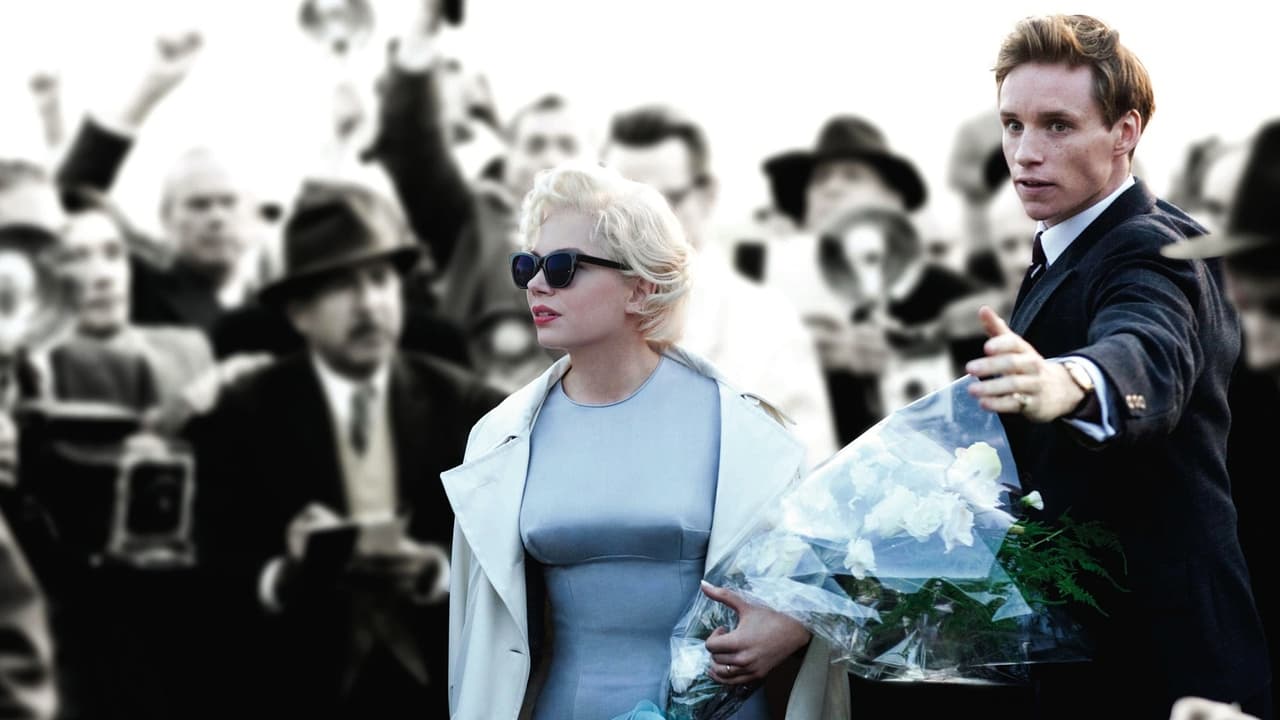
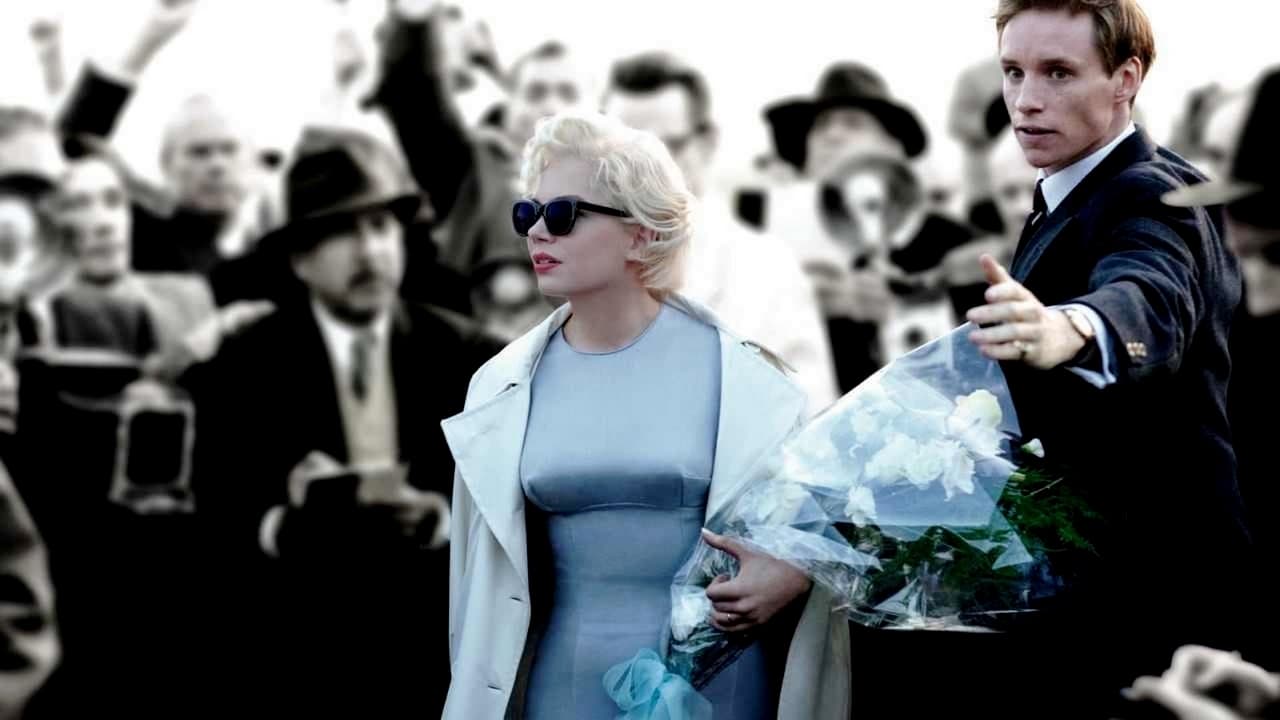
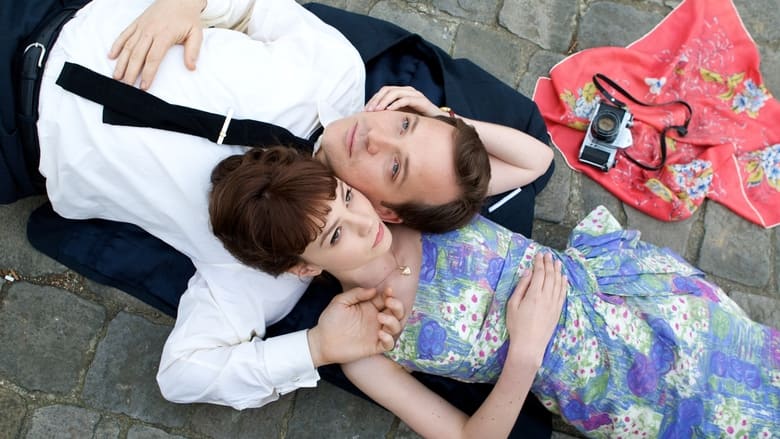
Our way into this world is Colin Clark, played by Eddie Redmayne. At this point in 2011, Redmayne was effectively the king of playing "earnest young men with great hair," and he leans into it hard here. As the third assistant director who manages to charm his way into Marilyn’s inner circle, he’s our surrogate. Is he a bit of a blank slate? Sure. But his job is to look at Marilyn with the same doe-eyed adoration we do.
The film is based on Clark’s own memoirs, and while historians have spent years debating how much of this "week" actually happened—many suggest Colin Clark was essentially writing high-end fan fiction about his own life—the movie doesn’t care about the facts. It cares about the feeling of being twenty-three and having the most beautiful woman in the world lean her head on your shoulder. It’s a fantasy of proximity to greatness.
Looking back from a decade-plus distance, My Week with Marilyn feels like a relic of that specific early-2010s "prestige" era. Produced by the now-infamous Weinstein Company and BBC Film, it has that polished, mid-budget glow that we see less and less of in the streaming age. It’s the kind of movie that used to thrive on DVD—the sort of thing you’d buy for your mom for Christmas and then end up watching together because the production design is so lush and the costumes are so sharp.
Behind the Scenes and Polished Truths
The production itself was a bit of a meta-commentary on the film. They shot at Pinewood Studios, the very place where the actual Prince and the Showgirl was filmed. They even used Monroe’s original dressing room. I love those kinds of details; they bleed a certain authenticity into the frame, even if the script takes some breezy liberties with the timeline.
One of the more interesting "what-ifs" of the production is the casting of Milton Greene. Dominic Cooper plays him as a protective, slightly oily gatekeeper, but early rumors suggested the role might have gone elsewhere. The ensemble is rounded out by British acting royalty like Derek Jacobi and Philip Jackson, giving the whole thing the weight of a high-end stage play. It’s a film that knows exactly what it is: a bittersweet footnote in a tragic biography.
The film does a great job of highlighting the technological shift of the era—the transition from the massive, immobile cameras of the 1950s to the more intimate storytelling that Monroe’s style of acting demanded. It mirrors the transition we saw in the 90s and 2000s from analog to digital; it's about the struggle to find the "truth" in a medium that is inherently artificial.
My Week with Marilyn isn't a deep dive into the psyche of a legend, nor does it try to solve the mystery of her life. Instead, it’s a beautifully acted, atmospheric snapshot of a moment in time. It captures the exhausting reality of being a "goddess" and the fleeting joy of a young man who got to see the human being underneath the bleach-blonde curls. It’s light, it’s charming, and it features a career-best turn from Williams that still holds up as one of the best biographical performances of the 21st century.


Keep Exploring...
-
An Education
2009
-

The Painted Veil
2006
-
The Duchess
2008
-

A Good Year
2006
-
Just My Luck
2006
-

Little Children
2006
-

Across the Universe
2007
-

Becoming Jane
2007
-

Dan in Real Life
2007
-
Lars and the Real Girl
2007
-
The Nanny Diaries
2007
-
Ghost Town
2008
-

Nick and Norah's Infinite Playlist
2008
-
Two Lovers
2008
-
Wild Child
2008
-
A Single Man
2009
-

Crazy Heart
2009
-
The Young Victoria
2009
-

Youth in Revolt
2009
-
I Love You Phillip Morris
2010