New Year's Eve
"Sparkles, stars, and the ultimate ball drop."

There is a specific kind of madness that only a 2011 Garry Marshall production can provide. It’s the cinematic equivalent of a Cheesecake Factory menu: eighteen pages long, wildly over-engineered, and featuring at least five things that have no business being in the same room together. Watching New Year’s Eve is like being trapped in a luxury elevator with every person who was famous ten minutes ago, and honestly? I’m kind of here for the chaos.
I first sat down with this film while recovering from a wisdom tooth extraction, clutching a bag of frozen peas to my jaw and drifting in a haze of painkillers. Somehow, that felt like the intended viewing state. The film doesn't ask for your focus; it asks for your surrender. It’s a glittering, sugar-spun artifact from that brief window in the early 2010s when Hollywood decided that if one A-lister was good, thirty-five A-listers were a legally binding obligation.
The Ensemble Fever Dream
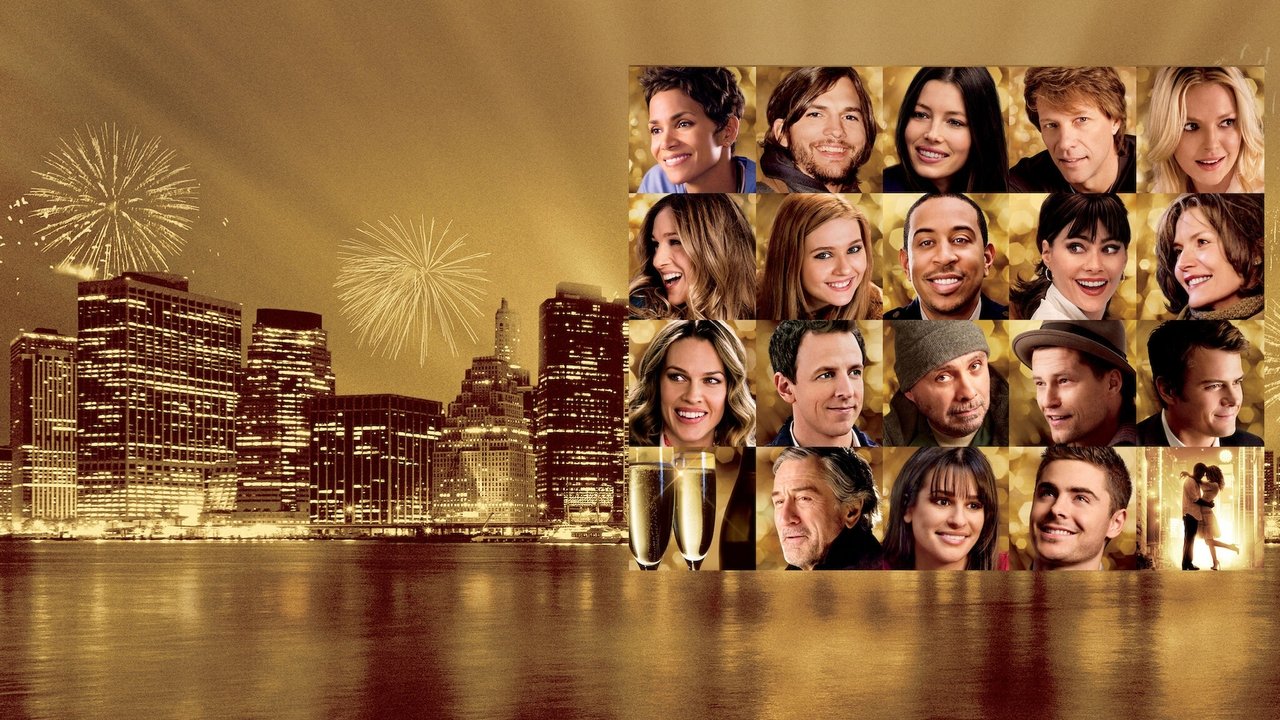
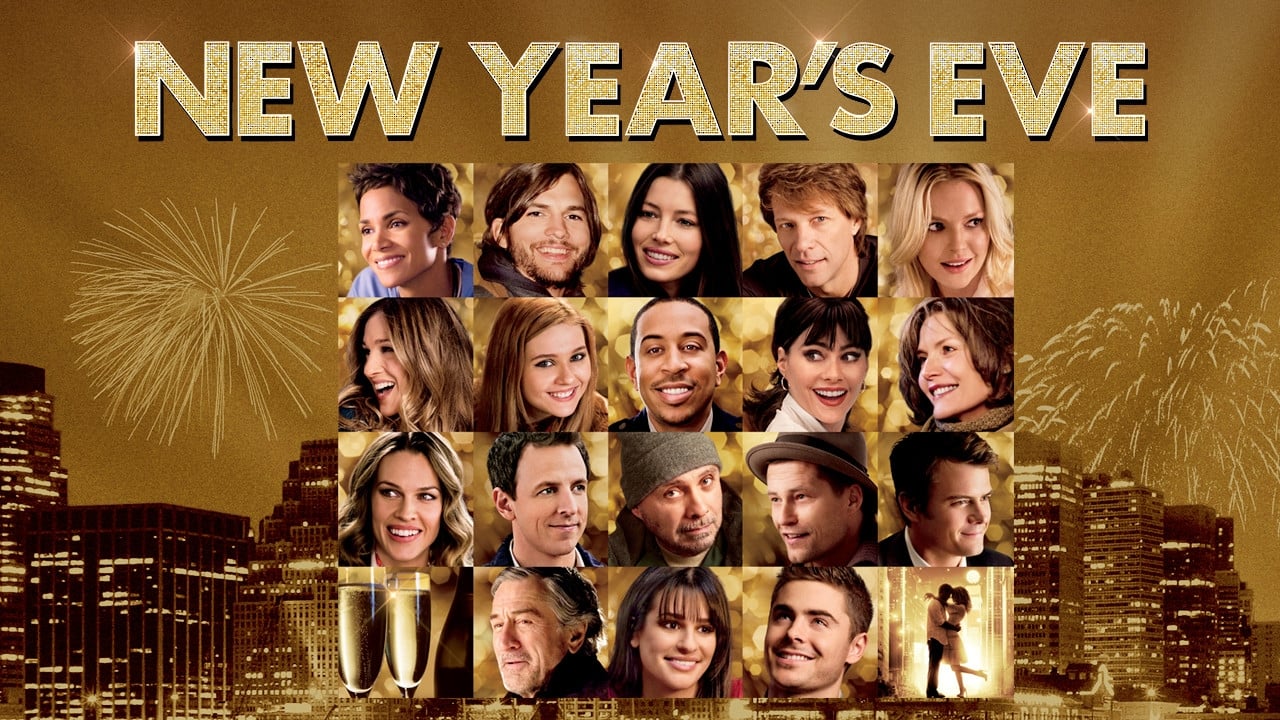
The plot—if we can call it that—is a series of loosely connected vignettes orbiting Times Square. We’ve got Hilary Swank as the woman in charge of the literal "Ball Drop," Robert De Niro as a dying man who just wants to see the lights one last time, and Michelle Pfeiffer as a frustrated secretary who quits her job to fulfill a list of resolutions with the help of a very charming, very "Disney-era" Zac Efron.
Looking back, the cast list feels like a fever dream or a very expensive hostage situation. Sarah Jessica Parker is there, Josh Duhamel is wandering around the woods, and Ashton Kutcher is trapped in an elevator with Lea Michele. It is a masterclass in "why not?" casting. Every five minutes, another face pops up—Ludacris, Sofia Vergara, Common, Seth Meyers—and you find yourself playing a game of "Where’s Waldo?" but with people who have SAG Awards.
What strikes me now is how much this film represents the "Peak Ensemble" era of the Modern Cinema transition. Before the MCU solidified the idea of a "shared universe" through capes and post-credit scenes, Garry Marshall (the man behind Pretty Woman and The Princess Diaries) was doing it with romantic comedies. He realized that in an age of fragmenting attention spans, the best way to get people into seats was to promise them every single person they’d ever seen on a magazine cover.
A Cult of Holiday Sentimentality
While critics absolutely mauled this movie upon release—it was nominated for five Razzies, including Worst Picture—it has developed a weird, cozy cult status. It’s the "hate-watch" that turned into a "tradition-watch." There’s something undeniably comforting about its relentless optimism and its blatant refusal to acknowledge that New York City doesn't actually work this way.
The Michelle Pfeiffer and Zac Efron storyline is the secret heart of the movie. Pfeiffer brings a genuine, twitchy vulnerability to her role that feels like it belongs in a much better film. Watching her and Efron zip around the city on a scooter to "deliver" a box of records is arguably the most delightful thing in the entire 118-minute runtime. It’s the kind of subplot that fans of the film (yes, we exist) point to as proof that there’s a soul buried under all that glitter.
Stuff You Didn't Notice
The production of New Year's Eve was a logistical nightmare that only a veteran like Marshall could handle. Here are a few things that make the "cult" of this film even more fascinating:
Real-Life Times Square: To get those wide shots of the crowd, the crew actually filmed during the real 2010-2011 New Year’s Eve celebration. Hilary Swank and the crew had to navigate a million actual tourists while trying to hit their marks. The De Niro Connection: Robert De Niro reportedly stayed in a real hospital bed for his scenes to stay in character. Seeing a titan of cinema play a "deathbed" scene in a movie that also features a "baby-having contest" between Jessica Biel and Seth Meyers is the peak of 2011 surrealism. Bon Jovi’s "Gig": Jon Bon Jovi plays a rock star named Jensen. He actually helped write the songs his character performs, bringing a weirdly authentic "Dad Rock" energy to the proceedings. The Resolution Tour: The "Resolution List" Michelle Pfeiffer's character carries was actually curated based on real-life common resolutions from 2011, making it a perfect time capsule of our collective anxieties a decade ago. The Marshall Touch: This was the second of Garry Marshall's "Holiday Trilogy" (starting with Valentine's Day and ending with Mother's Day*). He was obsessed with the idea of "connection," even if that connection was held together by cinematic duct tape and hairspray.
New Year’s Eve is not a "good" movie by any traditional metric of pacing or logic. It is loud, it is sentimental, and it treats the New York City power grid like a magical fairy forest. But as a piece of cultural history—a snapshot of a time when we still believed thirty celebrities in one room was the pinnacle of entertainment—it’s strangely fascinating. It’s the movie you put on while you’re folding laundry or waiting for the actual ball to drop, and in that specific, low-stakes environment, it sparkles just enough to keep you watching.
I don’t watch it for the "prestige." I watch it because every time Zac Efron smiles, I forget for a second that I’m an adult with taxes to pay. It’s a cinematic security blanket made of sequins and questionable subplots. It won't change your life, but it might make your New Year's Eve feel just a little bit more crowded in the best way possible.


Keep Exploring...
-

Valentine's Day
2010
-

Hairspray
2007
-
I Now Pronounce You Chuck & Larry
2007
-

Bedtime Stories
2008
-

Couples Retreat
2009
-

Killers
2010
-

Just Go with It
2011
-
This Means War
2012
-

Runaway Bride
1999
-
Confessions of a Shopaholic
2009
-
Ghosts of Girlfriends Past
2009
-

The Invention of Lying
2009
-
Hall Pass
2011
-

Monte Carlo
2011
-

What's Your Number?
2011
-

LOL
2012
-
To Rome with Love
2012
-

Magic in the Moonlight
2014
-
That Awkward Moment
2014
-
The Princess Diaries 2: Royal Engagement
2004