Return to Jurassic Park
"The prehistoric evolution of a digital revolution."

In September 1992, a Category 4 hurricane named Iniki tore through the Hawaiian island of Kauai, effectively trapping the cast and crew of Jurassic Park in a hotel ballroom. While most people would be busy reconsidering their life choices, Steven Spielberg was reportedly unfazed, eventually using the storm’s actual footage to enhance the film. This is the kind of frantic, high-stakes energy that permeates Return to Jurassic Park, a massive, six-part documentary that originally surfaced during the 2011 Blu-ray release. While technically "supplemental material," it functions as a definitive autopsy of a trilogy that didn't just change movies—it broke the world and glued it back together with pixels.
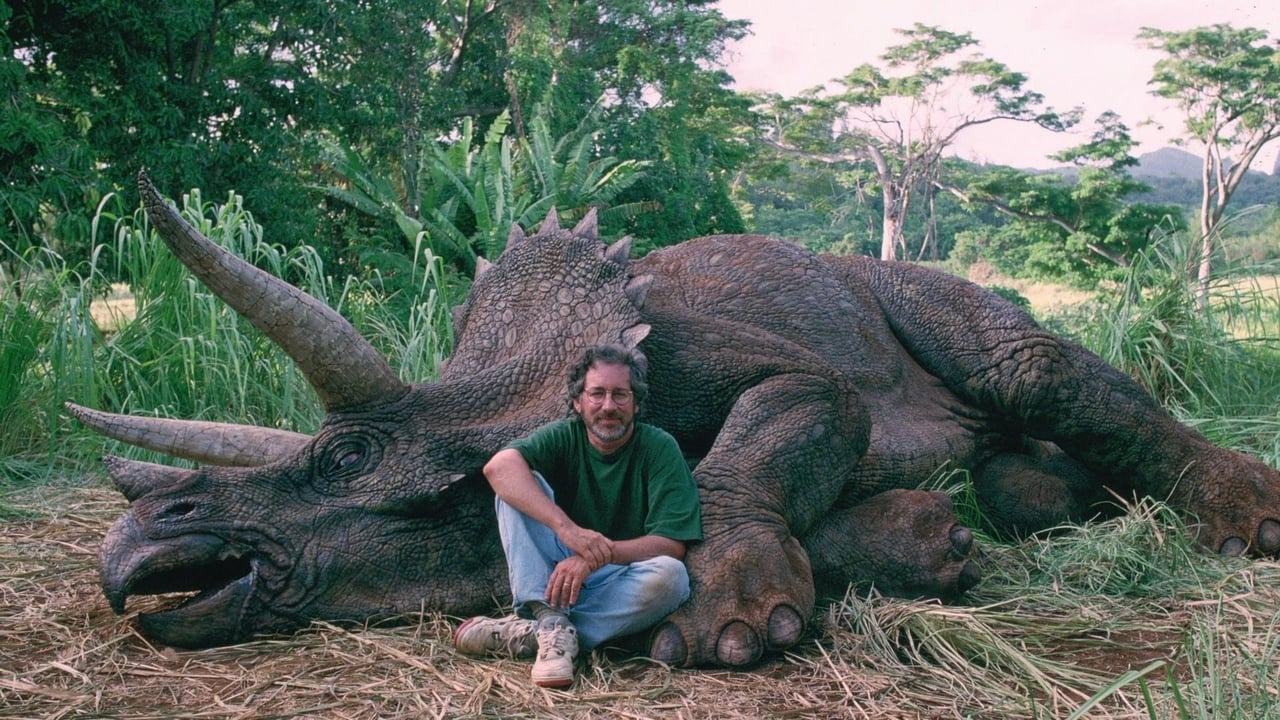
I watched this entire two-hour-plus odyssey while trying to peel a very stubborn, sticky residue off a new laptop screen with my fingernail, and the frustration of that task felt strangely aligned with the ILM guys trying to figure out how to make digital skin look wet in 1993. There’s something deeply satisfying about watching geniuses struggle.
The Death of the Stop-Motion Star
The documentary shines brightest when it digs into the "Dawn of a New Era" segment, focusing on the existential crisis of the practical effects industry. We get to see the legendary Phil Tippett—the man responsible for the "go-motion" dinosaurs—realize in real-time that his entire craft was becoming a relic. When he saw the early CGI walk cycles created by Dennis Muren and the team at ILM, his reaction was a blunt, "I think I’m extinct." Spielberg, ever the dramatist, put that line directly into the movie.
It’s easy to look at 1993 through a nostalgic lens, but this doc reminds us that the digital revolution was terrifying for the people living through it. The "Drama" here isn't on the screen; it's in the eyes of the puppeteers and model makers who realized the game had changed overnight. The film does a fantastic job of giving these craftspeople their flowers while acknowledging that the shift was inevitable. We see the transition from the massive, hydraulic T-Rex (which used to malfunction when it got wet, shivering like a giant, cold dog) to the sleek, digital predators that defined a generation’s nightmares.
The Human DNA Behind the Dinosaurs
While the tech talk is top-tier, the interviews with the core trio—Sam Neill, Laura Dern, and Jeff Goldblum—provide the heartbeat. Looking back from the vantage point of 2011, they speak about the production with a mixture of reverence and "I can't believe we survived that" exhaustion. Jeff Goldblum, specifically, remains a delight, offering the kind of eccentric, staccato insights that make you wonder if he’s ever actually not in character.
The documentary doesn't shy away from the sequels, either. It’s fascinating to see the shift in tone when discussing The Lost World and Joe Johnston’s Jurassic Park III. There’s a palpable sense of the franchise "figuring it out" as it went. I’ve always maintained that Jurassic Park III is a better monster movie than people admit, and seeing the BTS footage of the Spinosaurus animatronic—a machine so powerful it could literally crush a professional stunt car—only solidifies my respect for the sheer physical labor involved in these "modern" blockbusters.
The Era of the Ultimate DVD Extra
Return to Jurassic Park is a product of that glorious window between 2005 and 2012 when home media was king. Before streaming services buried "behind-the-scenes" content in sub-menus (or omitted them entirely), we had Laurent Bouzereau. The director of this doc is the undisputed heavyweight champion of making-of features, and his touch is everywhere here. He knows exactly when to cut from a polished final shot to the raw, unedited footage of Ariana Richards and Joseph Mazzello screaming at a guy holding a dinosaur head on a stick.
This documentary captures the Y2K-era transition perfectly. It’s old enough to feel like a retrospective but new enough to benefit from high-definition archival footage. It reminds me of why I fell in love with cinema in the first place: the collaborative friction between art and technology. It’s a love letter to a time when "digital" wasn't a dirty word, but a magic trick that no one quite knew how to perform yet.
For those who grew up on the "Dino-Damage" toys and the VHS tapes with the flickering Universal logo, this isn't just a documentary. It’s an essential piece of history that explains how we moved from the analog warmth of the 80s into the digital sprawl of the 21st century.
Ultimately, this is a deep-dive that earns its runtime by focusing on the people in the trenches. It treats the creation of the raptors with the same gravity as a historical war documentary, and honestly, given the cultural impact of Jurassic Park, that’s exactly how it should be. It’s a rare look at a moment when Hollywood stood on a precipice, looked down, and decided to jump. If you own the trilogy, stop skipping the "Special Features" and give this the attention it deserves. It’s the closest any of us will ever get to seeing how the lightning was caught in the bottle.
Keep Exploring...
-

Man on Wire
2008
-

Exit Through the Gift Shop
2010
-

The Imposter
2012
-

Jackass Number Two
2006
-

Grizzly Man
2005
-

Jackass: The Movie
2002
-

An Inconvenient Truth
2006
-

This Is It
2009
-

Morning Glory
2010
-

The Switch
2010
-

Jackass 3D
2010
-

The Hunter
2011
-

Inside Job
2010
-

Jiro Dreams of Sushi
2011
-

Blackfish
2013
-

One Direction: This Is Us
2013
-

Citizenfour
2014
-

Senna
2010
-

Wild at Heart
1990
-

Bowling for Columbine
2002
-

Fahrenheit 9/11
2004
-

Super Size Me
2004
-

A Good Year
2006
-

Accepted
2006