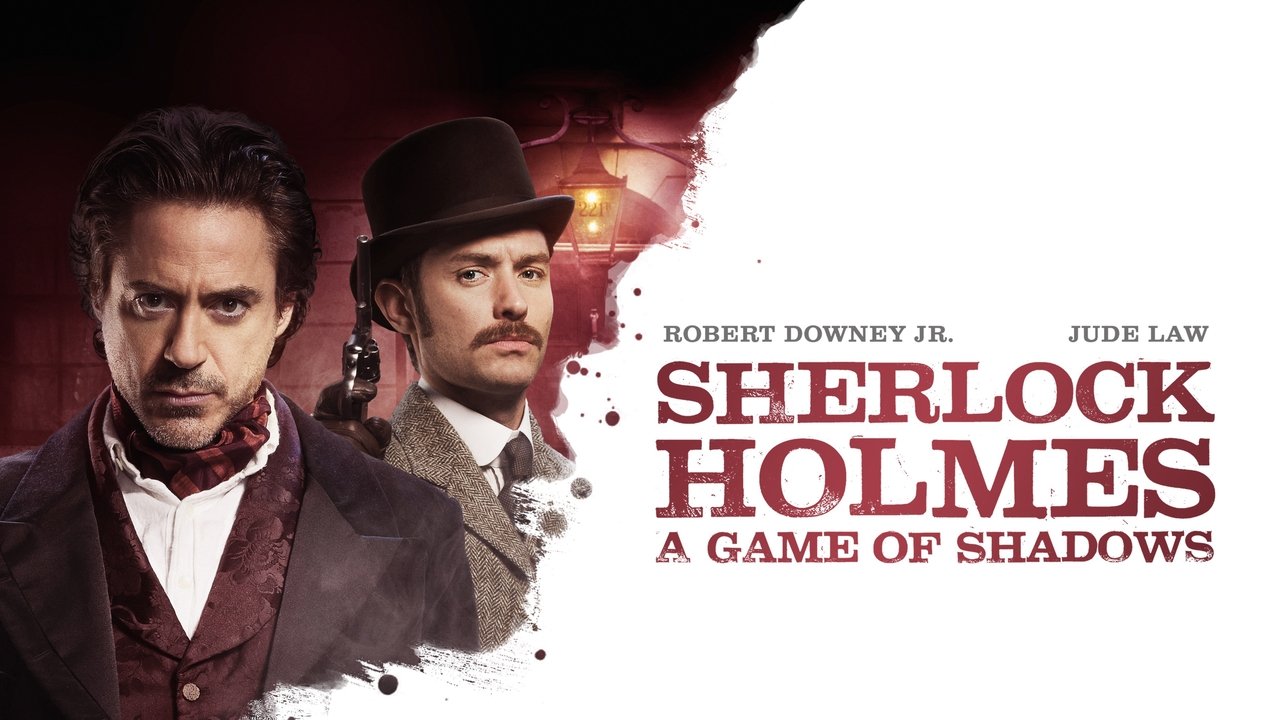
Sherlock Holmes: A Game of Shadows
"Shadows fall as the game turns deadly."
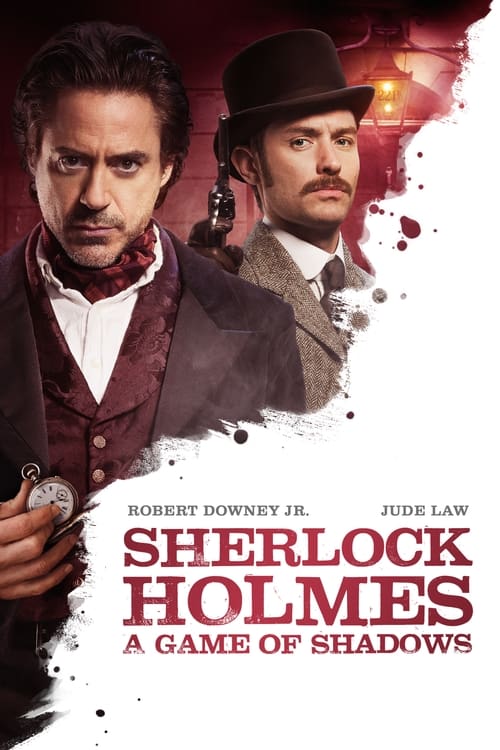
By 2011, the "gritty reboot" was already starting to feel like a mandated corporate strategy rather than a creative choice. We were three years out from The Dark Knight, and every franchise was trying to trade its primary colors for a palette of slate grey and moral exhaustion. When Guy Ritchie returned for Sherlock Holmes: A Game of Shadows, he didn’t just lean into that darkness; he weaponized it. I watched this again recently while nursing a lukewarm ginger ale that had lost its fizz twenty minutes prior, and honestly, the flat drink matched the film’s increasingly grim, carbon-dusted atmosphere perfectly.
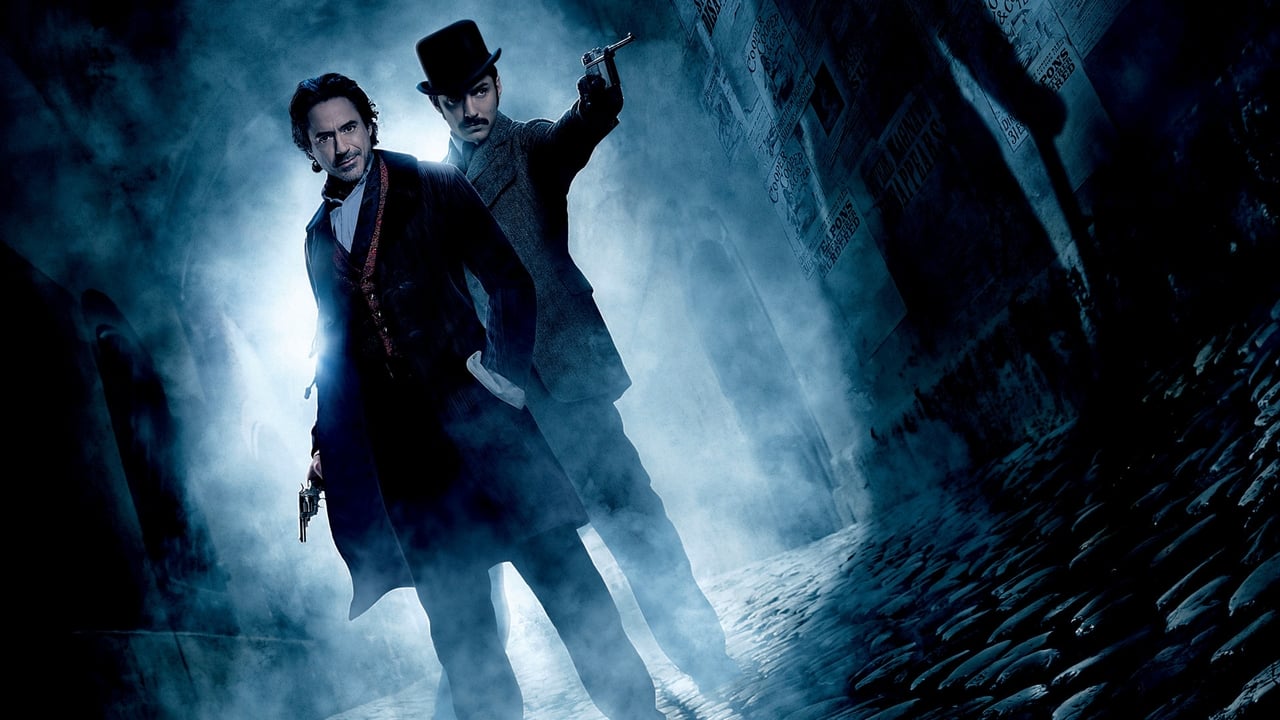
This isn't the playful scavenger hunt of the 2009 original. This is a film about the impending machinery of modern warfare, where the "consulting detective" finds himself outmatched not by a smarter man, but by a more ruthless era.
The Mastermind and the Madman
The heartbeat of this sequel is the introduction of Jared Harris as Professor James Moriarty. Before he was navigating nuclear meltdowns in Chernobyl, Harris was giving us a Moriarty who felt like a cold front moving across Europe. There were rumors at the time that the studio wanted a massive A-lister—Brad Pitt’s name was whispered in every trade magazine—but Harris was the superior choice. He doesn’t twirl a mustache; he simply exists as a personification of the 20th century’s coming horrors.
His chemistry with Robert Downey Jr. is built on a shared frequency of genius, but while Downey’s Holmes is a frantic, vibrating mess of eccentricities, Harris is a still pond. The scene where they finally sit across from each other, discussing their "mutual friction" while Moriarty casually threatens the newly-wed Dr. Watson, is a masterclass in quiet menace. Downey Jr. is great here, arguably giving us more layers than his Tony Stark ever allowed, but Jared Harris is the gravity that keeps this movie from flying off the rails.
And then there’s Jude Law. People often forget that Law’s Dr. John Watson is the only reason this version of Holmes works. He isn’t a bumbling sidekick; he’s a veteran with a short fuse who is clearly the only person Holmes genuinely loves. Their "bromance" was a massive pillar of the early 2010s Tumblr fandom, but looking back, it’s just solid, character-driven action writing.
The Anatomy of a Bullet
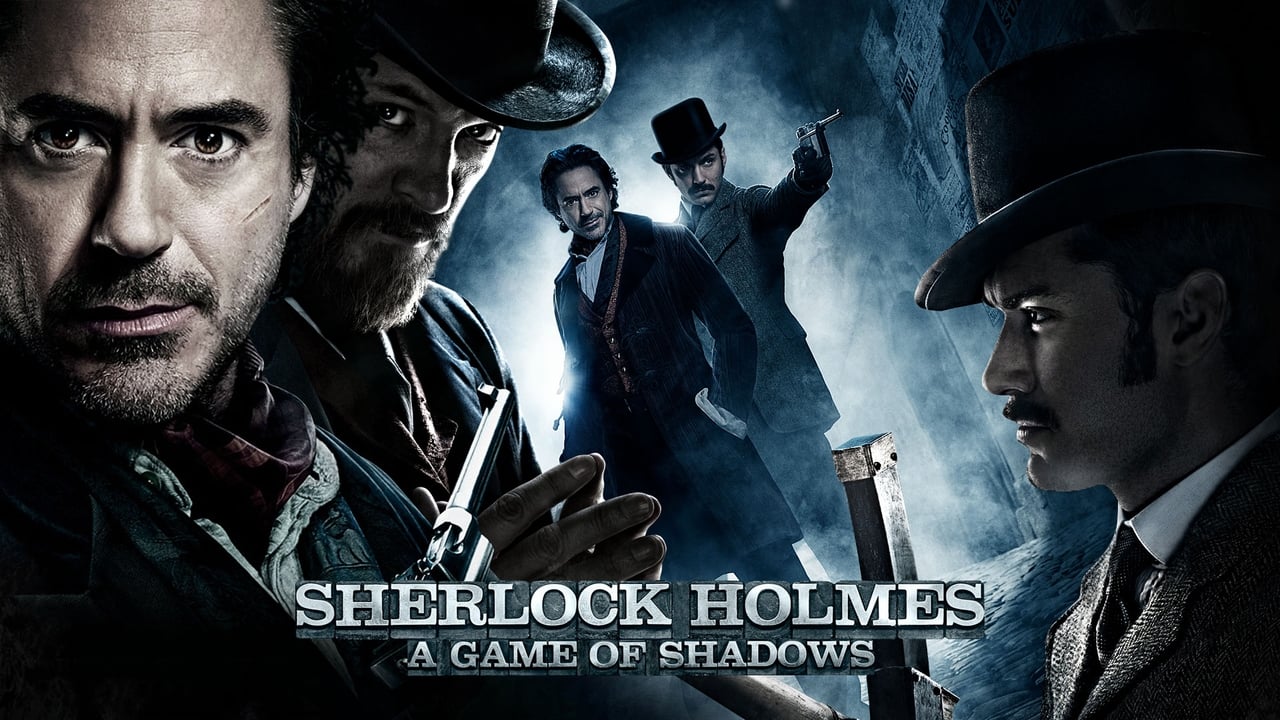
If the first film introduced "Holmes-vision"—the slow-motion pre-calculation of a fight—A Game of Shadows pushes that stylistic quirk to its absolute breaking point. The standout sequence remains the forest escape outside an arms factory. It is a terrifying, beautiful, and deafening stretch of cinema where Philippe Rousselot’s cinematography captures giant railway guns shattering ancient trees in hyper-slow motion.
It’s one of the few times I’ve seen CGI used to make action feel more bruising rather than less. You feel the displacement of air; you see the splinters of wood hanging like frozen glass. It reflected that 2011 obsession with "high-frame-rate" photography, but Ritchie uses it to show us that Holmes’s mind can no longer keep up with the sheer scale of industrial destruction. The "game" is no longer about a fistfight in a shipyard; it’s about a world-ending conspiracy that involves an anarchist bombing campaign and the looming shadow of World War I.
The score by Hans Zimmer also takes a sharp turn here. He brought back the "broken pub piano" sound from the first film but infused it with a frantic, Romani-influenced energy, thanks to the addition of Noomi Rapace as Madam Simza Heron. While her character feels a bit sidelined by the central duo, the musical texture she brings—all screeching fiddles and driving percussion—perfectly mirrors the film’s European road-trip structure.
A Legacy of Bromance and Black Powder
It’s fascinating to look back at this film as a bridge between the analog blockbusters of the 2000s and the digital behemoths that followed. You can see the beginnings of the "cinematic universe" mentality, yet A Game of Shadows feels remarkably self-contained. It’s a cult favorite among a very specific set of fans who prefer their Holmes with a side of PTSD and heavy artillery.
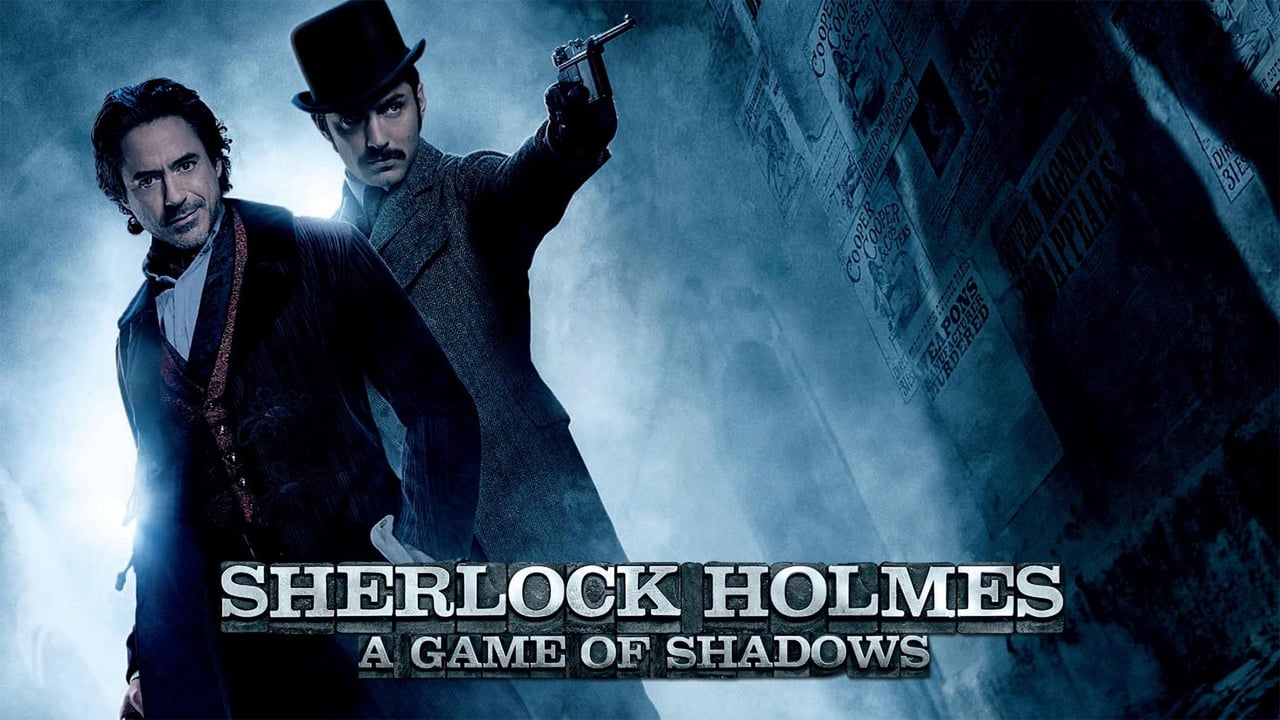
Apparently, the famous chess match at the climax was choreographed with the help of a real Grandmaster to ensure the moves were authentic to the characters' personalities. It’s that level of detail—the intersection of high-brow intellect and low-brow scrap—that makes the film stick. Ritchie even let Stephen Fry wander around a house completely naked as Mycroft Holmes, which is the kind of chaotic energy modern PG-13 blockbusters are far too cowardly to attempt today.
Is it perfect? No. The treatment of Rachel McAdams’ Irene Adler is a genuine disappointment—a "fridging" that feels like a shortcut for a script that didn't know what to do with her. But as a dark, intense escalation of a franchise, it hits harder than most sequels. It’s a movie about the end of an era, made by a director who was, at the time, redefining his own.
Sherlock Holmes: A Game of Shadows is that rare sequel that trades the "fun" of the original for something significantly more substantial and haunting. It’s a film that understands that the greatest threat to a genius isn't a smarter rival, but a world that is becoming too violent for logic to solve. By the time that final chess piece is moved, you aren't just watching a detective story; you're watching the birth of the modern world. It’s loud, it’s messy, and it’s still one of the most stylish things Robert Downey Jr. has ever touched.

Keep Exploring...
-
Sherlock Holmes
2009
-
RocknRolla
2008
-

The Girl with the Dragon Tattoo
2011
-
The Losers
2010
-
Kiss Kiss Bang Bang
2005
-

16 Blocks
2006
-

The Girl Who Kicked the Hornet's Nest
2009
-
Oblivion
2013
-
Batman: Under the Red Hood
2010
-
Batman: The Dark Knight Returns, Part 1
2012
-

Batman: The Dark Knight Returns, Part 2
2013
-

Zodiac
2007
-

Changeling
2008
-
Quantum of Solace
2008
-
Kick-Ass 2
2013
-
The Jackal
1997
-
Lethal Weapon 4
1998
-
Lucky Number Slevin
2006
-
Eastern Promises
2007
-
Gone Baby Gone
2007