The Rum Diary
"The ink is wet, but the ice is melting."
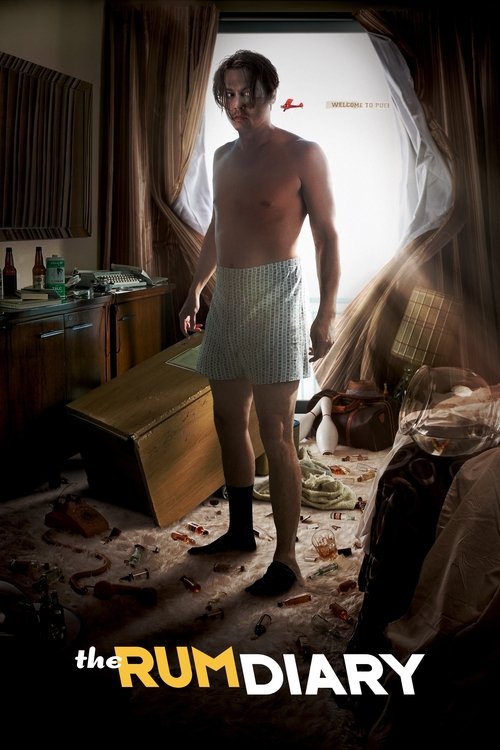
Most people remember the exact moment they realized the Johnny Depp "hat period" was becoming a permanent personality trait. For me, it was around 2011, right when he used his immense post-Pirates capital to drag a long-lost Hunter S. Thompson manuscript out of a dusty trunk and onto the big screen. I watched The Rum Diary on a Tuesday night while my apartment’s radiator clanked like a percussion section in a Tom Waits song, and I realized I wasn’t watching a movie so much as a very expensive, very sweaty act of friendship.

The Ghost of Hunter S. Thompson
This wasn't the first time Johnny Depp stepped into the oversized bucket hat of his real-life friend, the late gonzo journalist Hunter S. Thompson. We’d already seen the hallucinogenic, high-speed car crash of Fear and Loathing in Las Vegas (1998). But The Rum Diary is a different beast entirely. It’s a prequel to the madness—the "origin story" of a writer finding his "ink" (his voice) while marinated in high-proof alcohol in 1960s Puerto Rico.
The film follows Paul Kemp, a failed novelist who takes a job at a dying San Juan newspaper. It’s a humid, gorgeous, and deeply corrupt world. Director Bruce Robinson—the man behind the legendary Withnail and I (1987)—came out of a nearly two-decade retirement specifically for this project. You can feel that vintage, grimy DNA in every frame. The Rum Diary is essentially a vibe-check disguised as a narrative, and while that's why many people found it boring, it’s also the reason it’s worth a second look now that the hype has evaporated.
A Masterclass in Saturated Sweat
Visually, the film is a knockout, thanks to cinematographer Dariusz Wolski (who also shot The Crow and The Martian). He captures the late-Eisenhower era with a thick, syrupy saturation. Everything looks like it’s about to melt—the vintage Chevys, the linen suits, and especially the people. It’s a "Modern Cinema" look back at the past that avoids the digital crispness of the 2010s, opting instead for a texture that feels like a stained postcard.
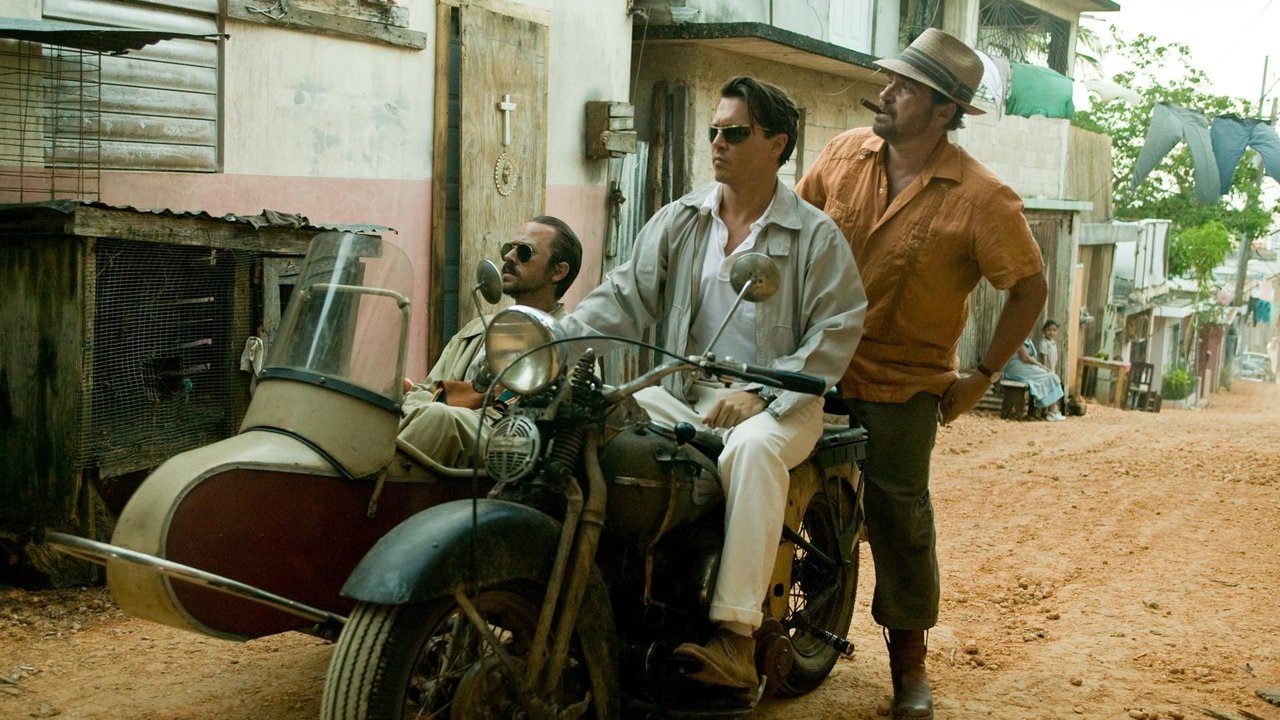
The drama hinges on Kemp’s moral awakening. He’s caught between the downtrodden, rum-soaked reality of his coworkers—played with fantastic, phlegmy exhaustion by Michael Rispoli and a truly unhinged Giovanni Ribisi—and the seductive, predatory world of American capitalism. Representing the latter is Aaron Eckhart, playing a shady property developer with a smile that looks like it cost more than the newspaper's entire budget. Eckhart is brilliant at playing "charming but soulless," and he provides the perfect foil for Kemp’s emerging conscience.
Then there’s Chenault, played by Amber Heard. She is framed less like a character and more like a celestial event. Her introduction, emerging from the dark Caribbean water like a siren, sets the tone for the film’s romantic arc. While the chemistry is there, her role is primarily that of the "Forbidden Prize," which feels a bit dated even for 2011. Still, she commands the screen in a way that makes you understand why a man would risk a perfectly good rum supply to follow her into a trap.
Why This One Stayed in the Bottle
So, why did a movie starring the biggest actor on the planet, based on a cult-favorite author's work, lose over $20 million at the box office? Looking back, it was a victim of expectations. In 2011, audiences wanted "Wacky Johnny." They wanted the frantic, drug-fueled energy of Terry Gilliam. Instead, Bruce Robinson gave them a slow-burn character study about the end of colonialism and the birth of a journalist’s integrity.
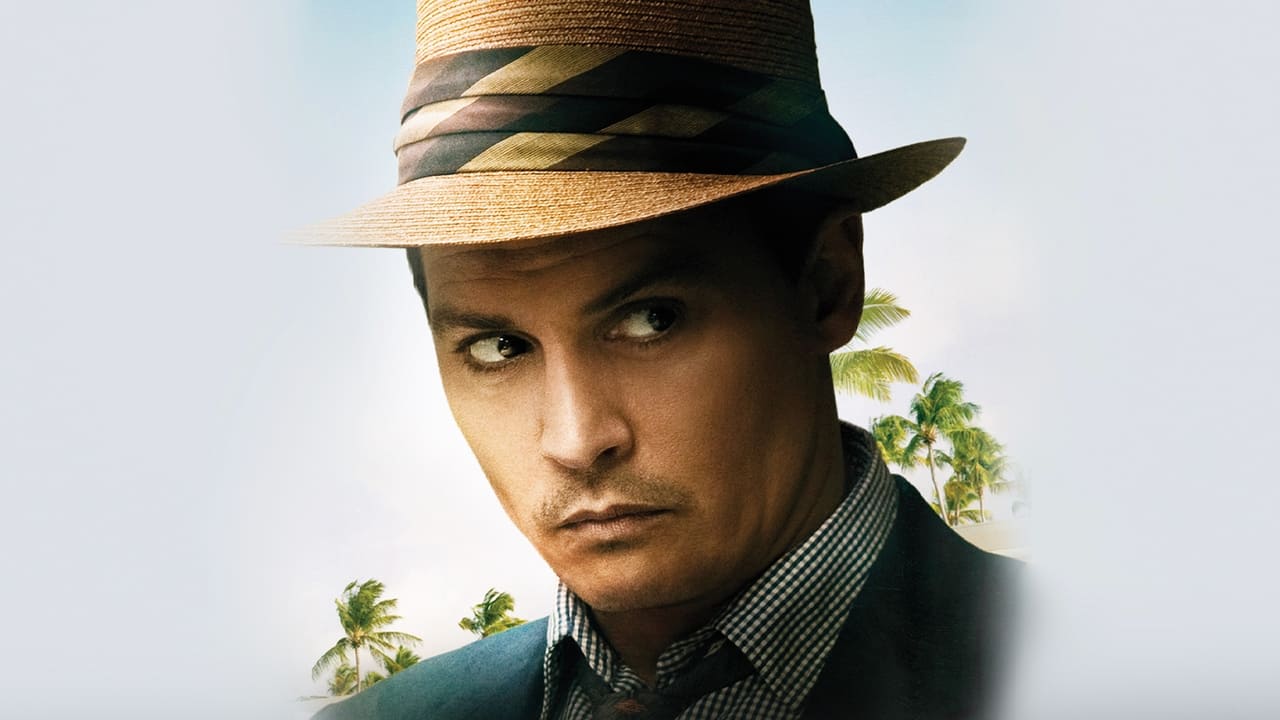
Johnny Depp’s best performances are the ones where he actually tries to look like a human being rather than a cartoon, and Kemp is one of his last truly grounded roles. He’s observant, slightly lost, and surprisingly quiet. But in the era of burgeoning franchises and the MCU's rapid ascent, a $45 million drama about a guy drinking rum and writing editorials felt like a relic from a different century. It lacked the "hook" that the DVD-buying public of the late 2000s required.
The movie’s pacing is, frankly, a mess. It meanders. It stops to look at a cockfight for ten minutes. It spends an inordinate amount of time on Giovanni Ribisi’s character listening to Adolf Hitler speeches on high-speed vinyl. It’s a movie that refuses to get to the point, much like a drunk friend telling a story at 3:00 AM. But if you’re in the right mood—the kind of mood where you don't mind a little aimless wandering through a beautiful, decaying landscape—that meandering becomes its greatest strength.
The Rum Diary isn't a masterpiece, and it’s certainly not the gonzo epic many were hoping for. However, it is a fascinating, atmospheric footnote in the careers of both Johnny Depp and Bruce Robinson. It captures a specific, sweltering moment in time with a level of craft that feels increasingly rare in the age of green-screen dominance. If you have two hours and a bottle of something strong, it’s a trip worth taking, if only to see what happens when a movie star chooses a passion project over a paycheck.
I still think about that scene with the two of them on the bicycle—Depp sitting on Rispoli’s lap while they steer through the chaotic streets. It’s absurd, it’s slightly touching, and it’s exactly the kind of weird, human moment that makes "failed" movies like this more interesting than most polished successes. Just don't expect a fast-paced thriller; this is a film that operates entirely on island time.

Keep Exploring...
-
No Reservations
2007
-

A Good Year
2006
-
Just My Luck
2006
-
Dan in Real Life
2007
-
The Nanny Diaries
2007
-
Be Kind Rewind
2008
-
Ghost Town
2008
-
Nick and Norah's Infinite Playlist
2008
-
Wild Child
2008
-

The Informant!
2009
-
Youth in Revolt
2009
-
I Love You Phillip Morris
2010
-
Morning Glory
2010
-
The Switch
2010
-
You Will Meet a Tall Dark Stranger
2010
-
Larry Crowne
2011
-
Our Idiot Brother
2011
-
Something Borrowed
2011
-

Young Adult
2011
-
Bernie
2012