The Skin I Live In
"Revenge is a dish best served under the microscope."
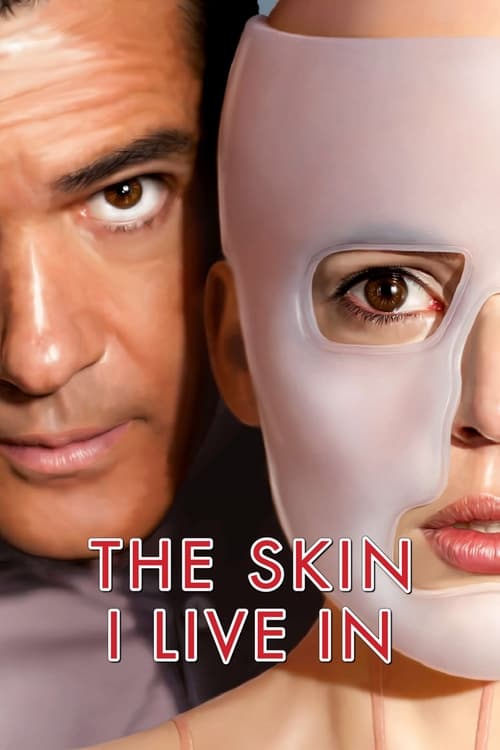
I remember watching The Skin I Live In for the first time in a tiny, basement-level art house theater where the air conditioning was stuck on "Arctic." I was nursing a lukewarm espresso that had gone oily, and the claustrophobia of the room perfectly mirrored the suffocating elegance of the screen. By the time the credits rolled, I didn't care about the cold or the bad coffee; I felt like I needed to go home and apologize to my own reflection.

Pedro Almodóvar has always been cinema’s great provocateur of the heart, but in 2011, he decided to stop tickling our emotions and start peeling back our layers—literally. This isn't just a movie; it’s a high-fashion nightmare, a clinical tragedy that feels like Almodóvar basically made a Saw movie for people with PhDs.
The Sterile Beauty of Madness
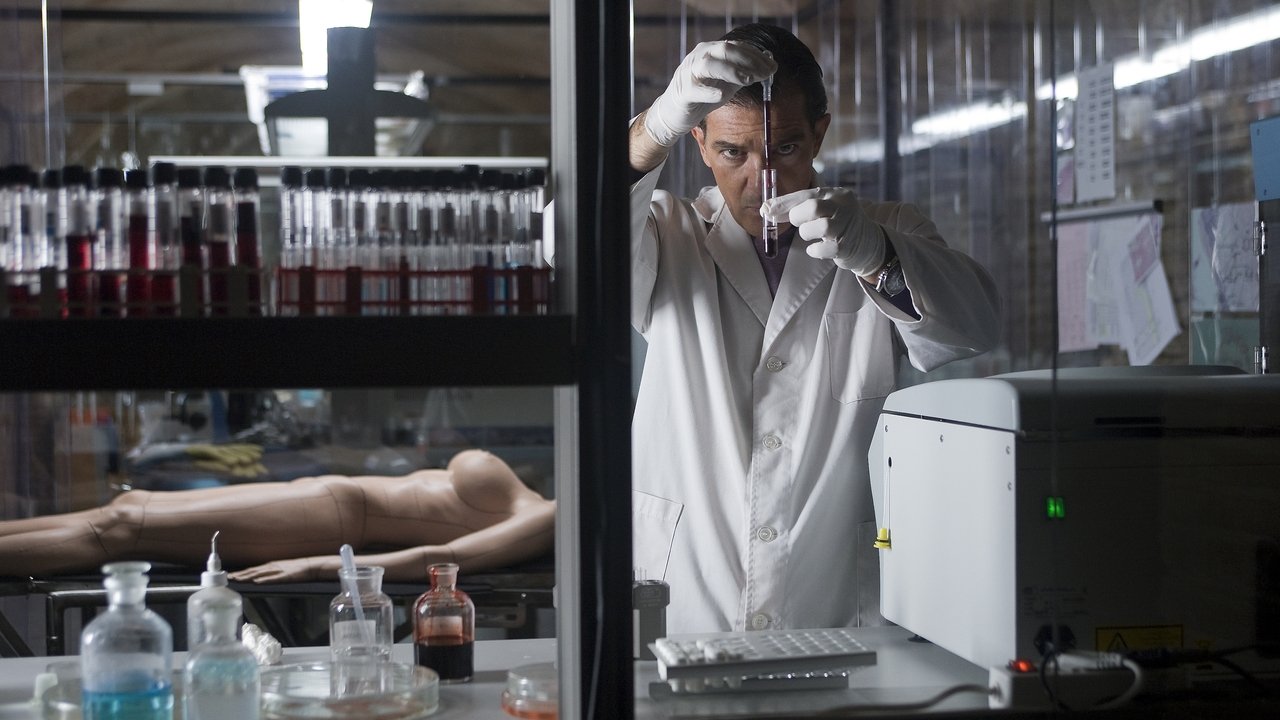
The film centers on Dr. Robert Ledgard, played by a terrifyingly restrained Antonio Banderas. This was a massive deal at the time—a reunion between the director and his former muse after twenty-one years apart. If you only knew Banderas from Zorro or Puss in Boots, this was a cold shower. He plays Ledgard with a surgical-grade stillness, a man who has channeled the grief of his wife’s death into a singular, obsessive goal: creating a synthetic, indestructible skin.
His "guinea pig" is Vera (Elena Anaya), a woman kept captive in a room that looks like a high-end furniture catalog but functions like a tomb. She spends her days doing yoga in a flesh-colored body stocking, her every move monitored by Ledgard via giant plasma screens that dominate his walls. It’s voyeurism as a medical necessity, or so he tells himself.
The horror here isn't about jump scares or masked killers. It’s about the terrifying realization that science is just a fancy word for a god complex with a scalpel. Almodóvar uses the clinical aesthetic of the early 2010s—that transition where digital cameras started making everything look a little too sharp—to create a world that feels painfully clean. It makes the eventual "mess" of the plot feel even more invasive.
A Cult Journey Into the Flesh
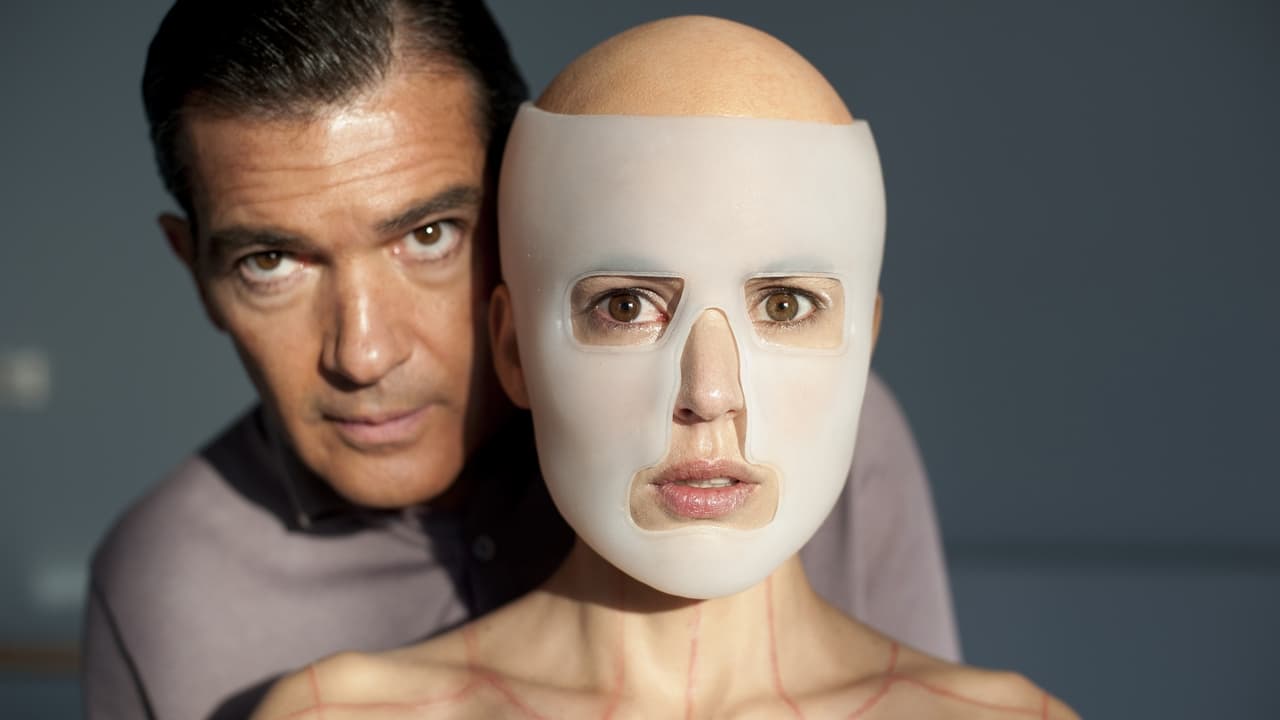
While it was a modest success at the box office, The Skin I Live In has since ascended to the ranks of those "you have to see this" cult classics. It’s the kind of film that survives through hushed recommendations and "don't look it up" warnings. Part of its longevity comes from its DNA; it’s based on the French novel Mygale by Thierry Jonquet, but Almodóvar strips away the pulp and replaces it with operatic melodrama and Hitchcockian suspense.
The production was famously meticulous. Apparently, Antonio Banderas was told to act "without any emotion," which is nearly impossible for a performer so naturally charismatic. He had to become a blank slate, much like the synthetic skin he was obsessed with. Meanwhile, the incredible flesh-colored bodysuit worn by Elena Anaya was designed by the legendary Jean Paul Gaultier, turning her into a living, breathing piece of industrial design.
The film also features one of the most effective uses of "art within art." The sculptures and paintings scattered throughout Ledgard’s estate are inspired by the work of Louise Bourgeois, emphasizing themes of domestic trauma and the female form. It’s these layers—the fashion, the high art, the clinical score by Alberto Iglesias—that make the central twist feel so earned and yet so devastating.
The Horror of Identity
Looking back from the 2020s, the film’s exploration of gender, identity, and the physical body feels even more potent than it did a decade ago. It asks a horrifying question: if you change everything about a person’s exterior, do you eventually delete the soul inside?
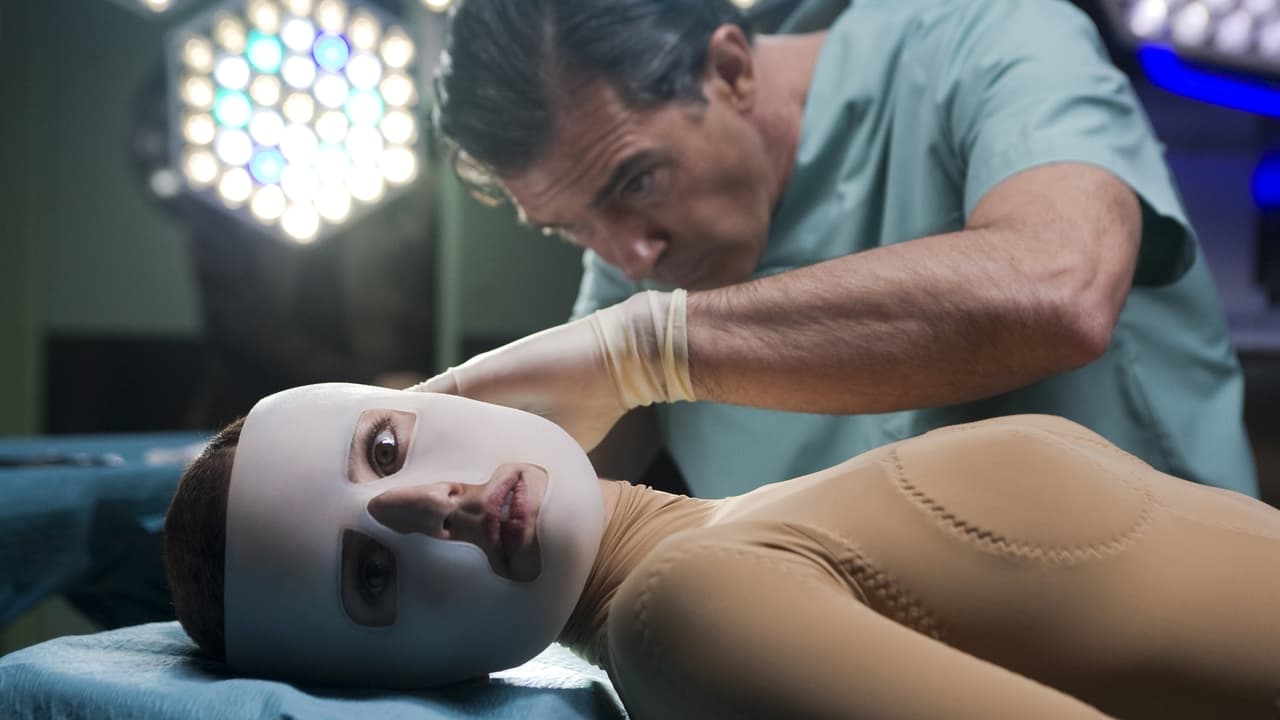
The second act shift is a masterstroke of non-linear storytelling. We are introduced to Vicente (Jan Cornet), a young man whose life intersects with Ledgard’s in a way that seems accidental but becomes the catalyst for the film’s most shocking revelations. Marilia (Marisa Paredes), the Dr.’s loyal housekeeper, provides the only grounded perspective, though her own secrets are just as twisted as the man she serves.
What stays with me isn't the gore—and there is some, though Almodóvar usually looks away just before it becomes gratuitous—but the silence. The film uses silence as a weapon. It’s in the quiet hum of the intercoms, the soft slide of a food tray, and the sound of a pen scratching on skin. It creates a sustained dread that makes you want to crawl out of your own seat. It’s surgical-grade obsession masquerading as science, and it’s one of the most haunting things Almodóvar has ever put to film.
The Skin I Live In is a rare specimen: a psychological thriller that is as beautiful as it is repulsive. It captures that 2011 moment where cinema was becoming sleeker and more digital, using that clarity to show us things we’d perhaps rather not see. It’s a tragedy of errors, a masterpiece of body horror, and a reminder that no matter how much we change the surface, the past has a way of scratching its way back out. Watch it with the lights off, but maybe keep a blanket handy—you’ll feel the chill.

Keep Exploring...
-

Inland Empire
2006
-

Lucky Number Slevin
2006
-

Martyrs
2008
-

The Skeleton Key
2005
-
All About My Mother
1999
-
Twin Peaks: Fire Walk with Me
1992
-
Lost Highway
1997
-
Bad Education
2004
-
Funny Games
1997
-

The Devil's Advocate
1997
-

The Game
1997
-

Eyes Wide Shut
1999
-

Sleepy Hollow
1999
-

Tell No One
2006
-

The Orphanage
2007
-

The Girl with the Dragon Tattoo
2009
-

The Secret in Their Eyes
2009
-

Thirst
2009
-

Black Swan
2010
-

Take Shelter
2011