Transformers: Dark of the Moon
"The moon landing was just the beginning."
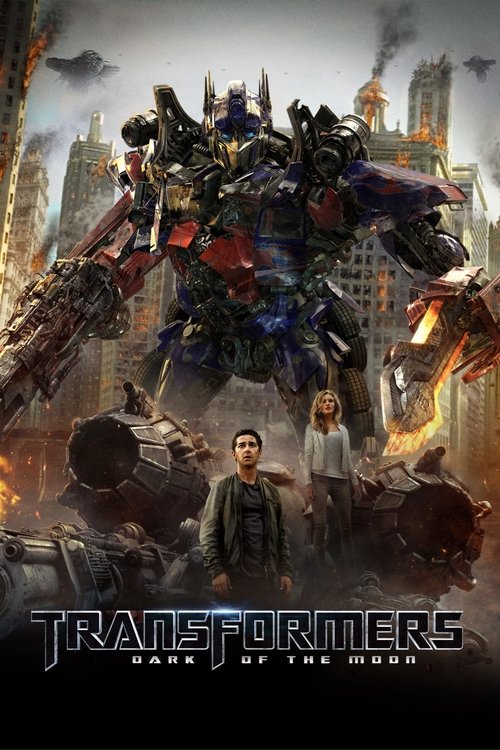
If you ever wanted to see what happens when a director is given nearly 200 million dollars and told to let his inner ten-year-old run the asylum, Michael Bay's Transformers: Dark of the Moon is the definitive answer. It’s a loud, sprawling, often exhausting epic of metal-on-metal violence that somehow managed to turn the Apollo 11 moon landing into a secret CIA recovery mission. Looking back at 2011, this wasn’t just a movie; it was a sensory siege that signaled the absolute peak of "Bayhem" before the franchise eventually collapsed under its own weight.
I remember watching this in a theater where the air conditioning had died, sitting next to a guy who was aggressively peeling an orange. Between the citrus fumes and the deafening roar of Steve Jablonsky’s (who also scored The Island) booming soundtrack, I felt like I was undergoing a futuristic interrogation. Yet, there is something undeniably impressive about the sheer scale here. While the second film, Revenge of the Fallen, was a victim of the 2008 writers' strike and felt like a disjointed mess, Dark of the Moon has a grim, focused determination to be the biggest thing you’ve ever seen.
The Conspiracy of the Chrome Giants
The plot kicks off with a surprisingly effective historical revisionism. We learn that the space race was actually a sprint to reach a crashed Cybertronian ship, the Ark, which carried Sentinel Prime (voiced with Shakespearean gravity by Leonard Nimoy, a lovely nod to his Star Trek legacy). It’s a clever hook that grounds the fantasy in a bit of "what if" paranoia. Fast forward to the present, and Shia LaBeouf's Sam Witwicky is struggling with the most relatable problem in the movie: he has saved the world twice but can’t find a job in a tough economy.
LaBeouf is, as always, a vibrating wire of anxiety. He spends the movie shouting, sweating, and sprinting, providing a human anchor that is frequently overshadowed by the digital titans around him. Michael Bay has always had a "more is more" philosophy, and that extends to the cast. We’ve got John Turturro (reprising his role from The Big Lebowski days) returning as the eccentric Simmons, and Frances McDormand—fresh off an Oscar-caliber career—showing up as a hard-nosed Director of National Intelligence. Seeing McDormand share a scene with a giant CGI robot is the kind of glorious tonal whiplash only a billion-dollar blockbuster can provide.
The Chicago Massacre: A CGI Masterclass
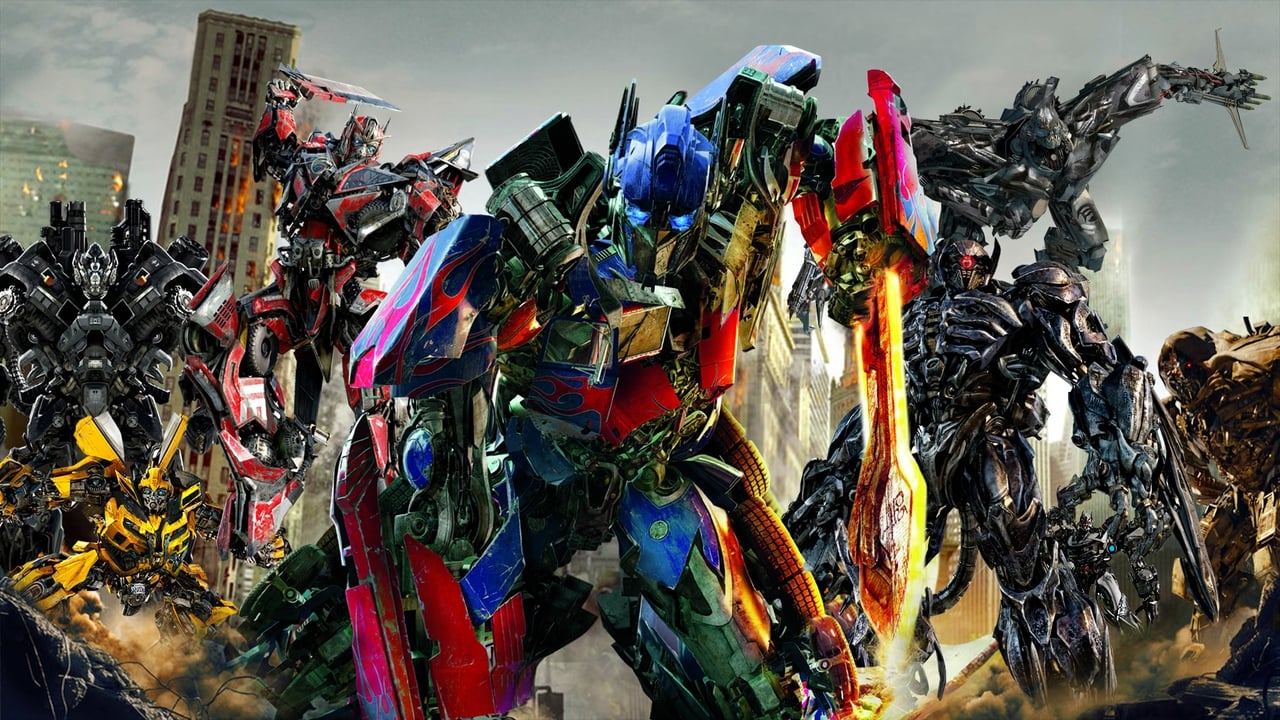
The final hour of this film is essentially one long, continuous action sequence set in a devastated Chicago. At the time, this was the gold standard for digital effects. Industrial Light & Magic (the house that Star Wars built) pushed the boundaries of what was possible, rendering complex metallic surfaces and debris that still look better than most of the muddy CGI we see in modern superhero flicks.
What makes the action stand out is the blend of the digital and the physical. Bay famously utilized real-life wingsuit flyers to BASE jump off the Willis Tower, capturing footage that no computer could perfectly replicate. There’s a weight to the destruction here. When a giant metal "Driller" snake tears a skyscraper in half, it feels tactile. The physics are absolute nonsense, but the visual clarity is astounding. Unlike the "shaky cam" craze that plagued the early 2000s, Bay keeps his camera wide and his sun-drenched frames sharp, ensuring you see every single bolt flying out of a Decepticon’s head.
However, we have to talk about the shift in tone. This is a remarkably mean-spirited movie for a "toy" franchise. Optimus Prime, voiced with iconic stoicism by Peter Cullen, spends the finale executing enemies in ways that would make a slasher villain blush. There’s a post-9/11 grittiness to the urban warfare that feels very of its era—an obsession with "shock and awe" that leans more toward a war film than a Saturday morning cartoon.
A Billion-Dollar Time Capsule

Financially, Dark of the Moon was a juggernaut. It grossed over $1.1 billion worldwide, proving that global audiences had an insatiable appetite for high-fidelity destruction. It was also the peak of the 3D craze. Following Avatar, every studio wanted that "depth," and Bay actually shot much of this with 3D cameras rather than doing a cheap post-conversion. If you saw this in a theater back then, it was one of the few times the glasses actually felt worth the headache.
The film treats female characters with the subtlety of a sledgehammer, famously introducing Rosie Huntington-Whiteley (who replaced Megan Fox) with a lingering shot that became a lightning rod for criticism of the "male gaze" in cinema. It’s a stark reminder of the cultural attitudes of the late 2000s and early 2010s blockbuster landscape—an era where the spectacle was king and the nuances of character were often left on the cutting room floor.
Looking back, Dark of the Moon represents the moment the Transformers series peaked in its technical ambition. It’s an overstuffed, ridiculous, and often brilliant display of craft. It captures a specific moment in Hollywood history: the transition from the gritty realism of the early 2000s to the massive, interconnected universe-building that was about to take over. It’s not a "good" movie in the traditional sense, but as a piece of pure, unadulterated cinema-as-spectacle, it’s a fascinating relic of a director who never met an explosion he didn't like.
Ultimately, this is a movie designed to be watched on the biggest screen possible with the volume turned up to "neighbor-annoying" levels. It’s a feat of engineering as much as it is a piece of storytelling. While the human drama is paper-thin and the runtime is punishing, the technical achievement of the Chicago sequence remains a high-water mark for the genre. If you can switch off the logical part of your brain for two and a half hours, it’s a ride worth taking—just maybe skip the tuna salad while watching.

Keep Exploring...
-
Transformers: Revenge of the Fallen
2009
-
Transformers
2007
-
Transformers: Age of Extinction
2014
-
Transformers: The Last Knight
2017
-
Armageddon
1998
-
The Island
2005
-
Spider-Man 3
2007
-
2012
2009
-

Iron Man 2
2010
-
Resident Evil: Afterlife
2010
-
Journey 2: The Mysterious Island
2012
-
The Amazing Spider-Man
2012
-

The Hunger Games
2012
-
Iron Man 3
2013
-
The Wolverine
2013
-

Divergent
2014
-
Teenage Mutant Ninja Turtles
2014
-
The Amazing Spider-Man 2
2014
-

The Matrix Reloaded
2003
-

Captain America: The First Avenger
2011