21 Jump Street
"High school is even scarier the second time."
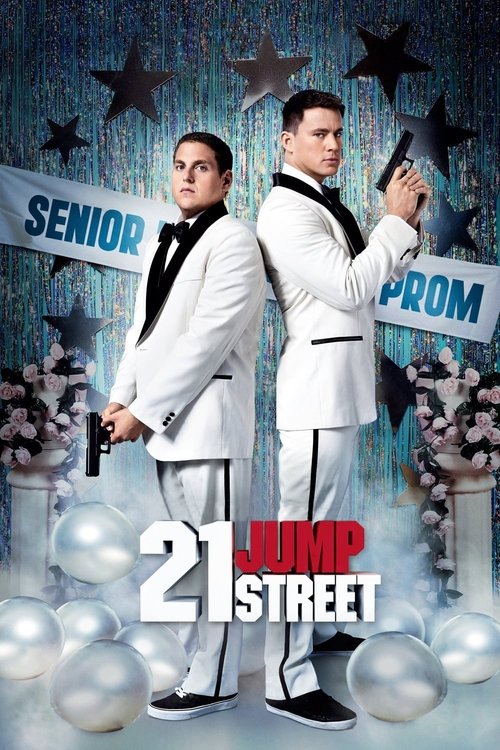
By 2012, the "reboot" fatigue wasn't just a mild headache; it was a full-blown cultural migraine. When word got out that Columbia Pictures was dusting off a semi-forgotten 80s procedural about youthful-looking narcs, most of us rolled our eyes so hard we could see our own brains. It felt like the ultimate white flag of creative surrender. But then, the first trailer dropped, and we realized that Christopher Miller and Phil Lord weren't trying to remake a TV show—they were trying to deconstruct the very idea of the "lazy Hollywood remake" while setting it on fire.

A Masterstroke of Role Reversal
The genius of this film lies entirely in its understanding of how much the social landscape shifted between the late 90s and the early 2010s. When Jonah Hill (as the neurotic Schmidt) and Channing Tatum (as the dim-witted but golden-hearted Jenko) head back to high school, they expect the John Hughes-era archetypes they grew up with. They expect the jocks to rule the hallways with iron fists and the nerds to be shoved into lockers.
Instead, they find a world where being "ironic" is a personality trait, environmentalism is the new letterman jacket, and being sensitive is actually cool. Watching Channing Tatum—a man built like a Greek god sculpted out of protein powder—struggle to fit in with the "cool" indie kids led by Dave Franco is a comedic goldmine. I watched this for the third time while my neighbor was power-washing his driveway at 7:00 AM, and the rhythm of the water hitting the pavement actually synced up perfectly with the freeway chase scene, which only added to the sensory overload.
Channing Tatum's comedic timing was the biggest surprise of 2012; before this, he was the Step Up guy or the stoic soldier. Here, he’s a physical comedy revelation. Whether he’s trying to explain "P-F-F-F-Covalent bonds" or failing to perform a basic drug bust, his chemistry with Jonah Hill feels less like a movie pairing and more like two best friends trying to make each other break character.
Chaos Choreography and the "HFS" Trip

While the comedy is the main course, the action is where Lord and Miller show off the stylistic flourishes that would later define The Lego Movie and Spider-Man: Into the Spider-Verse. The action sequences aren't just there to fill time; they are paced with a relentless, frantic energy. Take the "HFS" drug sequence—it’s a four-stage hallucinogenic nightmare that manages to be both a brilliant piece of visual storytelling and a textbook example of escalating stakes.
The cinematography by Barry Peterson captures the neon-soaked absurdity of the film's climax at the prom, but the practical stunt work is surprisingly grounded. The freeway chase, involving a motorcycle gang led by DeRay Davis, features some genuinely impressive vehicle work that feels tactile and dangerous. It’s an action-comedy that actually bothers to be a good action movie. It’s a movie that thrives on the fact that everyone involved knows exactly how stupid the premise is, and they lean into the chaos with total commitment.
The film also features one of the most inspired uses of a villain in recent memory with Rob Riggle as Mr. Walters. Most movies would have made the gym teacher a generic jerk; this movie makes him... well, I won't spoil the third-act twist for the three people who haven't seen it, but it’s a level of commitment to a bit that few actors could pull off.
The Meta-Blockbuster Success
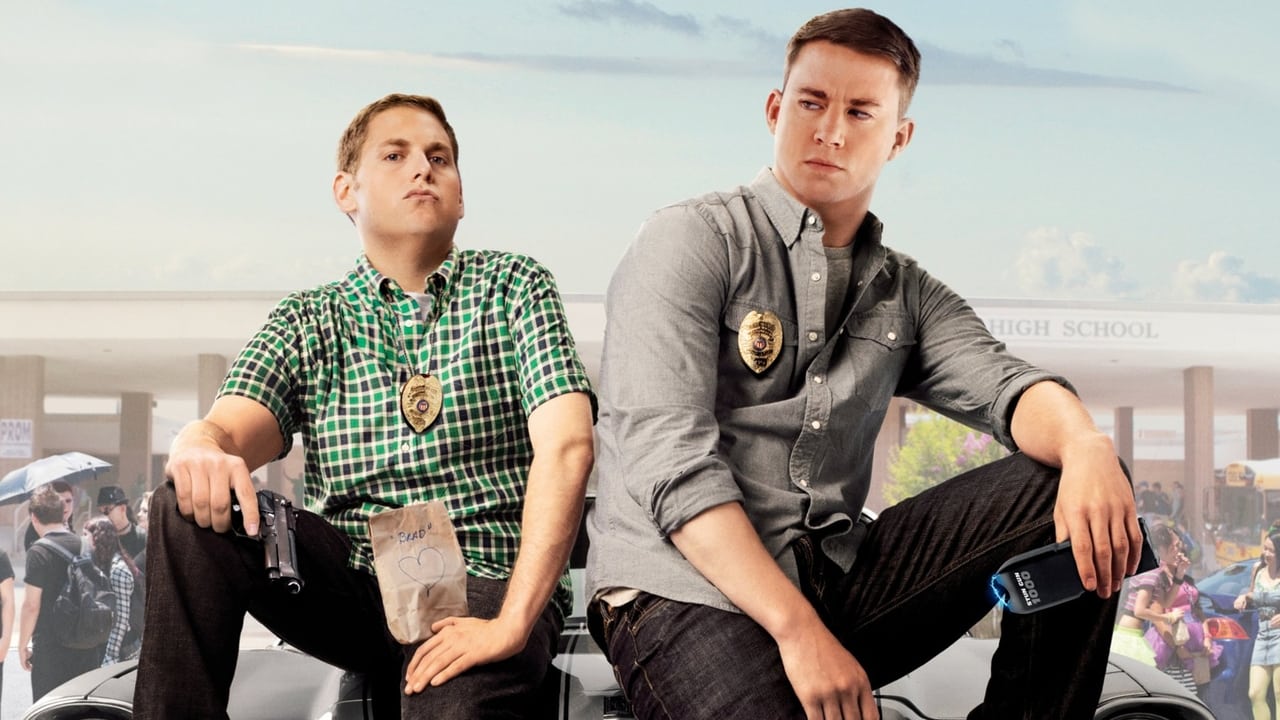
Looking back, the financial success of 21 Jump Street was a bit of a "told you so" to the industry. With a modest $42 million budget, it raked in over $201 million worldwide. It proved that audiences weren't tired of old IP—they were just tired of boring old IP. The film’s success was fueled by a marketing campaign that leaned heavily into the R-rated absurdity, moving away from the PG-13 safety net that usually hampers buddy-cop movies.
The "Cool Details" department is also packed here. Apparently, Channing Tatum turned down the role twice because he didn't think he was funny enough (spoiler: he was wrong). Then there's the legendary Johnny Depp and Peter DeLuise cameo. Jonah Hill actually wrote the cameo specifically for Johnny Depp, hoping he’d say yes. Not only did he agree, but he insisted on being in full, unrecognizable prosthetic makeup. In fact, the makeup was so convincing that when he arrived on set, Hill didn't even realize it was him for the first few hours.
The film also serves as a fascinating time capsule for the early 2010s rise of Brie Larson, who brings a genuine sweetness to Molly Tracey, grounding the film’s more manic moments. It’s a reminder of a time when "indie darlings" were starting to populate big-budget comedies, adding a layer of sincerity that kept the movie from feeling like a hollow parody.
21 Jump Street is that rare reboot that justifies its own existence within the first ten minutes. It’s loud, frequently vulgar, and intellectually "dumb" in the smartest way possible. By subverting the tropes of both the buddy-cop genre and the high school coming-of-age story, it created a blueprint for the meta-comedy era. It’s the kind of film that gets funnier with every rewatch, mostly because you can feel how much fun everyone was having on screen. If you’re looking for a dose of high-energy nostalgia that still feels modern, this is your ticket.
Keep Exploring...
-
22 Jump Street
2014
-
Pineapple Express
2008
-
The Heat
2013
-

RED
2010
-
Johnny English Reborn
2011
-
Another 48 Hrs.
1990
-
Lethal Weapon 3
1992
-
Bad Boys
1995
-
Rush Hour
1998
-
The Lego Movie
2014
-
Rush Hour 2
2001
-

Kung Fu Hustle
2004
-
Shoot 'Em Up
2007
-
The Family
2013
-
Hot Fuzz
2007
-
OSS 117: Lost in Rio
2009
-
The A-Team
2010
-

The Guard
2011
-
2 Guns
2013
-
RED 2
2013