Abraham Lincoln: Vampire Hunter
"Saving the Union, one neck at a time."
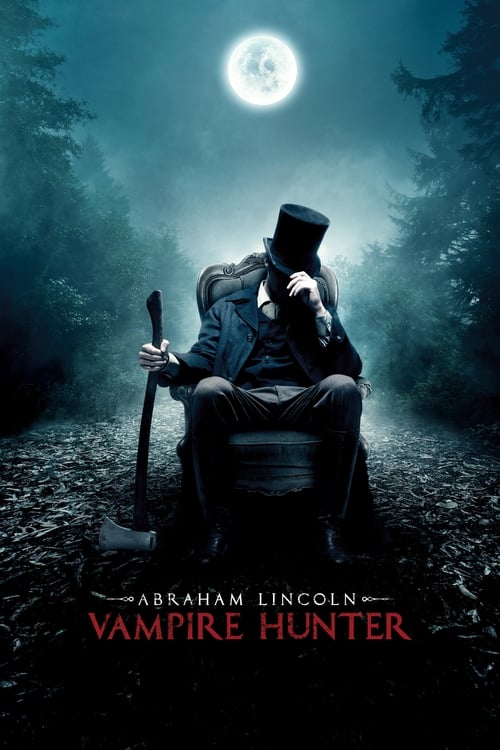
I remember the summer of 2012 vividly because it was the year Hollywood decided that the 16th President of the United States wasn't quite interesting enough on his own. We were in a bizarre cultural moment where "mashup" novels like Pride and Prejudice and Zombies were flying off shelves, and history was being rewritten with fangs and silver bullets. I actually watched this for the first time on a flight to Chicago while the lady next to me spent the entire duration aggressively knitting a neon green sweater, and honestly, the rhythmic clicking of her needles provided a better soundtrack than the jet engines ever could for a movie this strange.

The Most Earnest Absurdity You’ll Ever See
The first thing you have to understand about Abraham Lincoln: Vampire Hunter is that it refuses to wink at the camera. Directed by Timur Bekmambetov—the man who gave us the frantic, bullet-bending madness of Wanted—this film treats the idea of the Great Emancipator swinging a silver-coated axe with the gravitas of a Shakespearean tragedy. It’s a bold move. Most directors would have leaned into the "B-movie" campiness of the title, but Bekmambetov and writer Seth Grahame-Smith (who adapted his own novel) play it entirely straight.
Benjamin Walker takes on the role of Lincoln, and he’s remarkably good. He captures that lanky, melancholy dignity we associate with the man, even when he’s doing 360-degree mid-air flips. It was a breakout role for him, and he famously beat out bigger names like Adrien Brody and Josh Lucas by proving he could handle the physicality of the "axe-fu." I appreciated that the movie covers Lincoln’s entire life, from a boy losing his mother to a supernatural predator to the weary leader at Gettysburg. It turns the Civil War into a literal battle between the living and the undead, framing the Confederacy as a front for ancient vampires who view the slave trade as their primary food source. It's a heavy metaphor, and the movie commits to it with the intensity of a fever dream.
Visual Chaos and the CGI Learning Curve
Looking back from the 2020s, the film serves as a perfect time capsule for that early-2010s visual style. We were deep into the "speed-ramping" era—where action sequences slow down to a crawl for a cool shot and then whip-fast forward. It’s a technique Bekmambetov loves, and here he uses it to highlight the sheer physics-defying absurdity of the fight scenes.

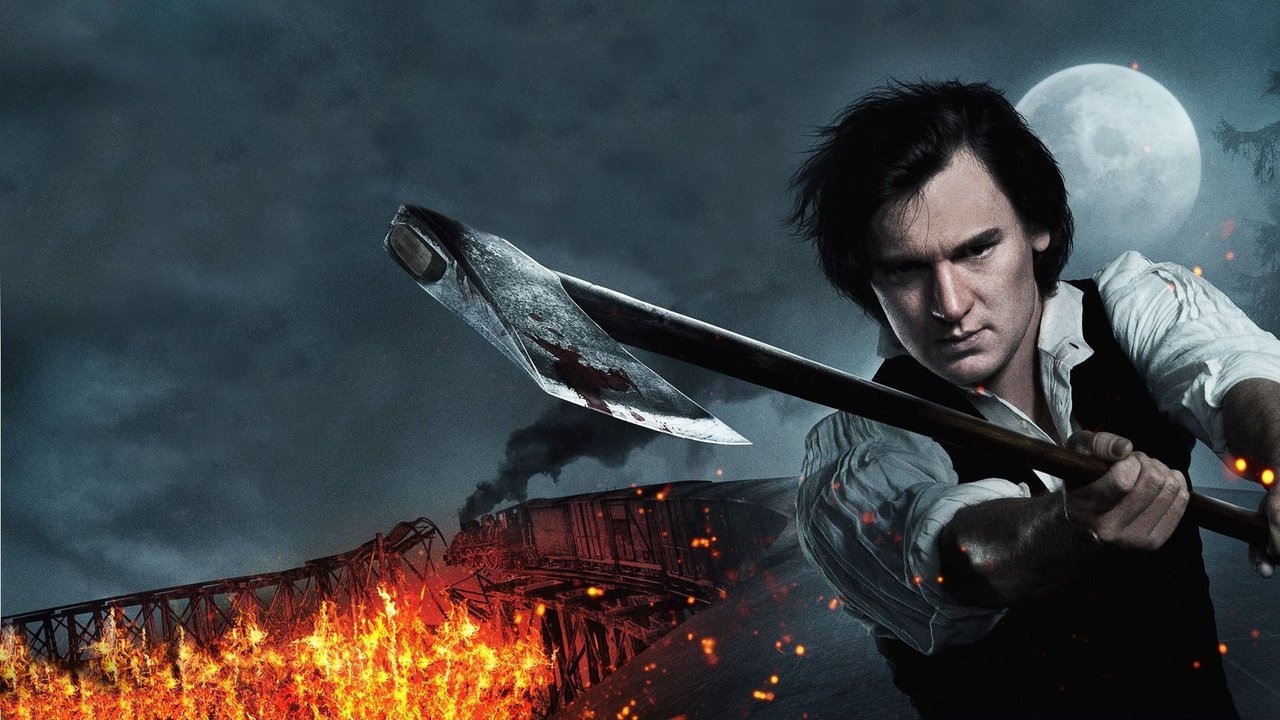
The centerpiece is an insane stampede of thousands of horses through which Lincoln chases the primary villain, Rufus Sewell’s Adam. It’s a CGI-heavy sequence that, if I’m being honest, looked a little crunchy even in 2012. Today, it feels like a relic of a time when directors were pushing digital effects to their absolute limits without quite having the processing power to make it feel grounded. But there’s a charm to that ambition. There’s a sequence on a burning train near the end that feels like a precursor to the massive set-pieces we see in the MCU today, yet it’s draped in a muddy, sepia-toned gloom that screams "Post-300 Action Cinema."
The horror elements, however, are where the craft shines. The legendary Greg Cannom handled the makeup, and the vampires here aren't the sparkly heartthrobs of Twilight. They are pale, distended, and genuinely creepy when they unhinge their jaws. They have a ghostly quality, popping in and out of existence, which adds a layer of dread that balances the over-the-top action.
Stuff You Didn't Notice
One of the more interesting bits of trivia is that 2012 was essentially the "Year of Lincoln." While Bekmambetov was filming this in New Orleans, Steven Spielberg was nearby filming his own Lincoln with Daniel Day-Lewis. Apparently, the two productions were so close that some crew members occasionally worried about getting the "serious" stovepipe hats mixed up with the "action" stovepipe hats.
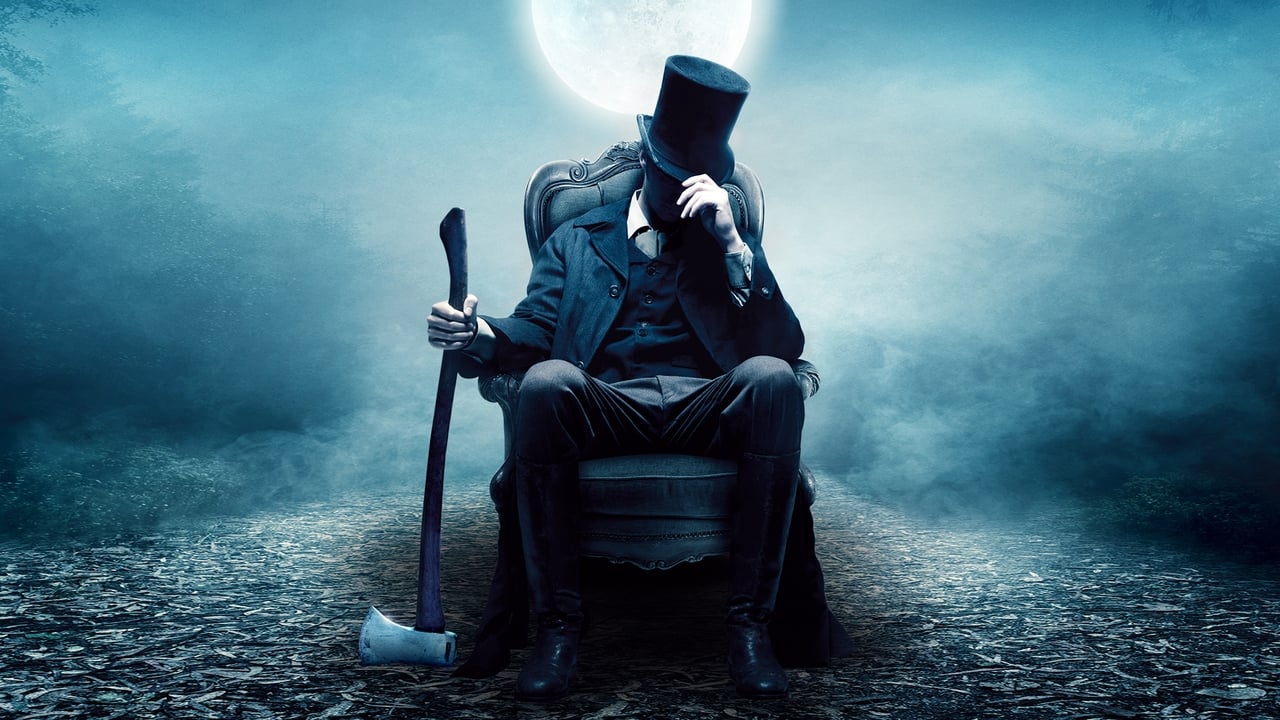
Also, keep an eye out for Mary Elizabeth Winstead as Mary Todd Lincoln. She’s often relegated to the "concerned wife" role in these kinds of movies, but she brings a lot of heart to a story that could have easily felt hollow. And Dominic Cooper, playing the mysterious mentor Henry Sturgess, seems to be having the most fun of anyone on screen, chewing through exposition with a smirk and a pair of tinted sunglasses that definitely weren't period-accurate but looked cool enough that I didn't care.
The movie is essentially a high-budget dare that someone actually followed through on. It’s not a "good" historical biography, and it’s arguably too serious for its own good, but it represents a specific moment in the digital transition of Hollywood where anything felt possible if you had enough CGI and a recognizable name from a history book.
Ultimately, Abraham Lincoln: Vampire Hunter is a cult curiosity that deserves a rewatch, if only to marvel at its sincerity. It doesn't have the polish of modern franchise films, but it has a weird, dark soul that most blockbusters lack. It’s the kind of movie you find on a streaming service at 11 PM and decide to "just watch five minutes of," only to find yourself still there ninety minutes later, wondering why more presidents don't fight monsters with silver-tipped furniture. It’s a loud, messy, sepia-toned blast from the recent past that reminds me why I love the occasional "what if" scenario taken to its absolute extreme.
Keep Exploring...
-
Priest
2011
-
Underworld: Awakening
2012
-

Legion
2010
-
Dracula Untold
2014
-

Blade II
2002
-
Hansel & Gretel: Witch Hunters
2013
-
Ghost Rider
2007
-
10,000 BC
2008
-
The Mummy: Tomb of the Dragon Emperor
2008
-

Wanted
2008
-
Night at the Museum: Battle of the Smithsonian
2009
-
Prince of Persia: The Sands of Time
2010
-
The Sorcerer's Apprentice
2010
-
Sucker Punch
2011
-

Wrath of the Titans
2012
-

47 Ronin
2013
-
Jack the Giant Slayer
2013
-
R.I.P.D.
2013
-
End of Days
1999
-
Constantine
2005