Batman: The Dark Knight Returns, Part 1
"Old scars, new blood, and a city on fire."
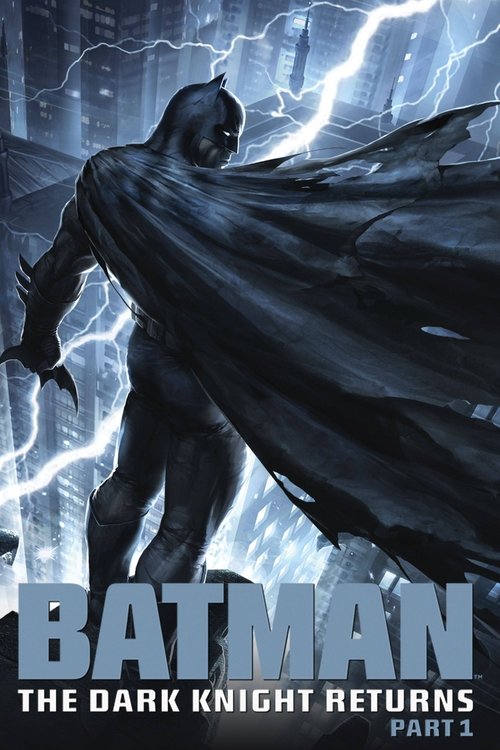
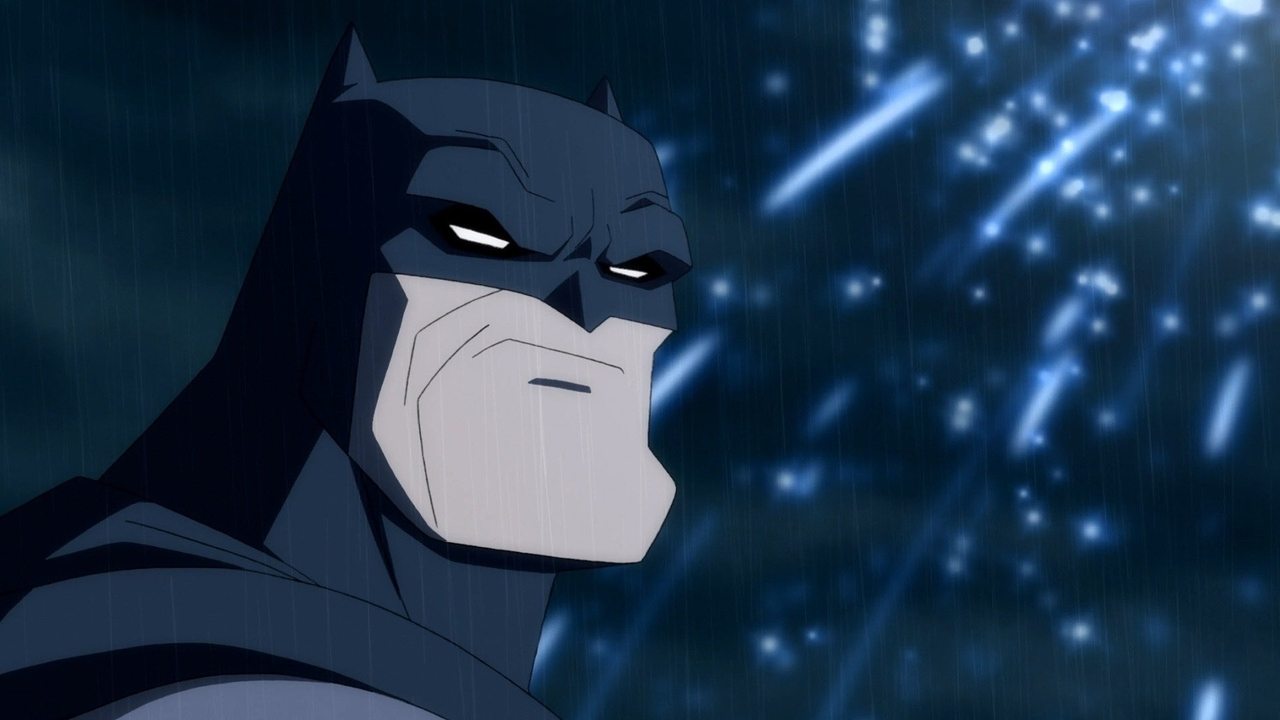
The image of a fifty-five-year-old Bruce Wayne, his face a road map of scars and regret, staring into the abyss of a Gotham City that has outgrown its need for heroes, is where Batman: The Dark Knight Returns, Part 1 earns its keep. Released in 2012, it arrived in the looming shadow of Christopher Nolan’s The Dark Knight Rises. While the world was lining up for IMAX spectacle, I was hunkered down on my lumpy IKEA sofa, trying to ignore a persistent fruit fly buzzing around my lukewarm ginger ale, watching this animated adaptation instead. I realized almost immediately that while the big-budget live-action films were playing at realism, this 76-minute animated punch to the gut was capturing something far more primal and frightening.

This was the tail end of an era where DC Entertainment’s direct-to-video wing was doing the most interesting work in the genre. They weren't just making "cartoons" for kids; they were translating the literary heavyweights of the comic world into cinematic language. For years, Frank Miller’s 1986 seminal graphic novel was considered "unfilmable" because of its internal monologues and jagged, ugly aesthetic. But director Jay Oliva and screenwriter Bob Goodman proved that if you lean into the grit rather than polishing it away, you get something that feels more like a 70s crime thriller than a modern superhero romp.
The Anatomy of an Old Man’s Rage
The film sets its stakes early: Batman hasn't been seen in a decade. Gotham is a humid, neon-soaked dumpster fire being terrorized by "The Mutants," a gang of hyper-violent youths who speak in a bizarre street-slang patois. Bruce Wayne is an alcoholic speed-freak—literally, he’s racing cars just to feel a heartbeat—until the "Spirit of the Bat" forces him back into the suit.
What makes the action here so distinct from the "Modern Cinema" era of 2012 is the sense of physical consequence. In an age where CGI was making superheroes feel like weightless pixels, The Dark Knight Returns makes every punch feel like a felony. When Peter Weller—the man who gave us the definitive robotic stoicism of RoboCop—speaks as Batman, you don't hear a "hero." You hear a weary veteran who is basically a senior citizen with a death wish. Weller’s voice is dry, brittle, and terrifying. He doesn't growl like Christian Bale; he rasps with the authority of someone who has nothing left to lose.
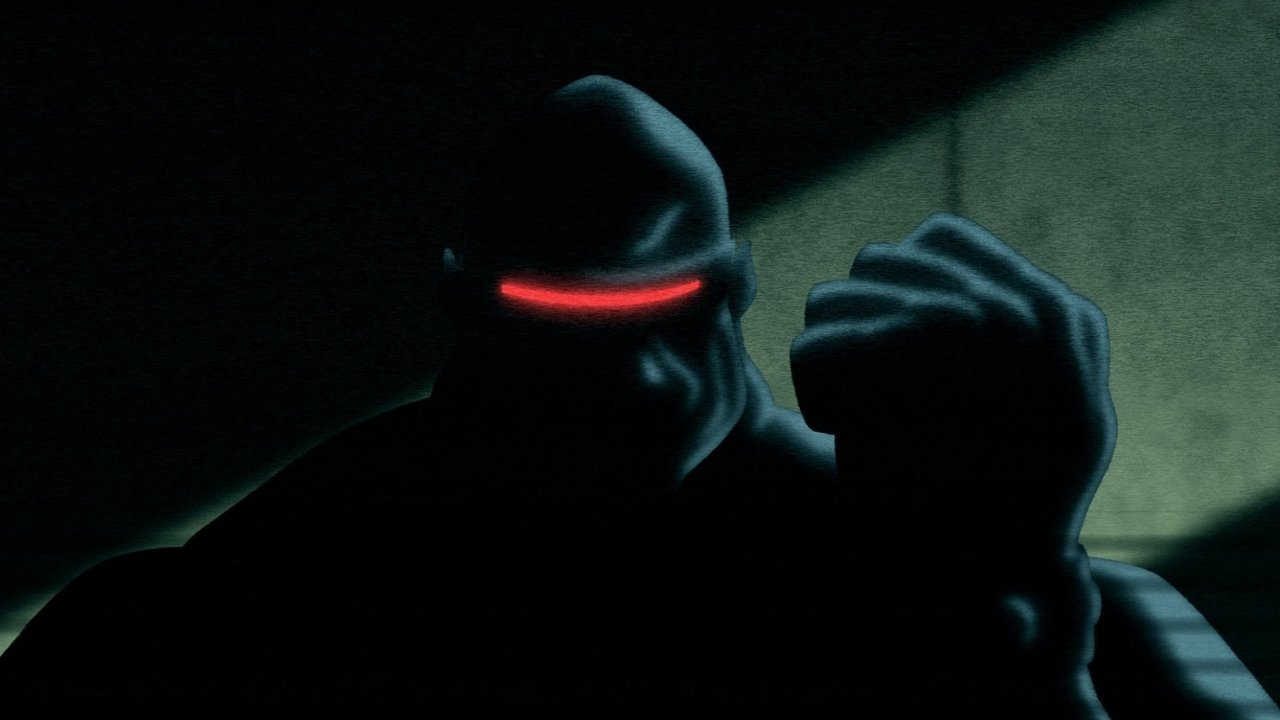
The centerpiece of Part 1 is the confrontation with the Mutant Leader. It isn't a graceful ninja fight. It’s a muddy, disgusting brawl where Bruce realizes his reflexes aren't what they used to be. The sound design is oppressive—you hear the wet thud of boots in the mud and the sickening crunch of a forearm snapping. Wade Williams voices the Mutant Leader with a guttural, shark-like intensity that makes the threat feel legitimate. This isn't a villain with a complex plan; he’s just a force of nature that needs to be broken.

A Masterclass in Stylistic Restraint
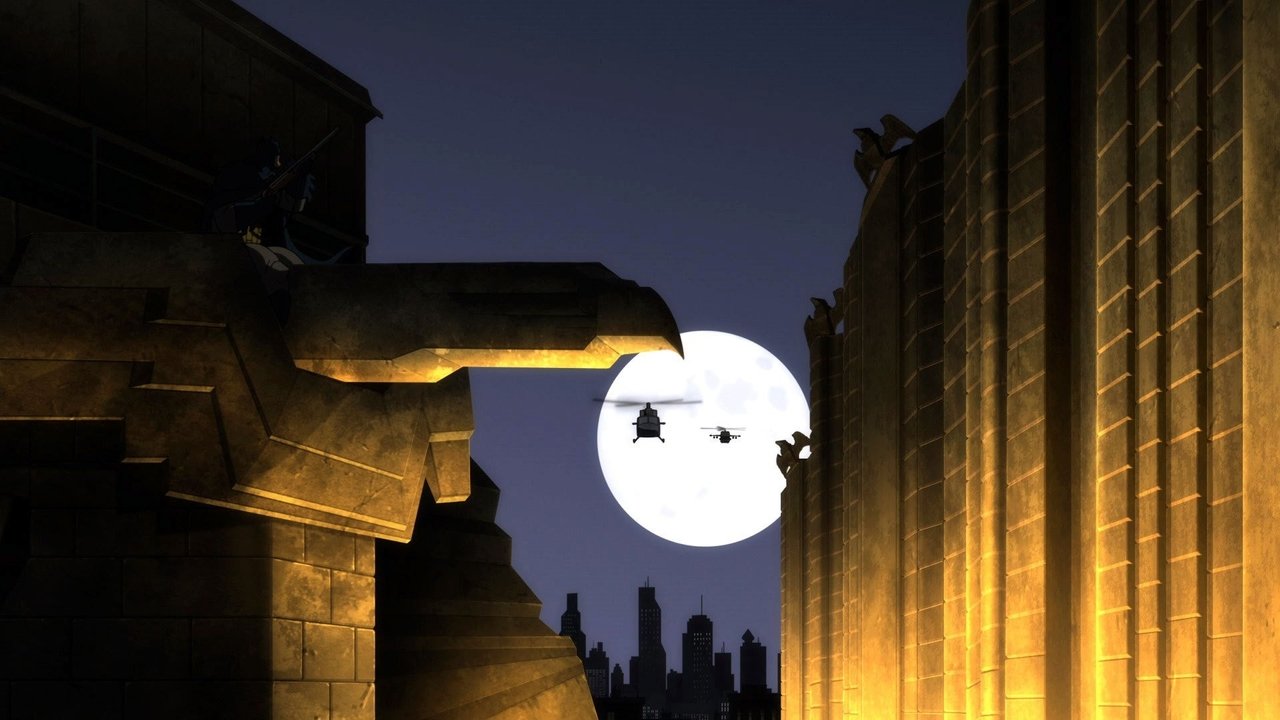
Visually, the film navigates a tricky path. It respects Miller’s original art without mimicking its most distracting eccentricities. The color palette is heavy on sickly yellows, bruised purples, and deep blacks. It captures that specific post-9/11 anxiety of urban decay, where the news media (represented by a constant barrage of talking-head segments featuring Michael McKean) is just as much a villain as the criminals, spinning every act of heroism into a political debate.
Then there’s the introduction of Carrie Kelley, voiced by Ariel Winter. Casting the girl-next-door from Modern Family as a DIY Robin was a stroke of genius. She provides the only spark of hope in a film that is otherwise drowning in testosterone and shadows. Her relationship with Peter Weller’s Bruce isn't sentimental; it’s a tactical partnership. He needs a soldier; she needs a purpose. Watching them navigate a Gotham that looks like it was designed by a depressed architect is one of the film’s quietest strengths.
The score by Christopher Drake also deserves a shout-out. Eschewing the traditional orchestral swells of John Williams or the Hans Zimmer "BWAHM," Drake goes for a John Carpenter-inspired synth pulse. It makes the movie feel like a lost 1980s VHS treasure that somehow got a million-dollar restoration. It’s a nostalgic nod that fits the film's "Looking Back" retrospective energy perfectly.
The Mystery of the Forgotten Gem
Why does this film often get lost in the shuffle? Part of it is the "Direct-to-Video" stigma. Despite a $3.5 million budget—which is plenty for 76 minutes of high-quality animation—it never got the marketing push of its live-action cousins. It’s a bit of a "forgotten curiosity" because it was released just as the MCU was standardizing the "fun, quippy" superhero formula. The Dark Knight Returns is the antithesis of that formula. It’s mean, it’s political, and it treats its characters with a somber gravity that might feel "too much" for a casual Friday night.
However, looking back over a decade later, it’s arguably the most faithful and effective Batman story ever put to screen. It understands that Batman is a creature of obsession, and that the Batmobile should look like a sentient building rather than a sleek sports car. It’s a film that demands you take it seriously, and it earns that respect through sheer craft and commitment to its grim vision.
Batman: The Dark Knight Returns, Part 1 is a rare example of a legacy adaptation that manages to surpass the source material’s accessibility while retaining its soul. It’s an intense, atmospheric crime drama that happens to feature a man in a bat costume. If you’ve only ever known Batman through the lens of billion-dollar blockbusters, do yourself a favor and track this one down. Just make sure you’ve got a cold drink and maybe some bug spray for the fruit flies—it’s a dirty, sweaty, brilliant ride that reminds us why the Bat never truly stays in the cave.
Keep Exploring...
-

Batman: The Dark Knight Returns, Part 2
2013
-
Batman: Under the Red Hood
2010
-
Batman vs. Robin
2015
-
Batman: Assault on Arkham
2014
-
Batman: Mask of the Phantasm
1993
-
Justice League: The Flashpoint Paradox
2013
-
Batman: Year One
2011
-
Infernal Affairs
2002
-

Evangelion: 1.0 You Are (Not) Alone
2007
-
Evangelion: 2.0 You Can (Not) Advance
2009
-

Evangelion: 3.0 You Can (Not) Redo
2012
-
Breakdown
1997
-
Mesrine: Killer Instinct
2008
-
Mesrine: Public Enemy #1
2008
-
Mother
2009
-

Elite Squad: The Enemy Within
2010
-
Glengarry Glen Ross
1992
-
Bound by Honor
1993
-
Strange Days
1995
-
Arlington Road
1999