Evangelion: 3.0 You Can (Not) Redo
"Waking up to a world that hates you."
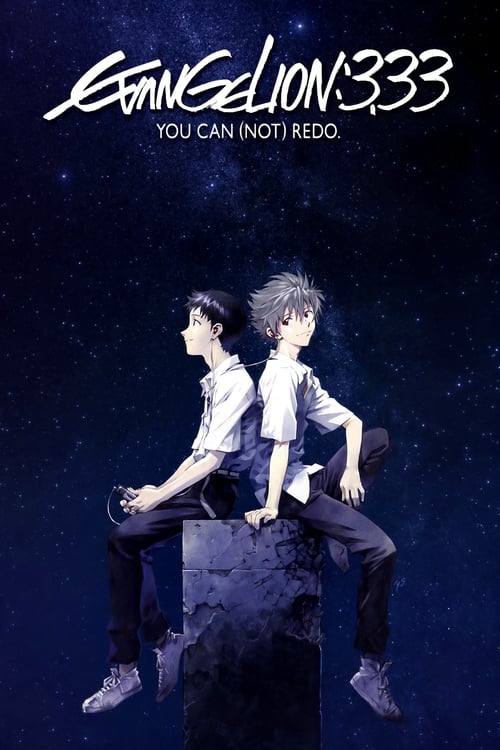
I watched this on a laptop with a cracked screen while my neighbor was loudly practicing the tuba, and honestly, the discordant brass parping in the background felt like the only appropriate soundtrack for the sheer, unmitigated chaos of Evangelion: 3.0 You Can (Not) Redo.

When Hideaki Anno (the mastermind who also gave us the live-action masterpiece Shin Godzilla) decided to "rebuild" his seminal 90s anime, the first two films felt like a glossy, high-budget hug for the fans. Then 2012 arrived, and 3.0 walked into the room and threw a brick through the window. It doesn’t just subvert expectations; it actively punishes you for having them. It’s a film that exists to make you feel as confused, isolated, and unfairly blamed as its protagonist, Shinji Ikari.
The 14-Year Slap in the Face
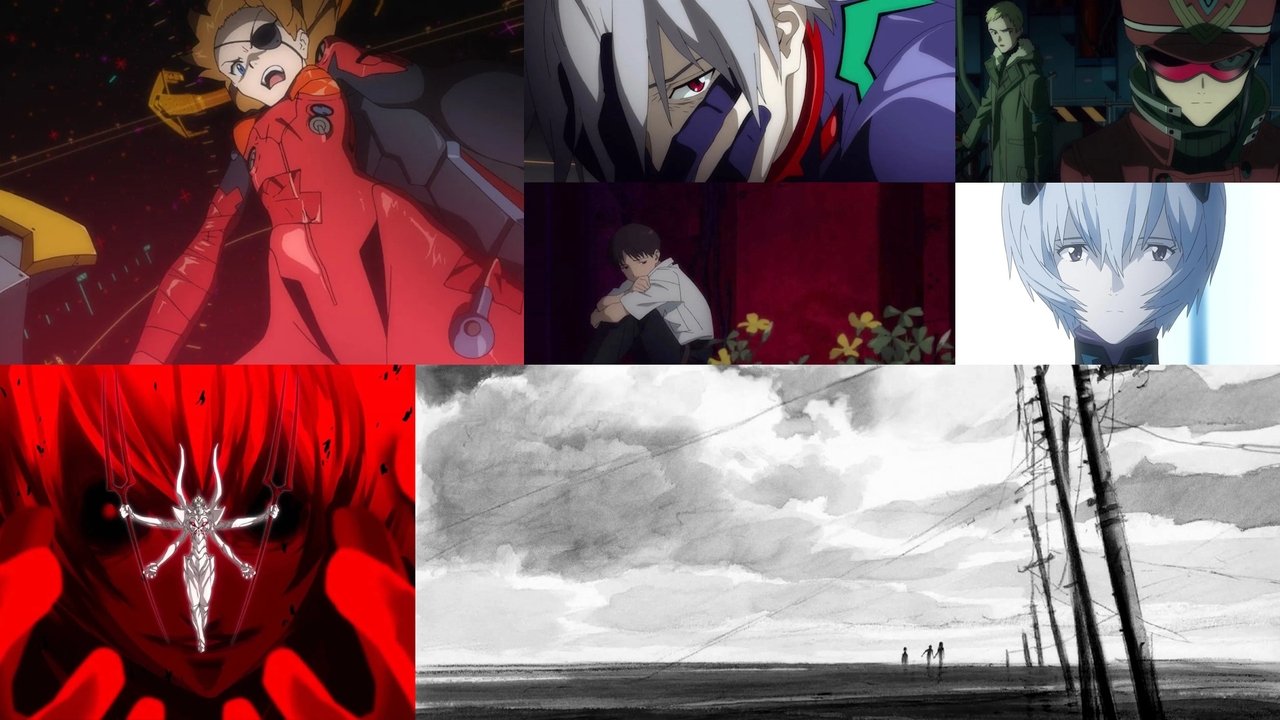
The film opens with a sequence that, in retrospect, was the peak of 2012’s digital animation prowess. We see Asuka Shikinami Langley (Yuko Miyamura)—now sporting a very cool, very marketable eye patch—battling in the vacuum of space. The choreography is frantic, a swirling dance of purple and red against the black void, underpinned by Shiro Sagisu’s orchestral score that sounds like the universe is folding in on itself.
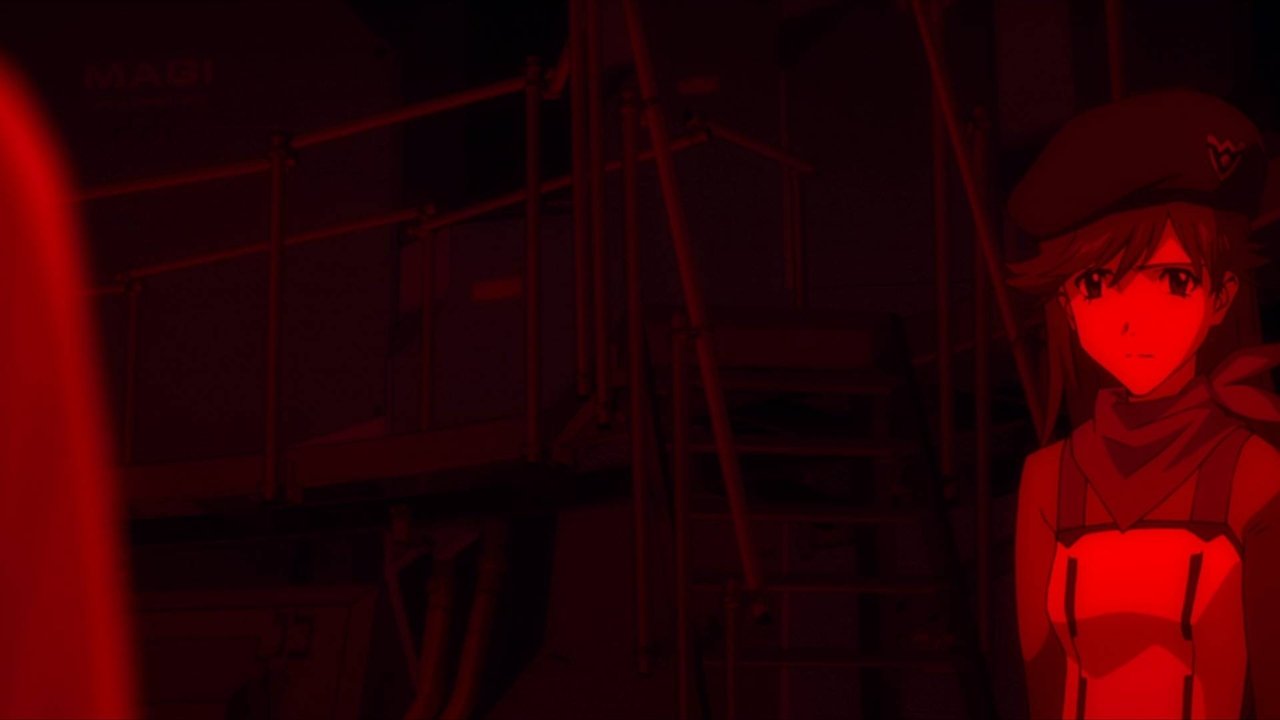
But then the real movie starts. Shinji (Megumi Ogata) wakes up fourteen years after the "Third Impact" he accidentally triggered at the end of the previous film. The world has moved on. The people he loved, including a now-stern Misato Katsuragi (Kotono Mitsuishi), have formed a rebel organization called WILLE specifically to stop NERV—and they’ve put an explosive collar on Shinji’s neck just in case he gets any more "heroic" ideas.
It is a bold, almost suicidal narrative choice. Imagine watching a sequel to Star Wars where Luke wakes up, everyone calls him a war criminal, and Han Solo refuses to speak to him. Turning your protagonist into a universal pariah is the ultimate cinematic troll move, and I kind of love Anno for having the guts to do it. The film captures that specific post-9/11 anxiety of a world that has irrevocably changed while you weren't looking, leaving you clutching at the ghosts of a "normal" that no longer exists.
A Masterclass in Mechanical Melancholy

Visually, 3.0 is where the Rebuild series fully embraced its $13 million budget and the "CGI Revolution" of the early 2010s. While some purists miss the shaky cel-animation of the 90s, there is a terrifying scale here that the original TV show couldn't dream of. The AAA Wunder, a flying battleship that looks like a fossilized whale made of gears and hatred, is a triumph of mechanical design.
The action sequences aren't just about robots hitting each other; they are staged with a frantic, claustrophobic energy. When the Evas fight, you feel the weight of the metal and the agonizing tension of the pilots. However, the film’s most "action-packed" moment isn't a fight at all—it's a piano duet.
Shinji’s friendship with the enigmatic Kaworu Nagisa (Akira Ishida) is the emotional spine of this chaotic mess. They sit at a grand piano in the middle of a ruined NERV headquarters and play. The way the camera circles them, tracking the rhythm of their fingers, provides more narrative clarity and "momentum" than any of the explosions. It’s a quiet, beautiful breather before the film descends back into a digital hellscape of red Earth and giant skulls.
The Beauty of Being Lost
This film has a reputation for being "difficult," which is a polite way of saying it’s a narrative car crash. It was famously delayed, and Hideaki Anno’s own struggles with depression heavily influenced the bleak, fragmented script. You can feel the production’s "human friction" on the screen; it doesn't feel like a movie made by a committee to sell toys, but like a cry for help from a director who was tired of his own creation.
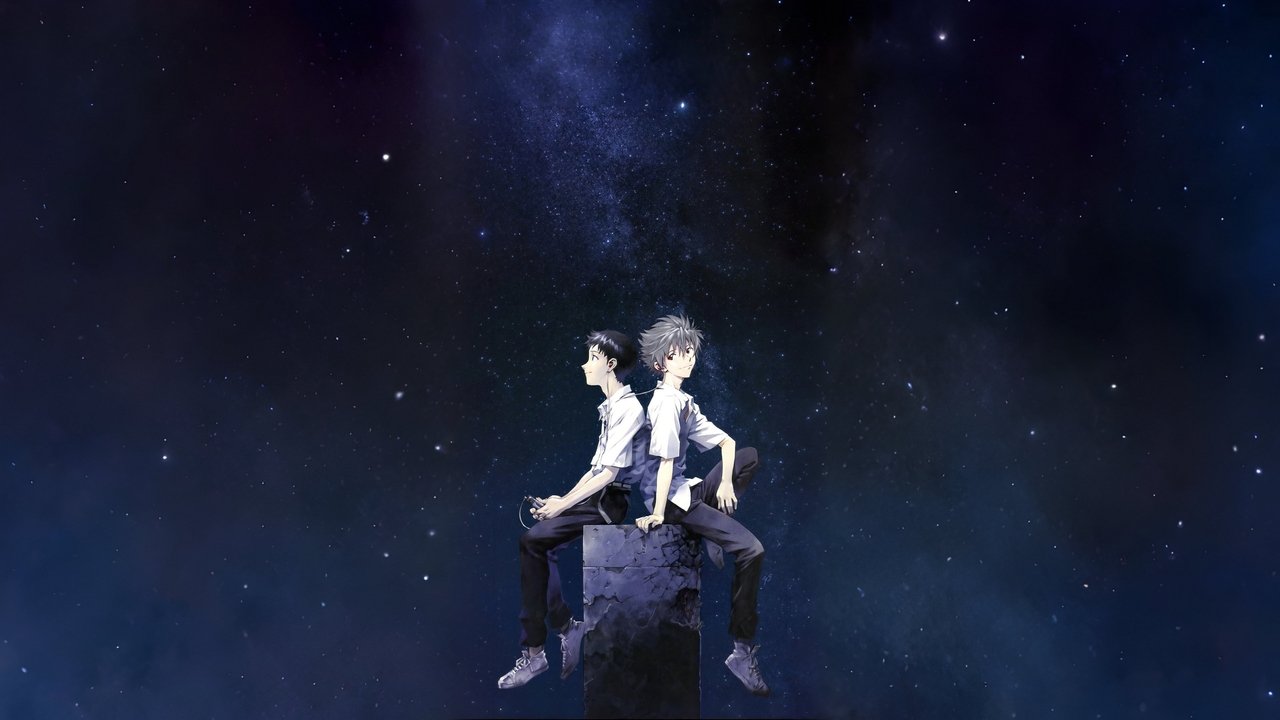
The CGI, while groundbreaking for 2012, occasionally hits that "Uncanny Valley" where things look a bit too smooth, a bit too digital. But the environmental design—the ruins of Tokyo-3, the blood-red oceans—is spectacular. It captures the transition from analog to digital perfectly: it's cleaner than the 90s version, but somehow feels more sterile and haunting.
Shinji Ikari being the most relatable person in the room because he has no clue what’s going on is the film's greatest strength. We are right there with him, wondering why everyone is speaking in techno-babble and why the moon is covered in blood. It’s a "middle child" movie that refuses to provide closure, choosing instead to wallow in the discomfort of the unknown.
Ultimately, Evangelion: 3.0 is a beautiful, frustrating, and essential piece of 21st-century animation history. It’s the sound of a franchise breaking its own bones just to see if it can still feel something. It’s not "fun" in the traditional sense—you won't walk out whistling a tune—but it sticks to your ribs like cold oatmeal. It’s a film about the consequences of trying to "redo" the past and finding out that the past doesn't want you back. If you can handle the narrative whiplash, it’s a trip worth taking, even if you end up as confused as I was with my neighbor’s tuba playing.
Keep Exploring...
-
Evangelion: 2.0 You Can (Not) Advance
2009
-

Evangelion: 1.0 You Are (Not) Alone
2007
-

Evangelion: 3.0+1.0 Thrice Upon a Time
2021
-
Neon Genesis Evangelion: The End of Evangelion
1997
-
Batman: The Dark Knight Returns, Part 1
2012
-

Batman: The Dark Knight Returns, Part 2
2013
-
Shin Godzilla
2016
-
The Animatrix
2003
-

Resident Evil: Degeneration
2008
-
Astro Boy
2009
-

Resident Evil: Damnation
2012
-

Dragon Ball Z: Battle of Gods
2013
-

Cowboy Bebop: The Movie
2001
-
Final Fantasy VII: Advent Children
2005
-

Batman: Under the Red Hood
2010
-

Superman/Shazam!: The Return of Black Adam
2010
-
Batman: Year One
2011
-
Justice League: Doom
2012
-
Justice League: The Flashpoint Paradox
2013
-

Dragon Ball Z: The Return of Cooler
1992