Holy Motors
"Life is a performance for an invisible camera."
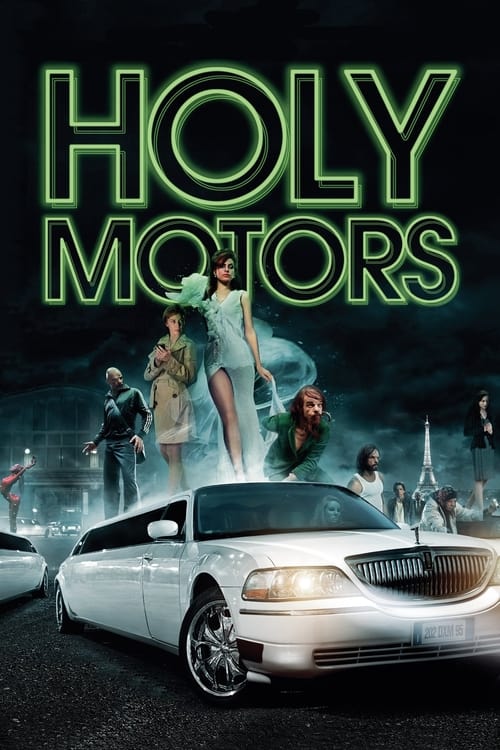
I watched Holy Motors for the third time last Tuesday while my neighbor was power-washing his driveway for four hours straight. Surprisingly, the aggressive, rhythmic hum of the water against concrete perfectly complemented the low thrum of the white limousine that serves as our protagonist's mobile dressing room. It felt like a 4D cinema experience I didn't ask for, but it grounded me in the sheer, physical labor of what Denis Lavant does in this film.
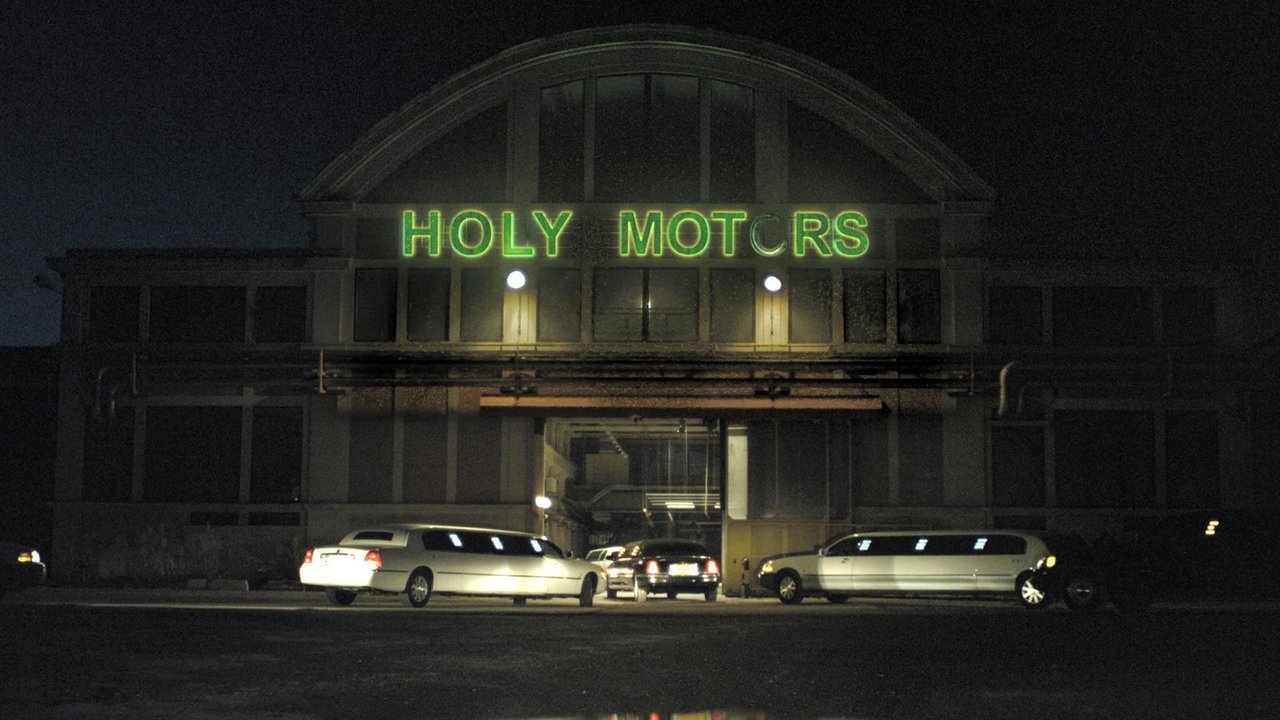
If you’ve never seen it, trying to explain the plot of Holy Motors is like trying to describe a dream you had while running a 102-degree fever. We follow a man named Mr. Oscar over the course of a single day in Paris. He travels in a stretch limo driven by the elegant Céline (Édith Scob), stopping at various "appointments." At each stop, he transforms. One moment he’s a hunched beggar woman; the next, he’s a motion-capture actor performing digital tantric sex; later, he’s a dying old man in a lush hotel room. There is no explanation given for who is hiring him or who is watching.
The Exhaustion of the Avatar
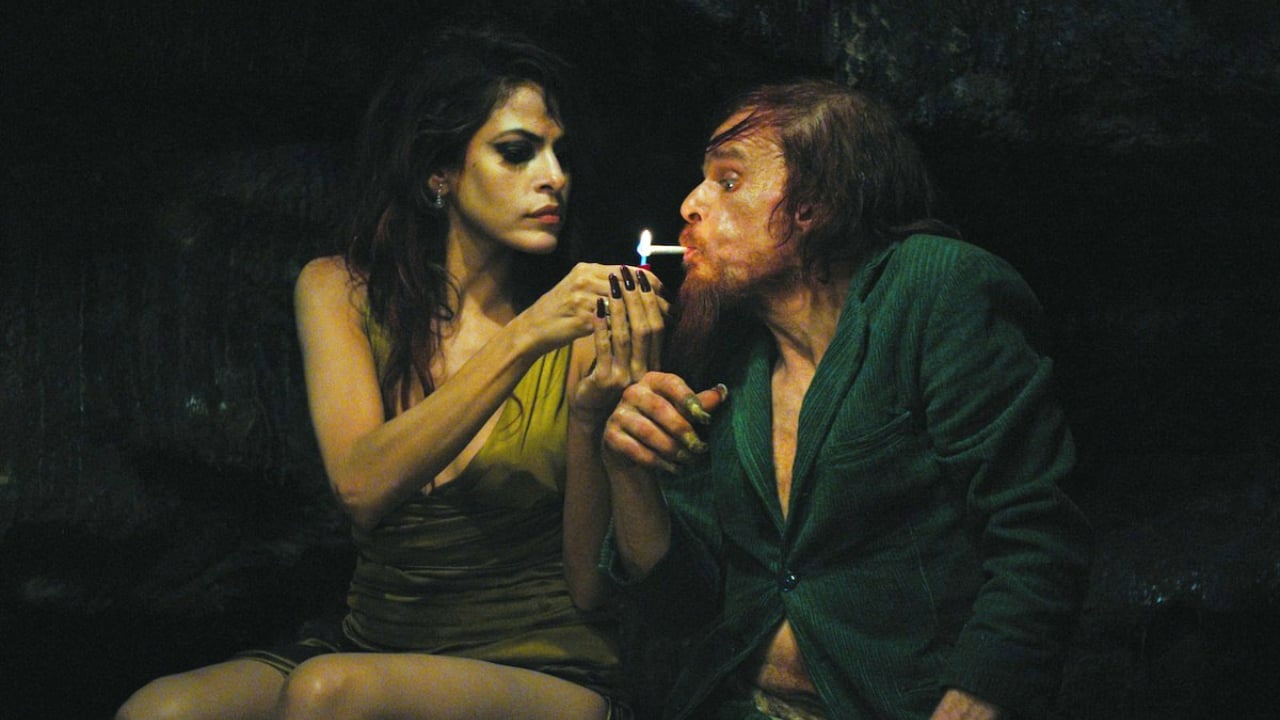
At its heart, this is a film about the sheer fatigue of existence in a world that has traded the tactile for the digital. Denis Lavant gives what I consider to be one of the most athletic and soul-baring performances of the 21st century. He isn't just "acting"; he’s a one-man repertory theater company. Watching Lavant eat flowers in a sewer is more compelling than any $200-million CGI dragon I’ve seen in a decade.
This was 2012, a time when the "Indie Film Renaissance" was wrestling with the death of 35mm film. Director Leos Carax was returning from a 13-year hiatus, and he clearly had some things to get off his chest about the state of cinema. He originally wanted to shoot on traditional film, but the modest $4 million budget—a pittance for a vision this grand—forced his hand. He shot on the RED Epic digital camera instead. In a stroke of meta-genius, he turned that frustration into a theme: the film is obsessed with the idea that cameras are becoming so small we can no longer see them, yet we are still forced to perform.
The motion-capture sequence is the standout "Modern Cinema" moment here. Seeing Lavant in a black suit covered in glowing ping-pong balls, contorting his body to create a digital monster, is both hilarious and deeply sad. It highlights the transition from the "practical" era of cinema to the "pixel" era, asking what is lost when an actor's sweat is replaced by a render farm.
A Masterclass in "Why Not?"
What I love about the indie spirit of Holy Motors is its total lack of "studio-mandated logic." In a traditional Hollywood drama, we’d get a scene where Oscar explains his tragic backstory or reveals he’s part of a government experiment. Carax gives us none of that. Instead, he gives us an "intermission" where Lavant leads a massive troupe of accordion players through a church. It serves no narrative purpose, and yet it is the most joyous three minutes of celluloid (or digital sensors) put to screen.
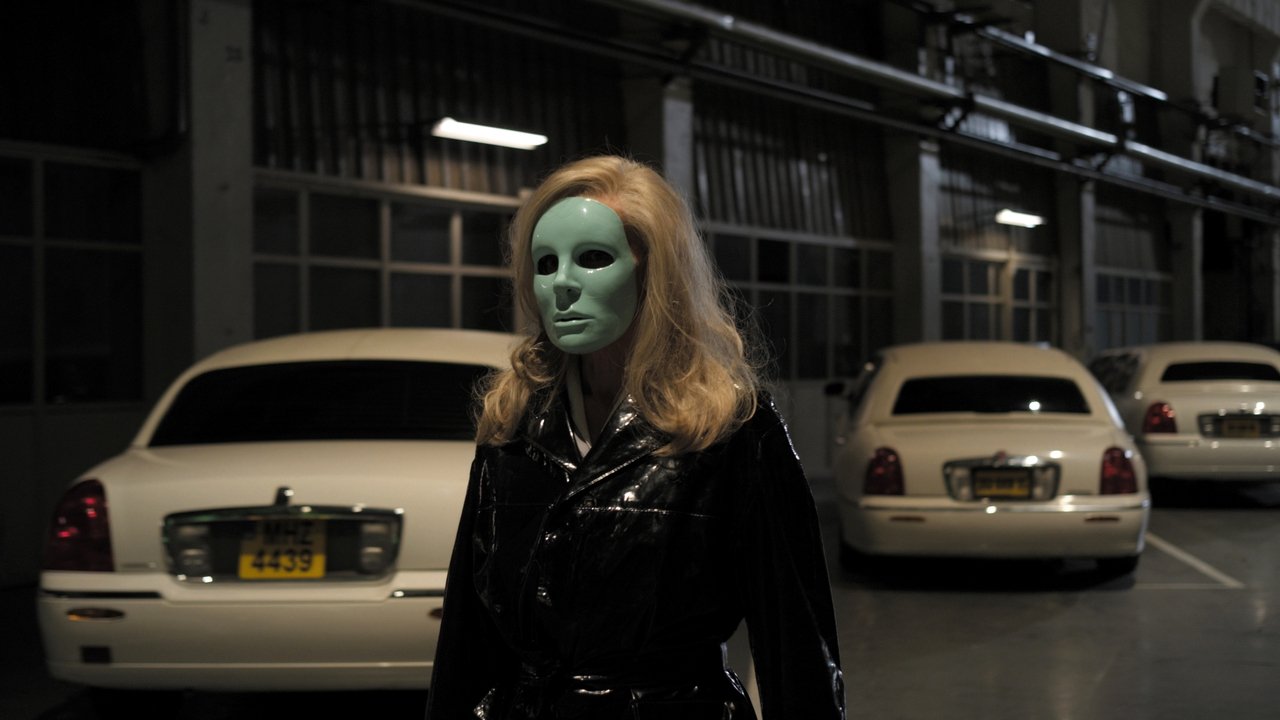
The film feels like a secret hand-off between eras. When Édith Scob puts on a translucent mask at the end of the film, it’s a direct, heartbreaking nod to her role in the 1960 classic Eyes Without a Face. It’s Carax saying that even as we move into a future of "talking cars" and digital ghosts, we are still carrying the DNA of the pioneers.
The production was a scrappy, high-wire act. Apparently, Denis Lavant did all his own stunts, including the grueling parkour-esque movements of the "Merde" character (the flower-eating caveman), and he actually injured himself quite a bit during the graveyard sequence. You can feel that physical risk. It’s a "passion project" in the truest sense; a film made because the director might have actually exploded if he didn’t get these images out of his head.
The Beauty of the Weird
It’s not all high-concept art-house brooding, though. There is a strange, pop-culture magnetism to the casting. Seeing Eva Mendes as a kidnapped supermodel ("Kay M") who remains totally stoic while being dragged into a subterranean lair is a fantastic subversion of her "Bond Girl" era persona. And Kylie Minogue? Her segment as a woman named Eva Grace, singing a haunting song in a derelict department store, is enough to make a grown man weep into his popcorn.
If you need your movies to make logical sense, this will be your personal cinematic hell. But if you’re willing to let a film wash over you like a weird, beautiful tide, it’s transformative. It’s a drama that finds its stakes in the simple question of whether the protagonist can keep going for one more "appointment."
Looking back from the 2020s, Holy Motors feels even more prescient. In an age of TikTok personas and the "curated self," we are all Mr. Oscar now, switching between identities for an audience we can't see, hoping that someone, somewhere, is still shouting "Action!"
This is a vibrant, chaotic, and deeply moving eulogy for a type of cinema that barely exists anymore. It’s the kind of movie that makes you want to go out and do something creative, even if that something is just playing the accordion in a grocery store. It’s a reminder that even when the budget is tight and the cameras are digital, a singular vision can still make the screen feel infinite.
***
Stuff You Didn't Notice: The film’s opening features Leos Carax himself waking up and using a prosthetic finger-key to enter a movie theater through his bedroom wall—a literal manifestation of his "dream-like" approach to filmmaking. Also, the budget was so tight that many of the "limo" interiors were actually filmed in a stationary mock-up because driving a stretch limo through the narrow streets of Paris for weeks on end was financially and logistically impossible. Finally, the talking cars at the very end were a late addition; Carax felt the machines deserved their own "wrap party" after a century of serving human stories.

Keep Exploring...
-
Beasts of the Southern Wild
2012
-
Donnie Darko
2001
-

The Devil's Backbone
2001
-
Waking Life
2001
-
Rubber
2010
-

Enter the Void
2010
-

Blue Is the Warmest Color
2013
-

Young & Beautiful
2013
-
Across the Universe
2007
-
Ghost Town
2008
-
The Curious Case of Benjamin Button
2008
-
The Spiderwick Chronicles
2008
-
A Christmas Carol
2009
-
Valhalla Rising
2009
-

Where the Wild Things Are
2009
-

The Tree of Life
2011
-

Ruby Sparks
2012
-
About Time
2013
-
Byzantium
2013
-
Horns
2013