Lawless
"The legend is immortal; the men are just blood."
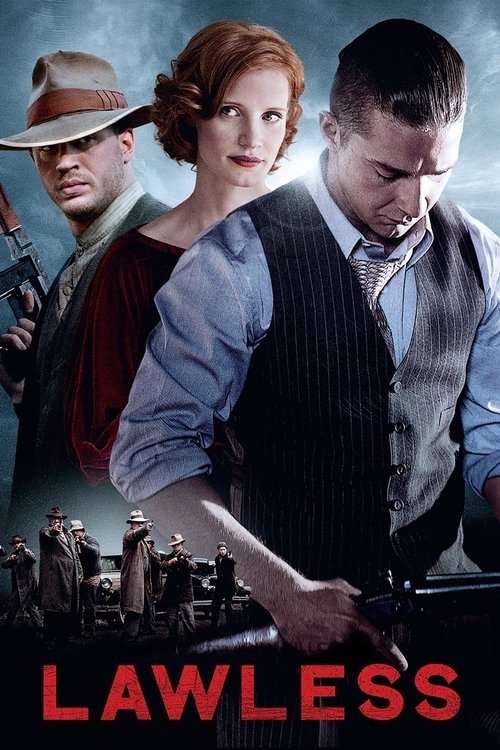
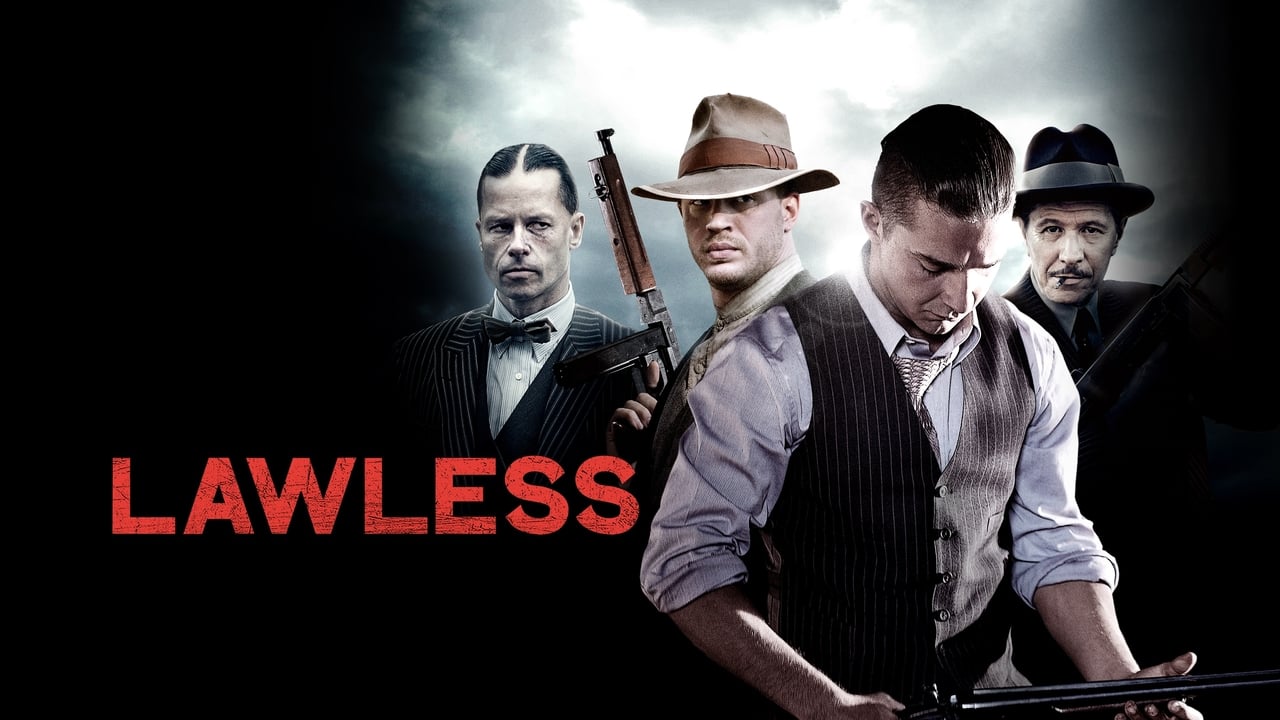
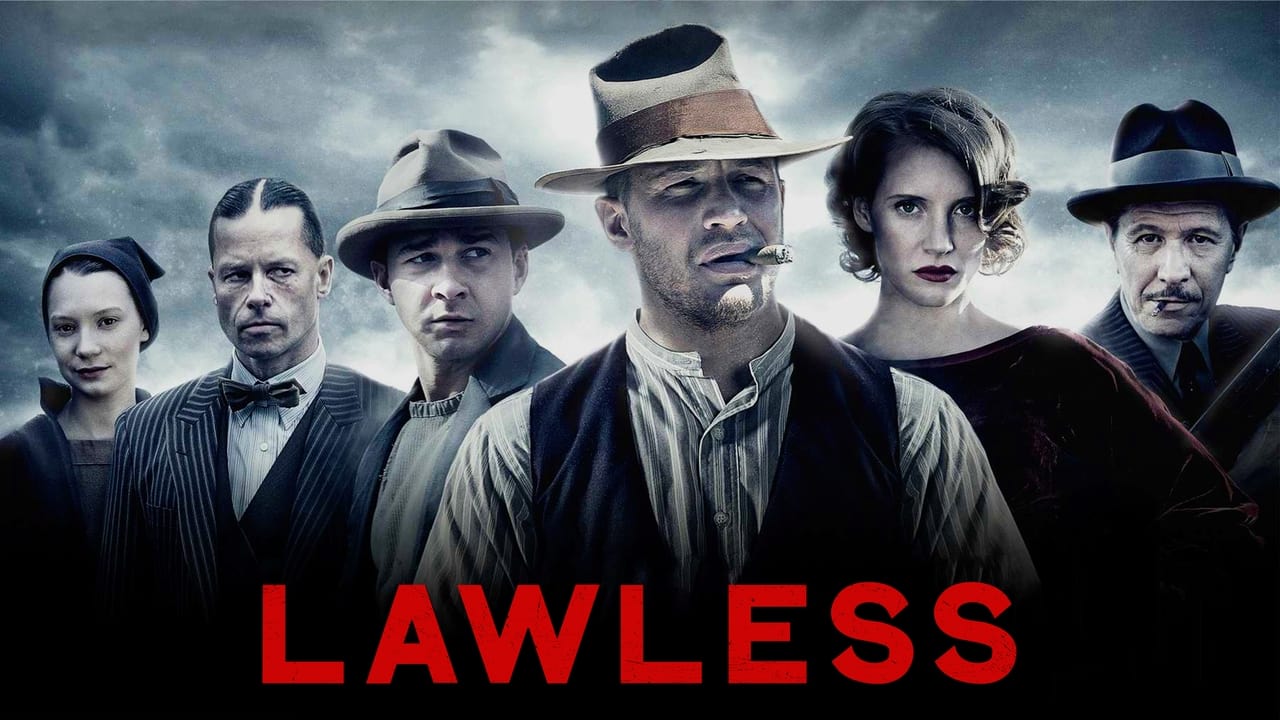
There is a specific sound that Tom Hardy makes in this movie—a low, rumbling grunt that sits somewhere between a bear waking from hibernation and a rusty truck engine turning over. It’s the sound of Forrest Bondurant, a man who believes his own myth of invincibility so deeply that death itself seems like a minor bureaucratic inconvenience. I remember watching this for the first time in a drafty apartment during a particularly nasty thunderstorm, and the dampness on screen felt so tangible I actually checked my ceiling for leaks. That’s the magic of Lawless. It’s a film you can practically smell: woodsmoke, copper-scented blood, and the stinging medicinal bite of high-proof corn liquor.
The Gospel of the Bondurant Boys
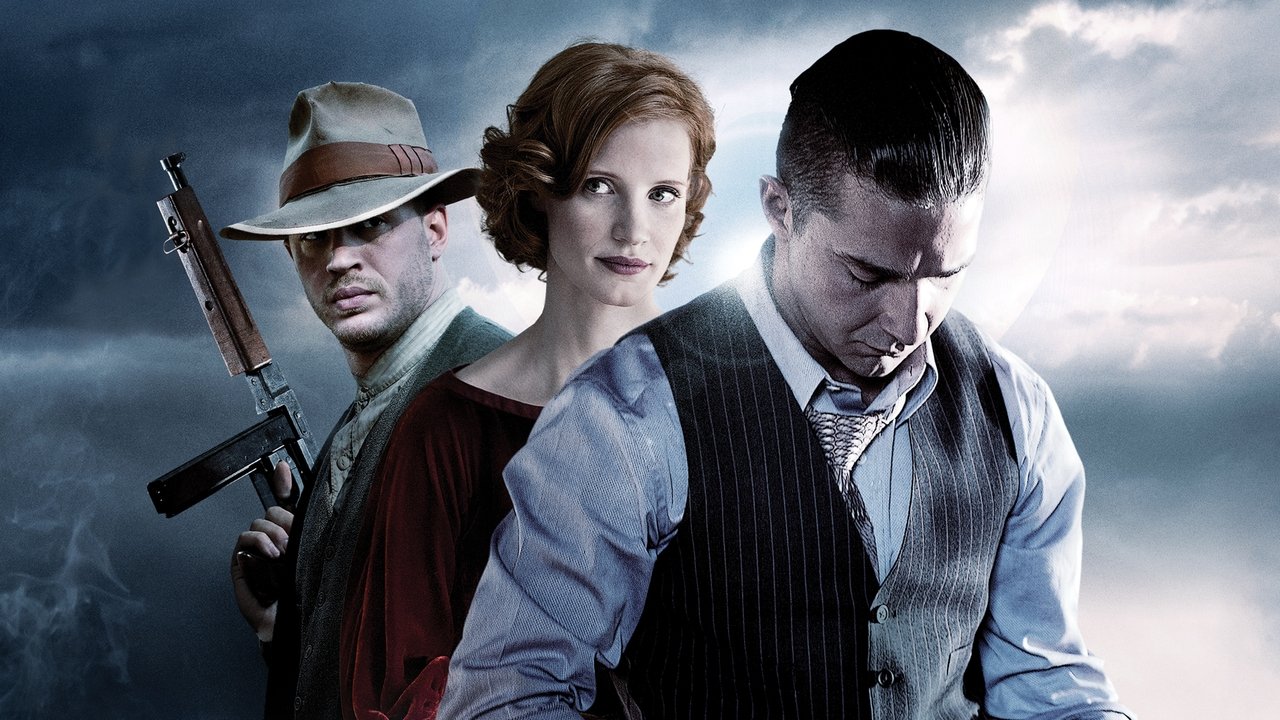
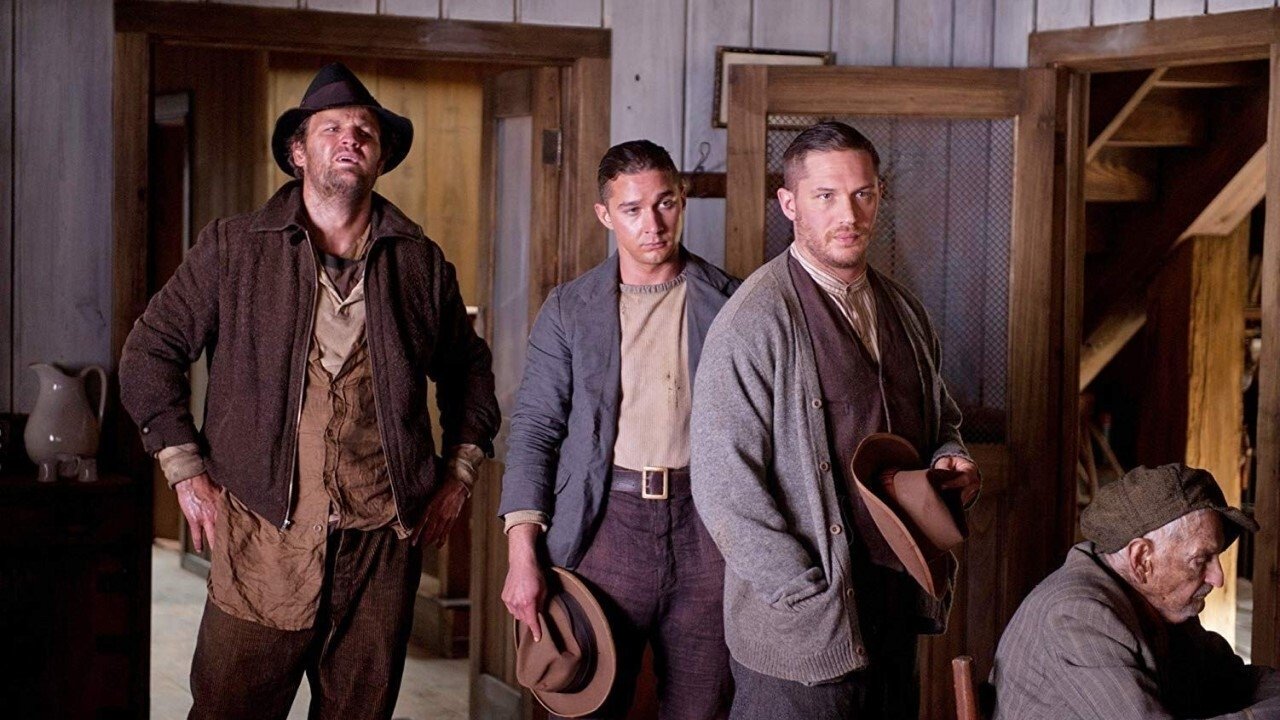
Adapted by Nick Cave (of the Bad Seeds fame) from Matt Bondurant’s historical novel The Wettest County in the World, the film treats the Prohibition-era Virginia mountains like a landscape from an old-school Western. We have the three brothers: Howard (Jason Clarke), the eldest and most volatile; Forrest (Tom Hardy), the stoic center of gravity; and Jack (Shia LaBeouf), the youngest, who desperately wants to be a "legend" before he’s even learned how to be a man.
Looking back from the vantage point of a decade-plus, it’s fascinating to see this specific era of Shia LaBeouf. This was right when he was pivoting hard away from blockbuster stardom into the "Method" madness that would define his later career. Apparently, he actually drank real moonshine on set to achieve a specific bloated, hungover look, which supposedly led to some friction with his co-stars. You can see it in his performance; there’s a frantic, sweaty desperation to Jack that balances out Tom Hardy’s deliberate, almost glacial stillness. Tom Hardy’s Forrest Bondurant communicates more through a guttural 'mm-hmm' than most actors do with a five-minute monologue. He plays Forrest like a man who has already seen his own funeral and decided not to show up.
A Villain Carved from Cold Wax
If the Bondurants represent a feral, old-world sense of honor, Guy Pearce represents the terrifying arrival of a sanitized, corporate kind of evil. As Special Deputy Charlie Rakes, Guy Pearce is a revelation of the grotesque. With his hair parted with surgical precision, his eyebrows shaved off, and an obsessive-compulsive need for cleanliness in a world made of mud, he’s one of the most unsettling antagonists of 2010s cinema. Guy Pearce looks like he belongs in a silent-era horror film about a haunted barbershop.
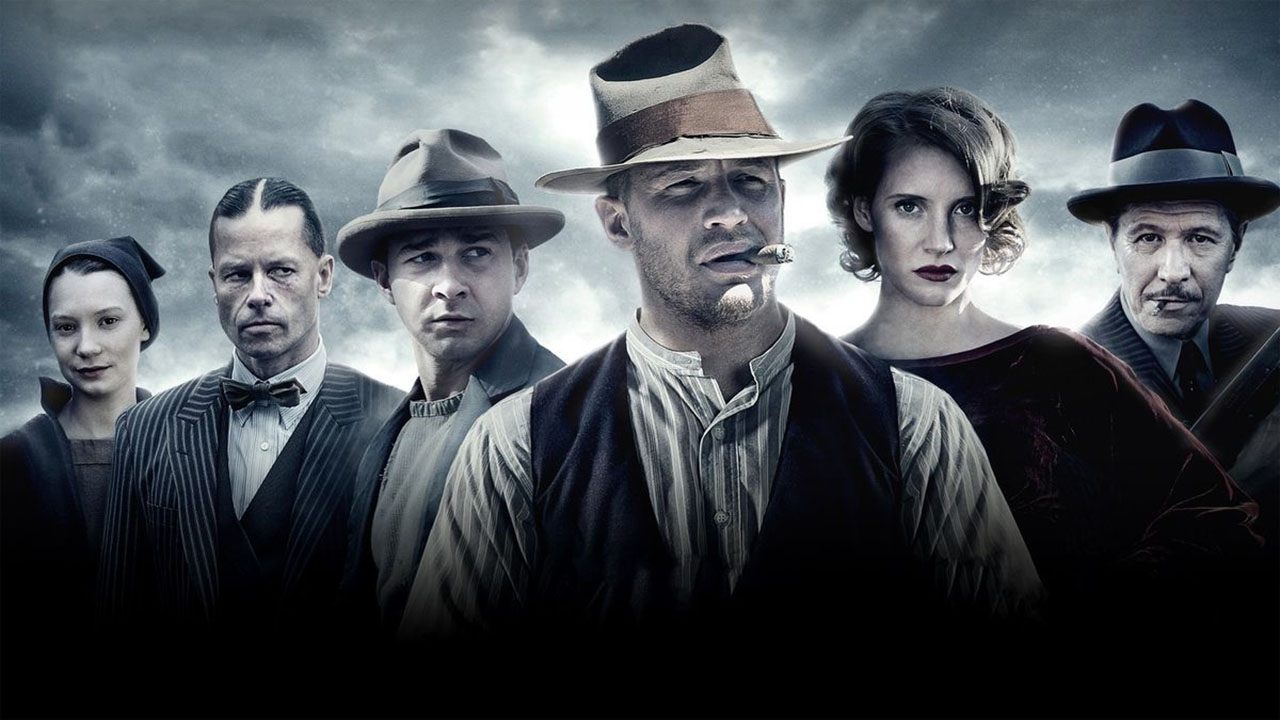
The conflict isn't just about illegal booze; it’s about the "New South" clashing with the "Old Frontier." Rakes is a city-slicker sociopath who views the locals as animals, and the violence that erupts between him and the brothers is shocking in its suddenness. Director John Hillcoat (who previously gave us the bleak-as-hell The Road) doesn't do "movie violence." He does ugly, clumsy, painful violence. When someone gets hit in this movie, they stay hit. There’s a scene involving a pair of brass knuckles and a very long walk that still makes me wince just thinking about the sound design.
The Soul of the Southern Gothic
What elevates Lawless from a standard crime thriller into something resembling a cult classic is the atmosphere. The score, composed by Nick Cave and Warren Ellis, is haunting—a mix of bluegrass twang and discordant modern drones that reminds you this is a story about ghosts who haven't died yet. Benoît Delhomme’s cinematography captures the Virginia woods in a way that feels both beautiful and claustrophobic, using digital cameras to capture low-light scenes that would have been impossible on film just a few years prior.
For all its brutality, there’s a surprising amount of heart here, mostly provided by Jessica Chastain as Maggie, a dancer from Chicago looking for a quiet life who finds herself tending bar for the most dangerous men in the state. Her chemistry with Hardy is all about what isn't said, a quiet understanding between two people who have survived too much.
Cool Details You Might Have Missed:
Tom Hardy actually based Forrest’s physical gait and cardigan-wearing persona on a photo of an old woman, wanting to give the "tough guy" a grandmotherly, protective vibe. The real-life Jack Bondurant (the author's grandfather) was actually a much more successful and intimidating figure than the film portrays him. Gary Oldman shows up for about ten minutes as the mobster Floyd Banner, and while it’s basically a cameo, he manages to hijack the entire movie with a tommy gun and a grin. The film spent years in "development hell" because studios were terrified of the R-rated script's uncompromising tone. * Jason Clarke actually spent time learning how to operate a period-accurate still, though I suspect he didn't sample the product as heavily as LaBeouf did.
Lawless is a movie about the myths we tell ourselves to survive. The Bondurants believed they couldn't be killed, and because they believed it, the rest of the county believed it too. It’s a somber, heavy, and occasionally beautiful piece of filmmaking that deserves a spot on your shelf next to The Proposition or Hell or High Water.
It is a rare thing to find a "modern" film that feels this lived-in and weathered. While it occasionally stumbles into melodrama, the sheer weight of the performances carries it through the mud. If you’re looking for a film that treats its characters with gravity and its violence with consequence, grab a jar of the clear stuff and settle in. Just don't expect a happy ending without a few scars to go with it.
Keep Exploring...
-
The Place Beyond the Pines
2013
-
The Road
2009
-
Gone Baby Gone
2007
-
The Next Three Days
2010
-
Drive
2011
-

The Lincoln Lawyer
2011
-

End of Watch
2012
-
Nightcrawler
2014
-

American Gangster
2007
-
Freedom Writers
2007
-

Changeling
2008
-

Law Abiding Citizen
2009
-

The Best Offer
2013
-
Hell or High Water
2016
-

Batman Begins
2005
-
Boyz n the Hood
1991
-
Thelma & Louise
1991
-
A Bronx Tale
1993
-

Falling Down
1993
-
Natural Born Killers
1994