Road to Ninja: Naruto the Movie
"Be careful what you wish for, even in a dream."

Imagine coming home every day to a house that doesn’t just feel empty—it sounds empty. No "welcome back," no smell of dinner, just the hum of a refrigerator and the silence of a kid who grew up as a social pariah with a literal demon in his gut. For a decade, Naruto fans watched their orange-clad hero deal with that void with a smile, but 2012’s Road to Ninja: Naruto the Movie finally decided to poke the wound.

I actually watched this for the first time on a laptop with a cracked screen while sitting in a laundromat waiting for my heavy-duty comforter to dry. The smell of industrial-strength dryer sheets and the rhythmic thumping of a nearby dryer weirdly complemented the domestic, "slice-of-life" vibe of the film’s first act. It’s a movie that relies on you knowing the characters, but even if you’re a casual viewer, the central "What If?" scenario is a hook that’s hard to ignore.
The Mirror World’s Bizarro Charm
The plot is a classic "Monkey’s Paw" scenario. Naruto and Sakura are transported by the villainous Masked Man (Naoya Uchida) into an alternate reality where their greatest desires and insecurities are inverted. For Sakura (Chie Nakamura), who is annoyed by her overbearing parents, she finds herself in a world where they were the heroes who died saving the village. For Naruto (Junko Takeuchi), the boy who never knew his parents, Minato (Toshiyuki Morikawa) and Kushina (Emi Shinohara) are alive, well, and surprisingly... ordinary.
Seeing the "mirror" versions of the supporting cast is where the film has its most fun. The Akatsuki appearing as a mercenary group for hire is the equivalent of seeing Darth Vader working a shift at Starbucks. It’s absurd, but it works. We get a Hinata who is a foul-mouthed bully and a Sasuke who is a wandering "playboy" instead of a brooding revenge-machine. It’s fan service in the purest sense, but it’s anchored by a genuine emotional weight. When Naruto finally breaks down and accepts the love of this "fake" family, it’s a gut punch that feels earned after years of watching him eat ramen alone.
High-Stakes Choreography and Digital Polish
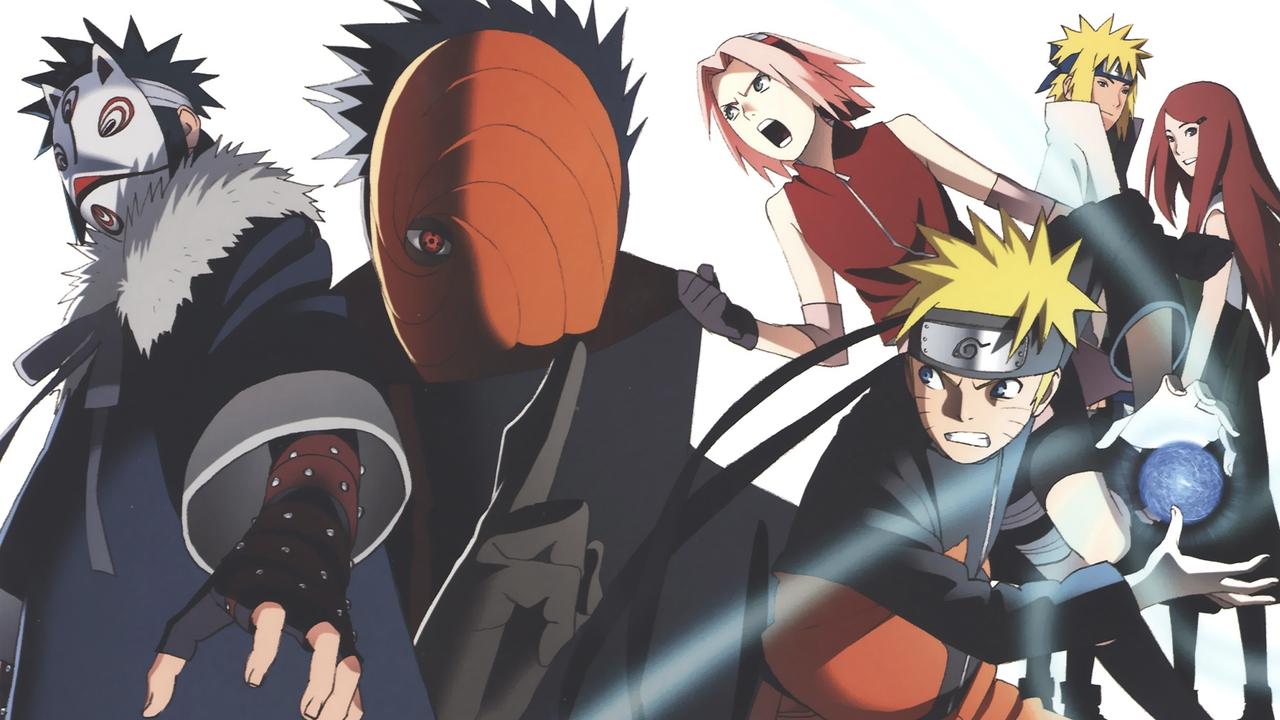
By 2012, the Naruto Shippuden production pipeline was a well-oiled machine, but Road to Ninja shows where the movie budget went. Director Hayato Date (who steered the TV series for years) clearly relished the chance to break away from the static, talk-heavy episodes. The action here isn't just "big"—it’s deliberate.
The standout sequence involves Naruto facing off against a dark reflection of himself named Menma. The choreography here is a blast; the way the camera tracks the "Nine-Masked Beasts" as they summon elemental attacks feels more cinematic than the usual TV fare. There’s a specific focus on the weight of the impacts. When a "Great Spiral Ring" (this world’s version of a Rasengan) levels a portion of the forest, the sound design—a low-frequency thrum followed by a vacuum-like silence—gives the destruction a physical presence.
The film captures that 2010s transition where digital effects were starting to blend seamlessly with traditional cel-shading. The lighting in the sunset scenes at the Uzumaki household has a warmth that feels distinct from the flat colors of the weekly broadcast. It’s a reminder of a time when "movie versions" of long-running anime still felt like a massive event, a prestige upgrade from your Saturday morning routine.
The Hidden Gem Status
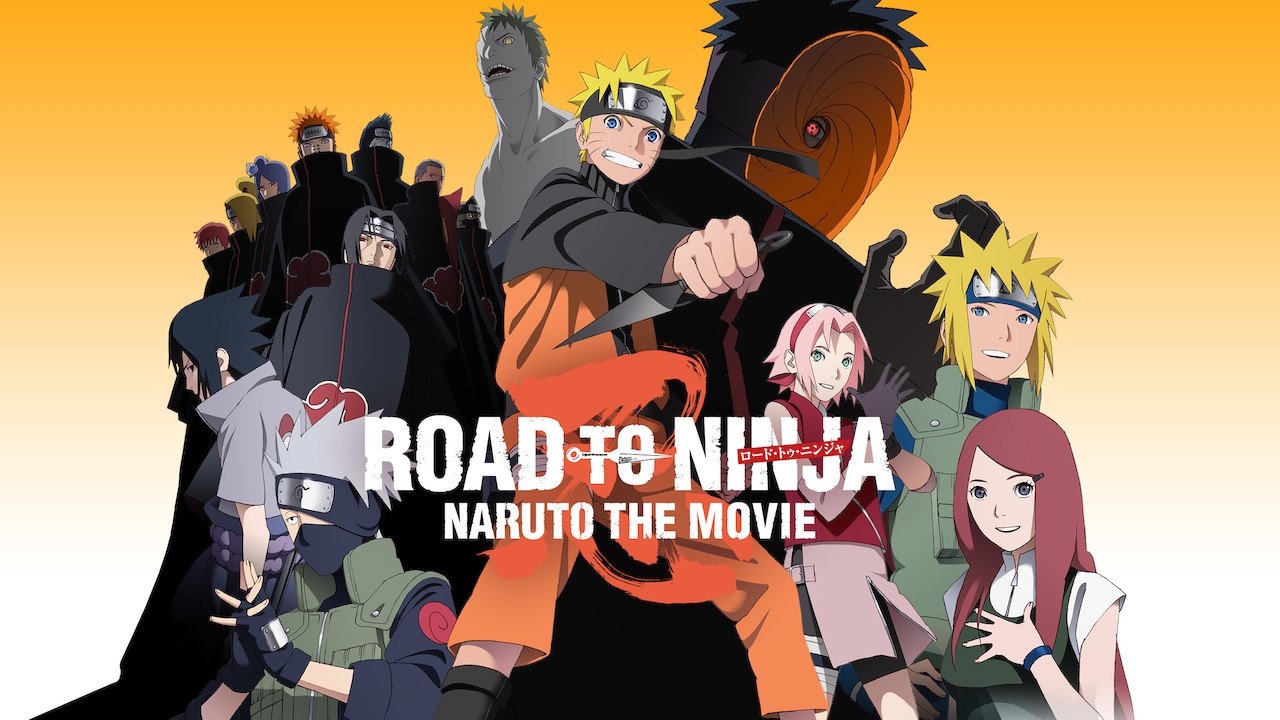
Despite being the ninth film in the franchise, Road to Ninja often gets lost in the shuffle between the earlier, simpler adventures and the "canonical" heavy-hitters like The Last (2014) or Boruto (2015). It’s a shame because this is the only time the creator, Masashi Kishimoto, took such a hands-on approach to the story and character designs for a movie during the series' original run. He wanted to tell a story about what "family" meant to Naruto before the series ended, and you can feel that authorial DNA in the script.
Apparently, Kishimoto originally had even weirder ideas for the alternate versions of the characters, but many were dialed back to keep the plot focused. Even so, the film remains a fascinating time capsule of the "Big Three" era of anime, where franchises were massive enough to command these high-budget, psychological side-stories. It’s a film that understands its hero’s tragedy and, for 109 minutes, allows him—and us—to pretend it never happened. Naruto’s parents being "normal" is actually scarier than them being dead, because it makes the eventual return to reality feel like losing them all over again.
Road to Ninja isn't a masterpiece of high cinema, but as an action-heavy character study, it hits the mark. It balances the "bizarro world" comedy of seeing a shy Hinata turned into a brawler with a surprisingly mature look at grief and identity. If you’ve ever wondered what lies behind the mask of a hero who has everything to prove and nothing to lose, this is a trip worth taking. Just be prepared for the silence to feel a little louder once the credits roll.
Keep Exploring...
-

Naruto Shippuden the Movie
2007
-
The Last: Naruto the Movie
2014
-
Boruto: Naruto the Movie
2015
-
Justice League: Doom
2012
-
Justice League: The Flashpoint Paradox
2013
-
Final Fantasy VII: Advent Children
2005
-

Puss in Boots
2011
-

Brave
2012
-
Rise of the Guardians
2012
-
How to Train Your Dragon 2
2014
-

Evangelion: 1.0 You Are (Not) Alone
2007
-

Resident Evil: Degeneration
2008
-
Evangelion: 2.0 You Can (Not) Advance
2009
-

Hotarubi no Mori e
2011
-

Evangelion: 3.0 You Can (Not) Redo
2012
-
Resident Evil: Damnation
2012
-
Rurouni Kenshin Part I: Origins
2012
-

Dragon Ball Z: Battle of Gods
2013
-
The Tale of The Princess Kaguya
2013
-
Pokémon: The First Movie
1998