Sinister
"Evil lives in the grain."
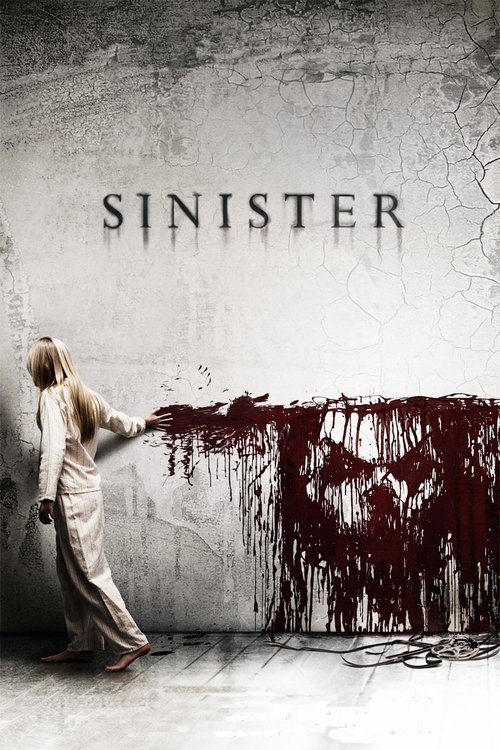
There is a specific, guttural sound that defines Sinister (2012): the rhythmic, mechanical clack-clack-clack of a Super 8 projector. It’s a sound that belongs to a different era of home movies and grainy nostalgia, yet here, it’s weaponized. Most horror movies from the early 2010s were busy chasing the "found footage" dragon sparked by Paranormal Activity, but Scott Derrickson did something much more unsettling. He put the found footage inside a traditional narrative, forcing us to watch a man watch his own demise in 8mm.
I watched this for the first time on my laptop while eating a bowl of slightly burnt popcorn, and the crunching sound kept making me jump, thinking the projector noise was coming from inside my own bedroom. It’s that kind of movie. It doesn't just scare you; it makes your own house feel like a stranger's property.
The Anatomy of Obsession
The film follows Ellison Oswalt (Ethan Hawke), a true-crime writer who is essentially the "one-hit wonder" of the literary world. He’s desperate. He’s so hungry for a comeback that he moves his wife and kids into a house where a family was recently hung from a tree in the backyard. It’s a classic horror trope—the house with a dark past—but Ethan Hawke elevates it. He isn’t a chin-jutting hero; he’s a flawed, somewhat selfish man drinking too much whiskey and chasing a paycheck under the guise of "justice."
Ethan Hawke has the best 'looking at a screen' face in Hollywood history. For huge chunks of the runtime, we are just watching him watch film canisters he found in the attic. These films, with titles like "Hanging Out '11" and "Pool Party '66," start as eerie family memories before pivoting into snuff-film nightmares. The genius of these sequences lies in the texture. Christopher Norr (Cinematography) captures that specific, degraded film stock quality that feels like it’s rotting as you watch it. It taps into a primal fear that the past isn’t dead; it’s just waiting to be threaded through a lens.
Low-Budget Ingenuity
Looking back, Sinister is a landmark for the "Blumhouse Model." Produced by Jason Blum for a measly $3 million, it’s a masterclass in how to maximize a limited budget. You don’t need a massive CGI monster when you have a well-timed shadow and a terrifying soundscape. Scott Derrickson and co-writer C. Robert Cargill (who famously came up with the idea after a nightmare he had following a screening of The Ring) understood that horror is 70% audio.
The score by Christopher Young is legitimately one of the most abrasive and terrifying things I’ve ever heard. It’s not a traditional orchestral score; it’s a collection of industrial drones, distorted chants, and rhythmic scratching. It sounds like a panic attack put to music. During the "Lawn Work" sequence—the jump scare in the bushes is basically a war crime—the sound design does more work than the visual ever could. It’s a reminder that in this era of cinema’s transition to digital, there was still something profoundly "wrong" and tactile about analog media.
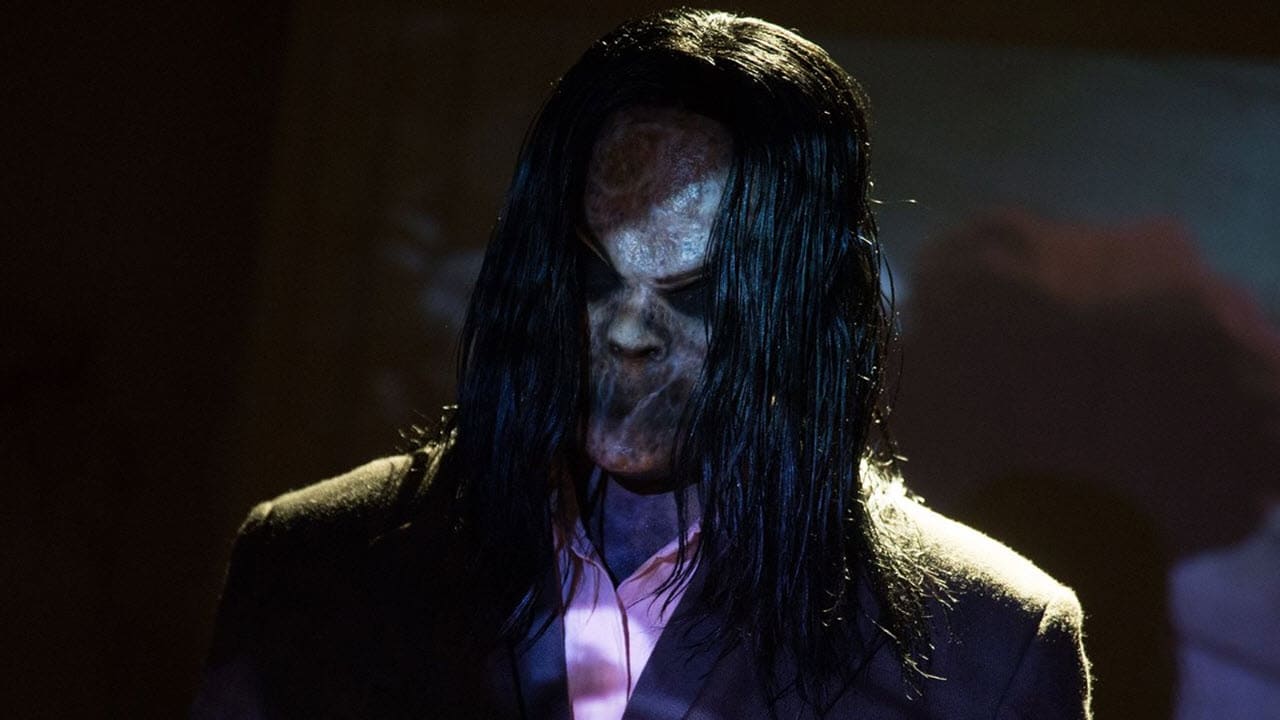
The film also makes great use of its supporting cast in small, efficient bursts. James Ransone (as "Deputy So-and-So") provides the only breath of fresh air in an otherwise suffocating atmosphere, while Vincent D'Onofrio appears via Skype (very 2012!) as Professor Jonas to provide the necessary occult exposition about "Bughuul," the child-eating deity.
The Legacy of the Look

What fascinates me about Sinister twelve years later is how it sits at the crossroads of the analog-to-digital shift. Ellison is using modern tools to investigate ancient evils recorded on mid-century technology. It’s a movie about the act of seeing. The tagline wasn't lying: "Once you see him, nothing can save you."
While some critics at the time complained about the jump scares, a 2020 scientific study by Broadband Choices (The Science of Scare) actually named Sinister the scariest movie ever made based on the average heart rate of viewers. While I think "scariest" is subjective, I can’t argue with the data of my own pulse during that final act. The ending remains a polarizing "love it or hate it" moment—I personally find it effectively bleak—but the journey there is a pristine example of modern gothic horror.
It’s a "feel-bad" movie in the best way possible. It treats the audience like Ellison: we know we should look away from the grainy, flickering screen, but we’re too obsessed with the mystery to stop.
Sinister is the crown jewel of the early 2010s horror boom, proving that you don't need a massive budget to create a lasting nightmare. It’s a film that respects the power of a single, well-placed image and the soul-crushing weight of a great sound design. If you haven't seen it, turn the lights off, crank the volume, and just try to ignore the scratching coming from your attic. It's probably just the wind. Probably.
Keep Exploring...
-
Deliver Us from Evil
2014
-
The Exorcism of Emily Rose
2005
-
You're Next
2013
-
The Awakening
2011
-
High Tension
2003
-
Shutter
2004
-
After.Life
2009
-
The Last Exorcism
2010
-
Pandorum
2009
-
Devil
2010
-
Stonehearst Asylum
2014
-

Time Lapse
2014
-
The Black Phone
2022
-
P2
2007
-
I Spit on Your Grave
2010
-

Red State
2011
-
V/H/S
2012
-
Dark Skies
2013
-
The Purge
2013
-
Sinister 2
2015