Step Up Revolution
"Protest has never looked this choreographed."

I distinctly remember the summer of 2012 because, for a brief, delusional window of time, we all collectively believed that a well-timed flash mob could solve any social ill, from corporate greed to a lack of parking spaces. Looking back, Step Up Revolution (or Step Up 4: Miami Heat as the international posters screamed) is the absolute peak of that specific cultural fever dream. I rewatched this on a laptop with a sticky 'H' key while eating a bowl of cereal that had gone slightly soggy, and honestly, the sheer, unadulterated sincerity of this movie is exactly the kind of palate cleanser I needed.

Gentri-dance-fication and Neon Lights
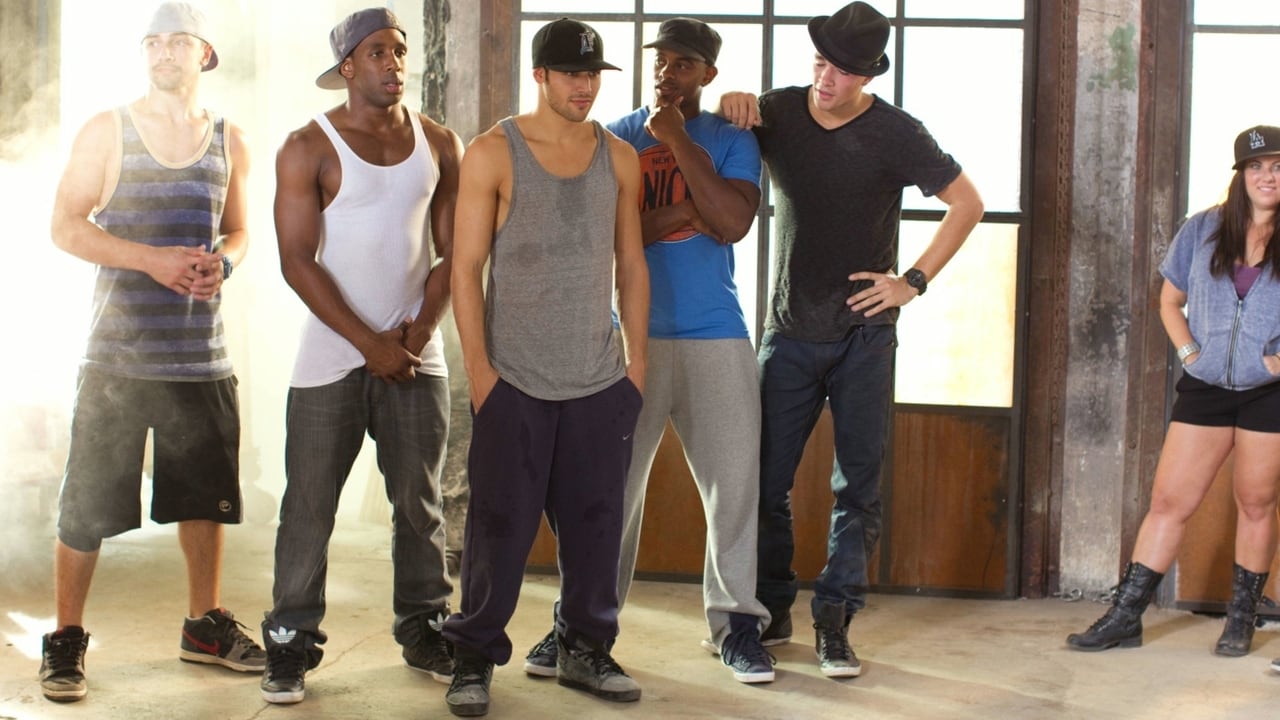
By the time the fourth installment of the Step Up franchise rolled around, the producers realized they couldn't just do another "underdog wins a dance battle" story. They needed stakes. They needed revolution. Enter Sean, played by a then-unknown Ryan Guzman, who leads "The Mob," a crew of performance artists staging elaborate, illegal flash mobs across Miami to win a YouTube contest. Sean is the quintessential 2010s protagonist: he has a soul, a tank top, and a dream of hitting 10 million views.
The drama kicks in when Emily (Kathryn McCormick), a "classically trained" dancer and daughter of a billionaire developer, rolls into town. Her father, played by the eternally suave Peter Gallagher—whose eyebrows deserve their own SAG card at this point—wants to raze Sean's neighborhood to build a luxury hotel. Naturally, Emily joins the crew, sparks fly, and suddenly dance isn't just about winning a contest; it’s about social justice. The plot is basically 'FernGully' with more hair gel and fewer trees, but you aren't here for the screenplay by Amanda Brody and Jenny Mayer. You’re here for the spectacle.
The SYTYCD Pipeline and Practical Magic
What’s fascinating about this era of modern cinema is how it became a subsidized employment program for So You Think You Can Dance alumni. Kathryn McCormick was a fan favorite on that show, and while this was her first major acting gig, her technical ability is undeniable. She brings a level of grace that contrasts sharply with the gritty, propulsive street styles of the crew.

Director Scott Speer, who cut his teeth on high-gloss music videos, treats Miami like a neon-soaked playground. Looking back, the cinematography by Karsten 'Crash' Gopinath captures that specific 2012 digital aesthetic: high contrast, saturated teals, and oranges that make everyone look like they’ve been living on a diet of carrots and sunshine.
There’s a standout sequence in an art gallery that actually holds up surprisingly well. The crew dresses as living paintings and statues, blending into the decor before "activating" to a glitchy Aaron Zigman score. It’s inventive, visually clever, and reminds me of a time when the Step Up movies were genuinely trying to push the boundaries of how dance could be filmed. It’s also where we see the late, great Stephen 'tWitch' Boss doing what he did best—commanding the screen with a charisma that felt effortless. Seeing him back in this world is a bittersweet reminder of his incredible talent.
A $140 Million Dance Party
Let’s talk numbers, because the commercial success of this film is staggering when you consider the "franchise fatigue" that usually sets in by a fourth entry. On a modest budget of $33 million, Step Up Revolution pirouetted its way to over $140 million globally. It was a massive international hit, proving that the language of dance is the ultimate box-office universal translator.

Apparently, Ryan Guzman wasn't even a professional dancer when he was cast; he was an MMA fighter with some "natural rhythm." The fact that he holds his own next to Kathryn McCormick and Misha Gabriel is a testament to the brutal rehearsal schedule these films demand. It’s also worth noting that this film leaned heavily into the burgeoning "viral marketing" era. The production actually staged real flash mobs to promote the release, blurring the lines between the film’s plot and reality in a way that felt very "Web 2.0."
Even though the dialogue is often as thin as a piece of damp tissue paper, the film succeeds because it understands its own brand. It doesn't want to be Black Swan; it wants to be a 99-minute endorphin rush. It captures a moment in time when we were transitioning from the analog grit of the early 2000s into the hyper-polished, social-media-driven world we live in now.
Ultimately, Step Up Revolution is a shiny, loud, and deeply earnest artifact of the early 2010s. It’s a movie that believes—with its whole heart—that the best way to stop a multi-million dollar real estate development is to do a synchronized routine on top of some shipping containers. While it lacks the raw "street" feel of the original Channing Tatum outing, it compensates with scale and some truly impressive choreography. It’s the cinematic equivalent of a high-sugar energy drink: you know it's not "good" for you, but man, does it give you a temporary boost.

Keep Exploring...
-
Step Up All In
2014
-
Step Up 2: The Streets
2008
-
Step Up
2006
-
Step Up 3D
2010
-

High School Musical 3: Senior Year
2008
-

Hannah Montana: The Movie
2009
-
Save the Last Dance
2001
-
Walk the Line
2005
-
High School Musical 2
2007
-
Nick and Norah's Infinite Playlist
2008
-

Crazy Heart
2009
-
Footloose
2011
-

Begin Again
2014
-
Rock of Ages
2012
-
Juno
2007
-

Knocked Up
2007
-
Music and Lyrics
2007
-

P.S. I Love You
2007
-

Forgetting Sarah Marshall
2008
-
The Reader
2008