The Best Exotic Marigold Hotel
"Outsource your golden years. India is waiting."

If you put Judi Dench and Maggie Smith in a room together and just filmed them reading the back of a shampoo bottle, I’d probably pay twelve bucks to see it. It’s a specific kind of cinematic comfort food—the "Silver Tsunami" ensemble—and 2012’s The Best Exotic Marigold Hotel is the undisputed five-star buffet of the genre. I remember watching this on a Tuesday afternoon while eating a lukewarm samosa that I’m fairly certain was mostly potato-flavored air, and honestly, the grease on the bag only added to the film's chaotic, vibrant atmosphere.

Back in 2012, the film industry was fully entrenched in the "franchise era." We were smack in the middle of the Hunger Games craze and watching the MCU consolidate its power. In that landscape, a movie about seven British retirees moving to Jaipur because their pensions wouldn't cover a sandwich in London felt like a radical act of rebellion. It’s a drama that wears the skin of a comedy, or perhaps a comedy with the soul of a mid-life (or late-life) crisis.
The Avengers of the AARP
The premise is deceptively simple: seven strangers, all facing the indignities of aging and the terrifying math of British real estate, decide to "outsource" their retirement to a seemingly luxurious hotel in India. Of course, when they arrive, the Marigold Hotel is less "Maharajah’s Palace" and more "leaking roof and a manager with more ambition than plumbing skills."
What makes this work isn't the plot—which you can see coming from a continent away—but the sheer, unadulterated horsepower of the cast. Judi Dench plays Evelyn, a recent widow discovering independence for the first time, and she anchors the film with a gentle, blogging-narrator vibe that should be annoying but is actually quite moving. Then you have Bill Nighy as Douglas, a man who has spent forty years being politely miserable, and Penelope Wilton as his wife, Jean, who is essentially a sentient lemon. Tom Wilkinson provides the film’s emotional gravity as Graham, a high-court judge returning to India to find a lost love from his youth.
And then there is Maggie Smith. As Muriel, a retired housekeeper with a tongue like a serrated blade, she gets all the best lines. Her character starts as a caricature of British xenophobia—she’s the kind of person who treats a foreign country like a personal inconvenience—but her eventual softening is one of the film’s most rewarding arcs. Watching her and Judi Dench share the screen is like watching two grandmasters play speed chess; the chemistry is effortless because, in real life, they’ve been friends since the 1950s.
A Different Kind of Outsourcing
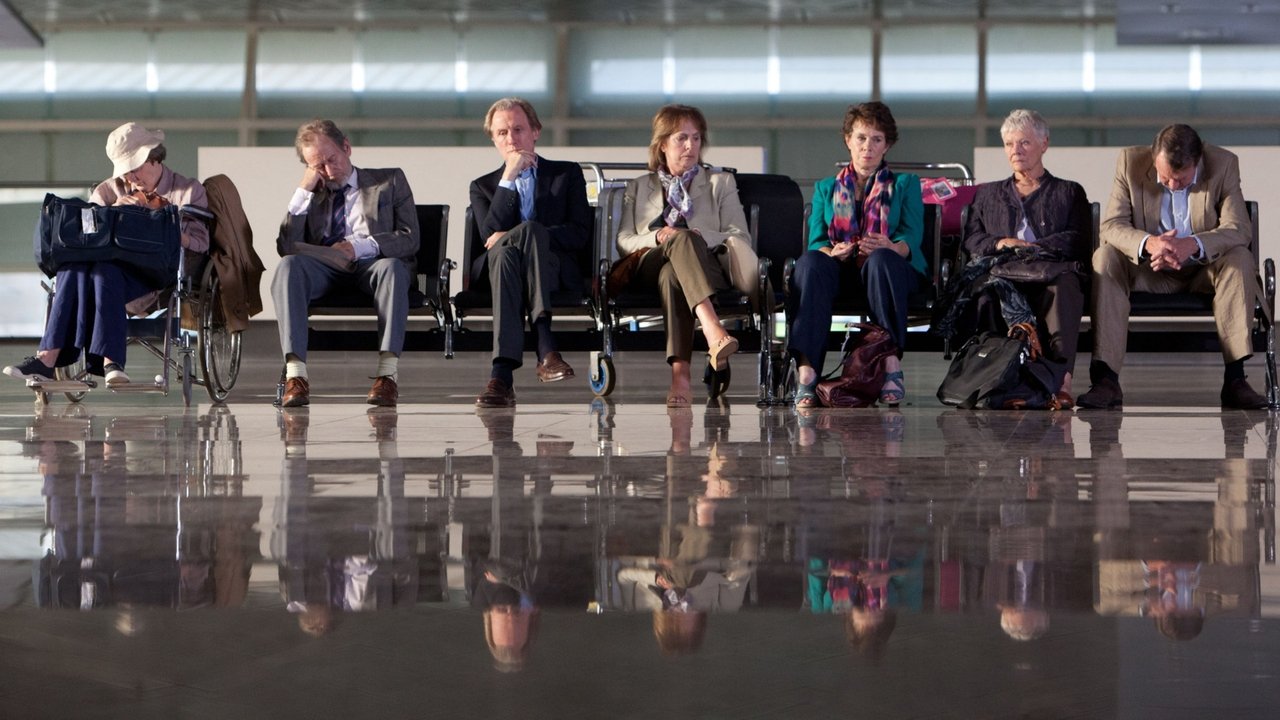
Director John Madden (who gave us Shakespeare in Love) treats India with a mix of reverence and frantic energy. The cinematography by Ben Davis captures the sensory overload of Jaipur without falling entirely into "tourist-gaze" clichés. It’s loud, it’s dusty, and it’s colorful in a way that makes the grey English suburbs of the opening act look like a funeral dirge.
The film taps into a very 2010s anxiety: the feeling that the world you worked for has suddenly become too expensive to live in. It’s a "first-world problem" drama, sure, but it handles the transition with grace. The conflict between Dev Patel’s Sonny—the hyper-kinetic manager—and his mother (played by the legendary Lillete Dubey) adds a layer of local domestic drama that keeps the movie from being just "Brits abroad." Dev Patel is essentially a human espresso shot here, and while his performance leans into the "charming bumbler" trope, he provides the necessary bridge between the hotel’s past and its future.
Looking back at this film a decade later, it reveals a shift in how Hollywood viewed the "older" demographic. This wasn't a movie meant to be dumped in February; it was a genuine commercial juggernaut. It proved that audiences were hungry for stories about people who still had lives to lead after sixty-five. It’s Eat Pray Love for people who have actually paid off a mortgage.
The $150 Million Sleeper Hit
One of the most fascinating things about The Best Exotic Marigold Hotel is its box office trajectory. Produced for a modest $10 million, it went on to earn over $150 million globally. This wasn't just a hit; it was a phenomenon that spawned a sequel and a wave of imitators.
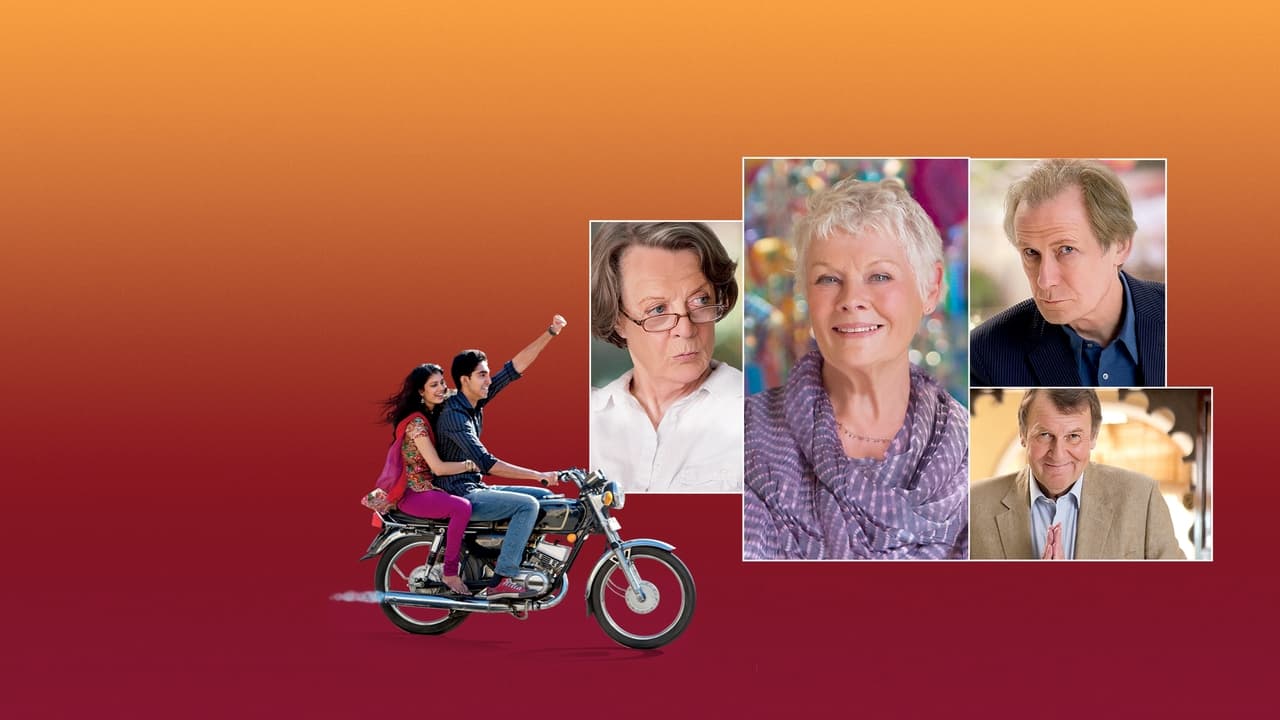
The production itself had its own "Marigold" moments. Apparently, the hotel used in the film, the Ravla Khempur, is a real place near Udaipur, and the cast had to deal with the same chaotic energy depicted on screen. Maggie Smith famously refused to travel into the city much, preferring the quiet of the hotel, which mirrors her character's initial reluctance to embrace the world around her.
The film also captures a specific moment in technology—Evelyn’s blog serves as the framing device. In 2012, "silver surfers" (seniors using the internet) was a major talking point in the UK, and seeing Judi Dench navigate the world of blogging felt like a nod to the changing social attitudes of the era. It was the "digital democratization" period where everyone, regardless of age, was trying to find their voice online.
At its heart, this movie is a warm blanket with a few surprising thorns. It’s sentimental, yes, and it wraps up its various subplots with a neatness that life rarely affords us, but it earns its happy endings through the sheer talent of its ensemble. It reminds me that growth isn't just for the young, and that sometimes you have to lose your luggage to find your life.
The film ends with the now-famous proverb: "Everything will be alright in the end. If it's not alright, it is not yet the end." It’s a bit Hallmark, but when delivered by Dev Patel with a beaming smile, I find myself wanting to believe it. It’s a lovely, vibrant, and deeply human way to spend two hours, even if you’re just killing time before your bus.
Keep Exploring...
-

Shakespeare in Love
1998
-

The Bucket List
2007
-

Love & Other Drugs
2010
-

Arthur Christmas
2011
-

The Artist
2011
-
Magic Mike
2012
-

Silver Linings Playbook
2012
-

Birdman or (The Unexpected Virtue of Ignorance)
2014
-

Imagine Me & You
2006
-
Fried Green Tomatoes
1991
-

The Santa Clause
1994
-

Babe
1995
-

Billy Elliot
2000
-

About a Boy
2002
-

About Schmidt
2002
-

Mean Girls
2004
-

The Devil Wears Prada
2006
-

The Debt
2010
-
As Good as It Gets
1997
-

Stepmom
1998