The Impossible
"Nature has no mercy. Neither does the grief."
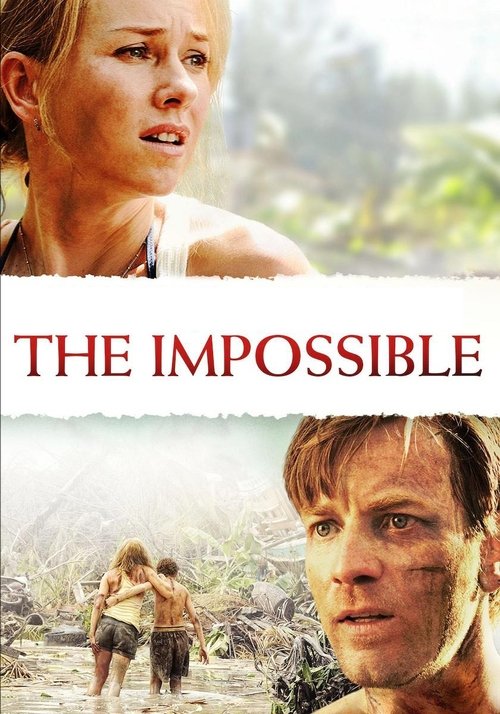
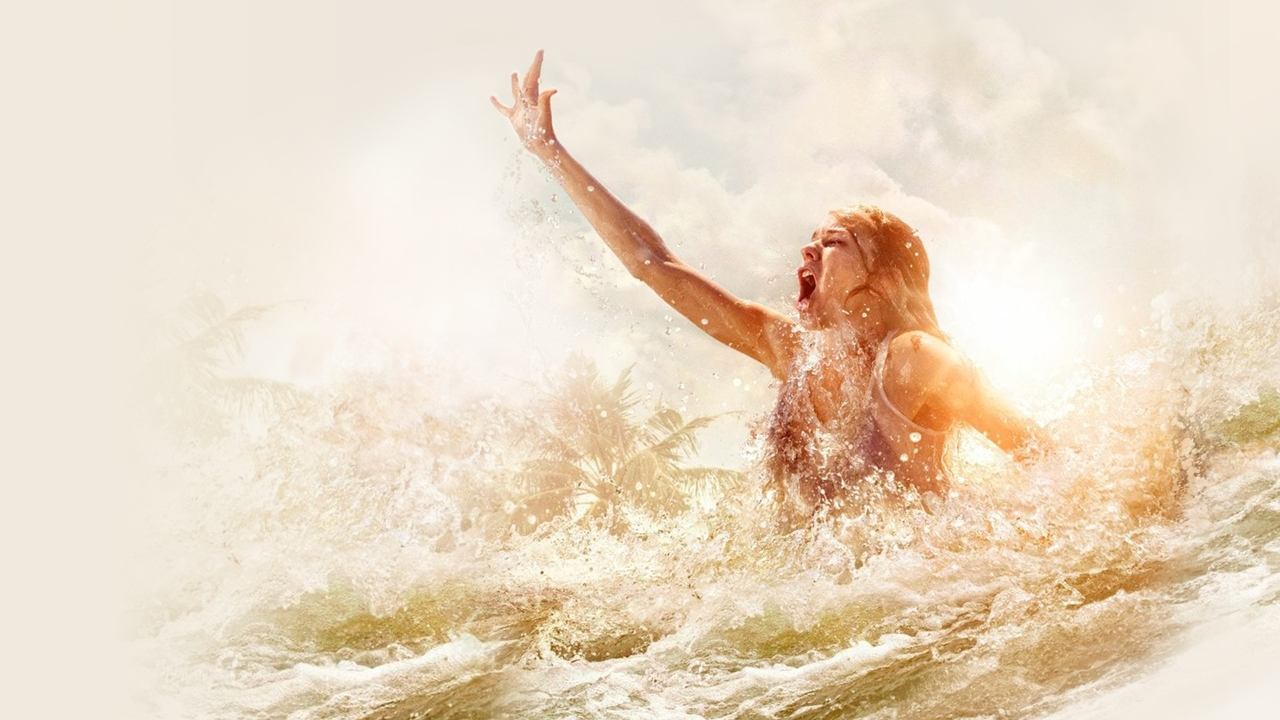
The first ten minutes of The Impossible aren't a movie; they are a collective breath-hold. We’ve all seen digital cities crumble in Marvel movies or Roland Emmerich’s various attempts to freeze, drown, or explode the planet, but J.A. Bayona’s 2012 recreation of the 2004 Indian Ocean tsunami is different. It isn't spectacle; it’s an erasure. When that black wall of water hits the Thai resort, the sound design alone—a low-frequency roar that feels like it's vibrating your actual ribcage—signals that the rules of the "disaster movie" have been discarded.
I watched this for the first time on a laptop with a dying battery and a frayed charging cable, and I honestly think the meta-stress of the screen potentially cutting to black at any second only heightened the experience. It’s that kind of film.
The Anatomy of a Nightmare
Looking back from a decade where CGI can conjure entire multiverses, The Impossible stands as a peak example of the "Modern Cinema" transition. It’s a film that uses digital tools to polish what is, at its heart, a brutal exercise in practical filmmaking. J.A. Bayona didn't just sit in a dark room with a render farm; he spent a massive chunk of his $45 million budget building a giant outdoor water tank in Spain.
The actors were actually tossed around in churning water, surrounded by real debris. You can see it in Naomi Watts’ eyes. As Maria Bennett, she isn't just acting "hurt"—she looks like she’s being physically dismantled by the elements. There is a specific, sickening sequence where she is being swept through the submerged forest, hitting submerged branches and jagged metal. It’s shot with a clarity that refuses to let you look away. The ocean doesn't do jump-scares; it does erasures. That realism paid off, turning a mid-budget Spanish production into a nearly $200 million global hit. It proved that audiences, even in the era of burgeoning franchises, were starving for stakes that felt heavy and permanent.
The Birth of a Hero
While Naomi Watts earned her Oscar nomination by essentially portraying a living wound, the real discovery here was a young Tom Holland. Long before he was swinging between skyscrapers as Peter Parker, he was Lucas, a kid forced to grow up in the span of a single afternoon.
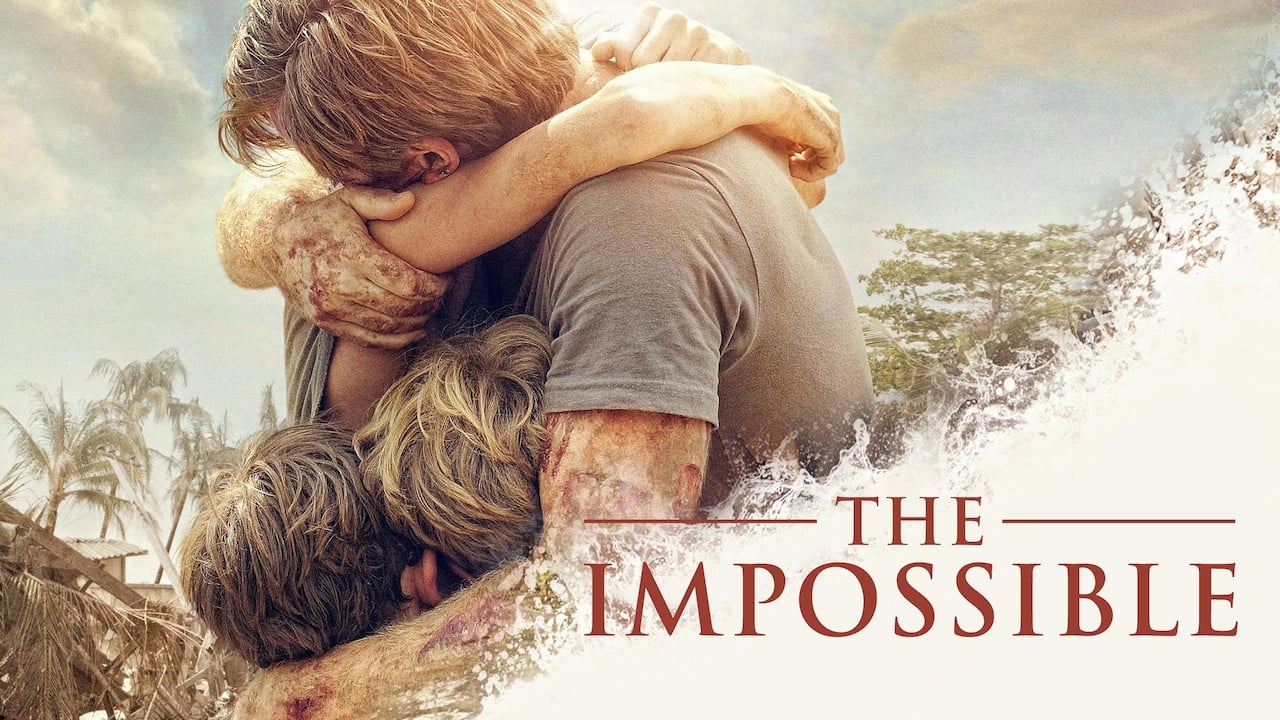
The chemistry between Holland and Watts is the film's nervous system. There is a moment after the initial wave where they find each other in the water, and the shift in Lucas’s face—from a terrified child to a makeshift protector—is incredible. It’s easy to see why Marvel saw their future flagship star in this performance. He carries the middle act of the movie with a raw, unpolished grit that keeps the story from veering into "misery porn."
On the other side of the disaster, we have Ewan McGregor as Henry. For the first half of the film, he’s separated from the main action, and his performance is a masterclass in the specific, frantic agony of a father who doesn't know if he’s the only one left. There is a three-minute long-distance phone call McGregor makes back to the UK that is, quite frankly, one of the most devastating pieces of acting in the 2010s. He manages to capture that exact moment where shock gives way to the realization of loss.
The Weight of the True Story
Because this is based on the real-life Belón family (who were closely involved in the production), there’s a level of detail that feels too specific to be scripted. The way the mud gets into everything, the triage at the local hospitals, the way Marta Etura’s character appears as a brief, haunting beacon of hope—these moments feel like fragments of a recovered memory.
However, looking back at the film now, the "Modern Cinema" lens reveals some of the era's blind spots. The film was criticized for "whitewashing" by focusing on a Western family amidst a disaster that primarily devastated local Thai populations. It’s a valid critique. While the film portrays the incredible kindness of the Thai people who rescued the family, they remain mostly in the background—the facilitators of the Western protagonists' survival. In the 2012 landscape, this was the "safe" way to get a big-budget disaster drama made; today, I think (and hope) a director of Bayona's caliber might give the local perspective more real estate.
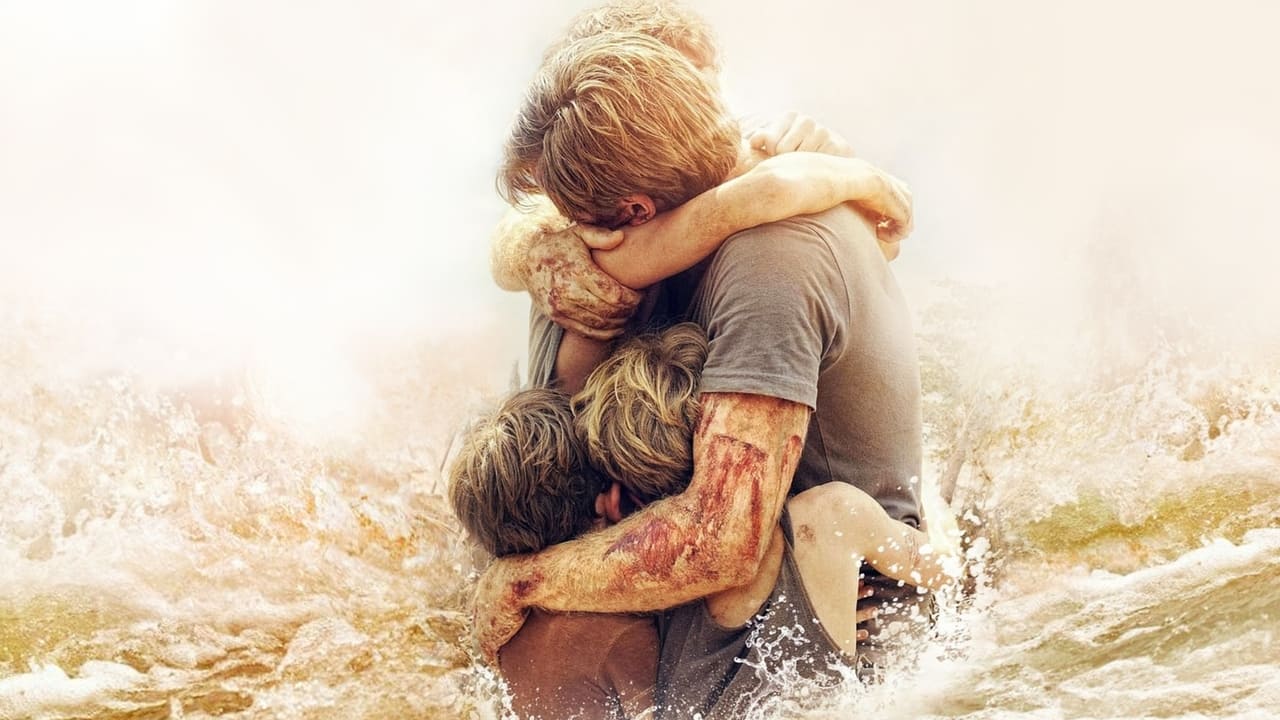
That said, the film's power comes from its narrow focus. It isn't trying to explain the geology of the tectonic plates or the geopolitics of disaster relief. It’s a story about the fragility of the "vacation" bubble and how quickly a family can be reduced to nothing but the instinct to hold on to one another.
Stuff You Didn't Notice
One of the most impressive technical feats was the sound. The crew used recordings of real heavy machinery and jet engines to create the "roar" of the tsunami, which is why it feels so much more industrial and terrifying than simple "water" noises. Also, the real Maria Belón chose Naomi Watts to play her after seeing her in 21 Grams, and she spent months on set guiding the production. That authenticity is why the hospital scenes feel so claustrophobic and tactile.
The film also captures that pre-social media era of 2004 perfectly. There were no iPhones to record the wave; there were just missing person posters pinned to plywood boards. It reminds me of how much the world changed just a few years after this event.
The Impossible is a grueling, essential piece of survival cinema that manages to be both a technical marvel and a deep dive into the human psyche. It avoids the typical "blockbuster" tropes of the era by focusing on the agonizingly slow process of recovery rather than just the three minutes of destruction. It’s a film that leaves you feeling bruised, but also strangely quiet, reminding you that the most powerful thing in the world isn't the water—it's the hand reaching out from under it.
Keep Exploring...
-
The Orphanage
2007
-
JFK
1991
-

The Imitation Game
2014
-

Black Swan
2010
-
The Town
2010
-
Argo
2012
-
Zero Dark Thirty
2012
-
The Count of Monte Cristo
2002
-
United 93
2006
-
Mulholland Drive
2001
-
I Am Legend
2007
-
The Bourne Ultimatum
2007
-
The Girl with the Dragon Tattoo
2009
-
Rise of the Planet of the Apes
2011
-
Gravity
2013
-
The Wind Rises
2013
-
Dawn of the Planet of the Apes
2014
-
Munich
2005
-
Ghost
1990
-
Cape Fear
1991